
Table of Contents >> Show >> Hide
- Why Inside Out 2 Feels So Familiar to Medical Students
- Anxiety: The Overachiever Who Means Well and Wrecks the Group Project
- Envy: The Classmate Comparison Spiral in a White Coat
- Embarrassment: The Emotion Behind “I’ll Never Recover From This”
- Ennui: Burnout’s Bored, Slouching Cousin
- The Original Emotions Still Matter
- What Medical Schools Can Learn From the Movie
- What This Topic Feels Like in Real Life: A Longer Experience-Based Reflection
Medical school and Inside Out 2 have more in common than you might think. On paper, one is a Pixar movie about a 13-year-old navigating puberty, friendship, and identity. The other is a demanding professional training path full of anatomy labs, exam scores, clinical rotations, and the occasional caffeine-based spiritual experience. But emotionally? They overlap in a big way.
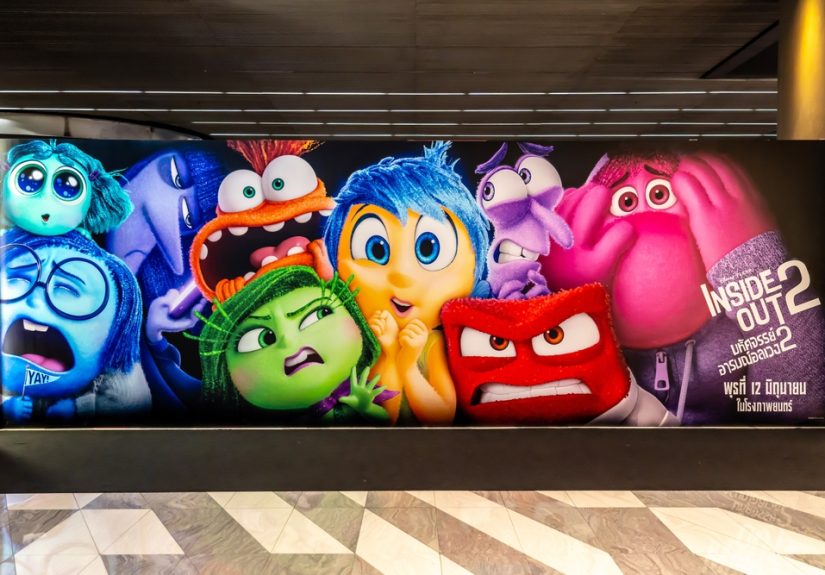
That is what makes Inside Out 2 such an unexpectedly useful lens for understanding medical student life. When Riley’s inner world becomes crowded with new emotions like Anxiety, Envy, Embarrassment, and Ennui, the movie captures something many medical students know far too well: growing up often means feeling more things at once, not fewer. And in high-pressure environments, those emotions do not politely wait their turn. They kick open the control-room door and start pushing buttons.
For medical students, the struggle is not simply “stress.” It is a more layered mix of imposter syndrome, fear of failure, social comparison, chronic fatigue, identity pressure, and the awkward reality of trying to look competent while internally wondering whether you just confused the radius with the ulna in front of five people and a consultant. That is why Inside Out 2 lands so well. It does not treat difficult emotions as glitches. It treats them as part of development.
This article explores how the new emotions in Inside Out 2 mirror the real emotional terrain of medical students, and why that parallel matters for students, educators, and anyone who has ever smiled confidently while their internal Headquarters looked like a fire drill.
Why Inside Out 2 Feels So Familiar to Medical Students
One of the smartest things the film does is show that maturation does not produce emotional simplicity. It produces emotional crowding. Riley is no longer operating with just the original emotional crew. As adolescence hits, her inner world becomes more socially tuned, more future-focused, and more vulnerable to uncertainty. That is also how medical school feels.
Medical students are not merely learning science. They are also navigating identity formation. They are figuring out who they are when grades become rankings, rankings become opportunities, and opportunities start to feel like verdicts. In that setting, emotions multiply. A single ordinary day can contain pride after answering one question correctly, dread over an upcoming exam, envy of a classmate’s research output, embarrassment from a stumble on rounds, and exhaustion so deep it starts answering emails on your behalf.
That emotional layering is not weakness. It is context. The environment is intense, competitive, evaluative, and deeply human. Students are asked to absorb enormous amounts of information while also becoming trustworthy, compassionate professionals. The challenge is not just performance. It is keeping a stable sense of self while being constantly measured.
Anxiety: The Overachiever Who Means Well and Wrecks the Group Project
If one emotion dominates the conversation around Inside Out 2, it is Anxiety. That makes sense. Anxiety is not portrayed as pure evil. It is fast, strategic, and obsessed with future outcomes. It wants Riley to be prepared, accepted, and safe. The problem is that it does not know when to stop. That is painfully relatable for medical students.
In medicine, anxiety often shows up wearing a productivity badge. It says things like, “You should review one more lecture,” “Everyone else has started Step prep,” or “You probably need three backup plans, two mentor meetings, and a spreadsheet before breakfast.” It can look responsible from the outside, even admirable. But once anxiety starts running the console full-time, it narrows attention, amplifies fear, and turns normal uncertainty into catastrophe.
Medical students live with a lot of future-oriented pressure: licensing exams, clerkship evaluations, specialty choice, residency applications, letters of recommendation, and the quiet terror of not wanting to disappoint everyone who believed in them. Anxiety thrives in exactly that kind of environment. A little of it can help students prepare. Too much of it can hollow out sleep, joy, focus, and perspective.
That is why the movie’s depiction is so sharp. Anxiety is not ridiculous because it exists. It becomes harmful because it starts believing it alone can protect the self. Many students do the same thing. They start trusting vigilance more than rest, over-preparation more than judgment, and self-criticism more than self-trust. They confuse being constantly worried with being truly ready. Those are not the same thing.
What this looks like in medical school
A first-year student convinces herself that one below-average quiz score means she may not belong. A third-year student replays every presentation after rounds and remembers only the sentence that came out clumsy. A fourth-year student stares at residency applications as if one imperfect line could collapse an entire future. None of these reactions are unusual. They are simply examples of Anxiety speaking through a stethoscope.
Envy: The Classmate Comparison Spiral in a White Coat
Envy gets one of the smallest bodies in Inside Out 2 and one of the biggest truths. Envy notices what other people have and wonders why you do not have it. In adolescence, that might mean popularity, confidence, or coolness. In medical school, it often means grades, publications, honors, mentor access, charisma on rounds, or that mysterious classmate who somehow looks rested during surgery week.
Comparison culture is deeply baked into medical training. Even when schools try to soften competition, students still absorb informal hierarchies. Who got the best shelf score? Who matched into the most competitive specialty? Who already has a publication list that reads like a table of contents? Envy thrives in environments where achievement is visible and self-worth starts attaching itself to performance metrics.
The danger of envy is not just jealousy. It is distortion. It edits reality. It magnifies other people’s highlights and minimizes your own effort, growth, and humanity. It can make a student who is objectively doing well feel perpetually behind. That emotional logic sounds a lot like: “If everyone else seems more confident, maybe I’m the only one struggling.” In truth, many students are struggling at the exact same time, just more quietly.
The healthier lesson is not to pretend envy never appears. It is to recognize what it is signaling. Sometimes envy reveals longing. A student may not truly want someone else’s resume. They may want mentorship, reassurance, balance, or a sense of progress. Once named honestly, envy can become information instead of poison.
Embarrassment: The Emotion Behind “I’ll Never Recover From This”
Embarrassment in Inside Out 2 is memorable because it captures that sudden urge to disappear into the floor. Medical students know that feeling intimately. Few learning environments expose knowledge gaps as publicly as medicine. You answer in front of peers, residents, attendings, patients, standardized patients, and sometimes your own rapidly collapsing dignity.
Embarrassment often enters during high-visibility moments: getting pimped on rounds and freezing, fumbling a presentation, forgetting a detail you absolutely knew six minutes earlier, or realizing you misread a social cue in a clinical setting. These moments sting because medical students are not just being evaluated for information. They feel evaluated as future physicians, and sometimes as people.
This is where embarrassment can slide into shame. Embarrassment says, “That moment was rough.” Shame says, “That rough moment proves I am not enough.” In medical education, that shift matters. When students repeatedly interpret mistakes as personal defects, learning becomes emotionally expensive. Participation drops. Curiosity narrows. Psychological safety disappears.
And yet medicine cannot be learned without being wrong sometimes. That is the brutal math of training. Students must speak before they are fully polished. They must try before they feel fully ready. They must tolerate correction without letting it become identity collapse. Easier said than done, of course. Headquarters rarely says, “Wonderful developmental opportunity.” It usually says, “Please move to a remote cabin and change your name.”
Why educators should pay attention
Students do not need a training culture that removes challenge. They need one that separates correction from humiliation. The difference is enormous. Feedback can sharpen. Shame can silence. If Inside Out 2 teaches anything here, it is that uncomfortable emotions are survivable when they are integrated, not weaponized.
Ennui: Burnout’s Bored, Slouching Cousin
Ennui, the film’s delightfully unimpressed embodiment of emotional detachment, may be the most underrated parallel to medical student burnout. Burnout is often described in dramatic terms, but in day-to-day life it can feel surprisingly flat. Not explosive. Not cinematic. Just numb, cynical, and tired in a way that steals meaning from things that used to matter.
That is why Ennui fits. Medical students do not always hit a wall through tears. Sometimes they drift there through emotional blunting. Lectures blur. Motivation goes missing. Small tasks feel oddly heavy. Patients still matter, but the student’s inner life feels dimmer. They are present, but not fully there. It is not laziness. It is depletion.
Burnout can also make students perform a strange contradiction: they keep functioning while feeling increasingly disconnected from the purpose that brought them into medicine. They still show up. They still study. They still do what is required. But the internal soundtrack changes from “I want to become a doctor” to “I just need to get through this week.” Then the next week. Then the next.
Ennui reminds us that not every distress signal looks dramatic. Sometimes the warning sign is indifference. Sometimes it is emotional distance. Sometimes it is the student who seems fine because they have become extremely efficient at looking fine.
The Original Emotions Still Matter
One reason Inside Out 2 works so well is that it does not throw out the original emotions. Joy, Sadness, Fear, Anger, and Disgust still matter. The newer emotions complicate the system, but they do not erase the old ones. That is another useful lesson for medical students.
Joy still matters in medicine, even when students feel guilty for pausing long enough to notice it. It appears in a patient saying thank you, a concept finally clicking, a team that teaches kindly, or the first time a student feels not just capable, but useful. Sadness matters too, because medical training includes grief, disappointment, and the loss of former versions of self. Fear has a place when it sharpens caution. Anger can expose injustice. Disgust can protect boundaries. None of these emotions are the enemy by default.
The challenge is balance. A healthy emotional life in medical school is not one in which only confidence gets a microphone. It is one in which multiple emotions can speak without any single one hijacking identity. Students do better when they learn that being anxious does not mean being unfit, feeling envy does not make them bad, embarrassment does not make them incompetent, and fatigue does not make them lazy.
What Medical Schools Can Learn From the Movie
If the emotional logic of Inside Out 2 mirrors medical student life, then training programs should take that seriously. Students need more than resilience slogans and wellness emails sent at 11:47 p.m. They need systems that acknowledge the emotional demands of training as real, predictable, and worth addressing.
That starts with normalization. Students should hear, early and often, that imposter feelings, stress, and uncertainty are common. Not trivial. Not a character flaw. Common. It also means improving access to confidential mental health care and reducing the lingering stigma around help-seeking. If a student believes getting support will make them look weak, they are more likely to wait until distress becomes harder to manage.
Programs also need psychologically safer learning environments. Students learn better when they can ask questions, make early mistakes, and receive correction without humiliation. Peer support matters too. A well-timed conversation with another student who says, “I thought I was the only one,” can be more stabilizing than an entire stack of productivity hacks.
And yes, the boring basics still matter. Sleep matters. Food matters. Time off matters. Human connection matters. Students are not brains on stilts. They are people whose cognitive performance, emotional regulation, and professional growth depend on the same biological realities as everyone else, even if medicine occasionally behaves like a sandwich and six hours of sleep is a luxury cruise.
What This Topic Feels Like in Real Life: A Longer Experience-Based Reflection
Imagine a medical student at the start of a new rotation. On the outside, she looks composed. She has her notebook, her penlight, her badge, and that carefully practiced expression that says, “I am prepared and definitely know what is happening.” Inside, however, Headquarters is chaos. Anxiety is building a ten-step contingency plan in case she gets asked about a disease she reviewed but cannot quite retrieve. Envy is peeking over the console because another student seems naturally quick, polished, and charming with patients. Embarrassment is already rehearsing what will happen if she misspeaks. Ennui, leaning in the back with maximal indifference, is muttering that none of this is sustainable anyway.
This is not an unusual student. This is a normal one.
That is the point worth underscoring. Medical student struggles are often framed as isolated problems, as if distress only belongs to a few students who somehow “cannot handle it.” But many of the emotions students experience are direct responses to the structure of training itself. Constant evaluation can make Anxiety louder. Competitive comparison can feed Envy. Public correction can energize Embarrassment. Chronic exhaustion can invite Ennui to move in and redecorate the place.
Now imagine that same student after a difficult day. She missed a question on rounds, forgot a lab value, and watched someone else deliver a flawless assessment. She goes home and tells herself she needs to work harder. That might be partly true, but it is rarely the whole truth. What she may really need is rest, perspective, and someone to remind her that one awkward moment is not a referendum on her future as a physician.
This is where the emotional metaphor from Inside Out 2 becomes more than clever. It becomes compassionate. The movie suggests that growth does not happen by deleting difficult emotions. It happens by understanding them, listening to what they are trying to protect, and refusing to let them define the whole self. That is a powerful message for medical students, who are often taught to manage outward performance long before they are taught to interpret inward experience.
Students who thrive over the long term are not necessarily the ones who never feel anxious, ashamed, envious, or depleted. They are often the ones who learn to notice those states earlier, respond with less self-contempt, and reconnect with people and practices that restore perspective. They learn that asking for help is not evidence of deficiency. They learn that competence develops unevenly. They learn that their worth cannot be reduced to a score report, an attending’s mood, or one brutal Tuesday in the ICU.
There is also something deeply hopeful here. In the film, Riley’s inner life becomes messy because she is growing. In medicine, emotional complexity often increases because students are growing too. They are taking on responsibility, uncertainty, grief, ambition, and professional identity all at once. Of course the control room gets crowded. Of course the signals get noisy. Development is not neat.
So if a medical student sees themselves in Anxiety, Envy, Embarrassment, or Ennui, that does not mean something has gone wrong beyond repair. It may simply mean they are in the middle of becoming. And becoming a doctor, much like becoming yourself, is rarely calm, linear, or aesthetically organized. Sometimes it is beautiful. Sometimes it is ridiculous. Most of the time, it is both.
Note: This article is for educational and informational publishing purposes and is written in a web-ready format based on real themes in adolescent emotional development, medical student well-being, and medical education culture.





 Close
Close