
Table of Contents >> Show >> Hide
- What Is the Equation of a Tangent Line?
- How to Find the Equation of a Tangent Line: 8 Steps
- Step 1: Identify the Function and the Point of Tangency
- Step 2: Find the Y-Coordinate
- Step 3: Take the Derivative
- Step 4: Evaluate the Derivative at the Given X-Value
- Step 5: Use Point-Slope Form
- Step 6: Simplify to Slope-Intercept Form
- Step 7: Check Whether the Tangent Is Horizontal or Vertical
- Step 8: Review the Final Answer in Context
- Full Worked Example
- How to Find a Tangent Line with Implicit Differentiation
- Using a Tangent Line for Approximation
- Common Mistakes When Finding Tangent Lines
- Experiences and Practical Advice for Learning Tangent Lines
- Conclusion
- SEO Tags
Finding the equation of a tangent line sounds like one of those math tasks designed to make pencils snap in half. Good news: it is much friendlier than it looks. Once you understand the basic recipe, the whole process becomes a neat little three-part mission: find the point, find the slope, and plug both into a line equation.
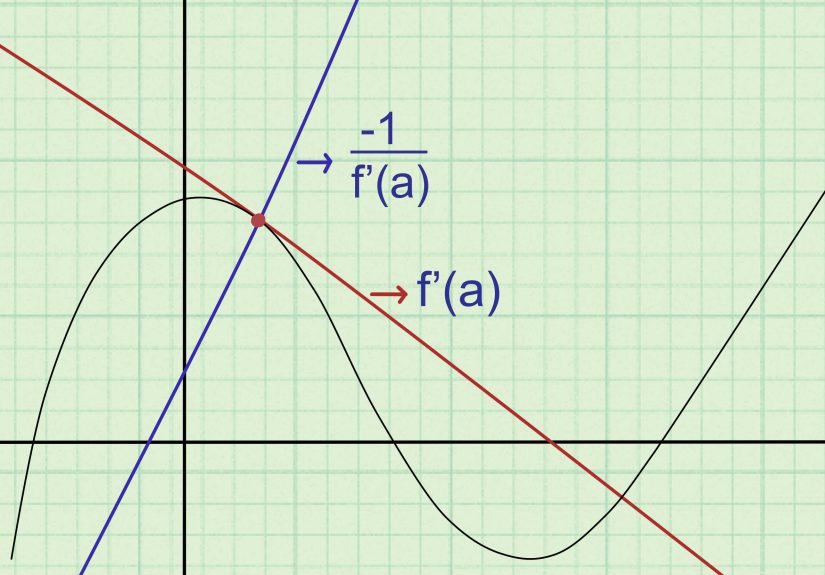
A tangent line is a straight line that touches a curve at a specific point and has the same slope as the curve at that point. In calculus, that slope usually comes from the derivative. In plain English, the derivative tells you how steep the curve is right where you are standing. If the graph is a roller coaster, the derivative tells you whether the track is climbing, dropping, or briefly pretending to be a flat parking lot.
This guide explains how to find the equation of a tangent line in 8 clear steps, with examples, common mistakes, and practical study tips. By the end, you will know how to handle standard functions, implicit curves, horizontal tangents, and tangent-line approximations without needing to bribe your calculator.
What Is the Equation of a Tangent Line?
The equation of a tangent line is the equation of a straight line that touches a curve at one chosen point and matches the curve’s slope there. For a function y = f(x), the tangent line at x = a uses this formula:
y - f(a) = f'(a)(x - a)
In that formula, f(a) gives the y-coordinate of the point, and f'(a) gives the slope of the tangent line. This is simply point-slope form dressed in calculus clothing.
How to Find the Equation of a Tangent Line: 8 Steps
Step 1: Identify the Function and the Point of Tangency
Start by writing down the function and the x-value where the tangent line touches the curve. This x-value is often given directly, such as “find the tangent line to f(x) = x^2 + 3x at x = 2.” Sometimes the full point is given, such as (2, 10).
If only the x-value is given, you must plug it into the original function to find the y-value. Do not use the derivative for the y-coordinate. The original function gives the point; the derivative gives the slope. Mixing those two is a classic math oopsie.
Step 2: Find the Y-Coordinate
Suppose the function is:
f(x) = x^2 + 3x
At x = 2, calculate:
f(2) = 2^2 + 3(2) = 4 + 6 = 10
So the point of tangency is (2, 10). This point matters because every line equation needs a location to pass through. A slope without a point is like a GPS with no destination: energetic, but not useful.
Step 3: Take the Derivative
The derivative gives the slope of the tangent line. For the function:
f(x) = x^2 + 3x
The derivative is:
f'(x) = 2x + 3
This derivative is not the final slope yet. It is a slope formula. To get the actual slope at the point of tangency, you must evaluate the derivative at the given x-value.
Step 4: Evaluate the Derivative at the Given X-Value
Now plug x = 2 into the derivative:
f'(2) = 2(2) + 3 = 7
So the slope of the tangent line is m = 7. This means that right at x = 2, the curve is rising 7 units vertically for every 1 unit horizontally. The curve may bend before or after that point, but the tangent line only cares about the instant it touches.
Step 5: Use Point-Slope Form
Point-slope form is:
y - y1 = m(x - x1)
Using the point (2, 10) and slope 7, substitute:
y - 10 = 7(x - 2)
This is already a correct equation of the tangent line. Many teachers accept point-slope form because it clearly shows the point and the slope. However, you may also be asked to simplify it.
Step 6: Simplify to Slope-Intercept Form
Starting with:
y - 10 = 7(x - 2)
Distribute:
y - 10 = 7x - 14
Add 10 to both sides:
y = 7x - 4
The equation of the tangent line is:
y = 7x - 4
To check it, plug in x = 2. You get y = 14 - 4 = 10, which matches the point of tangency. The slope is also 7. That is a satisfying little math handshake.
Step 7: Check Whether the Tangent Is Horizontal or Vertical
A horizontal tangent line happens when the derivative equals zero. For example, if f'(a) = 0, the tangent line has slope 0 and looks like:
y = f(a)
Example: Let f(x) = x^3 - 3x. The derivative is:
f'(x) = 3x^2 - 3
At x = 1:
f'(1) = 3(1)^2 - 3 = 0
The y-value is:
f(1) = 1 - 3 = -2
So the tangent line is:
y = -2
Vertical tangent lines are different because their slope is undefined. They often appear in curves that are not written as ordinary functions of x, or in cases where the derivative becomes infinite or undefined in a meaningful way. A vertical tangent line usually has the form:
x = a
If your class is working only with basic functions, most tangent-line problems will use regular finite slopes. Still, it is useful to know that not every tangent line can be written as y = mx + b.
Step 8: Review the Final Answer in Context
Before you move on, ask three questions:
- Did I use the original function to find the point?
- Did I use the derivative to find the slope?
- Did I plug the correct point and slope into point-slope form?
If the answer is yes, your tangent line is probably in good shape. If the graph is available, you can also sketch the curve and line quickly. The tangent line should touch the curve at the chosen point and move in the same direction as the curve at that instant.
Full Worked Example
Find the equation of the tangent line to:
f(x) = 4x^2 - x + 1
at x = 3.
Find the Point
f(3) = 4(3)^2 - 3 + 1 = 36 - 3 + 1 = 34
The point is (3, 34).
Find the Derivative
f'(x) = 8x - 1
Find the Slope
f'(3) = 8(3) - 1 = 23
Write the Tangent Line
y - 34 = 23(x - 3)
Simplify:
y - 34 = 23x - 69
y = 23x - 35
The final answer is:
y = 23x - 35
How to Find a Tangent Line with Implicit Differentiation
Some curves are not written as y = f(x). For example:
x^2 + y^2 = 25
This is a circle. To find the tangent line at (3, 4), use implicit differentiation.
Differentiate both sides with respect to x:
2x + 2y(dy/dx) = 0
Solve for dy/dx:
2y(dy/dx) = -2x
dy/dx = -x/y
At (3, 4), the slope is:
m = -3/4
Use point-slope form:
y - 4 = (-3/4)(x - 3)
That is the tangent line. You can leave it in point-slope form or simplify it, depending on your assignment instructions.
Using a Tangent Line for Approximation
A tangent line does more than touch a graph. It can also estimate nearby function values. This is called linear approximation. The idea is that close to the point of tangency, the curve and its tangent line are nearly the same.
If the tangent line to a function at x = a is:
L(x) = f(a) + f'(a)(x - a)
Then for x-values close to a, you can use L(x) to approximate f(x).
For example, if f(x) = sqrt(x) and you want to estimate sqrt(4.1), use a = 4 because sqrt(4) is easy.
f(4) = 2
f'(x) = 1/(2sqrt(x))
f'(4) = 1/4
The tangent line approximation is:
L(x) = 2 + (1/4)(x - 4)
At x = 4.1:
L(4.1) = 2 + (1/4)(0.1) = 2.025
So sqrt(4.1) is approximately 2.025. The exact value is close, which shows why tangent lines are powerful tools in calculus, physics, engineering, economics, and any field where “close enough for a smart estimate” is a valuable thing.
Common Mistakes When Finding Tangent Lines
Using the Derivative as the Y-Value
The derivative gives slope, not height. If the function is f(x), use f(a) to find the y-coordinate and f'(a) to find the slope.
Forgetting to Evaluate the Derivative
Writing m = f'(x) is not enough. The slope at x = a is f'(a). Always plug in the given x-value.
Dropping a Negative Sign
Negative slopes are common. If the curve is falling at the point, the tangent line should have a negative slope. Check your signs carefully, especially after distributing.
Simplifying Too Soon
Point-slope form is often safer than immediately jumping to slope-intercept form. Write y - y1 = m(x - x1) first, then simplify only after the structure is correct.
Experiences and Practical Advice for Learning Tangent Lines
One of the most useful experiences students have with tangent lines is the moment they stop seeing them as random formulas and start seeing them as local behavior. A tangent line is not trying to describe the whole curve forever. It is describing what the curve is doing right here, at one exact point. That small shift in thinking makes the topic much easier.
When I have seen students struggle with tangent-line problems, the issue is usually not the derivative itself. The real problem is organization. They know how to differentiate, and they know the line formula, but they mix the ingredients in the wrong order. A helpful habit is to create a mini table with three entries: x-value, y-value, and slope. First write the given x-value. Then calculate the y-value from the original function. Then calculate the slope from the derivative. Once those three boxes are filled, the final equation almost writes itself.
Another practical experience: graphing helps more than students expect. You do not need a perfect graph. A quick sketch can tell you whether your answer is reasonable. If the curve is increasing steeply at the point and your tangent line has a negative slope, something has gone sideways. If the tangent point is supposed to be (2, 10) and your final line does not pass through (2, 10), the line is politely waving a red flag.
It also helps to practice with different types of functions. Start with polynomials because their derivatives are friendly. Then try square roots, rational functions, exponential functions, logarithms, and trigonometric functions. After that, move to implicit curves like circles and ellipses. This gradual climb builds confidence without turning your notebook into a crime scene.
For test preparation, the best strategy is to slow down at the beginning. Many wrong answers happen in the first two lines of work: copying the function incorrectly, using the wrong x-value, or finding the point with the derivative instead of the original function. Spending ten extra seconds setting up the problem can save five minutes of repair work later.
Finally, remember that tangent lines are not just a classroom trick. They are the foundation of linear approximation, optimization, related rates, motion analysis, and many models used in science and business. When you find a tangent line, you are learning how to replace a complicated curve with a simple line near one point. That is a big idea. It is the math version of saying, “Let’s zoom in until the curve becomes manageable.” And honestly, that is a pretty elegant move.
Conclusion
To find the equation of a tangent line, identify the point of tangency, use the derivative to find the slope, and place both into point-slope form. The essential formula is y - f(a) = f'(a)(x - a). Once you understand what each part means, tangent-line problems become much less mysterious.
The key is not memorizing twenty different tricks. The key is knowing the role of each piece: the original function gives the point, the derivative gives the slope, and point-slope form gives the line. Whether you are solving a basic polynomial problem, using implicit differentiation, or estimating a nearby value, the same logic keeps showing up. Math loves a reusable tool, and the tangent line is one of its favorites.
Note: This educational article uses standard calculus notation and examples. Always follow your instructor’s preferred format for final answers, especially when choosing between point-slope form and slope-intercept form.






 Close
Close