
Table of Contents >> Show >> Hide
- Why Energia Still Looms So Large
- The “New Rocket Project” Is Really About More Than One Rocket
- How Energia’s DNA Shows Up in Today’s Thinking
- Russia’s Space Program in 2026: Ambitious, Stretched, and Very Human
- Why a Real Soviet-Scale Comeback Is So Difficult
- So Could the Colossus Really Return?
- Where Such a Rocket Would Actually Matter
- The Bottom Line
- Experiences and Observations: What It Feels Like to Watch This Story Unfold
Every few years, Russia’s space program unveils a familiar dream dressed in fresh PowerPoint clothes: a mighty new rocket, a bold lunar plan, a promise that the next giant booster will restore some old Soviet thunder. And every few years, space nerds everywhere lean forward and ask the same question: is this finally the moment the ghost of Energia comes back to life?
That question is what makes Russia’s new rocket project so fascinating. On paper, the idea sounds glorious. Build a modern heavy or super-heavy launcher, use it to support a new orbital station, future lunar ambitions, and maybe a deeper-space push, and remind the world that Russia was once half of the greatest space rivalry in history. In practice, however, reviving anything that resembles the old Soviet colossus is less like opening a dusty garage and finding a classic car, and more like trying to reassemble a cathedral after the map, the masons, and half the stones have vanished.
Still, the idea refuses to die. That is why the story matters. Russia’s heavy-lift future sits at the crossroads of nostalgia, engineering reality, geopolitics, industrial decline, and genuine technical ambition. The result is part comeback tale, part cautionary tale, and part rocket opera with very expensive props.
Why Energia Still Looms So Large
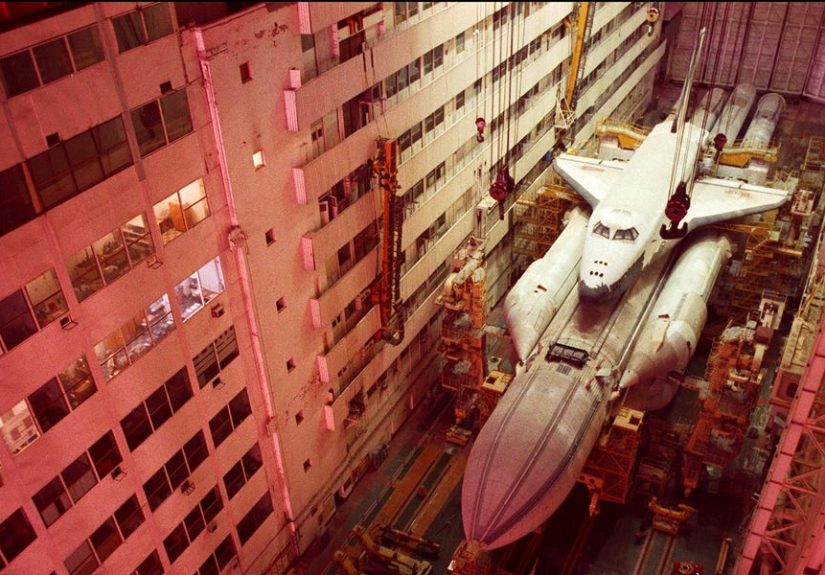
To understand why any new Russian rocket immediately invites comparisons to a Soviet-era titan, you have to start with Energia itself. This was not some modest launcher with delusions of grandeur. Energia was the Soviet Union’s answer to the biggest American hardware of the Cold War era. It first flew in 1987, launching the Polyus payload, and then carried the Buran orbiter on its only mission in 1988. In historical terms, it was one of the most powerful launch systems to leave Earth after the Saturn V.
Energia also had an aura that modern launch vehicles rarely match. It was big, dramatic, and politically symbolic. It arrived late in the Soviet game, just as the country’s economic and political foundations were beginning to wobble. That timing gave the rocket an almost mythical status. It was powerful enough to hint at a very different future, yet short-lived enough to become legend. Buran’s automated 1988 flight only added to the mystique. The vehicle flew, landed, and then history yanked the curtain down before the show could really begin.
That is why Energia remains the spiritual benchmark for any Russian super-heavy concept. It was the giant that got away.
The “New Rocket Project” Is Really About More Than One Rocket
When people hear that Russia might resurrect a Soviet-era colossus, they may imagine engineers rolling an old Energia out of storage, dusting off the frost, and declaring victory. That is not how this works. Modern Russian heavy-lift plans have tended to circle around a broader family of ideas, including super-heavy concepts such as Yenisei and related follow-on designs, while also leaning on newer launch systems such as Angara-A5 and the long-delayed Soyuz-5.
In other words, the modern effort is not a literal resurrection. It is more like architectural reincarnation. The goal is to recover the capability and strategic role of Energia, not necessarily the exact vehicle, the exact tooling, or the exact industrial ecosystem that produced it.
That distinction matters. A true revival of Energia would be brutally difficult because the Soviet Union’s manufacturing network no longer exists in the form it did in the 1980s. Suppliers were spread across what are now multiple independent states. Design standards have changed. Budgets are different. Sanctions and geopolitics complicate procurement. The old machine was born in a different political universe.
So when analysts say Russia may be resurrecting a Soviet-era colossus, what they usually mean is that Moscow keeps returning to the same strategic need: a launcher powerful enough to move very large payloads for lunar missions, major station hardware, or other prestige projects that smaller rockets cannot handle efficiently.
How Energia’s DNA Shows Up in Today’s Thinking
A modular mindset
One of the lasting lessons of Energia was modularity. The old Soviet system used a powerful central core with strap-on boosters, creating an architecture that could, at least in theory, be adapted for different roles. Modern Russian heavy-lift concepts have repeatedly flirted with the same logic. Rather than build one wildly exotic beast from scratch, engineers can imagine a family of launchers using shared stages, common engines, and related infrastructure.
That is where vehicles like Soyuz-5 become important. Soyuz-5 is not Energia reborn. It is a medium-lift rocket. But it has often been discussed as a stepping stone, a building block, or at minimum a piece of the industrial foundation Russia would need before attempting anything truly super-heavy. Think of it as less “the new colossus” and more “the gym membership before trying to deadlift a planet.”
A lunar shadow hanging over everything
Russia’s super-heavy talk has also been shaped by lunar ambitions. The moment a space agency starts talking about crewed lunar missions, big landers, cislunar infrastructure, or large cargo deliveries, the need for a giant rocket starts to make sense. A super-heavy launcher is not just a flex. It is often the practical answer to moving the mass required for serious Moon architecture.
That is one reason Energia’s ghost keeps showing up. If Russia wants to do more than launch crews to low Earth orbit or maintain a basic independent station, then a bigger rocket eventually becomes hard to avoid. That does not mean success is guaranteed. It just means the appetite for a giant launcher has strategic logic behind it.
Russia’s Space Program in 2026: Ambitious, Stretched, and Very Human
Any honest article about Russia’s new rocket project has to look at the current state of the broader space program, because rockets do not exist in a vacuum. They are expressions of industrial health, political will, and national priorities. And right now, Russia’s space sector looks like a mix of resilience and strain.
Start with Angara-A5. This rocket is important because it represents Russia’s first major post-Soviet heavy booster. Its launch from Vostochny in 2024 was a milestone, especially because Vostochny gives Russia a stronger sovereign launch option from its own territory. Angara is meant to support national missions, including future station hardware and other strategic payloads. That makes it the practical heavyweight currently on the field, even if it is not an Energia-class monster.
Then there is Proton, the old workhorse. Proton is still flying occasionally, but it is clearly in its twilight years. That matters because it illustrates the transition underway in Russian launch strategy. The old Soviet-derived hardware that carried so much of Russia’s space effort is aging out, while the replacements are arriving more slowly than planners would prefer.
Soyuz remains the backbone, of course. It is reliable, familiar, and still essential for crewed flights and cargo missions to the International Space Station. But even that backbone has shown stress. Damage to a key launch pad at Baikonur in late 2025 was a reminder that launch infrastructure can become a bottleneck just as quickly as rocket development does. If a nation’s operational launch system is under pressure, dreams of a super-heavy future get harder to fund, harder to schedule, and harder to believe.
Leadership turnover has also added uncertainty. Roscosmos changed chiefs in 2025, and the agency continues to balance national prestige goals with the practical realities of station planning, launch schedules, and post-Luna-25 credibility repair. That failed lunar mission in 2023 was not just a technical setback. It was a psychological one. It reminded observers that announcing ambitious exploration goals is much easier than landing hardware where it is supposed to go.
Why a Real Soviet-Scale Comeback Is So Difficult
Industrial memory does not preserve itself
One of the biggest obstacles to resurrecting a giant rocket is something engineers know all too well: capability is not just blueprints. It is people, supply chains, tooling, testing culture, and institutional memory. The Soviet system that produced Energia had all of those at once, backed by a state willing to spend accordingly. Recreating that ecosystem decades later is enormously hard.
Prestige missions need money, patience, and a stable roadmap
Super-heavy rockets are not useful because they are large; they are useful because they support a coherent mission set. The United States could justify Saturn V because of Apollo. SpaceX can justify Starship because it underpins multiple long-term business and exploration bets. Russia’s challenge is that its long-range roadmap has shifted repeatedly, from lunar plans to station plans to revised partnerships and timelines.
If the destination changes every few years, the rocket meant to reach it starts to look less like infrastructure and more like a monument waiting for a purpose.
Geopolitics keeps raising the difficulty setting
Russia’s war in Ukraine, sanctions, and its broader geopolitical isolation have made international cooperation more complicated in multiple areas of science and technology. Space cooperation with the United States persists in certain ISS operations, but broader collaboration is thinner than it once was. Russia has increasingly looked to China and other partners, yet building a modern super-heavy ecosystem still requires time, money, manufacturing discipline, and strategic consistency. Politics can supply the rhetoric, but they do not machine turbopumps.
So Could the Colossus Really Return?
Yes, but probably not in the simple, cinematic way the headline suggests.
The most realistic version of a comeback would not be a museum-faithful Energia revival. It would be a new Russian heavy or super-heavy architecture that borrows Energia’s logic, symbolism, and mission class while depending on newer rockets, newer engines, and newer infrastructure. The Soviet colossus would return in spirit rather than in serial number.
That outcome is plausible because Russia still has genuine rocket expertise, an enduring political interest in space prestige, and a practical need for heavier launch capability if it wants to sustain independent human spaceflight after the ISS era. Plans for the Russian Orbital Station beginning in 2027 show that Moscow is still thinking in terms of long-term orbital presence, not graceful retirement.
But the harder truth is that a true super-heavy revival remains a second-step project. First Russia must keep Angara moving, get Soyuz-5 flying on time, stabilize infrastructure, and prove that major programs can hit milestones without becoming cautionary tales. Only then does a full colossus-class vehicle start to look like a near-term project instead of a recurring dream sequence.
Where Such a Rocket Would Actually Matter
If Russia ever fields a vehicle that genuinely channels Energia’s old muscle, the payoff would be significant. It could launch larger station components in fewer missions. It could support serious lunar cargo operations. It could enable more ambitious deep-space probes, including heavier planetary spacecraft that are difficult to assemble through smaller launches alone. It could also serve as a national prestige platform, signaling that Russia still belongs in the top tier of launch capability.
That last point may sound theatrical, but space programs have always been part engineering and part storytelling. Saturn V was hardware, yes, but it was also narrative. So was the shuttle. So was Energia. So are today’s mega-rockets. Nations do not build giants only because they are useful. They build them because giants say something out loud.
The Bottom Line
Russia’s new rocket project matters because it sits at the intersection of memory and necessity. Energia remains a symbol of what Soviet engineering once achieved and of what modern Russia still wants to imply it can achieve again. The country’s newer rockets, especially Angara and the long-awaited Soyuz-5, show that the industrial base is still alive. But they also reveal the limits of how quickly that base can be modernized, expanded, and trusted with truly massive ambitions.
So yes, a Soviet-era colossus might return. Just do not expect a simple resurrection. Expect a long, uneven attempt to rebuild lost heavy-lift capability in a world that is harsher, more competitive, and far less forgiving than the one Energia briefly conquered. In spaceflight, history rarely repeats itself exactly. It usually comes back wearing updated avionics and a delayed launch schedule.
Experiences and Observations: What It Feels Like to Watch This Story Unfold
For longtime spaceflight followers, the experience of tracking Russia’s heavy-rocket ambitions is a strange mix of awe, skepticism, nostalgia, and whiplash. On one hand, the appeal is obvious. Energia and Buran belong to that rare class of space artifacts that feel bigger than engineering. They were expressions of a civilization trying to prove that it could match, and in some ways outdo, its rival. Even now, decades later, those names carry a weight that newer projects often struggle to match. Mention Energia in a room full of rocket enthusiasts and people do not just think of payload charts. They think of scale, symbolism, and one of history’s great unfinished stories.
That emotional pull is part of why every new Russian heavy-lift proposal generates so much attention. There is always a flicker of possibility that this time the country will finally reconnect its extraordinary past with a workable future. When a new concept appears, whether tied to lunar plans, station architecture, or an all-purpose super-heavy launcher, it invites a very human response: maybe the giant really is waking up.
And then reality barges in wearing steel-toed boots. Timelines slide. Budgets tighten. Political priorities change. A lunar mission fails. A launch pad is damaged. A long-promised vehicle remains one year away in the way that some restaurants claim your table is “almost ready” while you have clearly aged three seasons in the lobby. The emotional rhythm becomes familiar. Big announcement. Technical intrigue. Cautious optimism. Delay. Revision. Repeat.
Yet that does not make the story pointless. In fact, the tension between ambition and limitation is what makes it so compelling. Watching Russia’s rocket plans evolve is like watching a former heavyweight champion train for one more improbable title run. The old power is not imaginary. The pedigree is real. The scars are real too. Every new program reveals both truths at once.
There is also something revealing in the way Energia keeps returning to the conversation. It suggests that certain engineering ideas never fully disappear when they are tied to national identity. Russia does not merely want launch capacity; it wants consequential launch capacity. It wants something that can carry more than satellites. It wants something that can carry meaning. That desire is understandable. The Soviet Union helped define the early Space Age, and modern Russia does not want its role reduced to operating legacy vehicles while other powers chase the Moon, Mars, and giant reusable systems.
So the experience of following this topic is not just about rockets. It is about watching a nation negotiate with its own memory. The hardware is real, but so is the symbolism. Every Angara launch, every Soyuz-5 delay, every station update, and every revived super-heavy rendering becomes part of a larger question: can a program built on legendary achievements reinvent itself without being trapped by them?
That is why this story keeps pulling people back in. It is technical, political, and oddly emotional. It is about engines and launch pads, but also about inheritance, identity, and the stubborn refusal of old dreams to stay buried. And in that sense, the phrase “resurrect a Soviet-era colossus” is more than a catchy headline. It is a surprisingly accurate description of the drama itself.





 Close
Close