
Table of Contents >> Show >> Hide
- What Is AMD, Exactly?
- A 30-Second Macula Crash Course
- Dry vs. Wet AMD: Two “Flavors,” Very Different Tempo
- Symptoms and Early Warning Signs
- Who’s at Risk? (Spoiler: Aging Is Doing the Most)
- How AMD Is Diagnosed: What to Expect at the Eye Doctor
- Treatment Options: What Actually Helps (and What’s Hype)
- How to Lower Risk and Slow Progression
- When to Call the Eye Doctor Urgently
- FAQ: Quick Answers Without the Fluff
- Experiences With AMD: What It Feels Like in Real Life (and What Helps)
- Conclusion
If your vision were a movie, the macula would be the HD center screen: faces, street signs, reading, threading a needle, and spotting the one typo your coworker swears “isn’t there.”
Age-Related Macular Degeneration (AMD) is what happens when that center screen starts to glitchoften slowly, sometimes suddenlywhile your side vision may stay surprisingly okay.
This article breaks down AMD in plain English, with the right amount of science, a dash of humor, and plenty of practical takeaways.
(Because if your eyes are going to be dramatic, the least they can do is be understandable.)
What Is AMD, Exactly?
AMD is a condition that damages the macula, the central portion of the retina responsible for sharp, detailed vision.
It’s a leading cause of central vision loss in older adultsespecially after age 60though it can begin earlier.
AMD usually doesn’t erase vision like flipping a light switch; instead, it tends to blur, distort, or create a “missing spot” in the center of what you see.
Important nuance: AMD is not the same as “needing reading glasses,” cataracts, or dry eyes.
Those are common toobut AMD specifically affects the retina’s central detail zone.
A 30-Second Macula Crash Course
Think of the retina as the camera sensor in your eye. The macula is the tiny area in the middle of that sensor that gives you crisp detail.
When the macula is healthy, straight lines look straight, letters are sharp, and faces look like faces (not like impressionist paintings).
When it’s not, the center image can become:
- Blurry (like a smudged lens)
- Wavy/distorted (like your vision is quietly auditioning for modern art)
- Patchy (a dark or blank spot in the center)
Dry vs. Wet AMD: Two “Flavors,” Very Different Tempo
AMD is commonly described as dry or wet. Most people start with dry AMD.
A smaller portion develop wet AMD, which tends to be more aggressive and requires urgent treatment.
Dry AMD (More Common, Usually Slower)
Dry AMD often involves the buildup of tiny deposits called drusen under the retina.
Early on, you may have no symptomsyour eyes can be sneaky like that.
Over time, dry AMD can progress and lead to thinning and damage of macular cells.
A late stage of dry AMD is called geographic atrophy (GA), where patches of retinal cells stop functioning.
GA tends to progress gradually, but its effects on reading and recognizing faces can be life-changing.
Wet AMD (Less Common, Usually Faster)
Wet AMD happens when abnormal blood vessels grow under the retina and leak fluid or blood.
That leakage can scar the macula and cause rapid central vision loss.
The good news: wet AMD has effective treatments that can slow, stop, and sometimes improve visionespecially when started quickly.
Can Dry AMD Turn Into Wet AMD?
Yes. Dry AMD can convert to wet AMD. That’s why monitoring symptoms matters.
New distortion, a sudden central blur, or a fresh dark spot should be treated as an “eyes-first” prioritynot a “maybe next month” situation.
Symptoms and Early Warning Signs
AMD can be subtle early on. Many people notice changes first when doing detail-heavy tasks:
- Blurry or fuzzy central vision (peripheral vision may stay okay)
- Difficulty reading small printeven with good lighting
- Straight lines looking wavy (door frames, blinds, text lines)
- A dark, gray, or blank spot in the center of vision
- Needing brighter light for close work
- Colors looking less vivid
- Faces becoming harder to recognize
The “Wavy Lines” Clue and the Amsler Grid
Eye doctors often recommend an Amsler grid for at-home monitoring.
It’s a simple grid test: if lines look wavy, blurry, missing, or darker in one area, it’s a signal to contact an eye care professional promptly.
It’s not a diagnosismore like a smoke alarm for new changes.
Who’s at Risk? (Spoiler: Aging Is Doing the Most)
You can’t negotiate with time (people have tried), but you can understand risk factors.
Common AMD risk factors include:
- Age (risk rises sharply over time)
- Family history/genetics
- Smoking (one of the biggest modifiable risks)
- Cardiovascular health (blood pressure, cholesterol, overall vascular health)
- Race/ethnicity (AMD patterns vary across groups)
- Diet and lifestyle (long-term nutrition, activity, weight)
In the U.S., AMD is common: tens of millions of adults have some form of AMD, and prevalence increases dramatically with age.
That doesn’t mean everyone will have severe vision lossbut it does mean routine eye care is worth treating like a subscription you actually use.
How AMD Is Diagnosed: What to Expect at the Eye Doctor
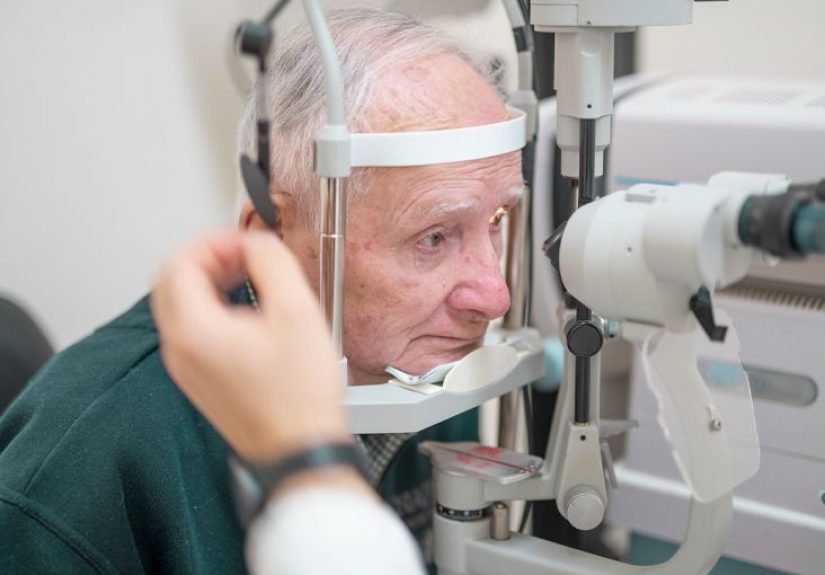
A proper AMD evaluation usually starts with a dilated eye exam, where the clinician examines the retina and macula.
Depending on findings, they may use imaging and tests such as:
- Optical coherence tomography (OCT) to map retinal layers and detect fluid or atrophy
- Retinal photographs to document drusen and macular changes over time
- Fluorescein angiography (in some cases) to check for leaking abnormal blood vessels
- Visual acuity and other functional vision tests
The goal is to determine: Is this dry AMD, wet AMD, or both? What stage? Is there active leakage?
Those answers shape treatment and follow-up intervals.
Treatment Options: What Actually Helps (and What’s Hype)
1) Wet AMD Treatments
The mainstay treatment for wet AMD is anti-VEGF therapymedications injected into the eye that block signals driving abnormal vessel growth and leakage.
In plain terms: they help stop the “leaky plumbing” problem in the retina.
Anti-VEGF treatment is usually given as a series of injections with follow-up imaging.
Many people start with frequent visits (often monthly or close to it), then shift to longer intervals if the retina stabilizes.
Yes, eye injections sound terrifying. No, they are not medieval torture.
Clinics use numbing drops, and the injection itself is typically quickmore “weird pressure” than “movie scream.”
Another option used in select cases is photodynamic therapy (PDT), which combines an intravenous light-activated drug with a laser applied in the eye to target abnormal vessels.
It’s less common than anti-VEGF today, but still part of the toolkit for specific situations.
2) Dry AMD and Geographic Atrophy (GA) Treatments
Dry AMD management depends on stage:
- Early dry AMD: monitoring, lifestyle optimization, and risk reduction
- Intermediate AMD: may benefit from specific supplements (more below)
- Geographic atrophy (late dry AMD): newer injectable treatments can slow the enlargement of atrophy in some patients
In recent years, the FDA approved treatments for geographic atrophy secondary to AMD, including complement-inhibitor therapies such as
pegcetacoplan (SYFOVRE) and avacincaptad pegol (IZERVAY).
These are not cures, and they do not restore lost vision. Their purpose is to slow GA progressionwhich can matter a lot over time.
Your retina specialist can explain expected benefit, injection schedules, and risks in your specific case.
3) AREDS2 Supplements: Who Should Take Them (and Who Shouldn’t)
The AREDS/AREDS2 clinical trials showed that a particular high-dose vitamin/mineral formula can reduce the risk of progression
from intermediate to advanced AMD by about 25% in certain people.
The key word is progression. These supplements:
- Do help reduce progression risk for many people with intermediate AMD
- Do not prevent AMD from starting
- Do not work like a “vision multivitamin” for everyone
The modern standard is typically the AREDS2 formula, which includes nutrients like vitamin C, vitamin E, zinc, copper, lutein, and zeaxanthin.
It intentionally avoids beta-carotene because beta-carotene can raise lung cancer risk in current or former smokers.
Translation: don’t self-prescribeask your eye doctor which formula fits your situation.
4) Low Vision Support: The Underrated Superpower
When central vision is affected, the goal shifts from “perfect eyesight” to “best possible function.”
Low vision rehab and tools can be life-changing:
- High-powered reading glasses, magnifiers, electronic readers
- Brighter task lighting and glare control
- Large-print settings, screen readers, smartphone accessibility features
- Orientation and mobility strategies for confidence outside the home
This is not “giving up.” It’s upgrading your toolkitlike switching from a butter knife to a chef’s knife when the recipe gets real.
How to Lower Risk and Slow Progression
No lifestyle change is a magic shield, but several habits are strongly linked to better eye (and overall) health:
- Stop smoking (the biggest modifiable risk factor)
- Eat for your retina: leafy greens (lutein/zeaxanthin), colorful veggies, fruits, nuts, beans
- Choose healthy fats: fish and other omega-3-rich foods; limit ultra-processed fats
- Move your body: regular physical activity supports circulation and metabolic health
- Manage blood pressure/cholesterol with your clinician
- Protect eyes from excessive UV and glare with quality sunglasses and brimmed hats
- Keep appointments: monitoring catches treatable changes earlier
If you already have AMD, think of this as “stacking the odds” in your favor. You’re not trying to win a single battle.
You’re playing the long gameand the long game loves consistency.
When to Call the Eye Doctor Urgently
Contact an eye care professional promptly if you notice:
- Sudden new distortion (straight lines turning wavy)
- A new dark/blank spot in central vision
- Rapid worsening of central blur in one eye
These can be signs of conversion to wet AMD, which is time-sensitive because treatment works best early.
FAQ: Quick Answers Without the Fluff
Does AMD cause total blindness?
AMD primarily affects central vision. Many people retain peripheral (side) vision, meaning they’re not typically in complete darkness.
But central vision loss can still severely affect reading, driving, and recognizing faces.
Is AMD the same as cataracts?
No. Cataracts cloud the eye’s lens; AMD affects the retina’s macula. Some people have both.
That’s why diagnosis matterstreatments are different.
Can I “feel” AMD happening?
Not usuallyno pain, no dramatic warning. AMD is often detected on exam before symptoms scream for attention.
Consider routine eye exams your retina’s version of “check engine.”
Should everyone take AREDS2 vitamins?
No. AREDS2 is generally intended for specific AMD stages (often intermediate AMD or certain high-risk situations).
It’s not a universal prevention supplement, and the formula mattersespecially for smokers/ex-smokers.
Experiences With AMD: What It Feels Like in Real Life (and What Helps)
Medical explanations are useful, but lived experience is where AMD becomes real. The stories below reflect common experiences shared by patients and families
(composite examples, not individual medical advice).
1) “I Thought the Lighting Was Just Bad”
A lot of people describe early symptoms as annoyingly normallike needing brighter light to read menus or feeling that small print “fights back.”
One person joked that restaurants must have an anti-reading conspiracy because “the font size shrank overnight.”
In reality, early AMD can reduce contrast sensitivity and make dim lighting feel like someone turned the world’s brightness slider down.
Helpful moves: adding task lighting at home, increasing phone font sizes, and scheduling a dilated exam instead of just buying stronger reading glasses.
2) “The Lines Look Wiggly… Wait, That’s Not Normal?”
Distortion is the symptom that makes people pause mid-sentence.
A door frame looks like it’s leaning. Tile lines curve. The crossword puzzle starts behaving like it’s melting.
Many patients say the moment they tried an Amsler grid at home was the moment they realized something had truly changed.
The best advice repeated in retina clinics is simple: if you see new waviness or a missing patch, don’t “watch and wait.”
Call. Get checked. Wet AMD treatment is most effective when started quickly.
3) The Injection Fear, Then the “Oh, That Was It?” Moment
For people diagnosed with wet AMD, fear of injections is practically universal.
It’s normal to imagine a cinematic needle situation. Clinics, however, are built around making this tolerable:
numbing drops, antiseptic prep, a quick procedure, and structured follow-up.
Many patients say the anxiety beforehand was worse than the injection itself.
The bigger challenge is often the routinegetting rides, keeping appointments, and staying on schedule.
Several people describe success as “making peace with the calendar” and treating appointments like a non-negotiable health habit,
similar to dialysis for the retinaonly much faster and usually far less disruptive than you fear at first.
4) The Emotional Side: “I Didn’t Expect the Grief”
AMD can bring real griefespecially when reading, driving, or recognizing faces becomes harder.
Some people feel embarrassed asking for help or repeating questions.
Others describe a strange mismatch: “I can see you, but I can’t see you,” meaning peripheral vision still detects a person,
but faces lose sharpness.
What helps is naming it: this is a health change, not a personal failure.
Support groups, counseling, and low vision rehab are not “last resorts”they’re quality-of-life tools.
A common turning point is when someone tries a magnifier, accessibility settings, or a video magnification device and realizes,
“Oh. I can do things again.”
5) Practical Wins People Wish They’d Started Earlier
- Phone accessibility: larger text, voice commands, screen readers, zoom shortcuts
- Lighting upgrades: bright, directed light for reading and cooking; reducing glare
- Contrast hacks: dark cutting boards for light foods, bold labels, high-contrast clocks
- Organization: consistent places for keys/meds; tactile markers on appliances
- Low vision referral: earlier is better than “when it gets really bad”
The big theme across experiences is this: AMD may change how you see, but it doesn’t have to erase what you do.
With the right treatment (when needed), monitoring, and adaptive tools, many people continue to read, travel, cook, work, and enjoy life
just with a few clever upgrades and a lot less shame about using them.
Conclusion
Age-Related Macular Degeneration (AMD) is common, complex, andimportantlymanageable in many cases.
Understanding the difference between dry and wet AMD, recognizing early warning signs, and keeping up with eye exams can protect vision.
Treatments like anti-VEGF injections for wet AMD and newer therapies for geographic atrophy can slow progression.
And for day-to-day living, low vision strategies can turn “I can’t” back into “I can, just differently.”
Medical note: This article is educational and does not replace personalized medical advice.
If you notice sudden distortion or central vision changes, contact an eye care professional promptly.






 Close
Close