Table of Contents >> Show >> Hide
- Why the Arctic suddenly feels like the world’s front porch
- Meet the legend: Polar Sea, the ship that made ice nervous
- So why won’t Polar Sea be part of the next Arctic push?
- The U.S. “dream” in the Arctic isn’t romanceit’s missions
- The stopgap era: keeping capability alive with Polar Star, Healy, and a new “Storis”
- Building the future: Polar Security Cutters, Arctic Security Cutters, and the ICE Pact
- What it means when an icon stays behind
- Conclusion: the dream survives, but it needs new steel
- Experiences from the ice : when “Arctic dreams” become a day-to-day reality
America has big Arctic energy right now. The kind of energy that says, “We should probably be able to show up in our own polar neighborhood
without borrowing a ride.” The problem is that Arctic ambition is not powered by speeches, maps, or vibes. It’s powered by steel, diesel-electric
systems, trained crews, and ships that can bully sea ice without breaking their own teeth.
And that’s where the heartbreak comes in: one of the most famous U.S. polar workhorsesthe Coast Guard Cutter Polar Seaisn’t coming along
for the next chapter. It’s the maritime equivalent of learning your favorite all-star is retiring right before playoffs. The jersey still hangs in the
rafters, but the skates are off.
Why the Arctic suddenly feels like the world’s front porch
The Arctic used to be the place you read about in expedition books and saw in documentaries narrated in a whisper. Now it’s part climate headline,
part shipping math, part security briefing. Sea ice is thinning and shifting, the open-water season is changing, and that creates more trafficresearch
ships, fishing fleets, cargo routes, tourism, and (yes) strategic competition. In other words: more humans doing human things, but on hard mode.
For the United States, Alaska makes the country an Arctic nation with real responsibilitiessearch and rescue, environmental response, maritime safety,
law enforcement, and the basic ability to operate where the map turns into a snow globe. The U.S. government has been explicit about wanting an Arctic
that stays peaceful, stable, and cooperative, even as the region transforms. That goal is a lot easier to pursue when you can actually reach the places
you’re talking about.
Meet the legend: Polar Sea, the ship that made ice nervous
If you’re going to tell the story of America’s icebreaking gap, you have to start with the ship that once helped define U.S. polar capability.
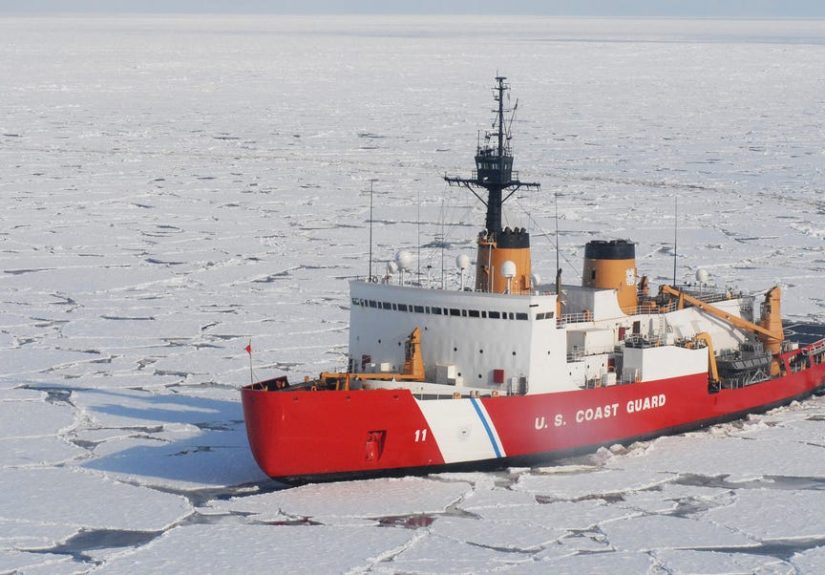
Polar Sea (WAGB-11) was built to do what normal ships can’t: push into thick ice, keep moving, and open pathways for science and logistics
in some of the harshest conditions on Earth.
Polar Sea’s résumé is the kind that makes other vessels quietly adjust their collars. It supported major U.S. polar missions, performed heavy icebreaking
work, and built a reputation for brute endurance. In its prime, it wasn’t just “an icebreaker”it was a moving piece of national infrastructure.
A ship like that becomes a floating symbol: of capability, of presence, and of “we can handle this.”
What made Polar Sea iconic (besides being 399 feet of stubborn)
- Built for extreme environments: engineered to operate in polar conditions where failure isn’t inconvenientit’s dangerous.
- Heavy icebreaking performance: designed to break thick ice and keep channels open for other vessels.
- Historic missions: helped sustain U.S. operations and scientific work in polar regions.
- Legend status: the kind of ship sailors tell stories about without needing to exaggerate (much).
There’s also something uniquely American about Polar Sea’s legacy. It represents a period when the United States could credibly claim “polar reach”
because it had the hardware to match the words. That matters now, because the Arctic is not a “someday” place anymore. It’s a “this year” place.
So why won’t Polar Sea be part of the next Arctic push?
The short version: ships age, systems fail, and the ocean does not care about nostalgia.
Polar Sea suffered a major engine casualty and became unavailable for operations. Over time, it moved into inactive status. Even more telling: key
equipment was transferred from Polar Sea to help keep its sister ship, Polar Star, operational. In plain English, Polar Sea became a donor
so another ship could keep working. That is not the kind of thing that happens when a vessel is on the brink of a triumphant comeback tour.
Could the U.S. rebuild or fully reactivate Polar Sea? In theory, ambitious projects happen all the time. In reality, reactivating a complex, aging
icebreaker is a money-and-time black hole. Replacement parts aren’t always commercially available. Systems may require extensive modernization.
And the Coast Guard’s operational needs don’t pause while a ship spends years in an industrial makeover montage.
This is the emotional core of the headline: Polar Sea is iconic precisely because it did so muchyet that past greatness doesn’t automatically convert
into future capability. Arctic dreams need ships that can sail, not ships that can only star in a documentary.
The U.S. “dream” in the Arctic isn’t romanceit’s missions
Let’s translate “dreams in the Arctic” into what it actually means on the water. Icebreakers aren’t trophy ships. They are working tools that enable:
1) Presence and sovereignty
Being present isn’t just symbolic. It’s the difference between responding to an incident in days versus “we’ll get there when the ice politely moves.”
Persistent operations help the U.S. monitor activity, support communities, and uphold rules and norms in waters that are getting busier.
2) Search and rescue (and plain old safety)
As maritime activity increases, so do emergencies. The Arctic is not forgiving. Distances are huge. Weather changes fast. Infrastructure is limited.
If a vessel gets in trouble, response capability can mean everything.
3) Science and environmental response
Research in the Arctic isn’t a luxuryit’s how we understand a changing region that influences global weather patterns, ecosystems, and economies.
Icebreakers can support scientific work and, when needed, help respond to spills or other environmental threats in remote areas.
4) National security and deterrence
The Department of Defense has described the Arctic as a strategically important region undergoing rapid geophysical and geopolitical change.
The approach emphasizes awareness, cooperation with allies and partners, and tailored presencegoals that are a lot more practical if the U.S. can
operate reliably in ice-affected waters.
The stopgap era: keeping capability alive with Polar Star, Healy, and a new “Storis”
When a country has more Arctic responsibilities than Arctic-ready hulls, it starts doing something very American: making it work with what it has.
That has meant leaning heavily on a small polar fleet while trying to build the next one.
Polar Star has carried an enormous share of heavy icebreaking duties for years, even as age makes maintenance harder and breakdowns more likely.
In official discussions, the fragility of aging systems is not theoreticalequipment failures and the challenge of sourcing parts are real constraints.
Polar Sea’s cannibalization to support Polar Star underscores how tight the margin has been.
Meanwhile, Healy provides medium icebreaking capability and supports research and operations, but the overall fleet size is still small
relative to the mission set.
Enter: a commercially available icebreaker, reborn as USCGC Storis
In late 2024, the Coast Guard accepted ownership of the commercial polar vessel Aiviq, describing it as a polar class 3-equivalent icebreaker.
The plan: bring it into Coast Guard service as USCGC Storis (WAGB 21)a name that nods to the original Storis and its long Arctic history.
The Coast Guard’s messaging was clear: this acquisition is meant to enhance operational presence in the Arctic while the service awaits delivery of
newly built Polar Security Cutters. In 2025, the renamed Storis departed on a maiden voyage to safeguard U.S. sovereign interests and conduct missions,
and later the Coast Guard commissioned Storis into service, noting a hybrid crewing model and plans tied to Juneau homeport infrastructure.
Think of Storis as a practical bridge: not a forever solution, but a way to reduce the gap between “we need more icebreakers” and “shipbuilding takes time.”
Building the future: Polar Security Cutters, Arctic Security Cutters, and the ICE Pact
The long-term plan centers on new constructionespecially the Polar Security Cutter (PSC) program. These are intended to be heavy,
multi-mission icebreakers that restore true U.S. polar reach.
The challenge is that building large, modern icebreakers is complex, expensive, and slowespecially in an industrial environment that hasn’t produced
these ships at scale in decades. Oversight bodies have emphasized that starting construction with an immature design can lead to rework, delays, and cost growth.
More recent analyses have highlighted rising cost estimates for the first three PSCs compared with earlier baselines.
That’s also why the U.S. has leaned into collaboration. In mid-2024, the United States, Canada, and Finland announced the ICE Pact
(Icebreaker Collaboration Effort), aiming to share expertise and strengthen shipbuilding capacity across like-minded partners.
The logic is straightforward: if the Arctic is getting busier, the West needs more ice-capable shipsand it needs them sooner than “eventually.”
By 2025, Arctic shipbuilding urgency showed up at the highest political level. A White House fact sheet described a presidential memorandum authorizing
construction of up to four Arctic Security Cutters abroad as a national security necessity, alongside a plan to on-shore expertise for
future construction in the United States. Whether you love or hate that idea, it signals the same reality: the icebreaker gap is now considered urgent.
What it means when an icon stays behind
Polar Sea’s absence from the next phase isn’t just a ship storyit’s a strategy story. It illustrates how quickly capability can shrink when a fleet ages
and replacements don’t arrive in time. An iconic ship becoming a parts source is not a victory lap; it’s a warning light.
But it’s also a pivot point. The U.S. is actively stitching together a new Arctic posture: extending aging ships, acquiring interim capability, investing in
new construction, and partnering with allies. That combination is what “dreams in the Arctic” look like in real life: budgets, shipyards, crews, training,
maintenance schedules, and a lot of engineering meetings where nobody says “romance” even once.
Conclusion: the dream survives, but it needs new steel
The Polar Sea will always be a legendan era-defining icebreaker that proved the United States could operate at the top of the world and the bottom of it, too.
But legends don’t break ice. Operational ships do.
America’s Arctic future is being built in a mix of shipyards, policy rooms, and partnerships. The new Storis helps narrow the gap. The Polar Security Cutter program
aims to restore heavy capability. The ICE Pact and Arctic Security Cutter decisions reflect a sense of urgency that wasn’t always there. And through it all,
Polar Sea stands as the reminder: if you wait too long to replace icons, you don’t just lose a shipyou lose time, options, and presence.
Experiences from the ice : when “Arctic dreams” become a day-to-day reality
Most people imagine Arctic operations as a postcard: a white horizon, a heroic ship, and maybe a dramatic music swell. The real experience is more
sensory, more practical, andoddlymore human. Everything is louder, slower, and more intentional.
Start with the motion. In open water, ships glide. In ice, ships negotiate. You feel the hull vibrate when it meets resistance, the way a car
shudders on gravelexcept the gravel is frozen ocean and the stakes are higher. Even when an icebreaker is built for the job, the ice still “talks back.”
Crews learn the rhythm: push, pause, back and ram when needed, then push again. It’s work, not magic.
Then there’s the psychology of distance. In the Arctic, a “nearby” asset might still be hundreds of miles away. Communications matter. Reliability matters.
When the Coast Guard describes upgrading communications and defensive capabilities on a ship like Storis, that’s not bureaucratic fluffit’s acknowledging
that you operate differently when help isn’t around the corner. A ship becomes its own small city: power generation, water systems, medical readiness,
spare parts, trained hands, and procedures for problems you’d never tolerate in warmer, busier waters.
Accounts from polar operations also remind you that nature doesn’t always follow the rulebook. One famous example from Polar Sea’s operational history is
encountering “rubber ice,” a strange, stubborn condition that behaved unlike the dense ice the ship was designed to smash through. The description offered
by someone aboard compared it to striking a pillow with a hammerstrong effort, unexpectedly little progress. That’s a perfect Arctic lesson:
you can have a powerful ship and still meet conditions that force humility and patience.
Life onboard is a blend of routine and awe. Routine: watch schedules, maintenance, drills, meals that arrive whether or not the weather is cooperating.
Awe: light that behaves differently (long days in summer, long darkness in winter), sea smoke curling off the water, pressure ridges that look like the
ocean tried to build its own mountain range overnight. If you’re a scientist on board, your “commute” to data collection might involve stepping onto a
deck where the wind feels sharp enough to have opinions. If you’re crew, you learn that small taskssecuring equipment, clearing ice, monitoring systems
become critical because mistakes compound quickly in remote environments.
There’s also a particular feeling when a ship is both a symbol and a tool. For decades, Polar Sea represented a kind of certainty: the U.S. could go
where it needed to go in ice. When an icon like that moves into inactive status and becomes a parts source, crews and planners don’t just lose a hull;
they lose a margin of confidence. That’s why the arrival of Storis matters emotionally as well as operationally. It’s a tangible sign of momentumsomething
that can sail now, train people now, and show up where presence matters.
The most honest “Arctic dream,” then, isn’t cinematic. It’s competence. It’s having enough ships that one breakdown doesn’t become a national drama.
It’s being able to respond quickly to an emergency, support research, and operate alongside allies without crossing your fingers every season. For anyone
who has worked in polar conditionsmariners, scientists, logisticiansthe dream is simple: the ship starts, the systems hold, the crew is ready,
and the country can do the job safely. That’s the Arctic experience in a sentence: beautiful, demanding, and completely uninterested in your excuses.