Table of Contents >> Show >> Hide
- Quick Jump
- Why Your Chest Looks Uneven
- 60-Second Self-Check: Muscle Imbalance or Something Else?
- The Fix Plan: What Actually Works
- Best Exercises to Even Out Your Pecs
- 1) Single-arm cable chest press
- 2) Single-arm cable fly (low-to-high or midline fly)
- 3) Dumbbell bench press (with a strict tempo)
- 4) Single-arm dumbbell bench press (anti-rotation press)
- 5) Dumbbell floor press
- 6) Push-up variations (tempo + pauses)
- 7) Upper-back essentials (don’t skip these)
- 8) Mobility finishers (2–5 minutes)
- Sample 6–8 Week Program to Fix Uneven Chest & Pecs
- Common Mistakes That Keep Your Chest Uneven
- When It Might Not Be “Just Muscle”
- How Long It Takes (Realistic Expectations)
- Experiences & Real-World Lessons: What People Learn While Fixing Uneven Pecs
- The “I swear I’m even” phase (and why video is humbling)
- The “my weak side is actually… uncoordinated” realization
- The “dumbbells fixed what barbells hid” moment
- The posture plot twist: back training becomes the chest solution
- The patience lesson: symmetry moves at “boring speed,” then suddenly looks obvious
- Wrap-Up
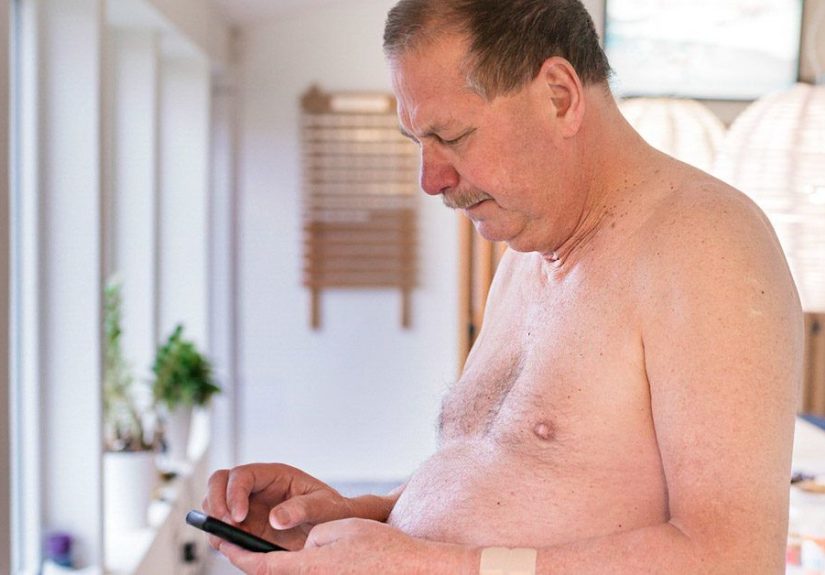
If one pec looks like it’s been putting in overtime while the other is still “working remotely,” you’re not alone. Mild chest asymmetry is normal (humans are not photocopiers), but a noticeable uneven chest can be frustratingespecially when your shirt insists on highlighting it.
The good news: if the issue is mostly muscle, strength, and technique, you can make real progress with smarter training. The important caveat: sometimes “uneven pecs” isn’t a training problem at allit can be posture, ribcage shape, spine alignment, or a medical condition. This guide covers both: how to fix uneven chest muscles in the gym, and how to recognize when you should get a pro involved.
Why Your Chest Looks Uneven
“Uneven chest” usually comes from one (or a combo) of these buckets:
1) Dominant-side strength + sneaky compensation
Your stronger side often takes over on bilateral pressesespecially barbellsbecause the bar moves as a single unit. Even if you think you’re pressing evenly, your body can subtly shift, rotate, or recruit different muscles to keep the rep moving. Over time, the strong side keeps winning and the gap stays (or grows).
2) Technique that turns chest day into “shoulders and triceps day”
If your shoulder blades aren’t controlled (think: stable shoulder position and smooth movement), your pressing can drift into patterns where one side loads differentlyoften because the scapulae aren’t doing the same job on both sides. Posture, upper-back strength, and shoulder mobility all influence this.
3) Mobility restrictions and posture
Tight pecs, stiff thoracic spine (upper back), or a cranky shoulder can limit range of motion on one side. The result: one pec gets a big, clean stretch and contraction… the other gets a weird half-rep. Over months, “half-rep pec” looks like it trains half as well. Rude, but predictable.
4) Different ribcage, spine, or chest wall shape
Sometimes the “imbalance” is the structure underneath the muscle: scoliosis can create rib prominence and uneven shoulders; chest wall differences (like pectus excavatum/carinatum) can change how your chest looks even if your pec strength is similar. In rarer cases, congenital conditions can affect pec development on one side.
5) Soft tissue differences (fat distribution, gland tissue)
If one side looks fuller around the nipple/areola area, it may not be muscleespecially if there’s tenderness, a lump, swelling, or nipple discharge. That’s a “talk to a clinician” situation, not a “do more cable flyes” situation.
60-Second Self-Check: Muscle Imbalance or Something Else?
Try these quick checks before you overhaul your training.
A) The mirror + posture check (30 seconds)
- Stand relaxed. Do your shoulders sit at different heights?
- Do you naturally rotate your torso slightly?
- Does one shoulder blade “wing” or pop out more?
If your shoulders/torso look uneven at rest, it’s often posture, upper-back control, or spinal/ribcage factorsnot just pec size.
B) The push-up test (30 seconds)
- Do 8–12 slow push-ups in front of a phone camera.
- Watch for shifting to one side, one elbow flaring more, or one shoulder hiking up.
If you shift or twist, your “uneven chest” may be a stability/coordination issue. That’s fixablejust not by going heavier.
C) The unilateral strength snapshot (optional)
Do a single-arm dumbbell bench press or single-arm cable press with a weight you can control for 10 reps. If one side is clearly weaker (or shakier), congrats: you found a training lever you can pull.
The Fix Plan: What Actually Works
Fixing uneven pecs is mostly boring consistency + smart constraints. Here’s the approach that works for most lifters:
Step 1: Clean up your pressing setup
- Set your shoulders: think “shoulder blades back and down,” then keep them stable while you press.
- Match your hand position: use markings on the bar or mirror your grip width precisely.
- Slow down the lowering phase: a controlled eccentric (3 seconds down) exposes asymmetry fast.
- Film a few sets: your brain lies; video doesn’t.
Step 2: Use unilateral work to force fairness
Unilateral training (single-arm pressing/flyes) prevents the strong side from stealing reps. It also helps you feel the weaker side better and build control. Think of it as training wheels for symmetryexcept you’ll still look cool.
A practical rule: start with your weaker side, choose loads that the weaker side can do cleanly, then match reps with the stronger side. Don’t let the strong side “add a few bonus reps,” because that’s how imbalances stay alive.
Step 3: Train your upper back like it’s part of chest day (because it is)
Your pecs attach to a shoulder complex that needs stable scapulae and strong mid-back muscles. More rows, face pulls, and controlled scapular work often improves pressing symmetry faster than adding yet another chest finisher.
Step 4: Add pec mobility and thoracic extension
If one side is tight, it can’t hit the same range of motion. Add simple chest stretches and upper-back mobility between sets or after workouts. You’re not doing yoga; you’re giving your pecs a fair shot at growing evenly.
Step 5: Track the right metrics
- Strength difference between sides (single-arm press/cable press)
- Quality of reps (less twisting/shifting)
- Pump and soreness distribution (both pecs feel worked)
- Photos every 2–4 weeks (same lighting, same pose)
Best Exercises to Even Out Your Pecs
These moves are favorites for correcting uneven chest muscles because they improve control, range of motion, and side-to-side equality.
1) Single-arm cable chest press
Cables keep constant tension and let you line up the press perfectly. Brace your core so you don’t rotate. Press slightly “in and up” (not straight out like you’re pushing a shopping cart with one wheel stuck).
2) Single-arm cable fly (low-to-high or midline fly)
Great for building a clean contraction and matching the same path each rep. Use a slow tempo and pause briefly when your hand crosses midline. If your shoulder rolls forward, reduce weight and re-own the movement.
3) Dumbbell bench press (with a strict tempo)
Dumbbells don’t allow your strong side to drag the bar. Keep your wrists stacked, elbows controlled, and lower evenly. A 3-second descent plus a short pause at the bottom is a symmetry cheat code.
4) Single-arm dumbbell bench press (anti-rotation press)
This is sneaky-hard. Your core must prevent twisting while your pec does the work. Start light and focus on stability. If you rotate, you’re training “twist press,” not chest.
5) Dumbbell floor press
The floor limits shoulder extension, which can help if one side gets cranky at the bottom of a bench press. It’s also easier to keep both sides moving evenly.
6) Push-up variations (tempo + pauses)
- Tempo push-ups: 3 seconds down, 1 second pause, press up smoothly.
- Hands-elevated push-ups: easier to control if you shift.
- Uneven hand position push-ups (advanced): one hand on a low step to bias the weaker sideonly if your form stays clean.
7) Upper-back essentials (don’t skip these)
- Chest-supported row (keeps cheating low)
- One-arm cable row (match scapular movement side-to-side)
- Face pulls (control the shoulder blades)
- Band pull-aparts (easy volume for posture)
8) Mobility finishers (2–5 minutes)
- Doorway pec stretch (both sides, but emphasize the tighter side)
- Towel chest stretch
- Thoracic extension over a foam roller (gentle, controlled)
Sample 6–8 Week Program to Fix Uneven Chest & Pecs
Run this 2 days per week (with at least 48 hours between). Keep everything smooth, controlled, and symmetrical. Add weight only when the weaker side owns the reps.
Day A: Unilateral priority
- Single-arm cable chest press – 3 sets x 8–12 each side (start weak side)
- Single-arm cable fly – 3 sets x 10–15 each side (2-second squeeze)
- Tempo dumbbell bench press – 3 sets x 6–10 (3 seconds down)
- Chest-supported row – 4 sets x 8–12
- Face pulls – 3 sets x 12–20
Day B: Stability + volume
- Single-arm dumbbell bench press – 3 sets x 8–10 each side (light-to-moderate)
- Dumbbell floor press – 3 sets x 8–12
- Push-ups (tempo) – 2–3 sets near technical failure (stop before form breaks)
- One-arm cable row – 3 sets x 10–12 each side
- Band pull-aparts – 2 sets x 20–30
Progression rules (simple and effective)
- Increase load by the smallest increment only if the weaker side hits the top of the rep range with clean form.
- Match reps on both sidesalways.
- If one side fails early, rest 15–25 seconds and finish the remaining reps on that side, then match on the strong side.
Common Mistakes That Keep Your Chest Uneven
Going heavier instead of going cleaner
If you chase PRs while your reps are twisting like a pretzel, your strong side is getting a growth stimulus and your weak side is getting… a front-row seat.
Letting barbells do all the work
Barbells are great, but they can hide imbalances. If your goal is symmetry, keep barbell work in the mixjust not as the only tool.
Ignoring the upper back
If your shoulder blades don’t move and stabilize well, your pressing path changesand your pec activation changes with it. Rows and scapular control aren’t “extra.” They’re part of the fix.
Uneven setup habits
One foot tucked back, one shoulder shrugged, one hand slightly wider… it adds up. Build a consistent setup ritual and stick to it.
When It Might Not Be “Just Muscle”
Training can improve muscle-based asymmetry, posture, and movement control. But it won’t “lift” a ribcage, straighten a spine, or resolve a medical issue on its own. Consider checking in with a qualified healthcare professional if you notice any of the following:
Medical red flags (don’t ignore these)
- A hard or firm lump, swelling, or persistent tenderness
- Nipple discharge
- Rapid change in size on one side
- Breathing issues, chest pain, or worsening chest wall shape over time
Structural causes that can affect chest symmetry
- Pectus excavatum/carinatum: chest wall shape differences can change appearance and sometimes relate to symptoms.
- Scoliosis: can cause uneven shoulders and rib prominence, which can make the chest look uneven.
- Poland syndrome (rare): congenital underdevelopment/absence of part of the pectoralis major on one side.
- Gynecomastia: gland tissue changes can appear as uneven chest fullness.
If you suspect a structural issue, the best move is an evaluation (primary care, sports medicine, physical therapist, or specialist as appropriate). Even if it turns out to be “nothing scary,” you’ll get clarityand a better plan.
How Long It Takes (Realistic Expectations)
If your uneven chest is mainly muscle and technique, most people notice better symmetry in strength and control within 4–8 weeks, and visible changes in 8–16 weeksdepending on training age, consistency, nutrition, sleep, and how big the original gap was.
Structural asymmetry (ribcage/spine/chest wall shape) may improve in appearance with posture and muscle development, but it may not disappear completelyand that’s normal. The goal is a stronger, healthier, more balanced you… not a perfectly mirrored anatomy poster.
Experiences & Real-World Lessons: What People Learn While Fixing Uneven Pecs
Here’s the part nobody wants to hear: fixing an uneven chest is usually less about discovering a secret “one weird exercise” and more about rebuilding habits you didn’t realize were lopsided. In coaching circles and among experienced lifters, the same themes show up again and again. If you’ve been frustrated by uneven pecs, these lessons can save you months of spinning your wheels.
The “I swear I’m even” phase (and why video is humbling)
Many lifters feel 100% symmetrical while pressinguntil they film a set and watch the bar drift, the torso rotate, or one shoulder creep upward. It’s not that you’re doing it “wrong” on purpose. Your nervous system is just extremely good at finding a way to finish the rep. The camera is the brutally honest training partner you didn’t ask for, but absolutely need. People who fix uneven chest fastest usually start filming early, then make tiny corrections (hand width, foot position, shoulder setup) that add up fast.
The “my weak side is actually… uncoordinated” realization
A common surprise: the weaker pec isn’t always dramatically weakerit’s often less coordinated. On unilateral cable presses, some people can lift a similar weight on both sides, but the weaker side shakes, loses its path, or can’t hold a squeeze. That’s not a character flaw; it’s a motor-control issue. The fix tends to be lighter loads, slower reps, and more pauses. Once the weak side learns the movement and stabilizes better, strength usually climbs on its own.
The “dumbbells fixed what barbells hid” moment
Lifters often report that switching to dumbbells (and especially single-arm work) finally forces both pecs to participate. With a barbell, the strong side can quietly “do more” without setting off alarms. With dumbbells, the strong side can’t drag the weak side along. The first few weeks can feel oddly ego-bruisingweights drop, reps slow down, and suddenly you’re doing “the basics.” But that’s usually where the symmetry progress starts: honest reps, matched range of motion, and fewer compensation patterns.
The posture plot twist: back training becomes the chest solution
Another real-world pattern: people chase chest symmetry by adding more chest volume, but the breakthrough comes after they build the upper back. Once rows, face pulls, and scapular control improve, the pressing groove becomes cleaner. Better scapular positioning often makes both pecs feel the work more evenlylike you finally found the light switch for the “sleepy” side. Many lifters describe this as the moment chest training stops feeling like a shoulder stress-test and starts feeling like actual pec training.
The patience lesson: symmetry moves at “boring speed,” then suddenly looks obvious
Progress tends to be sneaky. For weeks, you might only notice small wins: less shifting on push-ups, smoother lockouts, a more even pump. Then one day you put on a fitted shirt and realize the imbalance is noticeably reduced. That’s normal hypertrophy realitysmall changes compound until they become visible. People who stick to a simple plan (unilateral priority, matched reps, good form, consistent nutrition) usually win, even without fancy programming.
Bottom line from the trenches: your best “experience-based” strategy is to make symmetry non-negotiable. Start with the weaker side. Match reps. Use unilateral tools. Film your form. Train your upper back. Do it for 6–12 weeks without drama, and most muscle-based uneven pecs improve more than you’d expect.
Wrap-Up
To fix an uneven chest, you don’t need a mystical pec-growing ritual under a full moon. You need a fair training setup, unilateral exercises that prevent cheating, better scapular control, and enough time for the weaker side to catch up.
If the asymmetry comes with red flags (lumps, discharge, pain, rapid changes) or seems driven by chest wall/spine structure, get evaluatedbecause the smartest training plan starts with the right diagnosis.
Train smart, stay consistent, and remember: your pecs don’t have to match perfectly to look strong. They just need to stop acting like roommates who split rent unevenly.