Table of Contents >> Show >> Hide
- Why Edelman Fossil Park Matters So Much
- The Fifth Mass Extinction, Explained Without the Textbook Snooze
- What Scientists Are Finding in New Jersey
- From Asteroid Impact to Impact Winter
- Why This Fossil Park Is Also About the Future
- The Bigger Scientific Takeaway
- Experience the Story: What This Discovery Feels Like Up Close
- Conclusion
Sometimes the biggest stories in Earth history are hiding in the least glamorous places. Not atop a remote mountain. Not at the bottom of some impossible jungle ravine. But in southern New Jersey, in a former marl quarry that spent years looking more like a dusty hole in the ground than a portal to the apocalypse. And yet that is exactly what Edelman Fossil Park has become: one of the most compelling windows into the fifth mass extinction event, the catastrophe that ended the age of dinosaurs roughly 66 million years ago.
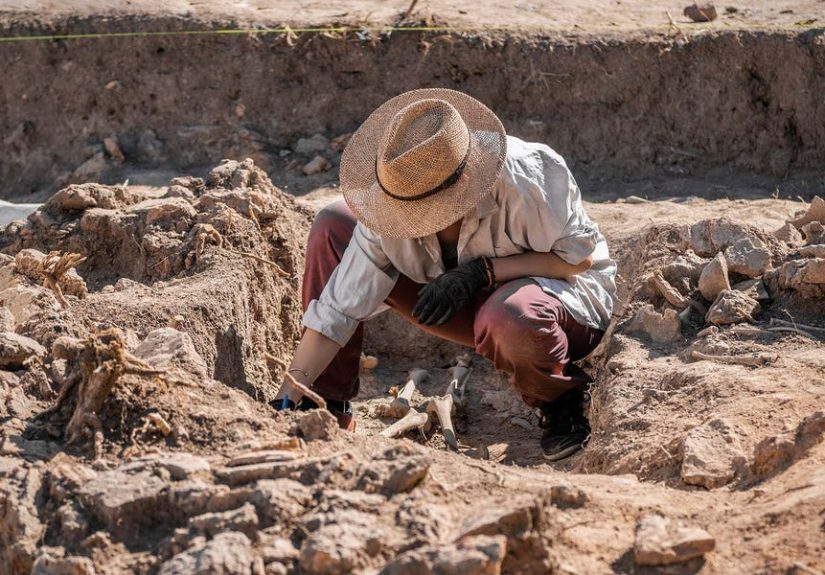
The site, now paired with the Jean & Ric Edelman Fossil Park & Museum of Rowan University, is far more than a fun place to dig up shark teeth and make children yell, “I found something weird!” It is an active scientific treasure chest. Researchers working there have uncovered more than 100,000 fossils representing over 100 species, from giant mosasaurs and marine crocodiles to sea turtles, fish, invertebrates, and prehistoric shark remains. That sheer quantity matters. But what matters even more is where many of those fossils sit: in and around the extinction layer tied to the Cretaceous-Paleogene, or K–Pg, mass extinction.
In plain English, Edelman Fossil Park is helping scientists piece together what happened when an asteroid slammed into Earth, darkened skies, disrupted climate, collapsed food webs, and wiped out roughly three-quarters of species. That is not just ancient drama. It is also a warning label for our own era, because mass extinction stories are never really only about the past.
Why Edelman Fossil Park Matters So Much
Paleontologists have studied the dinosaur extinction for decades, and the broad outline is well established. A massive asteroid struck near what is now the Yucatán Peninsula in Mexico, forming the Chicxulub crater and triggering an environmental chain reaction so severe that ecosystems on land and in the sea buckled. Fine dust, sulfur-rich aerosols, soot, and debris helped block sunlight. Photosynthesis faltered. Temperatures plunged during an “impact winter.” Food chains snapped like cheap lawn chairs at a family barbecue.
What makes Edelman Fossil Park so exciting is that it appears to preserve an unusually vivid local record of that global disaster. This is not merely a site with “dinosaur-era fossils.” It is a place where scientists can study the ecological boundary itself: the before, the impact signal, and the aftermath. That is the paleontology equivalent of finding a security camera pointed directly at one of Earth’s worst days.
The fossil bed in Mantua Township sits within a former marl quarry, and that geology is part of the magic. At the end of the Cretaceous, this region was tied to a coastal ecosystem where marine and terrestrial life could end up recorded together. That means the site does not only tell us what existed before the extinction. It helps show how death, transport, burial, chemistry, and survival intersected in the immediate wake of the impact.
Researchers at the park have also identified iridium, a metal strongly associated with asteroid impact evidence at the K–Pg boundary worldwide. Combined with the fossil concentration, sediment record, and broader geologic context, that gives the site unusual scientific power. In a field where context is everything, Edelman Fossil Park has context for days.
The Fifth Mass Extinction, Explained Without the Textbook Snooze
The K–Pg extinction, once often called the K–T extinction, marks the boundary between the Cretaceous and Paleogene periods. It is widely known as the event that killed off the non-avian dinosaurs, but dinosaurs were far from the only victims. Many marine reptiles vanished. Ammonites disappeared. Numerous plant groups were hit hard. Ocean ecosystems were battered. Life did survive, of course, but survival was uneven and brutally selective.
The asteroid itself was enormous, and the impact happened in what scientists sometimes describe as a tragically perfect location for maximum environmental damage. It struck rocks rich in sulfur and other materials capable of lofting climate-altering compounds high into the atmosphere. The result was not simply a big explosion. It was a planet-scale systems failure.
Models and geologic evidence suggest that after the impact, Earth experienced darkness, cooling, fires, acidifying conditions, and a sharp reduction in plant productivity. If you were a large animal needing lots of food every day, this was a terrible time to be alive. If you were small, adaptable, able to burrow, fly, eat seeds, scavenge, or hang on in freshwater systems, your odds improved. Evolution can be majestic, but it is also extremely rude.
That is why scientists care so much about high-resolution fossil sites. The extinction story is not just “asteroid hits, dinosaurs gone.” It is about sequence. How fast did temperatures change? Which habitats failed first? Which organisms disappeared immediately, and which lingered? How were carcasses transported? How did marine and terrestrial losses differ? When did recovery begin? Edelman Fossil Park contributes clues to those questions because it preserves the event in a more detailed ecological setting than many sites can offer.
What Scientists Are Finding in New Jersey
One of the most remarkable features of the Mantua fossil bed is the abundance and diversity of the fossils. Giant marine predators share the record with smaller organisms, and that variety helps scientists reconstruct a real ecosystem instead of a greatest-hits album. The presence of bus-length mosasaurs, marine crocodiles, sea turtles, fish, shark teeth, shells, and small invertebrates makes it possible to track who was living there, who died there, and how the site captured a moment of upheaval.
Kenneth Lacovara and other researchers connected to Rowan University have described the quarry as one of the best windows into the pivotal moment when the asteroid impact ended the dinosaur-dominated world and opened the door to the modern one. That is a bold statement, but it is grounded in the site’s unusual combination of fossil richness, extinction-layer relevance, and public accessibility.
In practical terms, the site offers three major advantages. First, the fossil concentration is huge. Second, the sediments preserve evidence tied to the extinction boundary rather than to some vague “around then” timeline. Third, the ecosystem represented there sits near the interface of sea and land, allowing for a fuller picture of environmental disruption. When a scientist can compare fossils, sediments, and geochemistry in one place, the story becomes much sharper.
There is also something refreshingly dramatic about the idea that one of the world’s most important extinction sites sits in suburban New Jersey. It sounds almost like a prank by the fossil gods. But science loves surprises, and this one is a good reminder that extraordinary evidence is not always found in extraordinary-looking places.
From Asteroid Impact to Impact Winter
If the word “extinction” sounds slow and abstract, Edelman Fossil Park helps make it feel horribly real. The impact itself was sudden. The consequences unfolded across minutes, hours, days, years, and longer. Seismic shock raced across the continent. Tsunamis and coastal surges reworked sediments and ecosystems. Heat pulses may have turned surface conditions lethal over wide areas. Then came the longer nightmare: blocked sunlight, collapsing photosynthesis, cooling, and food-web failure.
This is where the site’s clues matter. Fossils and sediments do not just prove that animals died. They help show how the environment changed around them. Researchers want to know whether the local bonebed reflects rapid burial after waves or surges, whether marine animals were displaced, whether terrestrial remains were transported, and how the chemistry lines up with global impact evidence.
Broader research from other sites and climate models supports the idea of a harsh impact winter. Some studies suggest land temperatures crashed dramatically and precipitation plummeted. Photosynthesis slowed or stopped in many places because sunlight was blocked. That kind of stress would have been devastating for animals at the top of food chains. No plants, no herbivores. No herbivores, no giant predators. Nature does not negotiate with missing lunch.
Yet the story after the impact was not purely one of loss. New research suggests that some marine systems may have begun recovering faster than previously thought, even though full ecological recovery took far longer. In other words, the asteroid ended a world, but it also cleared evolutionary space for another one. Birds survived. Mammals diversified. Flowering plants expanded in many regions. Modern rainforests, according to Smithsonian-led research, were shaped in part by this catastrophe.
Why This Fossil Park Is Also About the Future
Edelman Fossil Park does not present extinction as a sealed-off ancient tragedy with a neat gift-shop ending. Its mission, “discover the past, protect the future,” makes the larger point impossible to miss. The fifth mass extinction was caused by a natural catastrophe. Our biodiversity crisis is being driven by us. Different trigger, same terrifying theme: climate disruption, ecological instability, and survival pressure on living systems.
That is one reason the museum and research site have attracted so much attention. The story of the dinosaurs is a crowd-pleaser, sure. But the deeper lesson is about planetary fragility. If a sudden atmospheric shock could destabilize life 66 million years ago, we should not act shocked that rapid warming, habitat destruction, and biodiversity loss can destabilize life now.
The museum’s design and educational programming reflect that point. It is not just a shrine to giant reptiles. It is built to connect deep time to modern environmental choices. The setting, the architecture, and the interpretation are all trying to say the quiet part out loud: extinction is not only a fossil word.
That framing gives the site unusual cultural power. Many fossil museums tell visitors what happened. Edelman Fossil Park also asks what we plan to do with the knowledge. That question lingers longer than the mosasaur skeletons, and that is saying something because bus-length marine reptiles are not exactly subtle.
The Bigger Scientific Takeaway
So what exactly has Edelman Fossil Park uncovered? Not a single magical “aha” fossil that solves everything in one cinematic reveal. Science is usually less treasure map, more careful spreadsheet. What the site has uncovered is better: a dense, layered archive of evidence from one of the most consequential transitions in Earth history.
It is helping researchers refine the timing, ecology, and physical consequences of the K–Pg extinction. It is providing a rare look at how local fossil ecosystems recorded a global disaster. It is reinforcing the central role of the Chicxulub impact while offering new clues about what happened in the hours and years that followed. And it is doing all of that in a place where public visitors can stand close to real science rather than just reading about it after the fact.
That combination is rare. World-class paleontology, active excavation, extinction-layer relevance, public engagement, and an environmental message that does not feel bolted on as an afterthought. Edelman Fossil Park is not simply retelling the story of the fifth mass extinction. It is actively sharpening the details of that story.
Which means this former New Jersey quarry has become something extraordinary: a place where the end of one world can help another world think a little harder about how not to lose its own.
Experience the Story: What This Discovery Feels Like Up Close
Reading about the fifth mass extinction in a science article is one thing. Standing at a site connected to it is something else entirely. The experience tied to Edelman Fossil Park is powerful because it compresses scale in a way your brain does not quite expect. One moment you are looking at a fossil shark tooth in your palm, and the next you are thinking about global darkness, collapsed food webs, and an asteroid that changed life forever. That is a weird emotional jump, but it is exactly what makes the place memorable.
The first striking feeling is disbelief. New Jersey? Really? The suburbs do not exactly advertise themselves as the front line of ancient planetary disaster. But that contrast is part of the magic. It reminds visitors that Earth’s most dramatic chapters are often buried under the landscapes we take for granted. Parking lots, shopping centers, roads, neighborhoods, and then suddenly: mosasaurs, extinction layers, and the end of the Cretaceous. It is humbling in the best possible way.
Then comes curiosity. Fossils are wonderfully sneaky objects. They look small, quiet, and harmless, but they immediately force enormous questions. What kind of animal was this? What did it eat? Was it alive before the asteroid hit? Did it die instantly, or later, when the climate collapsed? Was it swept into the deposit by waves or buried where it lived? Every fossil acts like a tiny invitation to think bigger.
The emotional high point for many visitors is the realization that science here is not locked behind glass. This is not just a place where people point at old bones and say “neat.” It is a place where researchers are still learning, still testing, still revising, still asking. That makes the experience feel alive. You are not just consuming a finished story. You are brushing up against the process of discovery itself.
There is also an unexpectedly serious layer to the visit. Once the extinction story clicks, it stops feeling like a dinosaur tale and starts feeling like an environmental lesson written in stone. The asteroid caused a sudden climate shock. We are causing a different kind of climate shock now. That parallel does not drain the fun from the experience, but it adds weight to it. You leave entertained, yes, but also just a little less cocky about humanity’s place in the timeline.
In that sense, the most lasting experience connected to “Edelman Fossil Park Uncovers Clues to Fifth Mass Extinction Event” is not simply awe. It is perspective. The site makes deep time feel personal. It lets visitors touch evidence from a vanished world while quietly asking them to think about the one they are still lucky enough to inhabit. And that is what great science experiences do. They do not just tell you something amazing happened. They make you feel the stakes of knowing it.
Conclusion
Edelman Fossil Park is proving that the fifth mass extinction was not just a single violent moment, but a layered ecological crisis preserved in rock, chemistry, and bone. By uncovering fossils from a remarkably rich New Jersey quarry tied to the K–Pg boundary, researchers are gaining sharper insight into how the asteroid impact transformed climate, ecosystems, and the future of life on Earth. Even better, the site brings the public into that story, turning abstract deep-time science into something vivid, urgent, and surprisingly relevant. The dinosaurs may be gone, but the lesson they left behind is very much alive.