
Table of Contents >> Show >> Hide
- Who Is Evan Doorbell?
- What Makes Evan Doorbell’s Phone Tapes Special?
- The Analog Telephone Network: A Machine You Could Hear
- Phone Phreaking as History, Not a How-To Manual
- Why Telephone Sounds Became Collectible
- The Role of Telephone World and Digital Preservation
- Why Modern Listeners Still Love the Tapes
- Specific Examples of What the Archive Reveals
- The Cultural Value of Evan Doorbell’s Telephone World
- Listening Experience: What It Feels Like to Enter Evan Doorbell’s World
- Conclusion
Before smartphones became shiny rectangles of infinite distraction, the telephone network was a living, clicking, buzzing, whirring machine. It had moods. It had regional accents. It coughed, hummed, rang, clunked, chirped, and sometimes sounded like a robot trying to swallow a typewriter. Few people captured that disappearing world as lovingly as Evan Doorbell, a legendary telephone enthusiast and former phone phreak whose recordings preserve the analog soundscape of the Bell System era.
“Evan Doorbell’s Telephone World” is not just a nostalgic rabbit hole for people who miss rotary dials. It is a remarkable audio archive of how America’s telephone network worked during the 1970s and early 1980s, when electromechanical switching systems still routed calls through physical relays, selectors, crossbars, trunks, operators, recordings, and tones. Today, when a phone call feels like invisible software magic, Evan Doorbell’s tapes remind us that communication once had gears, rhythms, and a surprisingly dramatic soundtrack.
This article explores who Evan Doorbell is, why his telephone tapes matter, what they reveal about the old network, and why a collection of strange dialing sounds can feel as fascinating as a museum exhibitexcept this museum occasionally goes “ka-thunk.”
Who Is Evan Doorbell?
Evan Doorbell is a pseudonymous figure from the golden age of telephone exploration. He became known for recording “phone trips,” narrated journeys through the analog telephone network. These recordings often feature calls placed through different exchanges, long-distance routes, operator services, recorded announcements, switching machines, and unusual network behavior. Think of him as part historian, part audio documentarian, part mischievous tour guideand part person who could probably identify a telephone switch by the way it sneezed.
Doorbell’s work grew out of the phone phreaking culture of the 1960s and 1970s. Phone phreaks were not simply people trying to make free calls, although that was certainly part of the illegal side of the scene. Many were deeply curious technical explorers who wanted to understand how the public switched telephone network functioned. They listened carefully. They compared routes. They studied tones, recordings, and switching behavior. In an age before web forums, APIs, and YouTube explainers, the telephone system itself was the classroomand sometimes the teacher had a very loud busy signal.
Evan Doorbell’s recordings stand out because they were not only made for curiosity; they were also made for preservation. He and fellow enthusiasts understood that the old analog network was changing quickly. Step-by-step switches, crossbar offices, panel systems, local operator practices, and quirky regional sounds were being replaced by electronic and digital systems. What seemed ordinary in 1974 could be gone by 1984. Doorbell pressed record while the machine was still alive.
What Makes Evan Doorbell’s Phone Tapes Special?
The Evan Doorbell Phone Tapes are special because they capture a world that was both massive and intimate. The Bell System and its associated regional networks formed one of the most complex machines in American life. Yet the average person encountered that machine through a handset, a dial tone, and a few mysterious sounds between “hello” and “can you hear me?”
Doorbell’s recordings pull back the curtain. They let listeners hear the network thinking. On some tapes, a call progresses through a sequence of clicks and pulses as switching equipment responds to each dialed digit. On others, the listener hears recorded intercept messages, operator assistance, reorder tones, ringback patterns, or the layered sounds of long-distance routing. Instead of a silent digital connection, the old network had a personality. It sounded busy because it was busyphysically busy.
Another reason the tapes matter is narration. Doorbell does not simply dump audio into your lap and say, “Good luck, detective.” In many production tapes, he explains what is happening, what equipment is likely involved, and why a particular sound is interesting. This turns the archive into a guided tour of telephone history. It is like having a museum docent who can imitate a crossbar switch and knows exactly when to laugh at an odd intercept recording.
The Analog Telephone Network: A Machine You Could Hear
Modern digital networks are mostly quiet from the user’s perspective. Signals are packetized, routed, compressed, and managed by software. The average smartphone user does not hear the infrastructure doing its work. The old telephone network was different. It was full of physical processes that produced audible clues.
Step-by-Step Switching
Step-by-step, also known as Strowger switching, was one of the earliest automatic telephone switching methods. Instead of a human operator manually connecting cords on a switchboard, mechanical selectors advanced in response to dial pulses. Each digit moved equipment closer to the final destination. The result was a call path that was built piece by piece, like a tiny mechanical treasure hunt inside a central office.
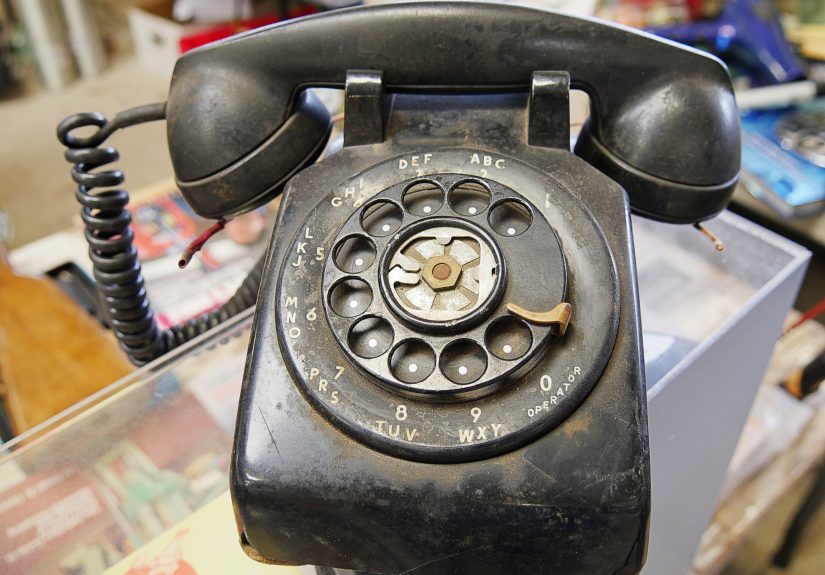
To listeners, step-by-step systems could sound wonderfully alive. Dialing produced pulses. Selectors moved. Relays clicked. Connections were assembled in stages. This is why recordings from old step offices can feel almost musical. There is rhythm, anticipation, and then the satisfying payoff of ringback or a completed call. It is less “instant communication” and more “please enjoy this brief percussion solo while the network finds your aunt.”
Crossbar Switching
Crossbar systems were more advanced electromechanical switches that used grids of contacts and common-control logic to establish calls more efficiently. The Bell System’s No. 5 Crossbar became one of the most important switching systems in mid-century telephone history. Compared with step-by-step, crossbar switching could be faster and more flexible, but it still had audible character.
In Evan Doorbell’s world, crossbar offices were not abstract engineering diagrams. They were voices in the network choir. A trained listener could distinguish the behavior of different switching systems through timing, tones, clicks, and call progress patterns. For many fans of the tapes, this is the magic: the recordings turn technical infrastructure into something you can recognize by ear.
Recorded Announcements and Intercepts
One of the most charming parts of the archive is the world of recorded telephone announcements. These were the voices that told callers a number had changed, a call could not be completed, or the network was having a small existential crisis. Some announcements were polished and professional. Others sounded local, strange, sleepy, or oddly dramatic.
Today, error messages are often text boxes or robotic voice prompts. In the analog era, recorded announcements had texture. They reflected local telephone companies, equipment limitations, regional practices, and the gradual standardization of a national network. A wrong number could become an accidental history lesson. For Evan Doorbell, even a failed call had documentary value.
Phone Phreaking as History, Not a How-To Manual
Any serious discussion of Evan Doorbell must mention phone phreaking, but it is important to frame it responsibly. Phone phreaking involved exploring, manipulating, and sometimes abusing telephone signaling systems. Some activities were illegal, especially when people used tones or devices to avoid charges or interfere with network operations. This article is not a tutorial and does not provide instructions for doing any of that.
Historically, however, phone phreaking matters because it helped shape early hacker culture. Many phreaks were fascinated by systems: how they worked, where their boundaries were, and what happened when a curious person asked too many technical questions. The same mindset later appeared in computer security, networking, and hacker communities. The telephone network was one of the first huge interactive systems that ordinary teenagers, hobbyists, engineers, and obsessives could poke at from home.
Doorbell’s recordings are valuable because they capture the cultural and technical environment without reducing it to “free calls” mythology. They show the network as a complex public utility, an engineering masterpiece, and a playground for curious ears. In other words, the tapes are less about beating the phone company and more about hearing the phone company before it became a ghost in the cloud.
Why Telephone Sounds Became Collectible
At first glance, collecting old telephone sounds may seem oddly specific. Then again, people collect stamps, vintage lunch boxes, cereal mascots, antique radios, and tiny spoons from places they barely remember visiting. Compared with that, a recording of a disappearing national communications network seems downright sensible.
Telephone sounds are collectible because they preserve vanished experiences. A rotary dial returning to rest, a busy signal from a particular exchange, a crossbar route completing, a distant operator’s voice, or a strange reorder tone can instantly transport listeners to another technological era. These sounds are historical artifacts, just like photographs, manuals, switchboards, and old pay phones.
There is also an emotional layer. For many Americans, the old telephone network was tied to everyday life: calling grandparents, checking in from a pay phone, waiting for long-distance rates to drop, hearing the family phone ring in the kitchen, or memorizing numbers because contacts did not live inside a glass slab. Evan Doorbell’s tapes preserve not only equipment sounds but the atmosphere around communication itself.
The Role of Telephone World and Digital Preservation
Telephone World and related preservation communities have helped keep Evan Doorbell’s recordings accessible to modern listeners. That matters because magnetic tape is not immortal. Cassette and reel-to-reel recordings degrade. Websites disappear. Personal archives get lost in closets, basements, and “I’ll organize this someday” boxes, which are where history often goes to take a nap and never wakes up.
By hosting, organizing, and presenting these tapes, preservationists make an obscure but important part of American technology history available to new audiences. The archive is especially useful because it combines audio with context. A random click may be interesting, but a click identified as part of a specific switching system, route, or exchange becomes evidence.
This is why Evan Doorbell’s Telephone World feels bigger than one person’s hobby. It is part of a larger movement to preserve telecommunications history: museum switch exhibits, restored central office equipment, old training films, technical documents, oral histories, and modern simulations of analog signaling environments. Together, these projects keep the old network from fading into a generic sentence like “phones used to be different.” No, phones were not just different. They were spectacularly weird.
Why Modern Listeners Still Love the Tapes
One reason modern listeners love Evan Doorbell’s tapes is that they reward attention. Most digital media fights for attention with speed, color, and noise. Doorbell’s recordings ask you to slow down and listen. A click matters. A pause matters. A tone pattern matters. A recorded voice saying a call cannot be completed may contain clues about geography, technology, and time period.
The tapes also offer a rare kind of technical nostalgia. They do not simply say, “Remember old phones?” They demonstrate how the network behaved. For engineers, telecom workers, historians, and vintage technology fans, this is gold. For casual listeners, it can feel like discovering a secret basement under the history of everyday life.
There is also humor. Old telephone systems could be unintentionally funny. Some recordings sound overly serious. Some routes behave like stubborn machinery with a grudge. Some announcements have the emotional warmth of a refrigerator reading legal copy. Doorbell’s narration often adds charm by balancing expertise with the delight of someone who knows the subject is unusual and loves it anyway.
Specific Examples of What the Archive Reveals
The archive reveals how different local exchanges had distinctive personalities. A call placed in one city might sound very different from a call placed elsewhere, depending on whether the area used step-by-step equipment, crossbar switching, electronic switching, independent telephone company gear, or special long-distance routing. This makes the recordings a kind of audio map of the old network.
It also reveals the transition from electromechanical systems to electronic switching. During the 1970s and early 1980s, many central offices were modernizing. Older switches were removed, replaced, or cut over to newer systems. A cutover could erase decades of audible character in a single night. Doorbell’s tapes preserve the “before” side of that transformation.
Another important example is the documentation of telephone operators and service recordings. Operators were once a major part of the network experience, especially for assistance, long-distance calls, collect calls, emergencies, marine radio connections, and special services. The tapes capture traces of that human layer, reminding listeners that the telephone network was not only machines. It was also people working inside a highly structured system.
The Cultural Value of Evan Doorbell’s Telephone World
Evan Doorbell’s Telephone World has cultural value because it preserves a technological environment that shaped how people communicated for generations. The old telephone network influenced business, family life, emergency services, journalism, teenage gossip, radio call-ins, customer service, and every dramatic movie scene where someone says, “Trace the call!” while a technician stares intensely at equipment.
It also teaches a broader lesson about infrastructure. We tend to notice infrastructure only when it fails. Roads, power grids, water systems, and telephone networks become invisible when they work well. Doorbell’s tapes make infrastructure audible again. They remind us that behind a simple call was a massive system of design, maintenance, standards, labor, and invention.
In a digital era, that reminder is useful. Today’s networks are even more complex, but they are harder for ordinary people to sense. We tap a screen, and things happen. Evan Doorbell’s recordings show a time when the hidden system occasionally introduced itself through the receiver: “Hello, I am the network, and I have brought relays.”
Listening Experience: What It Feels Like to Enter Evan Doorbell’s World
Listening to Evan Doorbell’s Telephone World for the first time can feel strange, especially if you grew up with smartphones. You expect old technology to be simple. Instead, you discover a network that sounds like a mechanical city under the floorboards. A call begins with familiar silence, then a dial tone, then digits, then clicks, pulses, bursts, pauses, and voices. Suddenly, a plain phone call becomes an expedition.
The experience is surprisingly immersive. You are not just hearing “old phone sounds.” You are hearing decisions being made by machines. The network is choosing a route, checking conditions, connecting trunks, returning signals, and telling the caller what happened. It is a little like listening to a train yard at night: metallic, organized, mysterious, and full of movement you cannot quite see.
One of the most enjoyable parts is learning to recognize patterns. At first, everything sounds like random clicks and tones. After a while, you begin noticing differences. Some switches answer with crisp confidence. Others lumber into action like they just woke up from a nap. Some recorded announcements are clean and standardized; others feel local and handmade. The more you listen, the more the network develops characters.
There is also a sense of time travel. The tapes carry the atmosphere of pay phones, kitchen wall phones, long-distance caution, area-code mystery, and the era when a telephone number felt like a physical address in an invisible machine. You can almost picture beige office walls, coiled cords, phone books thick enough to qualify as furniture, and someone yelling, “I’m on long distance!” like the family budget is about to catch fire.
For technology lovers, the archive delivers a rare pleasure: it makes engineering emotional. A crossbar switch is not just a component. A step-by-step office is not just a diagram. These systems had sound, timing, personality, and drama. Evan Doorbell’s narration helps translate that drama without draining away the mystery. He gives enough explanation to make the recordings meaningful, but the sounds still feel alive.
For writers, historians, and creative people, the tapes are a reminder that every era has a soundscape. The past is not silent. It hums through fluorescent lights, clatters through keyboards, crackles through radios, and clicks through telephone exchanges. Preserving those sounds gives future listeners more than facts; it gives them texture. It lets them feel the world as people once encountered it.
The best way to appreciate Evan Doorbell’s Telephone World is to listen patiently. Do not treat it like background noise while scrolling through five apps and pretending that counts as relaxing. Put on headphones. Let the pauses breathe. Enjoy the odd announcements. Notice the rhythm of the switches. Imagine the miles of copper, racks of relays, and human operators behind each call. Then remember that all of it existed so someone could ask, “Did you remember to buy milk?”
That is the charm of the archive. It turns the ordinary into the extraordinary. It shows that a telephone call, one of the most common actions of modern life, was once a performance by a continent-sized machine. Evan Doorbell did not merely record calls. He recorded the sound of America connecting itself, one click at a time.
Conclusion
Evan Doorbell’s Telephone World is a fascinating doorway into the analog age of American communication. Through narrated phone trips, raw recordings, switching sounds, operator voices, and strange network behavior, Evan Doorbell preserved a technological world that was already disappearing when he recorded it. His tapes help listeners understand step-by-step switches, crossbar systems, recorded announcements, telephone culture, and the broader history of phone phreaking without reducing the subject to legend or mischief.
More importantly, the archive reminds us that technology has a sensory history. The old telephone network was not only wires and switches; it was a soundscape. It had rhythm, personality, local flavor, and mechanical drama. In a world where modern communication often feels invisible, Evan Doorbell’s recordings let us hear the machinery of connection. And honestly, the machinery had excellent timing.
Note: This article is written for historical, educational, and cultural purposes. It discusses phone phreaking only as part of telecommunications history and does not provide instructions for manipulating telephone systems.






 Close
Close