Table of Contents >> Show >> Hide
- What Is a Regenerative Radio Receiver?
- A Little Radio History Without the Dusty Textbook Smell
- Why Build One Today?
- How a Regenerative Receiver Works
- What Can You Hear With a Regenerative Radio?
- Best Types of Regenerative Receiver Projects
- Essential Parts and Tools
- How to Tune a Regenerative Receiver
- Common Problems and Simple Fixes
- Safety and Good Operating Manners
- Why This Project Still Matters
- Experiences From Building and Using a Regenerative Radio Receiver
- Conclusion
Some projects teach you how electronics work. Others teach you patience, humility, and the ancient art of not dropping a tiny capacitor into the carpet. A regenerative radio receiver does all three, usually before dinner. It is simple enough for a careful beginner, mysterious enough to keep experienced builders entertained, and useful enough to pull real voices, music, Morse code, and shortwave stations out of thin air.
In an age of software-defined radios, pocket-sized digital receivers, and phones that can stream nearly anything, building a regenerative receiver may sound like carving your own spoon because forks became too convenient. But that is exactly the point. A regenerative radio is not just another gadget. It is a hands-on lesson in resonance, feedback, amplification, detection, selectivity, soldering, grounding, antennas, and the strange joy of hearing a signal arrive from beyond your neighborhood through a circuit you built yourself.
Everyone interested in electronics, amateur radio, radio history, STEM projects, or old-school tinkering should build at least one regenerative radio receiver. Not because it is the newest design. Not because it will outperform a modern communications receiver. It will not. Build one because it is one of the most educational radio projects ever inventedand because the first time it comes alive, it feels a little like wizardry with knobs.
What Is a Regenerative Radio Receiver?
A regenerative receiver, often called a “regen,” is a radio receiver that uses positive feedback to increase gain and sharpen selectivity. In plain English, part of the amplified signal is fed back into the tuned circuit in the correct phase, making the receiver more sensitive to weak signals and better at separating stations that are close together.
The magic happens near the edge of oscillation. Turn the regeneration control too low and the receiver behaves like a modest detector. Turn it up carefully and signals grow stronger, background noise rises, and the tuning becomes sharper. Turn it too far and the circuit begins to oscillate, which can produce a hiss, squeal, or beat note. That “edge” is where the regenerative receiver teaches its best lesson: electronics are not abstract symbols on a schematic. They are physical systems with moods.
A basic regenerative radio receiver may use a vacuum tube, a field-effect transistor, a bipolar transistor, or even a modern integrated audio amplifier after the detector. Many designs include a tuned LC circuit, a detector or RF amplifier stage, a regeneration control, an audio amplifier, headphones or a speaker, and a simple wire antenna. The parts count can be wonderfully low, yet the performance can be surprisingly good.
A Little Radio History Without the Dusty Textbook Smell
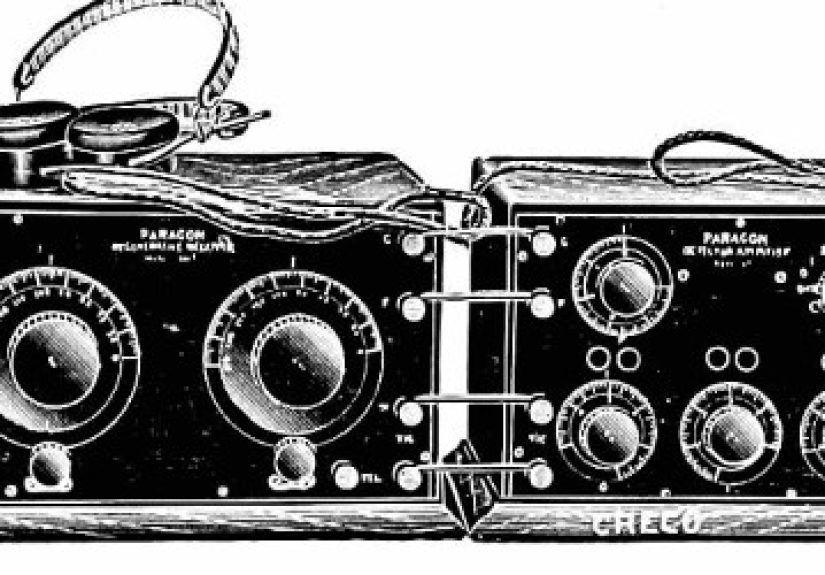
The regenerative circuit is closely associated with Edwin Howard Armstrong, one of the giants of radio engineering. In 1912, while studying at Columbia University, Armstrong developed the feedback principle that made weak radio signals dramatically stronger. His regenerative circuit helped transform early wireless reception from faint headphone whispers into usable audio.
That mattered because early active devices were expensive, power-hungry, and not especially powerful. When a single tube cost serious money and batteries were bulky, squeezing maximum performance from one active device was not just cleverit was necessary. Regeneration allowed builders to get impressive gain and selectivity from simple circuits. For early radio experimenters, that was like discovering your bicycle had a hidden motorcycle mode.
Regenerative receivers became popular in the 1910s and 1920s. Later, the superheterodyne receiver took over commercial radio because it offered better stability, easier tuning, and more predictable performance. But the regen never disappeared. It survived in amateur radio, shortwave listening, educational kits, QRP circles, vintage radio projects, and the workbenches of people who believe that “simple” and “boring” are not the same word.
Why Build One Today?
1. It Teaches Feedback Better Than Any Diagram
Feedback is everywhere in electronics. Oscillators, amplifiers, filters, audio circuits, switching power supplies, and control systems all depend on feedback in one form or another. A regenerative receiver lets you hear feedback working in real time. As you advance the regeneration control, the receiver becomes more sensitive. The noise floor rises. The tuning sharpens. Push it too far and the circuit breaks into oscillation.
That experience is hard to forget. A textbook can tell you that loop gain near unity changes behavior dramatically. A regen lets you hear that lesson in your headphones.
2. It Makes Resonance Feel Real
A tuned circuit is usually made from an inductor and a capacitor. Together, they resonate at a particular frequency. In a regenerative radio receiver, that resonant circuit becomes the front door to the radio spectrum. Change the capacitance or inductance, and you tune across stations. Add regeneration, and the receiver becomes more selective near resonance.
This is why winding your own coil can be so satisfying. A few turns of wire on a form may look unimpressive, but connect it to a capacitor and suddenly it becomes a frequency-selective gateway. That is a pretty good return on investment for something that resembles a tiny copper spring.
3. It Is Affordable and Forgiving
A simple regenerative receiver can be built with inexpensive parts: resistors, capacitors, a transistor or FET, a variable capacitor or varactor tuning circuit, wire for a coil, a potentiometer for regeneration, and an audio amplifier. Some kits include pre-drilled boards, through-hole components, and clear instructions. Others invite you to build from a schematic using Manhattan construction, perfboard, or whatever method your workbench will tolerate.
Unlike many modern projects, a regen does not require a microcontroller, firmware updates, USB drivers, cloud accounts, or a dramatic conversation with your operating system. It needs careful wiring, decent grounding, a reasonable antenna, and your willingness to adjust a knob slowly like you are defusing a very polite bomb.
How a Regenerative Receiver Works
At the heart of a regenerative receiver is a tuned circuit and an amplifying device. The tuned circuit selects the frequency range. The active device amplifies the signal. A controlled portion of the output is then fed back to the input in phase. This positive feedback reinforces the selected signal.
As regeneration increases, two things happen. First, gain rises, allowing weak signals to become audible. Second, the receiver’s effective bandwidth narrows, improving selectivity. That means nearby stations are easier to separate. The trick is to operate just below oscillation for AM voice and music reception. For CW Morse code and sometimes SSB reception, the receiver may be adjusted slightly into oscillation so the signal can beat against the local oscillation and produce an audible tone.
This dual personality is part of the fun. A regenerative receiver is both a detector and, when pushed, a small oscillator. That is why good operating technique matters. The operator is part of the circuit in a way that feels refreshingly mechanical and human.
What Can You Hear With a Regenerative Radio?
What you can hear depends on the design, frequency range, antenna, location, time of day, and patience supply. On the AM broadcast band, a regen can receive local stations and, at night, sometimes distant stations due to skywave propagation. On shortwave bands, a well-built regenerative receiver can tune international broadcasters, amateur radio activity, utility signals, Morse code, and other signals that make the radio spectrum feel alive.
Many beginner shortwave regenerative receiver kits cover several popular broadcast bands. Some designs tune roughly from the lower HF region into higher shortwave frequencies. Others are made for a single amateur band, such as 40 meters or 80 meters. A simple wire antenna in an attic, along a wall, or tossed into a tree can be enough to get started.
Do not expect a regen to behave like a polished commercial communications receiver. It may drift. It may overload on strong stations. The regeneration control may interact with tuning. Your hand near the coil may shift the frequency. The receiver may have more personality than a house cat. But that is exactly why it is such a good teacher.
Best Types of Regenerative Receiver Projects
Beginner Transistor Regen
A transistor regenerative receiver is a practical first build. It usually runs on low voltage, uses common parts, and avoids the high-voltage safety concerns of traditional tube circuits. A typical design may use one transistor or FET as the regenerative detector and one or two additional stages for audio amplification.
This style is excellent for learning because the circuit is visible and understandable. You can identify the tuned circuit, regeneration path, detector, and audio section without needing a magnifying glass, a datasheet marathon, or a motivational speech.
Shortwave Kit Receiver
A kit is the easiest path if you want a high chance of success. Many regenerative shortwave kits use through-hole components, printed circuit boards, labeled parts placement, and a tested design. This removes much of the guesswork while preserving the learning experience.
Kits are especially good for families, STEM clubs, Scouts, ham radio newcomers, and adults who want to build something real without spending three weekends asking why the oscillator is sulking.
Vacuum Tube Regen
A tube regenerative receiver is a beautiful project for builders who enjoy vintage electronics. Many tube designs use one tube as a detector and another stage for audio, while some clever circuits do a lot with a single tube. Modern low-voltage tube projects exist, but traditional tube circuits may involve potentially dangerous voltages. If you are new to electronics, start with a low-voltage design before entering the glowing-glass dragon cave.
Homebrew Scratch Build
Once you understand the basics, building from scratch is where the hobby becomes personal. You can wind your own coils, choose your own enclosure, experiment with different feedback methods, add band switching, improve audio filtering, or try a separate RF amplifier. The regenerative receiver is ideal for experimentation because small changes often produce audible results.
Essential Parts and Tools
Most simple regenerative radio receiver projects use a small collection of parts. You may need an inductor or hand-wound coil, variable capacitor or tuning diodes, one or more transistors or FETs, resistors, capacitors, potentiometers, an audio amplifier, headphones or a speaker, a battery supply, a switch, a knob or two, and a wire antenna.
For tools, a soldering iron, solder, wire cutters, needle-nose pliers, a multimeter, and a small screwdriver are usually enough. A frequency counter, signal generator, oscilloscope, or RF probe can be useful, but they are not required for many beginner builds. In fact, part of the charm is that you can build a working radio with humble tools and a little care.
Good construction matters. Keep leads short in the RF section. Use a stable coil. Avoid messy wiring around the tuned circuit. Use a solid ground layout. Mount the tuning capacitor firmly. If the receiver is hand-sensitive, try shielding, better grounding, or moving the coil farther from your fingers. The radio will tell you what it dislikes, although it may do so through squeals and vague silence.
How to Tune a Regenerative Receiver
Tuning a regenerative receiver is a skill. Start with the regeneration control low and the volume at a comfortable level. Slowly increase regeneration until you hear the background noise rise or a soft hiss begin. Back off slightly for AM reception. Tune slowly across the band. When you find a station, adjust tuning and regeneration together for the best balance of loudness, clarity, and stability.
For Morse code or SSB, you may need to advance regeneration just into oscillation. This creates a beat note that makes the signal audible. Move slowly. A tiny adjustment can turn a readable signal into a duck trapped in a kazoo factory.
Strong local stations may overload the receiver. If that happens, shorten the antenna, add an antenna attenuator, reduce coupling, or improve the front-end design. Weak signals may need more antenna, quieter operating conditions, or nighttime listening when shortwave propagation improves on certain bands.
Common Problems and Simple Fixes
The Receiver Is Silent
Check power first. Then check headphones, speaker wiring, audio amplifier connections, transistor orientation, solder joints, and coil continuity. Build and test in stages whenever possible. Many builders test the audio section first, then the detector, then the tuning and regeneration section.
It Squeals Too Much
Too much feedback can cause oscillation. Reduce regeneration, check component values, shorten leads, and improve grounding. If the antenna is loading the tuned circuit too heavily, reduce coupling between the antenna and detector stage.
It Drifts
Frequency drift can come from unstable coils, poor mechanical construction, temperature-sensitive parts, hand capacitance, or battery voltage changes. Use a rigid coil form, stable capacitors, short RF wiring, and a solid enclosure. Let the receiver warm up if it uses tubes.
It Receives Only Strong Stations
Improve the antenna, check regeneration range, verify the tuned circuit values, and make sure the audio section has enough gain. A regenerative receiver should be lively when adjusted correctly. If it behaves like a sleepy potato, something is wrong.
Safety and Good Operating Manners
Low-voltage transistor receivers are generally safe when powered by batteries, but soldering irons are hot, clipped leads are sharp, and batteries should be connected correctly. Tube receivers require more caution because many traditional circuits use high voltage. If you build a tube design, learn proper high-voltage safety before touching anything.
Also remember that regenerative receivers can oscillate. Poorly isolated designs may radiate a tiny signal back through the antenna. Keep antenna coupling modest, avoid unnecessary oscillation when listening to AM stations, and use good construction practices. A receiver should receive; it should not become the neighborhood’s smallest accidental broadcaster.
Why This Project Still Matters
The regenerative receiver matters because it reveals the bones of radio. A modern receiver may hide everything inside integrated circuits and digital signal processing. That technology is wonderful, but it can feel like magic sealed inside a black box. A regen is different. You can point to each part and understand its job.
The coil and capacitor select a frequency. The active device amplifies. The feedback control changes gain and selectivity. The detector turns RF into audio. The audio amplifier drives headphones or a speaker. The antenna gathers energy from passing electromagnetic waves. Nothing is hidden. Nothing requires an app. The whole thing is right there, humming, hissing, and occasionally behaving itself.
Building one also changes how you listen. You begin to notice propagation, noise, fading, tuning sharpness, overload, grounding, antenna length, and time of day. You stop thinking of radio as a list of stations and start thinking of it as a living environment. The air around you is full of signals. A regenerative receiver gives you a homemade key to the door.
Experiences From Building and Using a Regenerative Radio Receiver
The first experience most builders have with a regenerative receiver is not triumph. It is suspicion. You finish soldering, connect the battery, attach a piece of wire for an antenna, and hear absolutely nothing. At that moment, every resistor looks guilty. The transistor looks smug. The coil looks like it knows something and refuses to testify.
Then you touch the volume control, wiggle the headphone plug, adjust the regeneration knob, and suddenly there is a faint hiss. That hiss is not just noise. It is proof of life. It means the detector is waking up. You turn the tuning control slowly and hear a station slide into view. Maybe it is an AM broadcaster. Maybe it is a shortwave signal fading in and out like it is traveling through soup. Either way, the feeling is unforgettable: the radio is working, and you built it.
One of the most valuable lessons is how sensitive simple circuits can be to layout. On paper, a regenerative receiver schematic looks relaxed. In real life, lead length matters. Grounding matters. The placement of the coil matters. Put your hand too close to the tuned circuit and the station may drift away, as if offended by your enthusiasm. Move a wire and the receiver may become more stable. Shorten a lead and the squeal disappears. These are not failures; they are the project teaching you RF construction.
Another memorable experience is learning the regeneration control. At first, it feels fussy. You tune, adjust feedback, retune, adjust again, and wonder why anyone thought this was fun. Then your ear adapts. You learn the sound of the threshold. You hear the background noise rise just before oscillation. You discover that AM signals often sound best just below that point, while CW signals need the circuit nudged over the edge. Suddenly, the awkward knob becomes an instrument.
There is also the antenna lesson. A short indoor wire may receive strong local stations but struggle on shortwave. A longer wire may bring in more signals but also more noise and overload. Add a simple attenuator or reduce coupling and the receiver calms down. You start experimenting with antenna length, direction, grounding, and listening time. The project expands beyond the box on your desk into the room, the building, and the ionosphere.
The best part is that a regenerative receiver rewards curiosity. Try a different coil. Add a fine-tuning control. Improve the audio filter. Build a nicer enclosure. Compare headphones. Listen at sunset. Listen before sunrise. Keep notes. You may discover that a radio with only a handful of parts can provide more education than a polished commercial receiver with a thousand features you never use.
By the end, the builder usually understands something deeper than “this circuit works.” You understand why early radio experimenters were hooked. You understand why simple receivers launched lifelong hobbies. You understand why hearing a distant signal through a homemade circuit feels more satisfying than clicking a stream. The regenerative receiver is not just a project. It is a small, noisy, wonderful apprenticeship in radio.
Conclusion
Everyone should build at least one regenerative radio receiver because it is one of the rare projects that is simple, useful, historical, affordable, and genuinely educational. It teaches feedback, resonance, selectivity, gain, detection, antennas, grounding, and patience in a way no simulation can fully replace. It may drift. It may squeal. It may demand careful adjustment. That is part of its charm.
A regenerative receiver is not a museum piece. It is a living classroom. Whether you build a transistor shortwave kit, a scratch-built FET receiver, or a glowing tube regen, the reward is the same: you get to hear the invisible world using something made by your own hands. In a world full of sealed devices, that is a small act of rebellionand a very good excuse to buy more solder.