Table of Contents >> Show >> Hide
- Meet the Mind Behind the Stool
- What Exactly Are the Atelier Stools?
- Materials That Tell the Truth (and Look Better for It)
- The Stacking Feature: Small Detail, Big Lifestyle Upgrade
- Stool Heights: Choosing Between Standard and Counter Height
- Design Language: Industrial, Minimal, and Surprisingly Friendly
- How to Style Atelier Stools Without Trying Too Hard
- Buying, Availability, and What to Expect
- Why the Atelier Stools Still Feel Relevant
- of Experience: What It’s Like to Live With Atelier Stools
- Conclusion
Some furniture pieces announce themselves. Others quietly do the work, day after day, until you realize you’ve built a whole life around them.
The Atelier stools by Gabriel Abraham belong to the second category: honest materials, minimal lines, and a “why didn’t everyone do it this way?” practicality.
They’re the kind of stools that look at home in a sunlit kitchen, a concrete-floored studio, or a small apartment that needs every square inch to earn its rent.
If you’ve ever shopped for stools, you know the modern world offers two extremes: ultra-delicate “don’t breathe near it” design objects, or chunky,
mass-produced seats that wobble like a baby deer on ice. Abraham’s Atelier stools hit a rare middle laneindustrial but warm, spare but not cold,
and built with the kind of restraint that makes a room feel calmer without shouting about it.
Meet the Mind Behind the Stool
Gabriel Abraham is a Los Angeles–based designer whose work sits at the intersection of craft, story, and utility.
His background in production design (the world of sets, scenes, and visual narrative) shows up in the way his furniture feels “placed” rather than merely “purchased.”
Even when a piece is minimal, it carries a point of viewlike it belongs to a space with a purpose.
That worldview matters when you’re talking about stools. Stools are often treated like background actorsimportant, but not “the lead.”
Abraham treats them like essential characters: they must perform, stack, slide in and out, take daily abuse, and still look good doing it.
What Exactly Are the Atelier Stools?
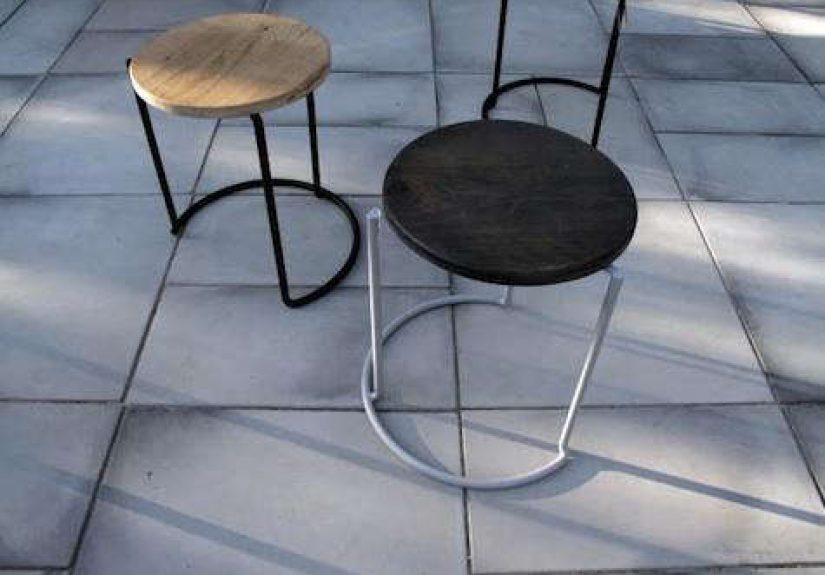
The Atelier stools are best known as stacking stools with a steel base paired with a reclaimed or salvaged wood seat.
The concept is delightfully straightforward: strong metal structure below, tactile wood above, and proportions that don’t waste space.
They were produced in California, with versions offered in both standard stool height and a counter-height model.
Think of them as the design equivalent of a great cast-iron skillet: simple, durable, and somehow more attractive the more you actually use it.
No fussy ornament. No “limited edition hand-polished unicorn hair finish.” Just materials doing what they do best.
Why the Name “Atelier” Works
“Atelier” means workshopand that’s exactly the vibe. These stools feel like they belong in a working space:
a place where things get made, meals get cooked, friends lean in with a drink, and someone inevitably says, “Wait… can I sit there too?”
Materials That Tell the Truth (and Look Better for It)
A big part of the Atelier stool’s charm is that it doesn’t pretend to be something it isn’t. The steel reads as steel. The wood reads as wood.
And because the seat material often comes from reclaimed sources, the surface carries variationgrain, tone, and small marks that make each stool feel specific.
Steel Base: The Quiet Workhorse
The base is steelchosen for strength, slim visual weight, and long-term stability. Steel lets the legs stay lean without feeling fragile,
which matters when stools are constantly dragged, nudged, scooted, and occasionally used as a “temporary step ladder”
(not recommended… but we all know it happens).
Visually, steel also gives the stools their subtle industrial edge. It’s the part that says: this piece can live in a loft, a modern farmhouse,
or a classic home that needs one slightly tougher note to keep things interesting.
Reclaimed Wood Seat: Warmth, Texture, and a Little History
The seat is where the Atelier stool gets its soul. Reclaimed wood isn’t just an eco-friendly detailit changes the feel of the piece.
New wood can look too perfect, like it’s afraid of life. Reclaimed wood looks like it’s already been introduced to reality.
In early coverage of the line, the seat wood is described as reclaimed poplar sourced from an old barn in Ohioan example of how the material story
was baked into the product identity. That kind of detail matters because it makes the stool feel grounded: not a generic “wood top,” but a surface with character.
The Stacking Feature: Small Detail, Big Lifestyle Upgrade
Let’s be honest: the real reason stacking stools are beloved is that modern life is crowded. Even big homes tend to have high-traffic zones where extra seating is useful
but extra clutter is not. The Atelier stools stack, which means they can exist in your life without permanently eating floor space.
Where stacking makes the biggest difference
- Kitchen islands where stools need to tuck in and out daily
- Small dining areas that flex between “Tuesday dinner” and “Saturday friends”
- Studios and creative spaces where seating comes and goes depending on the project
- Retail or hospitality environments where durable seating gets rearranged constantly
The best design trick is the one you forget is there because it makes your day easier without demanding attention. Stacking is exactly that.
Stool Heights: Choosing Between Standard and Counter Height
Abraham expanded the Atelier stool line to include a counter-height modela smart move that tracks with how people actually live.
A lot of homes don’t have “bar height” as much as they have “the kitchen island where everything happens”: breakfasts, homework, quick meetings,
and that one friend who always ends up in the kitchen no matter where you set up the party.
A practical way to pick
-
Measure your surface height (kitchen island or counter).
As a rule of thumb, you want enough clearance so knees aren’t negotiating a peace treaty with the underside of the countertop. -
Think about who uses the stools.
If kids or shorter adults are regular users, standard height can feel more stable and approachable. -
Decide how you sit.
If you linger with coffee and a laptop, the “fit” matters more than if the stool is mostly for quick perching.
Design Language: Industrial, Minimal, and Surprisingly Friendly
The Atelier stools land in that sweet spot where they can read as industrial, modern, rustic, or even quietly classicdepending on what you pair them with.
That versatility is a result of strong fundamentals: clean geometry, honest materials, and no decorative noise.
Why they work in so many interiors
Interior trends come and go (remember when everyone wanted everything in barn-door gray?), but the Atelier stool’s core formula is stable:
a slim metal frame and a warm wood seat. It’s a contrast humans tend to like because it mirrors the environments we build:
hard and soft, structured and lived-in.
This also aligns with the broader design ethos often associated with Abraham’s later work: modernism with references that soften itless sterile showroom, more cinematic realism.
In other words, it looks designed, but it doesn’t look like it’s allergic to fingerprints.
How to Style Atelier Stools Without Trying Too Hard
Stools are “supporting actors,” but they still need a good script. Here are a few styling approaches that highlight what the Atelier stool does best.
1) The Warm Minimal Kitchen
Pair the stools with white or cream cabinetry, simple hardware, and one warm element (oak shelving, a butcher-block cutting board, or a linen runner).
The metal base gives structure; the wood seat keeps things from looking clinical.
2) The Soft-Industrial Loft
Concrete floors, blackened steel details, and big windows? The Atelier stool fits right inespecially if you echo the wood tone in one other place,
like a dining table or open shelving. You don’t need to match perfectly. You just need to make it feel intentional.
3) The “Collected” Modern Farmhouse (Without the Clichés)
Skip the “LIVE LAUGH LOVE” signage and let the materials do the talking. Reclaimed wood and steel are already farmhouse-adjacent.
Keep the rest honest: pottery, woven baskets, and a few real plants that you actually water.
4) The Creative Studio Setup
Atelier stools shine in workspaces because they look appropriate in a room where things are made. Add a sturdy worktable, good task lighting,
and storage that can handle chaos. The stools add order without being precious.
5) The Small Apartment “Flexible Seating” Trick
If your space is tight, stacking stools are basically a life hack. Keep two out for daily use, stack the rest in a corner, and pull them out when friends come over.
You’ll feel like a hosting wizard without sacrificing your walking path to the sofa.
Buying, Availability, and What to Expect
Historically, the Atelier stools were sold through Los Angeles retailer Lawson-Fenning and also offered directly from the studio, with prices in early coverage
hovering in the low-to-mid hundreds per stool depending on the model and timing.
Today, availability may vary because boutique furniture lines often evolve, shift production, or re-release designs in new forms.
If you’re hunting for a set, check reputable design retailers and secondary markets, and pay attention to:
- Seat condition (reclaimed wood will show weardecide what kind of patina you like)
- Weld quality on the steel base (look for clean joins and stability)
- Finish (a darker steel tone can feel more industrial; a softer tone can blend more easily)
Care tips that keep them looking great
- Wood seat: Wipe with a slightly damp cloth, dry promptly. If it’s oiled/waxed, refresh occasionally with an appropriate product.
- Steel base: Dust regularly; for smudges, a mild cleaner works. Avoid harsh abrasives that can dull the finish.
- Floor protection: Felt pads are your friendespecially on hardwood. Your downstairs neighbor will also send thanks.
Why the Atelier Stools Still Feel Relevant
A good stool is more than a seat: it’s a tool. And tools don’t need reinvention every seasonthey need to be right.
The Atelier stools succeed because they solve real problems (extra seating, small spaces, durability) while also contributing a calm, considered aesthetic.
In a market flooded with disposable furniture and trend-chasing shapes, there’s something refreshing about a piece that basically says:
“I’m here to work. I’m also going to look good doing it. Let’s not make this weird.”
If you love furniture that feels both designed and lived-in, the Atelier stool is a smart pickand a reminder that the best objects in a home
are often the ones you use the most.
of Experience: What It’s Like to Live With Atelier Stools
Let’s talk about the part that doesn’t show up in a product photo: daily life. The first “experience” with Atelier stools usually starts the same way
you bring them into the kitchen, set one next to the island, and immediately notice how the materials change the room. The steel base gives the space a crisp outline,
while the wood seat warms everything up. It’s the design equivalent of putting on a great jacket: suddenly the whole outfit makes more sense.
Over the first week, the biggest surprise tends to be how often you use them. Not just for meals, but for everything that happens near a counter:
sorting mail, helping a kid with homework, standing conversations that turn into sitting conversations, and the classic “I’ll just have one snack”
that becomes a full improvised charcuterie moment. A good stool doesn’t demand a formal occasion. It just quietly invites you to stay five minutes longer.
Then comes the second phase: movement. You slide a stool to the side, pull it out, spin it slightly to face the roomthese little actions happen constantly.
Because the base is steel and the silhouette is straightforward, the stools feel capable rather than delicate. You don’t treat them like museum pieces.
And that’s the point: stools that look good but make you nervous are basically decorative anxiety.
Stacking becomes the stealth superpower when you host. Two people come over? Great, you’re set. Six people come over? You stack and unstack like you’re running a tiny
seat-rental business, except the only currency is compliments. The stools don’t eat your floor space when you don’t need them, whichif you live in an apartment or a busy
family homefeels like discovering a secret room in your house you didn’t know existed.
The wood seat also develops a relationship with your life. Reclaimed wood doesn’t stay pristine, because it was never meant to. It picks up small marks over time:
a faint ring from a glass you forgot to coaster, a tiny scratch from keys in your pocket, a softer sheen where people naturally sit. Instead of feeling “ruined,” the surface
starts to feel personalizedlike the stool is recording your routines in a language only wood can speak.
After a while, the Atelier stools stop being “those stools you bought” and start being “the stools.” The ones you reach for without thinking. The ones that somehow work with
every new rug, every paint color experiment, every impulsive plant purchase. They become part of the architecture of your habits. And if you ever move, they’re the pieces you
pack earlybecause you don’t want to live without them while the rest of the boxes are still arguing with gravity.