Table of Contents >> Show >> Hide
- What Happened: The Escape That Sparked the Firestorm
- Why This Went Viral: The Internet Loves a Moral Rorschach Test
- Are Rhesus Macaques Dangerous?
- Disease Fears: What People Heard vs. What Was Later Clarified
- The Hidden System Behind the Headline: Research, Transport, and Accountability
- Why Communication Matters More Than People Think
- “Protect the Kids” vs. “Protect the Animal”: Why This Argument Never Ends
- What To Do If You Ever See an Escaped Animal
- Conclusion: A Viral Story That Exposed a Real Fault Line
- Experience Notes: What These Situations Feel Like in Real Life (And Why People React the Way They Do)
Imagine waking up to the kind of sentence that sounds like it belongs in a movie trailer:
“Mom… I think there’s a monkey in the yard.” Now imagine it’s not a prank, not a costume, not your neighbor’s
overly ambitious Halloween decorationjust an actual rhesus macaque, loose in rural Mississippi, after a transportation
accident involving research animals.
That’s the real-world setup behind a story that detonated online: a mother said she shot and killed an escaped research
monkey after spotting it near her home, insisting she did it to protect her children. Within hours, the internet did what
it does bestsplit into teams, pick a hill, and start living on it.
But beneath the headline is a bigger, messier conversation about public safety, animal welfare, misinformation,
and how quickly fear spreads when official communication stumbles. Let’s unpack what happened, why it sparked such a
heated debate online, and what this incident reveals about the invisible infrastructure behind biomedical research.
What Happened: The Escape That Sparked the Firestorm
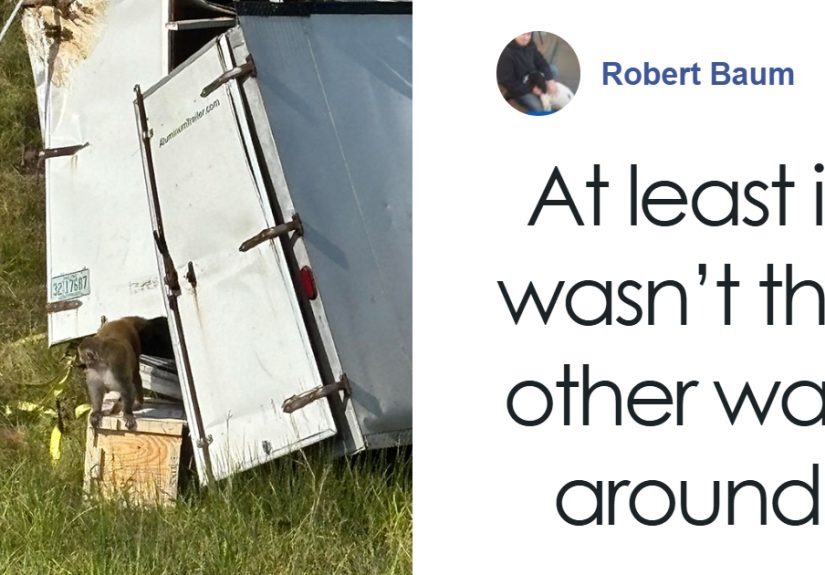
In late October 2025, a truck transporting rhesus macaques overturned on Interstate 59 near Heidelberg, Mississippi.
Multiple reports described confusion in the early hours about how many animals escaped and what risks they posed.
Local authorities warned residents not to approach the monkeys and described them as potentially aggressive.
Days later, a mother near Heidelbergidentified in reporting as Jessica Bond Fergusontold journalists that her teenager
spotted a monkey in their yard. She said she feared for the safety of her children and shot the animal.
The incident quickly became a lightning rod: some people framed it as a parent making a split-second protective decision;
others viewed it as a tragic outcome fueled by panic, poor information, and a system that put the public and the animals
in danger in the first place.
As the search continued, reporting indicated that another escaped monkey was also shot by a civilian, while at least one
other monkey was eventually recovered alive. In a later update, one surviving monkey was reported to have been placed at
an animal refuge in New Jerseyan ending that reads like a plot twist, except it’s real life.
Why This Went Viral: The Internet Loves a Moral Rorschach Test
This story hit multiple “go viral” triggers at once:
- Parent-and-child stakes (a guaranteed emotional accelerant)
- A research animal escape (mystery + distrust + “what aren’t they telling us?” energy)
- Disease fear (even the rumor of infection spreads faster than facts)
- A violent outcome (which forces people to pick sides)
- Rural-meets-institution tension (locals vs. “the system”)
Online, two competing narratives formed almost instantly:
Narrative A: “A mother protected her kids.”
Supporters argued that a strange primate near a home is an unpredictable threatespecially if you’ve been told it might
carry disease or behave aggressively. They emphasized a parent’s responsibility to prioritize children’s safety, and
they criticized the idea that an average resident should be expected to calmly evaluate animal behavior at dawn.
Narrative B: “Fear and misinformation got an animal killed.”
Critics argued the situation escalated because officials and social media amplified disease rumors, creating a climate of
panic. They pointed out that the monkey did not choose to be there, and that institutional failurestransport safety,
emergency response, and risk communicationput everyone in a corner where a bad outcome became more likely.
The truth is: both narratives can contain elements of reality at the same time, and that’s exactly why the debate stays hot.
Are Rhesus Macaques Dangerous?
Rhesus macaques are not stuffed animals with good PR. They’re intelligent, strong for their size, and capable of biting
and scratching. In many official responses to monkey escapes (including other incidents in the U.S.), agencies advise
residents not to approach them, not to try to capture them, and to report sightings. That advice exists for a reason:
an unfamiliar primate can behave unpredictably, especially when stressed, hungry, or cornered.
That said, “potentially aggressive” is not the same thing as “actively attacking.” Most escaped animals are frightened
and trying to avoid humans. The danger tends to rise when people attempt to get close, feed them, chase them, or trap them.
The safest public guidance stays boring for a reason: keep distance, keep kids and pets inside, and call authorities.
Disease Fears: What People Heard vs. What Was Later Clarified
Disease fear played a starring role in the online reaction. Early messaging from local authorities reportedly suggested
the escaped monkeys might carry infectious diseaseslanguage that, once released, cannot be stuffed back into the bottle.
Later reporting cited university and animal experts stating the monkeys were pathogen-free and had received recent medical
checks, undercutting the scariest version of the rumor mill.
Here’s the tricky part: you can acknowledge two things simultaneously:
- Most people are not equipped to verify an animal’s health status in real time.
- Mixed or incorrect official information can push communities into fear-based decisions.
And yesmacaques are associated with certain zoonotic risks in occupational settings. The CDC notes that B virus
(sometimes called herpes B) infection in humans is extremely rare but can be severe, and it typically occurs through
bites, scratches, or contact of bodily fluids with mucous membranes or broken skin. That’s a clinical reality.
It’s also why public health messaging often centers on “avoid contact” rather than “panic.”
The key is precision: a risk that matters in labs and animal facilities doesn’t automatically mean the public is facing
an outbreak scenario. In this case, reporting indicated the animals involved were not infected with the kinds of diseases
the public initially feared. But by the time that clarification lands, the comment sections are already on fire.
The Hidden System Behind the Headline: Research, Transport, and Accountability
The phrase “escaped research monkey” carries a lot of cultural baggage. For many readers, it triggers distrust:
Why are research animals on the highway? Who’s responsible? Why does nobody seem sure what’s going on?
Biomedical research in the U.S. uses nonhuman primates for specific kinds of studies, and the industry operates under a
patchwork of oversight: institutional animal care and use committees, federal regulations, accreditation standards,
and public health rules. Transportation adds another layer of complexity because the animals’ welfare and public safety
become intertwined with logistics, containment, and emergency response.
Transportation standards existso why do escapes still happen?
Regulations and guidance emphasize minimizing transit time, preventing injury, reducing zoonotic risk, and protecting
animals from environmental extremes. The Animal Welfare Act framework also includes standards related to veterinary
inspection and transport conditions for covered animals, including nonhuman primates.
Still, real life has potholes (sometimes literally). Vehicles crash. Equipment fails. Communication breaks down.
When an incident happens on a public highway, you don’t just have an “animal transport issue”you have a community crisis.
Why Communication Matters More Than People Think
If there’s a single lesson here, it’s that risk communication is part of public safety.
When officials say “disease carrier” and later say “pathogen-free,” the public doesn’t just update their beliefs like a
phone installing a software patch. They spiral. They screenshot the first message. They distrust the second.
Even well-intended warnings can backfire if they aren’t specific:
- Too vague → people fill the gaps with worst-case scenarios.
- Too dramatic → panic spreads faster than facts.
- Too technical → no one understands what to do.
The goal isn’t to downplay risk. It’s to deliver clear, actionable guidance that keeps people safe without turning the
community into a live-action rumor mill.
“Protect the Kids” vs. “Protect the Animal”: Why This Argument Never Ends
The online debate often sounded like people were arguing about one moment in one yard. But the emotional fuel came from
deeper questions:
- What do we owe to animals used in research?
- What should residents do when institutions fail on their doorstep?
- When does fear become justificationand when is it just fear?
- Who pays the cost when messaging is wrong: the public, the animals, or both?
A parent’s fear can be real even if the worst-case scenario isn’t. Animal suffering can be real even if the animal could
have posed a risk. The internet prefers clean heroes and villains, but incidents like this tend to deliver something
more frustrating: a tangle of human instincts, institutional responsibility, and imperfect information.
What To Do If You Ever See an Escaped Animal
Let’s keep this practicaland safe. Most official guidance in these scenarios boils down to:
- Do not approach. Avoid contact to reduce bite/scratch risk.
- Keep children and pets inside. Small animals can trigger defensive behavior.
- Secure doors and windows. Especially if authorities recommend it.
- Call local law enforcement or animal control. Report location and time of sighting.
- Don’t try to trap or feed it. That often makes situations worse.
The safest outcome is one where trained responders recover the animal and the public stays out of harm’s way.
Conclusion: A Viral Story That Exposed a Real Fault Line
“Heated debate online after woman slays escaped research monkey to protect her children” sounds like a headline designed
to melt your group chat. But the real story underneath is bigger than the comment section.
A transportation failure turned into a community safety incident. Confusing disease messaging magnified fear. A split-second
decision led to a violent outcome. And the internetpredictablyturned it into a morality play with two sides and no nuance.
If we want fewer tragedies like this, the focus can’t only be on what one person did in one moment. It has to include
the systems that created the moment: transport standards, emergency response, and public communication that’s accurate
the first timebecause the first message is the one most people remember.
Experience Notes: What These Situations Feel Like in Real Life (And Why People React the Way They Do)
If you’ve ever lived in a small townor even just a neighborhood where everybody actually knows everybodyyou know the
“information pipeline” is rarely a press conference. It’s a text thread, a Facebook post, and a friend-of-a-friend who
“heard something” from someone who “knows a deputy.” That’s not a knock on rural communities; it’s just human nature
plus proximity. When something unusual happens, people don’t wait for a PDFthey look out the window.
In real emergencies, the emotional timeline is faster than the factual timeline. First comes the shock (“A monkey escaped?”),
then the protective reflex (“Where are the kids?”), then the scramble to interpret risk (“Is it sick? Is it aggressive?”).
People don’t experience these events as a neat sequence of verified updates. They experience them as a collage of half-truths,
loud warnings, and the creeping feeling that the adults in charge might not have the full picture yet.
That’s also why “just stay calm” is advice that sounds great online and feels ridiculous in the moment. Calm is easier when
you’re sitting behind a screen, far from the scene, with the luxury of assuming responders will arrive quickly. In reality,
some families have had experiences where animal control takes hours, where dispatch lines are busy, or where previous incidents
taught them that help sometimes comes late. Those lived experiences shape how people judge risk. A parent who has felt “on their
own” before may interpret any unknown animal as an immediate threatbecause their brain is doing math with old memories.
There’s also the “credibility whiplash” effect. When authorities initially say an escaped animal could carry disease and later
say it’s pathogen-free, communities don’t neatly swap beliefs. They feel jerked around. Some people conclude the first message
was exaggeration; others conclude the second message is a cover-up. Either way, trust gets damagedand when trust is damaged,
people rely more on instinct and less on official guidance.
Online debate often misses how intensely physical these moments are: the sound of dogs barking at something you can’t see,
the way your stomach drops when you realize the “something” is not a raccoon, the mental replay of worst-case scenarios you
didn’t ask your brain to generate. That doesn’t automatically justify any outcome, but it does explain the speed of reaction.
Fear is persuasive. Fear makes people feel like doing something is safer than waiting.
The best “experience-based” takeaway isn’t a sloganit’s preparation and clarity. Communities handle unusual threats better
when messaging is specific, consistent, and actionable, and when residents know exactly who to call and what to do. Because in
the real world, you don’t get to pause the situation until the internet agrees on the moral of the story.