
Table of Contents >> Show >> Hide
- The Navy’s Old Problem: Keep Threats Away From the Carrier
- Enter the SM-6: A Ship Missile With Bigger Ambitions
- How the Navy Built the AIM-174B
- Why Range Matters So Much
- AIM-174B vs. AIM-54 Phoenix: Same Mission, Different Era
- Why the Navy Did Not Just Build a Brand-New Missile
- What the AIM-174B Means for China and the Indo-Pacific
- The Engineering Lesson: Innovation Is Often Recombination
- Challenges and Limits of the World’s Longest Air-to-Air Missile
- Why This Missile Changes the Conversation
- Experience Notes: What This Story Teaches About Long-Range Air Combat
- Conclusion
The U.S. Navy has always had a flair for dramatic entrances. Aircraft carriers? Floating airfields. Nuclear submarines? Steel sharks with PhDs. And now, in the age of long-range aerial combat, the Navy has done something very Navy-like: it took a missile originally built for warships, strapped it under a fighter jet, and quietly created one of the most intimidating air-to-air weapons in the world.
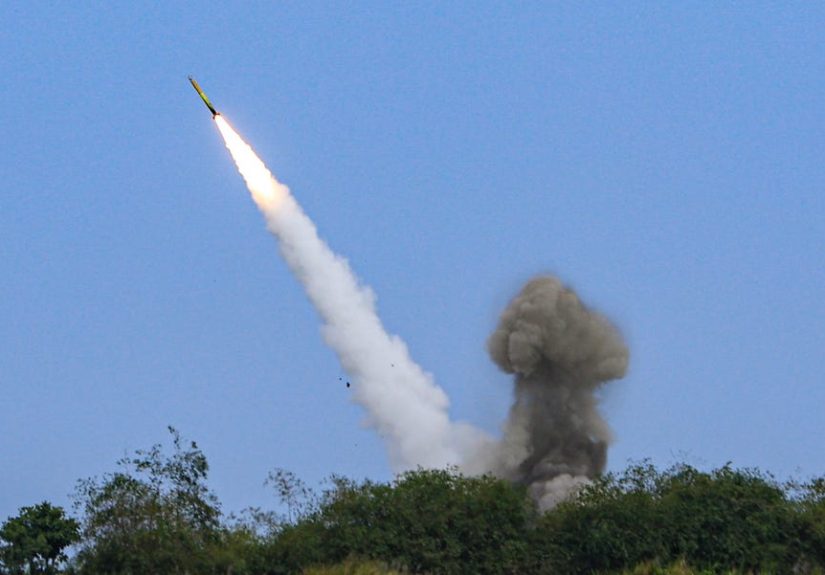
The missile is widely known as the AIM-174B, or the air-launched configuration of the SM-6. Its nickname, “Gunslinger,” fits the mood. This is not a small, nimble dogfight missile meant for close-range aerial knife fights. It is a long-range air-to-air missile designed to reach far beyond the normal visual horizon, threatening enemy aircraft, surveillance planes, bombers, and command-and-control platforms at distances that change how naval aviation thinks about combat.
To understand how the Navy built the world’s longest air-to-air missile, you have to follow a story that begins with Cold War carrier defense, runs through the legendary F-14 Tomcat and AIM-54 Phoenix, and lands in today’s Indo-Pacific competition, where range is not just a number. It is survival.
The Navy’s Old Problem: Keep Threats Away From the Carrier
For decades, the U.S. Navy’s biggest aviation challenge has been simple to describe and very hard to solve: protect the aircraft carrier. A carrier strike group is powerful, but it is also a huge, valuable target. During the Cold War, Soviet bombers such as the Tu-16 Badger, Tu-95 Bear, and Tu-22M Backfire could carry anti-ship cruise missiles meant to overwhelm fleet defenses before American fighters could respond.
The Navy did not want to wait until enemy bombers were close enough to ruin everyone’s day. It needed fighters and missiles that could intercept hostile aircraft far from the fleet. That need created one of the most famous fighter-and-missile pairings in history: the Grumman F-14 Tomcat and the AIM-54 Phoenix.
The AIM-54 Phoenix Was the First Giant Leap
The AIM-54 Phoenix was a monster by air-to-air missile standards. Built by Hughes Aircraft and later associated with Raytheon, it gave the F-14 a long-range punch that made the Tomcat more than a movie star with variable-sweep wings. The Phoenix could fly at extremely high speed, use radar guidance, and engage targets at ranges commonly described as more than 100 miles.
Its real magic was not just range. Paired with the F-14’s AWG-9 radar, the Phoenix system could track many targets and engage multiple aircraft at once. In a famous 1973 test, an F-14 launched six Phoenix missiles against six separate targets in less than a minute, scoring four direct hits. That was not a dogfight. That was air-defense chess played with rockets.
But the Phoenix era eventually ended. The Navy retired the AIM-54 in 2004, and the F-14 followed in 2006. The Navy then relied heavily on the AIM-120 AMRAAM, a superb missile but not a Phoenix-style ultra-long-range fleet-defense weapon. For years, the Navy lived without a direct Phoenix successor.
Enter the SM-6: A Ship Missile With Bigger Ambitions
The SM-6, formally part of the Standard Missile family, was originally designed for ships equipped with the Aegis combat system. Launched from cruisers and destroyers, it can perform several missions, including anti-air warfare, ballistic missile defense, and anti-surface warfare. In plain English: it can hit aircraft, help defend against advanced missiles, and even threaten ships. Not bad for something that starts its workday inside a vertical launch cell.
The Navy’s breakthrough was realizing that the SM-6 did not have to stay on ships. If the missile already had the speed, seeker technology, datalink potential, and long-range energy needed to chase difficult targets, why not adapt it for a carrier-based fighter?
That question led to the AIM-174B, an air-launched version of the SM-6 carried by the F/A-18E/F Super Hornet. Instead of designing a completely new missile from scratch, the Navy repurposed an existing weapon family. That approach saved time, reduced risk, and avoided the nightmare of creating an entirely new production line. Engineers love that kind of shortcut. Accountants probably sent thank-you cards.
How the Navy Built the AIM-174B
The AIM-174B was not built by simply duct-taping a ship missile under a Super Hornet and hoping for the best. The adaptation required careful work in several areas: aircraft integration, launch mechanics, software, guidance, and operational tactics.
1. Start With a Proven Missile Body
The SM-6 already had a strong foundation. It was a mature weapon produced by Raytheon, with a long-range rocket motor, advanced guidance, and a seeker derived from the AIM-120 AMRAAM family. That made it a logical candidate for adaptation. The Navy did not need to invent every component. It needed to transform a sea-launched interceptor into an air-launched missile that could survive carriage, separation, ignition, and guidance from a moving fighter aircraft.
2. Remove the Ship-Launch Assumptions
A ship-launched missile begins its life vertically and needs a booster to blast it out of a launch cell. A missile launched from a fighter starts in a completely different environment. It already has altitude, forward speed, and thinner air working in its favor. That air-launch advantage can help range because the missile does not waste as much energy climbing from sea level.
Public images of the AIM-174B show a missile that resembles the SM-6 but is configured for aircraft carriage rather than ship launch. That difference matters. Aircraft integration is about more than “will it fit?” Engineers have to evaluate weight, drag, vibration, structural loads, safe separation from the aircraft, and how the missile communicates with the jet before and after launch.
3. Pair It With the Super Hornet
The F/A-18E/F Super Hornet is the Navy’s workhorse fighter. It is not as glamorous as the old F-14 Tomcat, and it does not have the Tomcat’s swing-wing drama, but it is reliable, carrier-capable, and deeply integrated into modern naval aviation. By giving the Super Hornet the AIM-174B, the Navy effectively restored a long-range air-to-air capability that had been missing since the Phoenix retired.
Because the AIM-174B is large and heavy, it is not something a pilot carries casually like an extra granola bar. A Super Hornet loaded with AIM-174Bs must balance range, drag, fuel, other weapons, and mission requirements. But the tradeoff is significant: one aircraft can threaten targets far beyond the reach of older air-to-air loadouts.
4. Use Networked Warfare Instead of Lone-Wolf Targeting
The modern Navy does not fight as a collection of isolated platforms. It fights as a network. Ships, aircraft, sensors, satellites, and command systems share data to build a larger picture of the battlespace. That matters because a very-long-range missile is only useful if the shooter can detect, identify, and track the target at very long distance.
The AIM-174B likely benefits from this networked approach. A Super Hornet may not always need to rely only on its own radar picture. In a modern kill chain, targeting information can come from other aircraft, ships, or sensors. That is the real revolution: the missile’s range is powerful, but its value grows when connected to a wider fleet sensor network.
Why Range Matters So Much
In air combat, range is not just about bragging rights. It changes behavior. If one side can threaten valuable aircraft from farther away, the other side must operate more cautiously. Tankers, airborne early warning aircraft, electronic warfare planes, and patrol aircraft may have to stay farther back. That can weaken the enemy’s ability to see, communicate, refuel, and coordinate attacks.
This is especially important in the Indo-Pacific, where distances are enormous. A map of the Pacific looks calm until you remember that every inch represents miles of ocean, fuel planning, sensor coverage, and logistics headaches. In such an environment, a missile with extreme reach gives carrier aircraft a way to push danger outward from the strike group.
Public reporting has described the AIM-174B as having a range around 400 kilometers, or roughly 250 miles, though exact figures remain classified and estimates vary. Even with that caveat, the missile represents a major leap over the AIM-120 AMRAAM’s publicly discussed reach and gives the Navy a tool for countering long-range Chinese and Russian air-to-air weapons.
AIM-174B vs. AIM-54 Phoenix: Same Mission, Different Era
The AIM-174B is often compared with the AIM-54 Phoenix, and for good reason. Both missiles exist because the Navy hates surprises near its aircraft carriers. Both are large, long-range weapons intended to kill threats before they get too close. But they belong to different technological worlds.
The Phoenix was built for the F-14 and its AWG-9 radar during the Cold War. It was meant to stop bomber raids and cruise-missile carriers. The AIM-174B belongs to an era of distributed sensors, advanced datalinks, stealth aircraft, long-range anti-ship missiles, and contested networks. It is less about one fighter acting as a lone interceptor and more about a carrier air wing plugging into a much larger combat system.
Think of the Phoenix as a powerful longbow carried by one very specialized archer. Think of the AIM-174B as a spear thrown by an entire network that knows where the target is, where the threat is going, and how far away the carrier needs to stay.
Why the Navy Did Not Just Build a Brand-New Missile
Building a new missile from scratch is expensive, slow, and risky. It involves years of design, testing, production planning, software development, safety certification, and budget wrestling. By adapting the SM-6, the Navy used an existing industrial base and an already trusted missile family. That decision matters because modern warfare consumes precision weapons quickly, and production capacity is now a strategic concern.
Using the SM-6 family also gives the Navy flexibility. The same broad missile lineage supports ship defense, missile defense, anti-surface roles, and now air-launched long-range air combat. That is the military equivalent of buying one excellent multitool instead of carrying seven gadgets that all need different batteries.
What the AIM-174B Means for China and the Indo-Pacific
The AIM-174B arrived at a time when the United States is focused heavily on deterring conflict in the Indo-Pacific. China has invested in long-range missiles, advanced fighters, anti-ship weapons, and aircraft designed to push U.S. forces farther from contested areas. In that environment, range becomes a contest of who can threaten whom first.
Chinese long-range air-to-air missiles such as the PL-15 and reported PL-17 are often discussed as threats to U.S. tankers and support aircraft. Those aircraft are essential because fighters need fuel, surveillance, and command support to operate across Pacific distances. If enemy missiles force support aircraft too far away, U.S. fighters lose endurance and effectiveness.
The AIM-174B helps answer that problem. By giving Super Hornets a very-long-range shot, the Navy can threaten enemy aircraft that would otherwise operate comfortably outside older missile envelopes. That does not make the carrier invincible, and it does not replace stealth, electronic warfare, or good tactics. But it does complicate an opponent’s plans, which is often the whole point of deterrence.
The Engineering Lesson: Innovation Is Often Recombination
The AIM-174B is a reminder that military innovation is not always a sparkling new object rolling out of a secret lab while dramatic music plays. Sometimes innovation means looking at what already exists and asking, “Can this do more?”
The Navy did not create extreme-range air combat by starting with a blank sheet. It built on the SM-6, a proven ship-launched missile. It matched that weapon to the Super Hornet, a proven carrier aircraft. It connected the result to a modern networked battlespace. The outcome is new, but the ingredients were already sitting in the defense pantry.
Challenges and Limits of the World’s Longest Air-to-Air Missile
For all its promise, the AIM-174B is not magic. Long-range missile shots are complicated. Targets maneuver. Electronic warfare interferes. Rules of engagement matter. Pilots must identify targets correctly. A missile launched at extreme range may take time to reach its target, and the target may change course, descend, jam, or hide behind terrain or distance.
The missile’s size is another limitation. A Super Hornet carrying AIM-174Bs will face drag and weight penalties. It may carry fewer other weapons or sacrifice some performance. In carrier aviation, every pound matters, because jets must launch from catapults, recover on small decks, and operate safely in unforgiving weather.
There is also the cost question. Advanced missiles are not cheap, and using a high-end weapon against every target would be wasteful. The AIM-174B is best understood as a strategic tool for high-value targets and long-range deterrence, not as a replacement for every medium-range missile in the inventory.
Why This Missile Changes the Conversation
The AIM-174B changes naval aviation because it gives the carrier air wing a reach it has not had since the Tomcat-Phoenix era. It also proves that the Navy can move quickly by adapting existing systems rather than waiting decades for a perfect new weapon.
Most importantly, it changes what adversaries must think about. An enemy aircraft that once felt safe at long distance may no longer be safe. A surveillance plane that once orbited confidently may need to stay farther away. A bomber formation may have to account for Super Hornets carrying weapons with ship-missile DNA. That is how deterrence works: not by guaranteeing victory, but by making aggression look expensive, uncertain, and deeply inconvenient.
Experience Notes: What This Story Teaches About Long-Range Air Combat
Looking at the Navy’s long-range missile story offers several practical lessons for anyone interested in military technology, aviation history, or defense strategy. The first lesson is that requirements drive invention. The Navy did not build the AIM-54 Phoenix because engineers were bored on a Tuesday. It built Phoenix because Soviet bomber raids threatened carrier groups. Likewise, the AIM-174B did not appear because someone wanted a bigger missile for a bigger brochure. It emerged because modern threats are pushing farther outward, and the Navy needs its fighters to reach farther too.
The second lesson is that platforms and weapons must grow together. The F-14 was designed around the fleet-defense mission, and the Phoenix was central to that identity. The Super Hornet was not originally a Phoenix-style interceptor, but the AIM-174B gives it a new long-range role. That shows how a mature aircraft can remain relevant when paired with smarter weapons, better sensors, and improved networking. In aviation, the aircraft is only one part of the equation. The missile, radar, datalink, and battle network can matter just as much.
The third lesson is that range creates psychological pressure. A long-range missile does not need to be fired constantly to be useful. Its mere presence can force an opponent to change routes, hold support aircraft farther back, or spend more resources protecting high-value assets. That is similar to how a great pitcher changes a baseball game before the ball even leaves his hand. Everyone knows what might happen, and that possibility shapes every decision.
The fourth lesson is that adaptation can beat perfection. Defense programs often suffer when they chase flawless new designs for too long. The Navy’s decision to adapt the SM-6 into an air-launched weapon shows a more practical mindset. Start with something proven. Modify it. Test it. Field it. Improve it. In a fast-changing security environment, speed can be a weapon too.
The fifth lesson is that long-range combat depends on trust in information. A missile flying hundreds of miles needs accurate targeting data. That means pilots, ships, radar operators, satellites, and command networks must cooperate. The future of air combat will not be won only by the fastest jet or the biggest missile. It will be won by the side that can find targets, share data, make decisions, and act before the opponent can react.
Finally, the AIM-174B reminds us that old ideas often return wearing new technology. The Navy wanted to defend carriers at long range in the 1970s, and it wants the same thing today. The names have changed: Phoenix became Gunslinger, Tomcat became Super Hornet, and Cold War bomber raids became Indo-Pacific anti-access networks. But the core mission is familiar: keep the fleet alive, push threats away, and make any attack on a carrier strike group a very bad career choice.
Conclusion
The story of how the Navy built the world’s longest air-to-air missile is really a story about range, adaptation, and timing. The AIM-174B did not appear from nowhere. It grew from decades of fleet-defense thinking, from the AIM-54 Phoenix legacy, from the SM-6 missile family, and from the urgent need to compete in vast theaters like the Indo-Pacific.
By transforming a ship-based missile into an air-launched weapon for the Super Hornet, the Navy restored a capability it had lost when the Phoenix retired. It also showed that the future of air combat may belong not only to stealth fighters and sleek new aircraft, but also to clever combinations of existing systems. Sometimes the longest reach comes from taking something you already trust and teaching it a new trick.
The AIM-174B is big, expensive, and probably not something you bring to a casual dogfight. But for keeping enemy aircraft at arm’s length, protecting carriers, and complicating rival war plans, it may be exactly the kind of long-range muscle the Navy needs. In other words, the Gunslinger did not just enter the chat. It changed the room.







 Close
Close