Table of Contents >> Show >> Hide
- Why Baked Salmon Is Such a Smart Choice
- Choosing the Best Salmon for Baking
- How to Prep Salmon for the Oven
- Best Temperature for Baking Salmon
- How Long to Bake Salmon
- How to Tell When Salmon Is Done
- Step-by-Step: The Easiest Way to Bake Salmon
- Common Mistakes When Baking Salmon
- Healthy Meal Ideas with Baked Salmon
- How to Store and Reheat Baked Salmon
- Why Baked Salmon Belongs in Your Regular Rotation
- Real-Life Experiences with Baking Salmon at Home
- Conclusion
Salmon is the overachiever of the dinner world. It is fast, flavorful, protein-packed, and somehow manages to feel both weeknight-easy and dinner-party fancy. One minute it is sitting on a sheet pan with lemon slices, and the next it is being admired like it just walked out of a cooking magazine wearing a shiny olive oil jacket.
If you have ever wondered how to bake salmon without drying it out, undercooking it, or turning your healthy dinner into a sad fish situation, you are in the right place. Baking salmon is one of the easiest ways to make a delicious and healthy meal in a snap, and it does not require chef-level skills, a culinary degree, or dramatic background music.
This guide breaks down exactly how to bake salmon, including the best oven temperatures, how long to bake it, what seasonings work best, how to tell when it is done, and how to build quick meals around it. Whether you are cooking for one, feeding a family, or trying to impress someone with your suspiciously calm kitchen confidence, baked salmon delivers.
Why Baked Salmon Is Such a Smart Choice
Before we get into the nuts and bolts of baking salmon, let us give credit where it is due. Salmon is popular for good reason. It is rich in protein, naturally satisfying, and widely known for containing omega-3 fatty acids. That makes it a favorite for people who want meals that feel hearty without feeling heavy.
It is also wildly flexible. You can dress it up with garlic butter, keep it simple with salt and pepper, go sweet-savory with maple mustard, or lean bright and fresh with dill and lemon. Salmon works with rice bowls, roasted vegetables, salads, pasta, couscous, potatoes, and even tucked into wraps the next day. Few proteins are this adaptable without becoming boring.
Best of all, baked salmon is quick. In many cases, it cooks in under 15 minutes. That means it belongs in the same elite category as meals that save dinner on busy nights, right next to omelets, tacos, and whatever miracle is hiding in your freezer.
Choosing the Best Salmon for Baking
Fresh vs. Frozen Salmon
You can make excellent baked salmon with either fresh or frozen fish. Fresh salmon is convenient if you plan to cook it right away. Frozen salmon is equally useful, especially if you like to keep healthy meal options on standby. In fact, frozen salmon can be a lifesaver on nights when your dinner plan is “I forgot to have a dinner plan.”
If using frozen salmon, thaw it safely in the refrigerator before baking for the most even results. Pat it dry well before seasoning so the surface roasts instead of steaming.
Skin-On vs. Skinless
Skin-on salmon is often easier for beginners because the skin acts as a bit of a buffer between the fish and the hot pan. It can help protect the delicate flesh from overcooking. Even if you do not plan to eat the skin, baking salmon with the skin on can be a smart move.
Skinless fillets also work, but they benefit from parchment paper, foil, or a lightly greased pan so they do not stick and tear. Nobody wants their beautiful fillet to leave half its dignity behind on the baking sheet.
Types of Salmon
Atlantic salmon is common and tends to be rich, mild, and forgiving. Sockeye is leaner, deeper in color, and stronger in flavor. Coho and king salmon also bake beautifully. The main thing to know is that thicker, fattier fillets are often harder to dry out than thinner ones, so keep an eye on thickness when estimating cooking time.
How to Prep Salmon for the Oven
Good baked salmon starts with simple prep. You do not need a complicated marinade or a ten-step ritual involving obscure pantry items. A few smart basics go a long way.
- Preheat your oven before the fish goes in.
- Line a baking sheet or baking dish with parchment paper or foil for easy cleanup.
- Pat the salmon dry with paper towels.
- Brush lightly with olive oil or melted butter.
- Season with salt, black pepper, and any other flavorings you like.
That is the foundation. From there, you can stay classic or get creative.
Easy Flavor Ideas for Baked Salmon
- Lemon garlic salmon: olive oil, minced garlic, lemon zest, lemon juice, salt, and pepper
- Herb baked salmon: dill, parsley, chives, garlic, and a squeeze of lemon
- Maple mustard salmon: Dijon mustard, maple syrup, garlic, and black pepper
- Honey soy salmon: soy sauce, honey, ginger, garlic, and sesame seeds
- Spicy salmon: olive oil, smoked paprika, chili flakes, garlic powder, and lime
You do not need to drown the fish in sauce. Salmon already brings plenty of flavor to the table. Think of seasonings as backup singers, not the lead vocalist.
Best Temperature for Baking Salmon
One of the most common questions is this: what is the best oven temperature for baked salmon? The practical answer is that several temperatures work well, depending on the result you want.
375°F: The Reliable Middle Ground
Baking salmon at 375°F is a great all-purpose option. It gives you enough heat to cook the fish relatively quickly while still leaving some margin for error. This is a solid temperature for weeknight salmon fillets and beginner-friendly cooking.
400°F to 425°F: Fast and Popular
If you want salmon in a hurry, 400°F or 425°F is popular for roasting fillets. The higher heat helps cook the fish quickly and can give the surface a more appetizing finish. This works especially well for individual portions.
275°F to 300°F: Slow-Roasted and Tender
If you are after especially silky, tender salmon, a lower oven temperature can be wonderful. Slow-roasting takes longer, but it can reduce the risk of drying out the fish. This method is especially handy for thicker pieces or larger sides of salmon.
For most home cooks who want speed, ease, and dependable results, 400°F is a very strong choice.
How Long to Bake Salmon
Cooking time depends on the thickness of the fillet, the oven temperature, and whether the salmon starts cold from the fridge. As a general rule, salmon bakes quickly.
General Salmon Baking Guide
- At 375°F: about 12 to 18 minutes
- At 400°F: about 10 to 15 minutes
- At 425°F: about 8 to 12 minutes
- At 275°F: about 20 to 30 minutes, sometimes longer for thick cuts
A thinner tail piece will cook faster than a thick center-cut fillet, so try to choose pieces of similar thickness if you are baking several at once. If one piece looks like it belongs in a different fish family entirely, it may finish earlier.
How to Tell When Salmon Is Done
This is where many people get nervous, and fair enough. Overcooked salmon is dry and disappointing. Undercooked salmon can leave you second-guessing every bite. The good news is that doneness is not a mystery once you know what to look for.
Use a Thermometer
The easiest and most accurate method is an instant-read thermometer inserted into the thickest part of the fillet. For food safety, salmon is commonly cooked to an internal temperature of 145°F. If you prefer a softer, more tender center, some cooks pull it earlier and let carryover heat finish the job, but the safest benchmark is 145°F.
Look for Visual Cues
Done salmon should look opaque and flake easily with a fork. The center should no longer look raw or deeply translucent. A little translucency in the very center may disappear as the fish rests for a couple of minutes after baking.
You may also notice a white substance called albumin on the surface. It is just protein that firms up during cooking. It is perfectly normal, though a lot of it can be a sign the salmon cooked a bit too aggressively. In other words, it is harmless, but it is also the fish equivalent of sweat.
Step-by-Step: The Easiest Way to Bake Salmon
Simple Oven-Baked Salmon Recipe
Here is a basic method you can use over and over.
- Preheat the oven to 400°F.
- Line a baking sheet or baking dish with parchment paper or foil.
- Place salmon fillets skin-side down.
- Pat dry and brush with olive oil.
- Season with salt, pepper, garlic, and lemon juice.
- Add lemon slices or herbs on top if desired.
- Bake for 10 to 15 minutes, depending on thickness.
- Check for doneness with a thermometer or fork.
- Rest for 2 to 3 minutes before serving.
That is it. Dinner accomplished, kitchen confidence restored.
Common Mistakes When Baking Salmon
1. Overcooking It
This is the big one. Salmon can go from luscious to dry faster than you can say, “I was just checking on it.” Start checking early, especially with thinner fillets.
2. Not Drying the Surface
If the salmon is wet when it goes into the oven, it is more likely to steam than roast. Patting it dry helps improve texture.
3. Using Too Much Acid Too Early
A quick brush of lemon juice is great, but soaking salmon for too long in a highly acidic marinade can change the texture in a less-than-lovely way. Keep acidic marinades brief.
4. Forgetting Carryover Cooking
Salmon keeps cooking for a few minutes after it leaves the oven. If you wait until it looks wildly done, it may cross into overdone by the time it reaches the plate.
Healthy Meal Ideas with Baked Salmon
One of the best things about baked salmon is how easily it turns into a full meal. You can keep it light, hearty, low-carb, high-protein, or somewhere in between.
Quick Pairings That Work
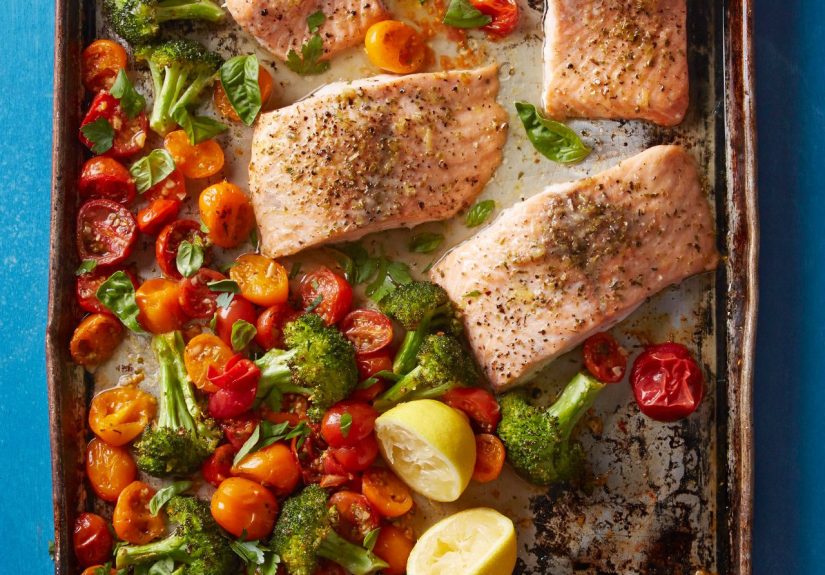
- Salmon with roasted broccoli and brown rice
- Salmon over quinoa with cucumber and tomatoes
- Salmon with sweet potato and green beans
- Salmon flaked into a salad with avocado and lemon vinaigrette
- Salmon bowls with rice, edamame, carrots, and spicy yogurt sauce
- Salmon with asparagus and a side of couscous
If you are meal-prepping, baked salmon is also useful for next-day lunches. Serve it cold over greens, fold it into a grain bowl, or mix it gently with Greek yogurt, herbs, and lemon for a quick salmon salad.
How to Store and Reheat Baked Salmon
Cooked salmon should be cooled and refrigerated promptly. Store it in an airtight container and use it within a few days for best quality. Reheat gently so it does not dry out.
Best Reheating Tips
- Use a low oven temperature, around 275°F, until warmed through
- Cover loosely with foil to help retain moisture
- Add a small splash of water, broth, or lemon juice if needed
- Avoid blasting it in the microwave unless you enjoy the smell of fish announcing itself to the entire building
Why Baked Salmon Belongs in Your Regular Rotation
Some meals are good in theory but annoying in practice. Baked salmon is not one of them. It is genuinely convenient, nutritious, and versatile. It cooks fast, pairs with almost anything, and can be tailored to whatever flavor profile you are craving.
It also solves a common weeknight problem: wanting something healthy that still tastes like real dinner. Baked salmon feels satisfying and substantial without demanding a lot of time. That is a rare and beautiful thing.
Real-Life Experiences with Baking Salmon at Home
What makes baked salmon such a keeper is not just the nutrition profile or the quick cook time. It is the lived experience of how well it fits into actual life. Not fantasy life, where everyone has an organized fridge, a spotless kitchen, and exactly one bunch of fresh dill waiting in a mason jar. Real life, where dinner decisions happen at 6:17 p.m. and someone is already asking what is taking so long.
For many home cooks, salmon becomes a gateway meal. It is often the fish that helps people stop being intimidated by cooking seafood at home. Chicken can dry out, steak can get expensive, and shrimp somehow goes from raw to rubbery in about six emotional seconds. But salmon has a more forgiving texture, especially when baked, and that makes it feel approachable.
A lot of people first fall in love with baked salmon because of how little cleanup it requires. Line a pan, season the fish, roast some vegetables beside it, and you suddenly have a meal that tastes thoughtful without leaving your sink looking like a post-holiday disaster zone. That ease matters, especially on work nights when motivation is low and takeout apps are whispering seductive nonsense.
There is also something satisfying about learning your preferred salmon style. Some people love it simply roasted with olive oil, kosher salt, cracked pepper, and lemon. Others discover that a maple-Dijon glaze makes dinner feel like it came from a restaurant that charges extra for cloth napkins. Some become loyal to garlic butter. Others are completely devoted to spicy honey, which is fair, because spicy honey can make almost anything feel more exciting.
Families often appreciate baked salmon because it can be customized without making separate meals. One fillet can be plain for picky eaters, another can get an herby topping, and a third can go bold with soy, ginger, and garlic. Everyone gets what they want, and the cook still gets to remain one person instead of becoming a short-order line.
Another common experience is discovering that leftover salmon is unexpectedly useful. It slips into lunch boxes, grain bowls, salads, wraps, and even breakfast scrambles. A piece of salmon baked on Monday can become a smart, satisfying lunch on Tuesday, which makes the original effort feel twice as valuable.
Perhaps the best part is the confidence it builds. Once you have baked salmon successfully a few times, you stop treating it like a high-stakes event and start treating it like what it really is: one of the easiest healthy dinners you can make. That shift is powerful. It turns salmon from “special occasion fish” into “Wednesday night hero,” and that is exactly where it shines.
Conclusion
If you want a meal that is quick, healthy, and reliably delicious, baked salmon deserves a permanent place in your kitchen routine. With the right oven temperature, a few simple seasonings, and careful attention to doneness, you can make salmon that is moist, flavorful, and ready in a snap.
Whether you keep it classic with lemon and herbs or branch out into sweet, savory, or spicy variations, the basic technique stays wonderfully simple. Once you learn how to bake salmon well, you will have a go-to meal that feels polished enough for guests and easy enough for a busy Tuesday.
In other words, salmon is not just healthy. It is helpful. And honestly, we should all have at least one dinner in our lives that behaves this well.