
Table of Contents >> Show >> Hide
- Quick reality check: Why AirPods battery is tricky on Android
- Before you start: Make sure your AirPods are paired correctly
- Method 1: Check battery in Android Bluetooth settings (no app, if you’re lucky)
- Method 2: Use an AirPods battery app (most reliable on Android)
- Method 3: Add a widget or keep a notification (set-it-and-forget-it mode)
- Bonus: The “power user” option (more features, more effort)
- Troubleshooting: When battery won’t show (or lies to you)
- Battery-life sanity check (so you know what “normal” looks like)
- Real-world experiences (the stuff people actually run into) about
Using AirPods with Android is a little like bringing a fancy espresso machine to a camping trip:
it works, it’s kind of impressive, but you’ll occasionally wonder why everything isn’t as… automatic.
The biggest “wait, seriously?” moment for most people is battery status. On an iPhone, AirPods battery pops up like
magic. On Android, you often have to ask nicelyand sometimes “nicely” means “install an app.”
The good news: you can absolutely check your AirPods battery on Android. The even better news:
you’ve got multiple options depending on how “extra” you want to be.
This guide breaks down the easiest methods, what works best in real life, and how to fix the common “it’s not showing”
moments that make you want to gently place your phone into the nearest pillow.
Quick reality check: Why AirPods battery is tricky on Android
Android can display battery for many Bluetooth accessoriesif the device reports battery info in a way Android expects.
AirPods, meanwhile, are optimized for Apple’s ecosystem and don’t always hand over battery details to Android in a clean,
standard way. That’s why Android often shows your AirPods as “Connected” but stays mysteriously quiet about battery.
Translation: if your phone shows battery natively, awesomeuse that. If it doesn’t, a third-party AirPods battery app can
fill the gap with a battery popup, a notification, and sometimes a widget.
Before you start: Make sure your AirPods are paired correctly
- Enable Bluetooth on Android: Settings > Connected devices (or Connections) > Bluetooth.
-
Put AirPods in pairing mode:
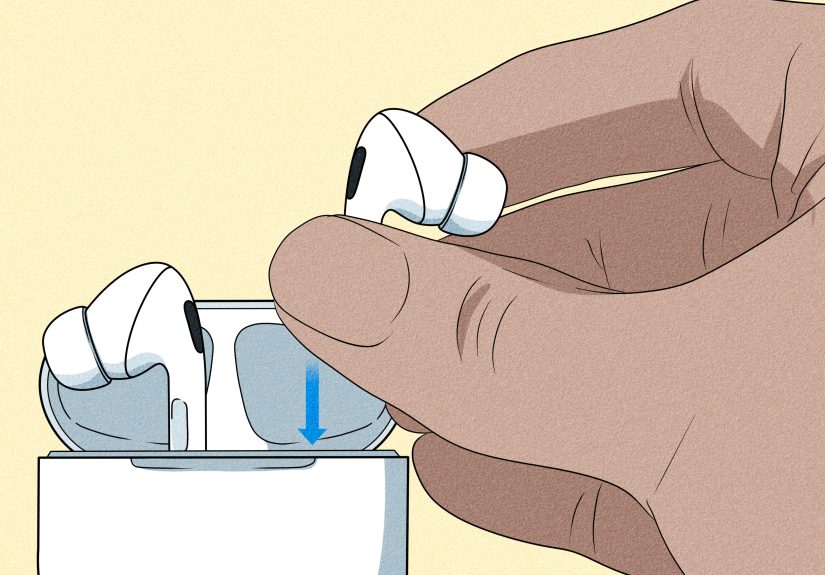
- AirPods / AirPods Pro: Place both earbuds in the case, open the lid, then press and hold the back button until the light flashes.
- AirPods Max: Press and hold the noise control button until the light flashes.
- On Android, select your AirPods from the Bluetooth list and tap Pair.
If pairing fails, charge the case for 10–15 minutes, toggle Bluetooth off/on, and try again. (Yes, turning it off and on
again still works in 2026. Technology is nothing if not consistent.)
Method 1: Check battery in Android Bluetooth settings (no app, if you’re lucky)
Some Android phones and versions can display connected device battery inside Bluetooth device detailsor via a system pop-up.
If your phone supports it for your AirPods, this is the cleanest solution because it requires zero extra installs.
Where to look
- Bluetooth device details: Settings > Bluetooth > tap the gear/info icon next to your AirPods.
- Quick Settings / system pop-ups: Some phones show a connected accessory’s battery in a temporary notification or pop-up.
Why it might not show
Even if your phone has excellent battery UI for earbuds in general, AirPods may not always report battery in a way Android can read.
So if you don’t see battery here, it’s not you. It’s… ecosystem politics.
Method 2: Use an AirPods battery app (most reliable on Android)
If Android won’t show battery natively, an AirPods battery app is your best friend. These apps typically display:
a battery popup when you open the AirPods case, a persistent notification, and sometimes a home screen widget.
Popular options (what they’re good at)
-
AirBattery-style apps: Great for a simple iPhone-like popup when the case opens.
Expect a quick battery card for left/right earbuds and the case. -
Assistant Trigger: Battery popups plus handy extras like triggering your phone’s voice assistant using AirPods controls.
(Great if you want Android to feel a little more “native.”) - MaterialPods: A more customizable look, plus widgets and notification options for battery.
- PodAir / PodsBattery: Other alternatives that focus on showing battery percentages and charging status with minimal fuss.
Step-by-step setup (works for most AirPods battery apps)
- Install the app from the Google Play Store.
-
Open the app and follow prompts. Many apps need permissions such as:
- Display over other apps (so the battery popup can appear on top of whatever you’re doing)
- Notification access (so it can show battery in the notification shade)
- Bluetooth / Nearby devices (to detect the connection properly)
- Location / Nearby permission (often required by Android for Bluetooth scanning, depending on your Android version)
-
If the app asks to be excluded from Battery optimization, consider allowing it.
(Otherwise Android may “helpfully” shut it down in the backgroundlike a cat sitting on your keyboard.) - Put both AirPods in the case.
- Open the case lid near your phone. Wait a few seconds for the popup or notification to appear.
What battery readings to expect (and why they can look “off”)
AirPods battery reporting on Android isn’t always perfectly granular. Many apps show battery in chunks rather than exact
single-percentage changes, and case battery may only appear when the lid is open. If you see percentages jumping (or staying
stuck), that’s common. The data often refreshes when the case opens, earbuds connect, or charging status changes.
Method 3: Add a widget or keep a notification (set-it-and-forget-it mode)
If you hate pop-ups (or love them but want something more consistent), aim for a widget or a persistent notification.
Many AirPods battery apps offer one or both.
Widget setup tips
- Long-press an empty spot on your home screen.
- Tap Widgets.
- Find your AirPods battery app in the widget list and drop it onto your home screen.
-
If the widget shows “” or doesn’t update, open your AirPods case near the phone or reconnect the AirPods once.
Widgets often need a “fresh” connection event to populate.
Note: Some phones (like Pixels) also have a system Battery widget that can show battery for nearby connected devices
but it still depends on whether the device reports battery info in a compatible way. If your AirPods don’t appear there,
a dedicated AirPods battery app is usually the fix.
Bonus: The “power user” option (more features, more effort)
If you want advanced AirPods-like features on Androidthink detailed battery stats, noise control switching in an app,
and deeper customizationthere are newer solutions out there. The catch: some of these options can require extra setup,
and in certain cases, rooting your phone.
For most people, this is overkill. But if you’re the type of person who enjoys tinkering (or you read phone forums for fun),
it’s worth knowing these exist.
Troubleshooting: When battery won’t show (or lies to you)
1) “No battery popup appears”
- Open the case again (close lid, wait two seconds, reopen).
- Keep the case closewithin a foot or two of the phone for the initial read.
- Confirm the app has Display over other apps enabled.
- Disable Battery optimization for the app (or set it to “Not optimized”).
2) “It shows earbuds battery but not the case”
- Many apps only show case battery when the lid is open.
- Make sure both earbuds are inside the case while it’s open.
- Try reopening the casecase battery can be stubborn.
3) “Percentages jump in weird increments”
- That’s normal for this setup. AirPods battery on Android is often reported in chunks, not a smooth countdown.
- For the most accurate “snapshot,” open the case near your phone and let the app refresh.
4) “One earbud battery is missing or stuck”
- Put both earbuds back in the case, close the lid, and open it again.
- Reconnect Bluetooth (disconnect and reconnect the AirPods).
- Clean charging contacts if one bud isn’t charging properly.
5) “The app wants location permissionwhy?”
Depending on Android version, Bluetooth scanning and “nearby devices” behavior can be tied to location-related permissions.
Many apps request it to detect the AirPods reliably. If you’re uncomfortable granting it, choose an app with clearer privacy
disclosures and limit permissions as much as possible while still enabling core features.
Battery-life sanity check (so you know what “normal” looks like)
Your actual battery life depends on your AirPods model, volume, microphone use, and features like noise cancellation or spatial audio.
As a rough reference, Apple rates common models around 5–6 hours per charge for listening time, with the case extending total
listening time into the 24–30 hour range. If you’re getting dramatically less (like 1–2 hours), it’s worth checking fit,
cleaning contacts, and verifying the buds are charging fully in the case.
Small habits that genuinely help
- Keep volume at a reasonable level (your ears will also send a thank-you note).
- If you’re using AirPods Pro, noise cancellation is greatbut toggling modes strategically can extend runtime.
- Store buds in the case when not in use so they don’t stay connected and drain.
Real-world experiences (the stuff people actually run into) about
Here’s what tends to happen in real life when Android users start tracking AirPods batteryespecially if they’ve been spoiled
by the iPhone popup at some point in the past.
First, the “Aha!” moment: most people discover that the case-lid open action is the secret handshake.
You open the case near your phone, and suddenly the battery card appears like you just said the right password at a speakeasy.
After that, you’ll probably do a few “science experiments”:
open lid far away (nothing), open lid close (battery!), open lid while earbuds are in your ears (maybe), open lid with one earbud
missing (why is the left one always the drama queen?). That’s normalAirPods battery updates are often event-based, not continuous.
Second, the “Why does it say 85% for ten minutes?” phase. On Android, it’s common to see battery percentages move in steps
instead of a smooth countdown. The practical takeaway is to treat the number like a rangea quick status check,
not a laboratory-grade measurement. If you need a more reliable read before a long commute or workout, do a quick reset routine:
put both buds in the case, open the lid near the phone, wait for the popup, then decide whether you’re safe to leave the charger behind.
Third, people run into Android’s “helpfulness.” Battery optimization can quietly stop an AirPods battery app from running,
which leads to the classic complaint: “It worked yesterday and now it’s haunted.” In practice, allowing the app to run in the
background (or excluding it from optimization) fixes most of these sudden failures. The trade-off is a bit more phone battery usage,
but if you’re checking AirPods battery often, that’s usually a fair deal.
Fourth, widgets become the favorite for anyone who hates pop-ups. A widget is calmer. A widget is stable. A widget doesn’t jump-scare
you while you’re showing someone photos of your dog. The catch is that widgets still need the AirPods to “report in” occasionally.
If the widget looks blank, opening the case for a refresh is usually all it takes.
Conclusion: If your phone shows AirPods battery natively, stick with itit’s the simplest path. If it doesn’t,
pick one well-reviewed AirPods battery app, grant only the permissions it truly needs, exclude it from aggressive battery optimization,
and use the case-lid trick as your instant refresh button. Once you build that tiny habit, checking AirPods battery on Android becomes
a two-second routine instead of a mystery novel.






 Close
Close