Table of Contents >> Show >> Hide
- Before You Clean: Figure Out What You’re Actually Cleaning
- Your Wood Furniture Cleaning Kit (Simple, Not Fancy)
- The Safe, Everyday Clean (The One That Prevents “Grime Archaeology”)
- Deep Cleaning for Sticky, Dull, or “Why Is This Tacky?” Furniture
- Spot Treatments: Fix the Specific Problem (Without Wrecking the Finish)
- Make It Look New Again: Restoring Shine Without Making It Greasy
- Antiques and Delicate Pieces: Clean Like You’re Borrowing It from a Museum
- When Cleaning Isn’t Enough (and That’s Not Your Fault)
- Real-World Experiences: What “Make It Look New Again” Actually Looks Like (500+ Words)
- Conclusion
Wood furniture is basically the “good jeans” of your home: it looks amazing when it’s cared for, and it looks… complicated when it isn’t.
Fingerprints, cloudy haze, mystery stickiness, water rings from that one friend who “doesn’t do coasters,” and dust that respawns overnight
it all adds up. The good news? Most wood furniture doesn’t need a dramatic makeover. It needs the right sequence: gentle cleaning first,
targeted spot fixes second, and shine restoration last.
Below is a practical, finish-safe guide that helps you clean wood furniture properly (without turning your dining table into a science project).
You’ll get step-by-step methods, real examples, what to avoid, and a longer “experience” section at the end with relatable scenarios that show how
these techniques play out in the real world.
Before You Clean: Figure Out What You’re Actually Cleaning
“Wood furniture” is a category, not a finish. The cleaning approach depends on what’s on top of the wood:
a sealed finish (polyurethane, lacquer, varnish, shellac), an oil finish, wax, paint, or laminate/veneer.
The goal is to remove grime without stripping protection.
Quick finish clues (no lab coat required)
- Sealed finish: Water tends to bead up for a bit before you wipe it away. These are the easiest to clean gently.
- Oil-finished wood: The surface can look matte and “thirsty,” and water may darken the wood quickly if left sitting.
- Waxed furniture: Feels silky and can smudge if you use the wrong cleaner or over-polish.
- Veneer/laminate: Looks like wood but often has a uniform pattern; avoid soaking and harsh abrasives.
- Antique or unknown finish: Treat it as delicate until proven otherwise (patch test everything).
When in doubt, pick an inconspicuous spot (the back of a leg, underside edge) and test your mildest method first.
If your cloth picks up color or the surface gets tacky/cloudy, stop and shift to an even gentler approach.
Your Wood Furniture Cleaning Kit (Simple, Not Fancy)
You don’t need 14 specialty bottles. You need the right basics:
- Microfiber cloths (at least 3): one for dusting, one for damp cleaning, one for drying/buffing.
- Mild dish soap + warm water: your safest “default” cleaner for sealed wood.
- Soft toothbrush or cotton swabs: for carved details and corners.
- Mineral spirits (optional): for sticky residue or greasy buildup (use with ventilation).
- Soft, non-gel white toothpaste + baking soda (optional): for some water rings and marks.
- Furniture wax or polish (optional): for restoring sheenchoose based on your finish type.
Two items to keep far away unless you’re intentionally refinishing: abrasive pads (they scratch) and “universal degreasers”
(they can dull or strip finishes). Wood is tough, but finishes can be dramatic.
The Safe, Everyday Clean (The One That Prevents “Grime Archaeology”)
Step 1: Dry dust first (yes, first)
Dust is tiny grit. If you wipe with moisture before removing it, you can grind it into the finish like sandpaper’s sneaky cousin.
Use a dry microfiber cloth and wipe with the grain. Hit edges, carved details, and the sneaky underside of table lips where dust loves to hide.
Step 2: Mix a gentle cleaning solution
In a bowl or small bucket, combine warm water with a few drops of mild dish soap. You’re aiming for “barely soapy,” not bubble bath.
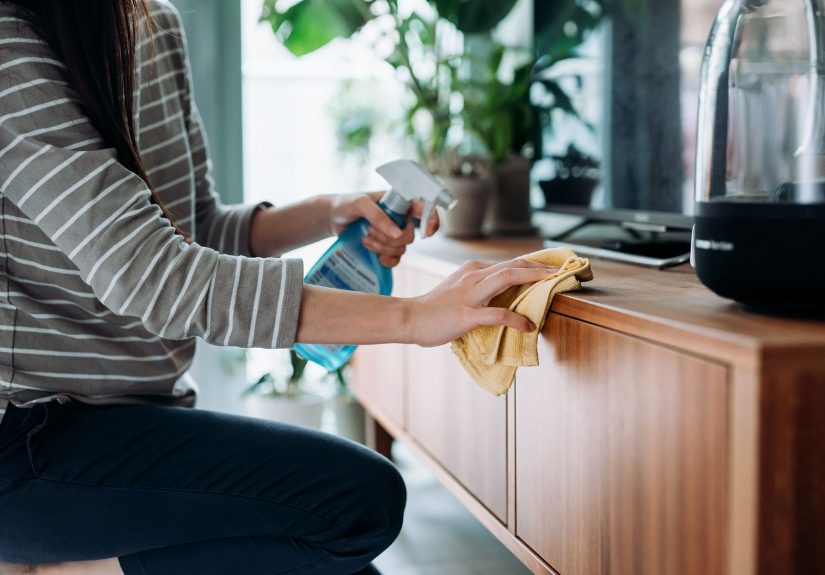
Dip a microfiber cloth, wring it until it’s damp (not wet), and wipe the surface with the grain.
Step 3: Dry immediately (this is non-negotiable)
Follow behind with a clean, dry cloth to remove moisture. Wood and standing water have a complicated relationship.
Drying right away helps prevent swelling, warping, and water marksespecially on seams, joints, and veneer edges.
Example: A dining table that looks “filmy” after dinner
If your table looks cloudy after meals, it’s often a mix of fine dust + cooking oils + cleaner residue.
A single pass with mild soap and a fast dry/buff can restore clarity without adding more product layers.
Deep Cleaning for Sticky, Dull, or “Why Is This Tacky?” Furniture
If soap-and-water doesn’t cut it, you’re likely dealing with buildup: old polish, cooking grease, smoke residue, or adhesives from stickers.
This is where people panic and grab harsh cleaners. Don’t. Use escalation, not chaos.
Option A: Repeat the gentle methodcorrectly
- Use a fresh damp cloth (dirty cloths redeposit grime).
- Work in small sections.
- Dry immediately and buff.
Option B: Mineral spirits for stubborn sticky residue (patch test first)
Mineral spirits can dissolve waxy buildup and sticky grime that mild soap can’t touch.
Use only in a well-ventilated area. Put a small amount on a clean cloth (do not pour directly on the wood),
wipe with the grain, and follow with a dry cloth. If your furniture had a wax layer, mineral spirits may reduce it
so you may need to re-wax or re-polish afterward.
Example: The “kitchen chair back” problem
Chair backs near cooking areas often get a tacky film from airborne grease. A quick soap clean improves it,
but mineral spirits can be the difference between “better” and “brand new.” Finish with a light buff and you’re back in business.
Spot Treatments: Fix the Specific Problem (Without Wrecking the Finish)
Once the surface is clean, you can tackle the stains and marks that make furniture look old.
Here’s a practical “choose your adventure” guide.
| Problem | What It Usually Is | Best First Fix |
|---|---|---|
| White water ring | Moisture trapped in the finish | Low heat (hair dryer/iron) or oil-based method (mayo/mineral oil) |
| Dark water stain | Moisture penetrated deeper (wood reaction) | Oxalic-acid approach (carefully) or professional refinish |
| Ink mark | Dye/pigment in finish surface | Gentle baking soda rub; then buff |
| Greasy fingerprint haze | Oil + dust + residue | Mild soap wipe; if persistent, mineral spirits |
| Scuffs/crayon | Surface transfer | Start with soap; escalate carefully (spot-clean) |
How to remove white water rings (the classic coaster crime)
White rings are often moisture trapped in the finish, not damage deep in the wood. Try these methods in order:
- Low heat method: Use a hair dryer on low heat, moving constantly, a few inches away.
Wipe and check frequently. The goal is to gently drive out moisturenot toast your tabletop like a bagel.
(An iron method can also work, but keep heat low and use a cloth barrier.) - Mayonnaise method: Apply a small amount of mayo to the ring, let it sit about 15 minutes,
then buff clean. It can help lift moisture and condition the finish. - Toothpaste method: Rub a tiny amount of non-gel white toothpaste with a soft cloth.
For stubborn rings, a small mix of equal parts baking soda + toothpaste can add gentle abrasion.
Wipe with a damp cloth and dry thoroughly. - Mineral oil method: Rub mineral oil with the grain, let it sit overnight, then buff.
This can help diminish the appearance of light marks in some finishes.
How to address dark water stains (the “it’s in the wood” situation)
Dark stains can mean the moisture went past the finish and reacted with the wood.
Sometimes you can lighten them; sometimes refinishing is the honest answer.
- Try a gentle oxalic-acid approach (advanced, patch test):
Oxalic acid (often sold as “wood bleach” or found in some cleansers) can lighten dark water marks on bare wood.
On finished furniture, results vary because the finish can block access to the stain.
If you’re not comfortable with chemical handling or you’re dealing with an antique finish, consider a pro. - Know when to stop: If you see finish clouding, color lifting, or uneven patches,
stop and reassess. “One more scrub” is how people accidentally refinish a whole tabletop against their will.
Ink marks and mystery scribbles
For ink marks on finished wood, lightly rub the area with a damp cloth dipped in dry baking soda.
Use gentle pressure, wipe clean with a damp cloth, then dry. If the finish looks dull afterward, buff lightly and consider a tiny amount of polish.
What not to use (unless you like surprise makeovers)
- Too much water: It can seep into joints, swell wood fibers, and damage veneer edges.
- Abrasives (steel wool, scouring pads): They scratch and dull finishes fast.
- Harsh bleachy cleaners: They can discolor wood and strip protective coatings.
- Hydrogen peroxide on wood furniture: It can act like a bleaching agent and may damage or discolor finishes.
- Spraying cleaner directly on wood: Overspray can pool and sneak into seams; spray on the cloth instead.
Make It Look New Again: Restoring Shine Without Making It Greasy
The fastest way to make wood look “new” is not to add more productit’s to remove residue first, then choose the right shine step.
After cleaning, you have two main paths: wax or polish (sometimes both, but not always).
Wax (best for traditional finishes and a soft glow)
- Apply a thin coat with a soft cloth.
- Let it haze slightly, then buff.
- Pro tip: Thin layers look better than thick ones and attract less dust.
If your piece is waxed, be careful with liquid or aerosol polishes that can dissolve wax or leave a hazy film.
Waxed furniture usually prefers wax maintenance, not constant product switching.
Polish (best for quick refresh, used sparingly)
A good furniture polish can reduce fingerprints and add shine, but overuse can build residue that attracts dust and turns tacky.
Think “occasionally,” not “daily hobby.” If you notice buildup, clean it off before adding more.
How often should you wax or polish?
A reasonable rhythm for most homes:
- Dust: weekly (or whenever the dust bunnies file for residency).
- Gentle wipe-down: every few weeks or monthly, depending on use.
- Wax/polish: a few times a year, or when the finish looks dullavoid constant layering.
Antiques and Delicate Pieces: Clean Like You’re Borrowing It from a Museum
Antique furniture can have fragile finishes (like shellac) that react poorly to alcohol, ammonia, and aggressive rubbing.
Keep it gentle:
- Dust with microfiber.
- Use a very mild soap solution with a well-wrung cloth (distilled water is a smart choice for minimizing mineral residue).
- Work in small sections and dry immediately.
- Patch test everything, especially solvents and polishes.
When Cleaning Isn’t Enough (and That’s Not Your Fault)
If your wood furniture has:
- deep black stains that won’t lighten,
- finish peeling, cracking, or alligatoring,
- sticky layers that keep returning,
- or widespread cloudiness from finish damage,
…it may need refinishing rather than cleaning. Cleaning removes grime. Refinishing repairs or replaces the finish.
The win is knowing which problem you havebecause trying to “clean” a failed finish is like trying to fix a cracked phone screen with a microfiber cloth.
(Nice effort, wrong tool.)
Real-World Experiences: What “Make It Look New Again” Actually Looks Like (500+ Words)
Below are a few common, real-life scenarios (composite examples based on what homeowners frequently run into) that show how these methods work in practice.
If your furniture problem has a personality, odds are it lives in one of these stories.
1) The “I Polished It… Why Is It Worse?” Coffee Table
The table looks dull, so someone reaches for furniture polish like it’s a magic spell. It shines for about 20 minutes, then turns hazy and sticky.
That’s usually product buildup stacking on top of old product buildup. The fix is counterintuitive: stop adding shine and start removing residue.
A gentle dish soap wipe-down (damp cloth, not wet) followed by a thorough dry/buff often removes the film. If the stickiness persists,
a careful mineral spirits wipe (patch test first, good ventilation) can cut through what soap can’t. Once the surface feels cleanmeaning your hand glides
and doesn’t “grab”then you pick a light wax or a sparing polish. The “new again” moment isn’t louder shine; it’s clarity and smoothness.
2) The Dining Table with a Constellation of Water Rings
The table has white rings from iced drinks, plus one darker mark where something sat overnight. The smart move is to treat the white rings first,
because they’re often fixable without drama. A hair dryer on low heat, moved constantly, can reduce or erase the marks by gently driving out moisture.
If that’s not enough, a short mayo treatment (about 15 minutes) or a tiny amount of toothpaste rubbed gently can help.
The key experience lesson: check often. People get impatient, scrub harder, and then they’re not removing a ringthey’re changing the sheen.
The darker stain is where expectations need a pep talk. Dark marks can be deeper than the finish. Sometimes they lighten; sometimes they don’t.
If it’s a valuable piece, many homeowners decide the table is worth either professional help or a planned refinish later.
In the meantime, preventing new rings (coasters, placemats, quick wipe-downs) keeps the problem from multiplying.
3) The “Kitchen Grease Ghost” on Chairs and Cabinet Adjacent Furniture
Furniture near kitchens tends to collect a fine layer of airborne oil, especially on chair backs, bar stools, and the sideboard that “just lives there.”
It doesn’t always look dirty, but it feels weirdslightly tacky, like the wood is wearing lip gloss.
The experience-based trick is to clean in two passes: first with dry microfiber to remove grit, then with the mild soap solution to lift oils.
If the tackiness remains, mineral spirits can help, but only in small sections with immediate buffing.
Once it’s clean, a light wax can add a smoother feel and help resist future grimewithout creating a thick layer that grabs dust.
4) The Antique Dresser That “Hates Modern Products”
Some older finishes don’t want trendy shortcuts. Homeowners often discover this when a “miracle spray” leaves smears, dull patches, or a gummy feel.
The best experience lesson here is: treat antiques like sensitive skin. Microfiber dusting and a very mild soap wipe with a well-wrung cloth,
followed by fast drying, tends to be the safest baseline. When people slow downsmall sections, gentle pressure, minimal moisturethe wood almost always
looks better without risking finish damage. The “new again” result is less about glossy shine and more about an even, cared-for surface.
In all these scenarios, the pattern is the same: clean gently, escalate only when needed, dry immediately, and restore shine with restraint.
Wood furniture doesn’t need you to fight it. It needs you to outsmart it.
Conclusion
To make wood furniture look new again, focus on the correct order: dust, then gentle clean, then targeted fixes,
and finally a light shine step (wax or polish) that matches your finish. Avoid soaking, abrasives, and harsh cleaners.
When stains are deep or the finish is failing, refinishing may be the real solutionand that’s a normal part of wood furniture’s long life.
Treat your pieces well, and they’ll keep aging like the classy items they are (unlike that “temporary” chair from college).