Table of Contents >> Show >> Hide
- Why Dish Soap Works on Windows (and Why It Sometimes Backfires)
- The Streak-Free Window Cleaning Toolkit
- Pick the Right Time (Yes, Timing Matters)
- The Best Dish Soap Window Cleaner Recipes
- Step-by-Step: How to Clean Windows With Dish Soap (No Streaks, No Drama)
- Common Causes of Streaks (and the Fixes That Actually Work)
- How to Handle Special Window Situations
- Maintenance: Keeping Windows Cleaner for Longer
- Real-World Experiences and Lessons That Make the Difference (Extra Notes)
- Conclusion
Cleaning windows sounds simpleuntil the sun hits the glass and reveals what can only be described as “abstract art in
smear form.” The good news: you don’t need a cabinet full of specialty sprays to get crystal-clear glass. With the
right dish soap window cleaner mix, the right tools, and one surprisingly important technique tweak,
you can get a streak-free window cleaning result that looks like you replaced the windows entirely.
This guide walks you through the method pros use (minus the ladder acrobatics), explains why streaks happen,
and gives you an easy troubleshooting playbook for the “why does this window hate me?” moments.
Why Dish Soap Works on Windows (and Why It Sometimes Backfires)
Dish soap is designed to break down greasy residuecooking oils, fingerprints, dog-nose prints, and the mysterious
film that appears on glass in homes with busy kitchens. In tiny amounts, it helps water lift grime so you can remove
it cleanly. The backfire happens when you use too much: excess soap leaves a residue that dries into
streaks and haze. In other words, dish soap is powerful… and a little dramatic if you overdo it.
The Streak-Free Window Cleaning Toolkit
You can clean windows with “whatever’s closest,” but if you want no streaks, the tools matter as much as the solution.
Must-haves
- Microfiber cloths (at least 2): one for washing, one for drying/buffing
- Squeegee with a good rubber blade (12–14 inches is a versatile size for many windows)
- Bucket (for larger jobs) or a spray bottle (for quick interior touch-ups)
- Lint-free towel or a “detail cloth” for edges and corners
- Soft brush/vacuum for tracks and frames
Nice-to-haves
- Distilled water (especially if you have hard water)
- White vinegar (helps cut mineral residue and improves clarity)
- Rubbing alcohol (70%) (useful for stubborn film and fast drying)
- Extension pole for high panes (safer than balancing on questionable furniture)
Quick laundry note: if you wash your microfiber cloths, skip fabric softener. It can coat fibers and reduce absorbency,
which is the opposite of what you want when your mission is “remove water completely.”
Pick the Right Time (Yes, Timing Matters)
If you’ve ever cleaned windows in bright sun and watched them dry in weird stripes before you could finish a single pane,
you’ve learned the hard way: direct sunlight speeds evaporation and can lock in streaks. Aim for an overcast day, early
morning, or late afternoon. Your windows shouldn’t be “hot to the touch” when you start.
The Best Dish Soap Window Cleaner Recipes
There isn’t one perfect formulathere are a few excellent ones. The secret is keeping dish soap minimal while letting
water (and optionally vinegar) do the heavy lifting.
Option A: The Pro-Style Bucket Mix (minimal soap, maximum control)
- 1 gallon warm-to-hot water
- A very small amount of liquid dish soap (think “nickel-sized” or just a few drops)
This is the classic “squeegee-friendly” mix. It creates slip so your squeegee glides smoothly, without leaving soap film.
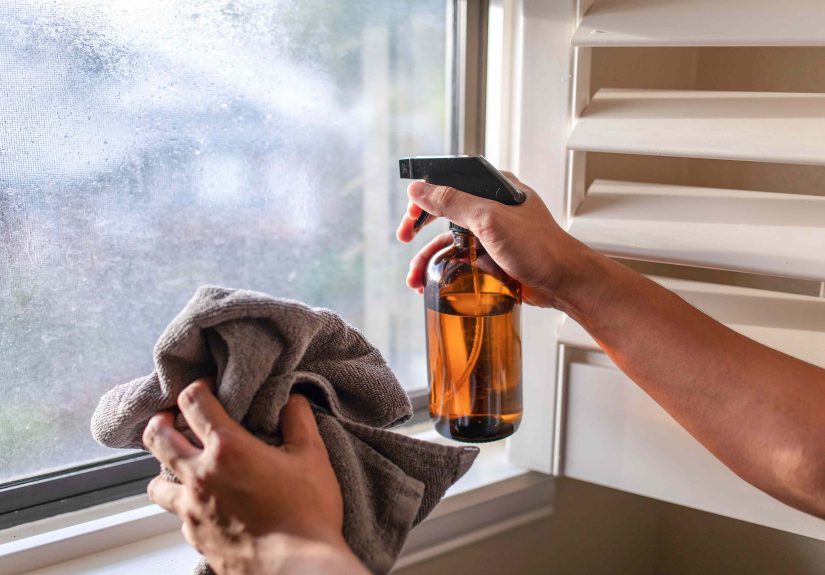
Option B: Spray Bottle Mix for Quick Interior Cleaning
- 1 cup water
- 1 cup distilled white vinegar
- 1 teaspoon dish soap
Great for interior windows, mirrors, and smaller panes where you’re wiping rather than doing full bucket-and-squeegee
theater.
Option C: Warm Water + Vinegar + Tiny Soap (balanced, beginner-friendly)
- 2 cups warm water
- 1/4 cup white vinegar
- 1/2 teaspoon dish soap
This blend is especially handy if your glass looks cloudy from minerals or if you’re cleaning near kitchens where
invisible grease likes to hang out.
Tip: If your tap water is hard, consider distilled water. Minerals can dry into spots and faint streaks,
even when your technique is solid.
Step-by-Step: How to Clean Windows With Dish Soap (No Streaks, No Drama)
Step 1: Dry prep first (the step everyone skips and then regrets)
- Remove curtains/blinds if they’re in the splash zone.
- Dust the glass lightly with a dry microfiber cloth to remove loose grit.
- Vacuum or brush window tracks and wipe frames/sills. (Dirty frames drip onto clean glassclassic betrayal.)
Step 2: Apply solution the right way
For a spray bottle mix, lightly mist the glassdon’t soak it like you’re power-washing a driveway. For a bucket mix,
dampen (not dripping) your scrubber or microfiber “wash cloth,” then cover the glass evenly.
Focus on the edges and corners where grime builds. If there are sticky spots (like tape residue or a suspicious smudge
that refuses to identify itself), let the solution sit for 30–60 seconds to soften itthen gently scrub.
Step 3: Squeegee like you mean it
The squeegee is your streak-prevention superhero. But it needs proper technique to do the cape-flapping hero thing.
- Start at the top and work down.
- Keep the blade angled so one edge leads slightly. That helps prevent lines after each pass.
- Wipe the blade after every pass with a lint-free cloth or towel.
- Overlap strokes slightly so you don’t leave thin wet strips behind.
Two easy squeegee patterns
-
Top-to-bottom pulls: Start at one side, pull down in straight lines, wiping the blade each time.
Great for beginners. -
Reverse-S method: A continuous S-shaped path across the glass that reduces stop-and-start marks.
Excellent once you’ve practiced a little.
Step 4: Detail the edges (where streaks love to hide)
Even great squeegee work can leave a tiny line of moisture along the frame. Use a clean, dry microfiber cloth to wipe
the perimeter and corners. This one step is often the difference between “pretty good” and “how is this window even real?”
Step 5: Use the “cross-check” trick to find leftover streaks
Here’s a simple way to tell whether a streak is on the inside or outside: wipe horizontal on interior
glass and vertical on exterior glass (or vice versa). If you spot a line later, the direction tells you
which side needs a quick touch-up.
Common Causes of Streaks (and the Fixes That Actually Work)
1) Too much dish soap
Symptom: the window looks clean but “hazy,” especially at angles. Fix: remake the solution with less soap, then do a quick
rinse pass with plain water or a light vinegar-water mist, and squeegee again.
2) Hard water minerals
Symptom: spots or faint trails after drying. Fix: use distilled water in your mix, and add vinegar for mineral cutting.
3) Dirty cloths or a tired squeegee blade
Symptom: streaks that seem to “move around” or reappear. Fix: swap to a fresh microfiber cloth and check your squeegee
rubber. If it’s nicked or stiff, it won’t pull water cleanly.
4) Cleaning in direct sun or on hot glass
Symptom: the solution dries too fast and leaves marks before you can squeegee. Fix: clean during cooler hours or shade
the window while you work.
5) Using paper towels (lint city)
Symptom: tiny fibers or a “polished but fuzzy” look. Fix: microfiber cloths or lint-free towels are more reliable.
How to Handle Special Window Situations
Exterior windows with heavy grime
For outdoor glass that has pollen, dust, and “weather residue,” rinse first if possible (a gentle hose rinse, not a
pressure washer cosplay). Then wash with your dish soap mix and squeegee promptly. For stubborn spots, rubbing alcohol on
a cloth can help break down residue before your normal wash.
Screens and tracks (the overlooked streak-makers)
If your screen is dusty, every breeze re-dirties your clean glass. Remove screens (if you can), brush or vacuum them,
then rinse and let them dry completely before reinstalling. Tracks should be vacuumed and wiped; otherwise, gunk can wick
back onto the edges of the glass.
Tinted or coated windows
Most modern windows handle mild dish soap fine, but avoid aggressive scrubbing pads and harsh chemicals. When in doubt,
test your solution on a small corner first and stick with soft microfiber and gentle pressure.
Maintenance: Keeping Windows Cleaner for Longer
- Do quick touch-ups monthly inside if fingerprints happen often (kids, pets, lively hand-talkers).
- Deep-clean exterior a couple times per year, especially after pollen season or windy months.
- Wipe frames and sills during each cleanclean glass + dirty frames is like wearing a tuxedo with muddy boots.
- Store microfiber properly so it stays lint-free (a clean bin or drawer beats the “floor pile of mystery”).
Real-World Experiences and Lessons That Make the Difference (Extra Notes)
People who switch to dish soap for windows usually have the same first reaction: “Wait… that’s it?” The second reaction,
about 20 minutes later, is often: “Why do I still see streaks?” That’s where experiencethe kind you get after cleaning
a few sets of windows and learning what your house environment does to glassbecomes the real secret sauce.
One common experience: kitchens create invisible film. If you’ve got windows near a stove, toaster oven, or that one pan
you always “mean to clean later,” the glass can develop a light grease haze. In those cases, dish soap is fantasticbut
only if you keep the soap minimal and follow with a thorough squeegee pass. People who use a heavier squirt of soap
usually report a clean-looking window that turns cloudy when sunlight hits it. The fix is almost always the same:
remake the solution with fewer drops, then do a second pass with a vinegar-water mix to remove any leftover residue.
Another real-life lesson: microfiber is only magical when it’s actually clean. Many homeowners re-use the same cloth
across multiple windows, then wonder why every pane has the same “signature smear.” What’s happening is simple: the
cloth becomes damp and loaded with dissolved grime, so it starts redistributing it. The experience-based workaround is
to rotate cloths. Keep a small stack nearby and switch to a fresh dry cloth when the one in your hand starts feeling
even slightly tacky.
The squeegee learning curve is also very real. Most beginners press too hard, as if the rubber blade needs a pep talk.
Too much pressure can cause the blade to chatter and leave lines. Experienced cleaners often describe it as “letting the
squeegee glide.” The hand pressure is firm but light, and the angle stays consistent. If you want a simple practice
drill, try one window and focus only on: (1) wiping the blade after every pass, and (2) overlapping each stroke slightly.
Those two changes alone often eliminate 80% of streak issues people complain about.
Hard water creates its own category of experience. Some people think they’re doing everything rightnew cloth, good
techniqueand still end up with faint spots. That’s usually minerals drying on the glass. People who switch to distilled
water often describe the change as “suddenly my windows behave.” If distilled water feels too extra for everyday life,
try reserving it for the final rinse or for the most visible windows (front-facing panes, patio doors, anything that
catches afternoon light).
Finally, the most relatable experience: the moment you finish, step back, and see one streak you missedright in the
middlelike the window is judging you. The low-stress fix is to keep a dry microfiber cloth in your pocket (or nearby)
and do a quick buff on that spot. Many people also swear by the “inside horizontal, outside vertical” habit because it
tells you exactly which side needs the touch-up. That little directional trick can save you from re-cleaning the whole
window out of pure spite.
Once you’ve cleaned windows a few times with dish soap, you start to notice the pattern: streak-free results don’t come
from stronger chemicals. They come from less soap, clean tools, good timing,
and finishing the edges. And yes, you’ll still occasionally find one streak after everything dries.
That’s not failure. That’s just windows reminding us they’re made of glasstransparent, reflective, and weirdly good at
revealing our human flaws.
Conclusion
If you want streak-free windows with dish soap, the formula is simple: use a tiny amount of soap, clean at the right
time of day, rely on microfiber and a good squeegee, and always detail the edges. Do that, and you’ll spend less time
re-cleaning and more time enjoying the suspiciously bright sunlight pouring into your living room.