
Table of Contents >> Show >> Hide
- Why Sports Bar Wings Usually Aren’t as Great as You Remember
- The Four Secrets to Better Chicken Wings
- The Best Oven Method for Crispy Chicken Wings
- Want Even More Crunch? Try These Upgrades
- Best Wing Sauces and Seasonings
- Mistakes That Ruin Chicken Wings
- How to Serve Wings Like You Know What You’re Doing
- The Better-Than-the-Bar Wing Formula
- Real-Life Experiences: What Happens When You Start Making Better Wings at Home
- Conclusion
Let’s be honest: sports bar wings live on reputation. They arrive in a plastic basket, wearing a heroic amount of sauce, and for about six minutes everyone acts like they’ve discovered fire. Then reality shows up. The skin goes limp. The coating turns soggy. The inside is either juicy or weirdly chewy. And somehow you just paid a small mortgage payment for twelve wings and a side of celery nobody invited.
The good news is that making better chicken wings at home is not some elite chef flex. You do not need a restaurant fryer, a secret handshake, or a neon beer sign buzzing in your kitchen. You need a handful of simple techniques, decent seasoning, proper heat, and the courage to let the wings get really dry before they cook. That last part is the one most people skip, which is why so many homemade wings come out with the personality of wet cardboard.
If your goal is crispy skin, juicy meat, bold flavor, and a finish that makes your guests stop mid-conversation and ask, “Wait, you made these?” this guide is for you. We’re going beyond basic game-day food and into “sorry, local sports bar, but I have plans at home” territory.
Why Sports Bar Wings Usually Aren’t as Great as You Remember
Most sports bar wings are built for speed and volume. That means consistency matters more than excellence. Wings may be fried ahead, held too long, reheated, or drenched in sauce so heavily that any crust underneath gives up and files for retirement. Even when the flavor is good, the texture often falls apart.
Great wings need balance. The skin should shatter a little when you bite into it. The meat should stay juicy and pull cleanly from the bone. The sauce should cling instead of puddling. And every bite should taste seasoned all the way through, not just on the outside. That’s where home cooks can actually win. You care about this one batch. The bar cares about surviving halftime.
Cooking chicken wings better than your local sports bar comes down to controlling four things: moisture, heat, seasoning, and timing. Once you understand those, you can make crispy chicken wings in the oven, the air fryer, or even on the grill with better flavor than most takeout spots.
The Four Secrets to Better Chicken Wings
1. Dry skin beats fancy ingredients
The enemy of crispy wings is surface moisture. If the skin is wet, it steams before it browns. That means the fastest route to disappointment is seasoning wet wings and tossing them straight into the oven. Pat them dry thoroughly. Then, if you have time, let them rest uncovered in the refrigerator for several hours or overnight. That air exposure dries the skin and sets you up for serious crunch.
2. A little baking powder can do heroic work
Used correctly, baking powder helps wings brown and crisp more effectively. It changes the surface chemistry of the skin and encourages blistering, crackly texture. The keyword here is little. Too much and your wings can taste oddly metallic or bitter, which is a tragic way to ruin dinner. Think of baking powder as backup vocals, not the lead singer.
3. Airflow matters
If wings sit flat on a crowded pan, the rendered fat and juices collect underneath and sabotage your crust. A wire rack lets hot air circulate around the wings, helping more of the skin brown evenly. No rack? Use parchment on a sheet pan and flip carefully, but the rack is better. It is the quiet overachiever of wing night.
4. Sauce is not a magic wand
Sauce should finish the wing, not rescue it. If you toss soft wings in buffalo sauce, all you have is a wet problem with better branding. Build crispness first, then toss the wings lightly in warm sauce just before serving. You want coated, not submerged. This is chicken, not a hot sauce lifeboat drill.
The Best Oven Method for Crispy Chicken Wings
If you want the most reliable home method with the least mess, the oven is your best friend. Done properly, oven-baked wings can rival deep-fried wings while keeping your kitchen from smelling like a fast-food parking lot.
What you need
- 2 1/2 to 3 pounds chicken wings, separated into flats and drumettes
- 1 tablespoon kosher salt
- 2 teaspoons baking powder
- 1 teaspoon black pepper
- 1 teaspoon garlic powder
- 1 teaspoon smoked paprika
- Optional: 1/2 teaspoon onion powder or cayenne
Step 1: Dry and season the wings
Pat the wings very dry with paper towels. In a large bowl, toss them with salt, baking powder, pepper, garlic powder, and paprika. The coating should look light and even, not pasty. Arrange the wings on a wire rack set over a sheet pan. Refrigerate them uncovered for at least 8 hours if possible. If you’re short on time, even 1 hour helps.
Step 2: Roast hot enough to render and crisp
Preheat the oven to 425°F to 450°F. Roast the wings until they are deeply golden, crispy, and cooked through, usually 40 to 50 minutes depending on size. Flip once halfway through. You are not looking for “lightly tanned.” You are looking for “spent a productive weekend at the beach.” Color equals flavor here.
Step 3: Check for doneness the smart way
Use a thermometer on a few of the thickest wings. Chicken wings should reach 165°F at minimum, but many cooks prefer taking them a little further for tender skin and better rendered fat. That extra time can make the difference between merely cooked and actually craveable.
Step 4: Sauce at the end
Transfer the cooked wings to a clean bowl. Add warm sauce a spoonful at a time and toss until evenly coated. Stop before they drown. That glossy, clingy finish is what you want.
Want Even More Crunch? Try These Upgrades
Use cornstarch for dry-rub wings
If you love salt-and-pepper wings, lemon pepper wings, or Korean-inspired dry wings, a little cornstarch can add extra crispness. It creates a delicate shell that stays crunchy longer than a fully sauced wing. This works especially well when you want the seasoning to stay front and center.
Start low, finish high
Some cooks swear by a two-stage bake: start at a lower temperature to slowly render fat, then increase the heat to finish crisping. This is a strong option if your oven tends to brown too quickly before the wings fully crisp. It takes a bit longer, but it can deliver excellent texture.
Air fry for smaller batches
An air fryer is fantastic for wings when you’re cooking for two to four people. The airflow is aggressive, the cleanup is easier, and the skin gets impressively crisp. The only downside is batch cooking. If you’re feeding a crowd, the oven wins. If you’re feeding yourself and one highly opinionated friend, the air fryer is glorious.
Grill for smoky flavor
Grilled wings are wonderful when you want char, smoke, and a slightly firmer bite. Cook them over indirect heat first so the fat renders without burning, then move them over direct heat to crisp and color the skin. Sauce near the end if it contains sugar, or it can scorch faster than your group chat during playoff season.
Best Wing Sauces and Seasonings
The best chicken wing recipe is not just about texture. Flavor matters, and this is where homemade wings can absolutely embarrass average bar food. You can tailor the wings to your mood, your guests, or your spice tolerance on a day when you’re feeling brave but not foolish.
Classic Buffalo
Mix melted butter with hot sauce, a splash of Worcestershire, and a little garlic powder. Add a squeeze of lemon if you want brightness. Buffalo sauce should taste sharp, buttery, and punchy, not just hot. Heat without balance is not flavor; it is a personal challenge.
Lemon Pepper
Toss hot wings with melted butter, lots of cracked black pepper, lemon zest, and a pinch of garlic powder. Finish with a tiny squeeze of lemon juice. The result is bright, fragrant, and dangerously snackable.
Honey Garlic
Simmer honey, soy sauce, garlic, ginger, and a little vinegar until glossy. This sauce is sweet-savory with enough acidity to keep it from tasting flat. It is excellent for guests who claim they “don’t like spicy food” but still want wings that feel exciting.
Dry Rub Barbecue
Use brown sugar, smoked paprika, garlic powder, onion powder, black pepper, salt, and a pinch of chili powder. This style keeps the wings crunchy and mess-free. It also lets people keep talking without looking like they lost a duel with a bottle of sauce.
Korean-Inspired Gochujang
Whisk gochujang with honey, soy sauce, rice vinegar, sesame oil, and garlic. This gives you sweet heat, depth, and a glossy finish that looks dramatic in the best possible way.
Mistakes That Ruin Chicken Wings
Not drying them enough
This is the big one. Wet wings do not become crispy wings by force of optimism.
Using too much baking powder
A small amount helps. Too much makes the wings taste off. Measure like you mean it.
Crowding the pan
If the wings touch too much, they steam. Give them space. They are not riding public transit.
Saucing too early
If you toss them in sauce before they crisp, you lock in softness. Build texture first.
Undersalting
Wings need assertive seasoning. They are all skin, fat, and dark meat energy. If you season timidly, they will taste timidly.
Ignoring carryover and resting
Let the wings rest for just a couple of minutes before tossing them in sauce. That helps the crust settle and keeps the sauce from sliding right off.
How to Serve Wings Like You Know What You’re Doing
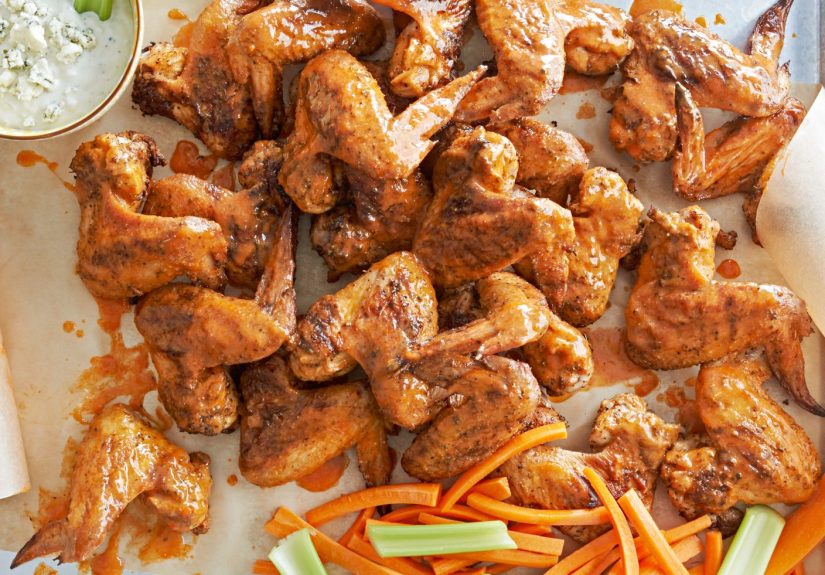
Serve wings hot, on a platter or sheet tray instead of piling them into a deep bowl where steam gets trapped. Offer one or two dips, not six. Ranch or blue cheese is enough. Add celery and carrots if you want tradition, but feel free to skip the performative vegetable garnish if nobody at your table is actually excited about it.
If you’re making wings for a party, cook in batches and hold them in a low oven until the final toss in sauce. Keep the sauced and unsauced wings separate if possible. People always say they’re open to different flavors until the platter arrives, and then suddenly everyone becomes very decisive.
For leftovers, refrigerate the wings promptly and reheat in the oven or air fryer instead of the microwave. The microwave turns crispy skin into a life lesson.
The Better-Than-the-Bar Wing Formula
Here’s the short version: buy good wings, dry them thoroughly, season them properly, give them airflow, cook them until deeply crisp, and sauce them at the end. That is the blueprint. From there, you can go classic Buffalo, smoky barbecue, citrusy lemon pepper, or something wilder. Once you start making wings this way, you’ll notice how often restaurant wings rely on nostalgia, noise, and cold beer to do the heavy lifting.
Homemade wings don’t need any of that. They just need technique. And maybe napkins. Lots of napkins.
Real-Life Experiences: What Happens When You Start Making Better Wings at Home
The funniest thing about learning how to cook chicken wings better than your local sports bar is that it usually starts with skepticism. The first time people hear “oven-baked wings can be better,” they react like you just told them a treadmill is more fun than vacation. But then you make a batch the right way, and the room changes. Somebody reaches for a second wing before they’ve even swallowed the first. Somebody else starts asking what sauce you used. The loudest person at the table gets weirdly quiet, which is one of the highest forms of culinary praise.
One of the best experiences with homemade wings is how customizable they are. At a sports bar, you pick from a list. At home, you build your own wing universe. You can make one tray extra spicy, one tray lemon pepper, and one tray with a dry rub for the people who don’t want sticky fingers all night. That flexibility becomes especially useful when you’re feeding a crowd that includes spice lovers, cautious eaters, and at least one person who insists they are “just having a couple” before personally demolishing twelve flats.
There’s also the timing advantage. Restaurant wings often arrive whenever the kitchen gods allow it. At home, you control the whole rhythm. You can prep the wings early, leave them drying in the refrigerator, and then roast them right before the game starts or guests arrive. That means your wings hit the table at peak crispness, not after a long car ride in a takeout box slowly turning them into hot poultry soup.
Another real-world benefit is confidence. Once you’ve made wings successfully a few times, you stop treating them like special-occasion food and start treating them like a reliable weapon. Last-minute guests? Wings. Casual Friday dinner? Wings. Big game? Obviously wings. Need a crowd-pleaser that feels indulgent without being complicated? Still wings. They become one of those dishes that makes you look far more competent than the effort required.
And then there’s the emotional side of it, which sounds dramatic until you’ve seen it happen. Good homemade food changes the mood of a room. A tray of crispy wings has a way of making people hover in the kitchen, talk longer, laugh louder, and suddenly care very deeply about dipping sauce strategy. Even people who swore they were “not hungry yet” mysteriously appear near the oven the second the aroma hits. That smell of roasted chicken skin, pepper, garlic, and warm sauce is basically social glue.
What surprises many home cooks most is not just that the wings taste better, but that they feel better to serve. There’s pride in hearing that the skin stayed crisp. There’s satisfaction in seeing a clean platter fifteen minutes after you set it down. And there’s a special kind of joy in realizing you no longer have to pay premium prices for wings that are just fine when you can make wings that are memorable.
So yes, better chicken wings are about technique. They are about drying, seasoning, roasting, and saucing with intention. But they are also about the experience they create: the gathering around the tray, the spontaneous comparisons to restaurant wings, the argument over flats versus drumettes, and the smug little smile you try not to show when everyone agrees these are better than the local sports bar. Try not to enjoy that moment too much. Actually, never mind. Enjoy it a lot.
Conclusion
If you’ve ever assumed great wings require a deep fryer and a neon sign, consider this your official correction. The best homemade chicken wings come from managing moisture, heat, and timing better than most restaurants do. Dry the wings well, season boldly, use a rack, roast until truly crisp, and sauce at the end. Do that, and you’ll get wings with crackly skin, juicy meat, and flavor that doesn’t need a giant TV screen to impress anyone. Your local sports bar had a good run.







 Close
Close