
Table of Contents >> Show >> Hide
- What Does “The Teapot Transformed” Really Mean?
- A Brief History of the Teapot
- The Teapot as a Design Object
- The Teapot as Art
- The Teapot in Museums and Collections
- The Teapot and Technology
- Why the Teapot Still Matters Today
- How to Choose a Teapot That Fits Your Life
- The Teapot as a Personal Object
- Experiences Related to “The Teapot Transformed”
- Conclusion: The Teapot’s Endless Reinvention
The teapot is one of those household objects that looks innocent until you start paying attention. At first glance, it is simply a pot with a spout, a handle, a lid, and the quiet responsibility of keeping tea leaves from floating into your teeth. Very practical. Very polite. Very “please pass the biscuits.”
But look closer and the teapot becomes something much bigger. It is a design problem, a cultural symbol, a piece of engineering, a collector’s treasure, a sculptural playground, and sometimes a family heirloom that has survived more kitchen arguments than any therapist should have to hear. Across centuries, the teapot has transformed from a functional brewing vessel into an object of art, memory, ritual, technology, and self-expression.
That transformation is the heart of this article. The story of the teapot is not only about tea. It is about how ordinary objects become extraordinary when culture, craftsmanship, and imagination pour themselves into the same cup.
What Does “The Teapot Transformed” Really Mean?
The phrase “The Teapot Transformed” suggests more than a change in shape. It describes the way a familiar domestic object can move from the kitchen shelf into museums, design studios, art galleries, computer graphics labs, and personal memory. A teapot can be useful, decorative, symbolic, humorous, political, futuristic, nostalgic, or delightfully weirdall while still being recognizable as a teapot.
That is why artists and designers love it. The teapot has rules, but not too many. It usually needs a body, spout, handle, lid, and opening. Yet those parts can be stretched, bent, exaggerated, miniaturized, carved, painted, polished, or completely reimagined. A teapot can look like a quiet round belly, a bird, a machine, a stack of geometric puzzles, or a surreal creature that seems ready to walk off the table.
In other words, the teapot is transformed whenever function meets imagination. It remains familiar enough to welcome us in, but flexible enough to surprise us.
A Brief History of the Teapot
Tea has a long global history, but the teapot as we recognize it today is relatively young compared with the drink itself. Tea drinking developed in China centuries before teapots became common. Early methods often involved boiling leaves or preparing tea in bowls. As loose-leaf steeping became more popular, a dedicated brewing vessel made more sense. The teapot arrived as an elegant answer to a practical question: how do you give tea leaves room to infuse while keeping the drink pourable?
Yixing Clay and the Birth of the Purpose-Built Teapot
Many histories of teapot design point to Yixing, a region in China famous for zisha, or purple clay. Yixing teapots became prized because the clay could be shaped with precision, fired into durable vessels, and left unglazed. Over time, the porous clay absorbed traces of tea, creating a seasoned pot that seemed to deepen the flavor of future brews. Tea lovers still speak of Yixing teapots with the kind of reverence usually reserved for rare musical instruments or grandmothers’ secret recipes.
These early clay teapots were often small, balanced, and intimate. They were designed for careful brewing rather than casual chugging. Their beauty came from proportion, texture, and restraint. No neon colors, no novelty slogans, no “World’s Best Boss” decals. Just clay, tea, and attention.
The Teapot Travels West
As tea moved through trade routes and became fashionable in Europe, teapots traveled with it. Imported Chinese porcelain and Yixing-style forms influenced European potters, who tried to imitate and eventually reinvent the object. In the 18th century, European porcelain factories such as Meissen changed the ceramics world by producing hard-paste porcelain, while British makers developed their own tea wares for a growing tea culture.
The teapot quickly became part of social life. It appeared in refined drawing rooms, taverns, family kitchens, and formal tea services. In Britain and America, tea was not just a drink; it was an occasion. A teapot on the table suggested hospitality, manners, class, politics, commerce, and sometimes rebellion. After all, history shows that people can become surprisingly dramatic about tea when taxes enter the conversation.
The Teapot as a Design Object
A good teapot is harder to design than it looks. Anyone can make a container. Making a container that pours well, retains heat, feels comfortable in the hand, balances when full, and does not dribble like a guilty toddler is another matter entirely.
Form Must Follow Function
The body of a teapot affects how tea leaves circulate. A rounded shape can allow water and leaves to move freely, helping flavor develop. The spout must pour smoothly and stop cleanly. The handle must stay cool enough to hold and strong enough to support the weight of hot liquid. The lid should fit securely without turning every pour into a suspense thriller.
These details sound small, but they determine whether a teapot is a pleasure or a menace. A beautiful teapot that burns your knuckles, spills on the tablecloth, and traps leaves in awkward corners may be artbut it is not winning breakfast.
The Brown Betty and Everyday Brilliance
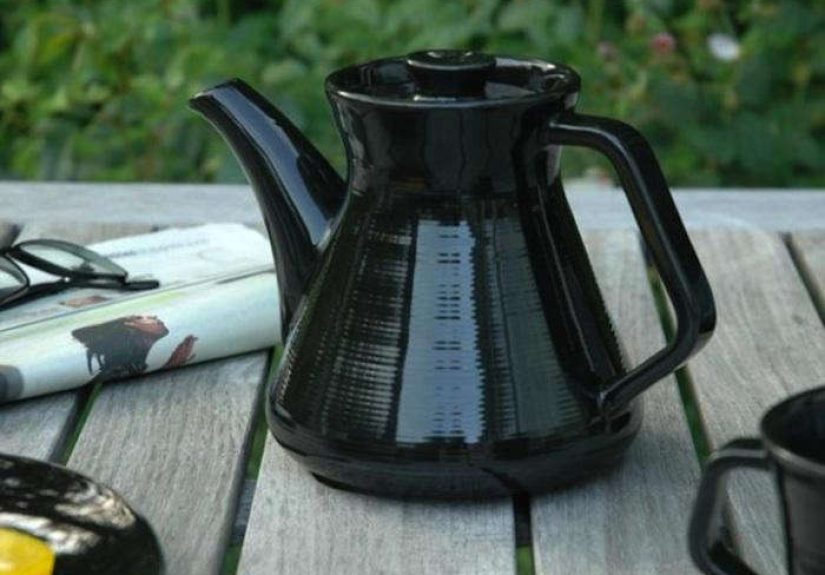
One famous example of practical design is the Brown Betty teapot, associated with Staffordshire red clay and a glossy brown Rockingham-style glaze. Its rounded body and sturdy character made it beloved in British homes. It was not designed to be precious. It was designed to make good tea, hold warmth, and survive daily use.
That is part of the teapot’s magic. Transformation does not always mean becoming extravagant. Sometimes it means becoming so useful and dependable that generations keep reaching for the same form. The Brown Betty is not flashy, but neither is a reliable friend. Both are worth keeping.
The Teapot as Art
At some point, the teapot escaped the kitchen. Artists noticed that it had a built-in personality: a belly, a nose, an ear, a hat. It was practically begging to become sculpture. Contemporary ceramic artists have pushed the teapot into playful, abstract, political, and conceptual territory. Some transformed teapots are still functional. Others are deliberately impossible to use, which is either profound artistic commentary or a very complicated way to avoid washing dishes.
Why Artists Keep Returning to the Teapot
The teapot gives artists a perfect balance of structure and freedom. Because viewers already know what a teapot is, artists can distort it and still keep the reference alive. Stretch the spout too long, twist the handle, add unexpected textures, or stack multiple forms together, and the viewer still thinks, “Ah, teapot.” Then comes the second thought: “Wait, what is this teapot trying to tell me?”
That moment of recognition followed by surprise is powerful. It turns a familiar object into a conversation. A transformed teapot may explore domestic labor, hospitality, colonial trade, gender roles, environmental concerns, consumer culture, or pure visual joy. It can be serious, funny, elegant, strange, or all of those at once.
From Functional Vessel to Sculptural Statement
Books and exhibitions devoted to transformed teapots show how wide the field has become. Traditional teapots may sit beside works shaped like animals, architecture, machines, or dream objects. Some artists focus on glaze chemistry and refined ceramic technique. Others use the teapot as a stage for storytelling.
A sculptural teapot might not pour tea, but it still pours meaning. It asks us to reconsider what function really means. Does an object only function when it performs a practical task? Or can it function by making us think, laugh, remember, or slow down? A teapot that cannot brew tea may still brew curiosity.
The Teapot in Museums and Collections
Museums collect teapots not because curators are secretly planning the world’s most elegant tea party, although that would be a fantastic fundraising event. They collect teapots because these objects reveal changing tastes, technologies, trade networks, social rituals, and design movements.
A silver American teapot can speak to colonial craftsmanship and status. A Chinese Yixing teapot can reveal relationships between material, ritual, and taste. A porcelain European teapot can show how global trade reshaped local industries. A modernist teapot can express industrial design ideals. A contemporary sculptural teapot can challenge the boundaries between craft and fine art.
In museum collections, the teapot becomes evidence. It tells us what people valued, how they gathered, what materials they mastered, and how beauty entered ordinary routines. The teapot may be small, but it has a surprisingly large historical footprint.
The Teapot and Technology
One of the strangest and most delightful transformations in teapot history happened not in a ceramics studio, but in computer graphics. The Utah Teapot, created in the 1970s by computer graphics researcher Martin Newell, became a famous 3D test model. Its curved body, handle, spout, and lid made it useful for testing light, shading, surfaces, and rendering techniques.
That means the teapot helped shape the digital images we now see everywhere, from animation and video games to visual effects. A domestic object became a technical icon. The humble teapot went from steeping leaves to helping computers understand surfaces. Not bad for something that usually sits next to sugar cubes.
The Utah Teapot proves that transformation does not always require clay, glaze, or silver. Sometimes an object transforms when it becomes data. Its curves became coordinates. Its body became a benchmark. Its form became a shared joke and a serious tool in the computer graphics community.
Why the Teapot Still Matters Today
In a world of instant coffee pods, insulated tumblers, and drinks ordered through apps with names longer than Victorian novels, the teapot still has a place. It asks for patience. It requires a pause. You warm the pot, measure the leaves, pour the water, wait, and share. The process is simple, but it resists hurry.
A Ritual in a Distracted World
The modern appeal of the teapot is partly emotional. Tea made in a pot feels different from tea made by dunking a bag into a mug while answering emails. The teapot creates a small ceremony. It says, “Stay for a minute.” It turns a beverage into an experience and a table into a gathering place.
That ritual can be formal or relaxed. It can involve delicate porcelain cups and cucumber sandwiches, or it can involve a chipped mug, sweatpants, and a cookie eaten directly over the sink. The teapot does not judge. It simply offers warmth.
Sustainability and Slow Living
The renewed interest in durable, repairable, handmade, and meaningful objects also gives the teapot new relevance. A well-made teapot can last decades. It does not need batteries, software updates, or a subscription plan. It is wonderfully offline. You can use it during a power outage if you can heat water, and it will never ask you to accept new terms and conditions.
For people interested in slow living, sustainable home goods, and thoughtful consumption, the teapot is a quiet hero. Buying one good teapot and using loose-leaf tea can reduce packaging waste while improving the everyday tea experience. It is not a dramatic lifestyle revolution, but most good habits begin with small, repeatable acts.
How to Choose a Teapot That Fits Your Life
Choosing a teapot is partly practical and partly personal. The best teapot is not necessarily the most expensive one. It is the one you will actually use.
Consider the Material
Ceramic teapots are common, attractive, and good at holding heat. Porcelain feels refined and works well for many teas. Stoneware is sturdy and often has a handmade character. Glass teapots allow you to watch leaves unfurl, which is soothing unless you are impatient, in which case it becomes a tiny botanical countdown. Cast iron teapots retain heat well but can be heavy. Silver and metal teapots are elegant but may require more care.
Match the Pot to the Tea
Different teas benefit from different brewing conditions. Delicate green teas may prefer lower water temperatures and shorter steeping times. Black teas often handle hotter water and a stronger brew. Oolong, pu-erh, and certain traditional Chinese teas may shine in smaller pots that allow multiple infusions. If you enjoy many types of tea, a neutral glazed ceramic or porcelain teapot is a flexible choice.
Look for Good Pouring Design
Before buying, notice the spout, handle, lid, and balance. A teapot should feel comfortable when lifted. The lid should not fall out when the pot is tipped. The spout should be shaped to pour cleanly. If possible, read reviews from people who actually use the pot, not just people who think it looks “adorable on the shelf.” Shelf beauty is nice. Hot tea on your lap is less nice.
The Teapot as a Personal Object
Many people own a teapot that carries emotional weight. It may have belonged to a grandparent, come from a memorable trip, or been purchased during a life stage when making tea felt like self-care. Unlike many household items, teapots often become attached to stories.
A teapot can remind us of Sunday mornings, long conversations, rainy afternoons, winter colds, exam nights, book clubs, family gatherings, or the first apartment where the furniture did not match but the kettle worked. It is not just the object. It is the repeated act around the object that gives it meaning.
That is why the transformed teapot is such a rich subject. It changes historically, artistically, and technologically, but it also changes privately. A teapot begins as a vessel for tea. Over time, it becomes a vessel for memory.
Experiences Related to “The Teapot Transformed”
The most memorable experiences with teapots often begin quietly. Imagine finding an old teapot in a thrift store, tucked between mismatched plates and a suspiciously cheerful ceramic frog. It may be dusty. The lid may wobble. The glaze may be crazed with fine lines that look like a tiny map of forgotten breakfasts. At first, it seems like just another object. Then you pick it up, feel the weight, notice the curve of the handle, and suddenly it becomes interesting. Someone designed this. Someone used it. Someone once poured tea from it and maybe complained about the weather, because that is one of tea’s official companion activities.
Using a teapot changes the pace of a room. The experience is different from making a single mug. A teapot suggests abundance. It creates a center. People lean toward it. Cups are refilled. Conversation stretches. Even silence becomes warmer when there is a pot of tea on the table. The object transforms the mood, not through grand drama, but through small hospitality.
There is also a creative experience in looking at teapots as art. At a craft fair, gallery, or museum, a transformed teapot can stop you in your tracks. You may see one shaped like a bird, another built like a tiny building, another covered in glazes that look like a storm cloud learned to sing. Some pieces are funny. Some are elegant. Some are so strange you wonder whether they brew tea or summon woodland spirits. That uncertainty is part of the pleasure. The teapot becomes a riddle with a handle.
For makers, the teapot is a demanding teacher. Ceramic students often discover that a teapot is not one object but a family of connected problems. The lid must fit. The spout must pour. The handle must balance the body. The clay must survive drying and firing. The surface must invite touch. A teapot exposes weak design quickly. It is humbling, which is a polite way of saying clay has no problem hurting your feelings.
At home, the transformation can be emotional. A teapot used every morning becomes part of a routine. One used only for guests becomes part of celebration. One inherited from family becomes a bridge to people who may no longer sit at the table. Even a cracked teapot, retired from service and filled with flowers, continues its second life. It stops holding tea and starts holding beauty.
The best experience of “The Teapot Transformed” is realizing that transformation does not belong only to artists or museums. It happens whenever we use an object with attention. A teapot transforms water into tea, leaves into aroma, a table into an invitation, and a few ordinary minutes into a pause worth remembering. That is a lot of work for something with a spout.
Conclusion: The Teapot’s Endless Reinvention
The teapot has traveled a remarkable path. It began as a practical vessel for brewing tea and became a global design icon, an artistic challenge, a museum object, a digital model, and a beloved part of everyday ritual. Its transformation is powerful because it never fully abandons its origin. Even the strangest sculptural teapot still whispers the memory of pouring, sharing, and gathering.
That is why the teapot continues to fascinate collectors, artists, designers, historians, and tea drinkers. It combines usefulness with imagination. It belongs to the hand and the eye, the kitchen and the gallery, the past and the future. The transformed teapot reminds us that ordinary objects are rarely ordinary for long. Give them time, culture, craft, and affection, and they become stories we can hold.





 Close
Close