
Table of Contents >> Show >> Hide
- Rice Basics That Make Every Method Work Better
- Method 1: Stovetop Rice (Absorption Method)
- Method 2: Steamed Rice (Stove Steamer or Bamboo Steamer)
- Method 3: Pressure Cooker Rice (Instant Pot and Similar)
- Troubleshooting: Fix Your Rice Like a Calm, Competent Wizard
- Flavor Upgrades (Without Turning Rice into a Science Fair)
- Food Safety: Storing and Reheating Cooked Rice
- Quick Cheat Sheet
- Extra: of Real-Life Rice Experiences (So You Don’t Have to Learn the Hard Way)
- Conclusion
Rice is the culinary equivalent of a white T-shirt: simple, reliable, and somehow still easy to mess up if you ignore the label.
The good news? Once you learn a few core rules (measure, manage heat, and let it rest), you can make fluffy, tender rice on a
stovetop, in a steamer, or in a pressure cookerwithout performing interpretive dance over the pot.
This guide breaks down three dependable methods, explains why ratios vary by rice type, and gives you specific fixes for common
problems like “why is it crunchy?” and “how did I create rice pudding by accident?”
Rice Basics That Make Every Method Work Better
1) Choose the right rice for the job
- Long-grain white (including basmati): fluffy, separate grains; great for bowls, pilaf, and meal prep.
- Jasmine: slightly sticky and fragrant; perfect with stir-fries and curries.
- Medium/short-grain: more tender and clingy; great for sushi-style meals or comfort-food rice.
- Brown rice: nuttier, chewier, and slower; needs more water and time.
2) Rinse (sometimes), soak (occasionally)
Rinsing rice removes surface starch. That can mean less gumminess and more distinct grainsespecially for jasmine and many
long-grain white rices. But if you’re aiming for stickier textures (some short-grain dishes), you may rinse lightly or skip it.
A quick soak (10–30 minutes) can help certain rices cook more evenly, but it’s optional for everyday cooking.
3) Ratios are guidelines, not law
The “perfect” rice-to-water ratio depends on rice type, pan size, lid fit, and how much water you lose to evaporation.
That’s why you’ll see ranges like 1 cup rice to 1 1/4–1 1/2 cups water for many long-grain whites, and higher for brown rice.
Once you find what works with your pot and stove, stick with it like it’s your grandma’s secret recipe (even if your grandma
measures with vibes).
4) The most underrated step: resting
Resting ricecovered, off heatfinishes steaming the center of each grain and helps moisture redistribute so the bottom isn’t
wet while the top is dry. Five to ten minutes is usually enough. This is the moment where good rice becomes “wait, did I cook
this?” rice.
Method 1: Stovetop Rice (Absorption Method)
This is the classic pot-on-the-stove method: simmer until the water is absorbed, then rest. It’s fast, dependable, and doesn’t
require extra equipmentjust a pot with a tight lid and a tiny bit of patience.
Best for
- Long-grain white, jasmine, basmati
- Everyday side dishes
- People who like simple routines (and hate washing extra gadgets)
Stovetop step-by-step (most long-grain white rice)
- Rinse (optional but helpful): Rinse 1 cup rice in cool water until it runs mostly clear. Drain well.
- Measure water: Start with 1 1/2 cups water for 1 cup rinsed long-grain white rice. Add a pinch of salt.
- Bring to a boil: Combine rice + water in a pot. Bring to a boil over medium-high heat.
- Cover and reduce heat: As soon as it boils, cover tightly and reduce heat to low (a gentle simmer).
- Cook: Simmer 15–18 minutes (don’t stir, don’t peeksteam is your employee; don’t let it quit).
- Rest: Turn off heat. Keep covered 5–10 minutes.
- Fluff: Fluff with a fork and serve. Taste. Smile. Pretend it was always this easy.
Suggested stovetop ratios (starting points)
- Long-grain white: 1 cup rice : 1 1/2 cups water
- Jasmine: 1 cup rice : 1 1/4 cups water
- Basmati: 1 cup rice : 1 1/2 to 2 cups water (often closer to 2 if you like softer grains)
- Brown rice: 1 cup rice : about 2 cups water; simmer 35–45 minutes, then rest 10 minutes
Pro move: prevent gummy rice with a “steam barrier”
If your rice gets a little sticky or wet on top, it might be condensation dripping back down. One simple fix is to place a clean
kitchen towel between the pot and the lid during the resting stage (keep it away from open flame). It absorbs excess steam and
helps rice stay fluffy instead of clinging like it’s afraid of being alone.
Alternative stovetop option: the “pasta method”
Want maximum forgiveness? Cook rice like pasta: boil a large pot of water, add rice, simmer until tender, then drain. This can
be especially handy if you struggle with exact ratios or evaporation differences. Texture is typically fluffy and consistent.
(Note: draining can rinse away some enrichment nutrients if you’re using fortified/enriched rice.)
Method 2: Steamed Rice (Stove Steamer or Bamboo Steamer)
Steaming rice is a favorite for cooks who want very even texture and less risk of scorched bottoms. It’s also great when you’re
cooking sticky-leaning rice styles. The trade-off is that steaming usually takes a little longer and benefits from rinsing (and
sometimes soaking).
Best for
- Jasmine, medium-grain, some sticky-style preparations
- Cooks who want consistent texture and don’t want to babysit a simmer
- Meals where the stove already has a pot of simmering something delicious
Steamer method (reliable and simple)
- Rinse thoroughly: Rinse 1 cup rice until the water is mostly clear. Drain well.
- Optional soak: Soak 15–30 minutes for more even steaming (especially helpful for jasmine or medium-grain).
- Set up the steamer: Add a few inches of water to a pot. Bring to a steady simmer. Water should not touch the rice.
- Load the rice: Place rice in a heat-safe bowl or steamer insert lined with cheesecloth (or a fine steaming cloth).
- Steam: Cover and steam about 20–25 minutes for many white rices. Add time for brown rice.
- Rest: Turn off heat and let it sit covered 5 minutes.
- Fluff and serve: Fluff gently and enjoy that clean, even texture.
Tips for better steamed rice
- Don’t let the pot run dry: Check water level if steaming longer than 20–25 minutes.
- Keep the lid on: Steam is the whole point. If you lift the lid repeatedly, you’re basically canceling your own plan.
- Season after cooking: For steamed rice, flavorings like butter, garlic oil, or herbs often taste fresher stirred in after.
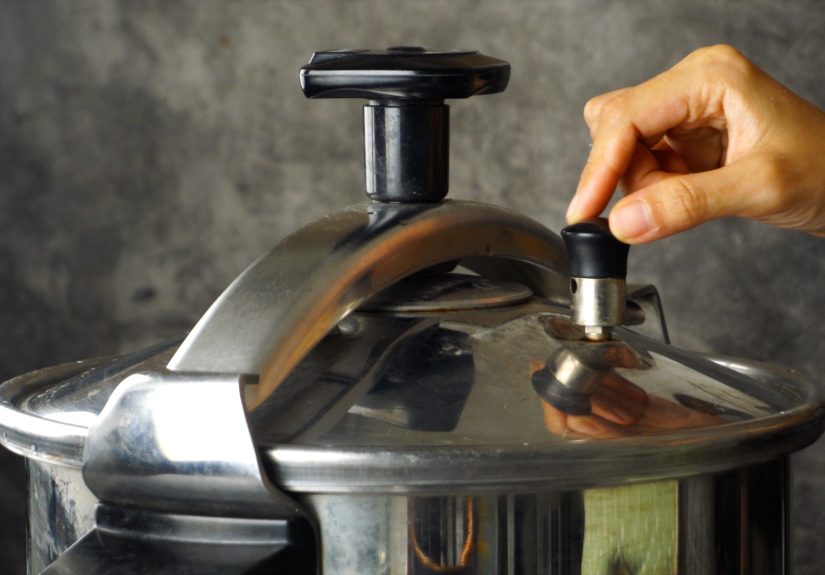
Method 3: Pressure Cooker Rice (Instant Pot and Similar)
Pressure cookers make rice with impressive consistency and minimal effort. They’re especially great for hands-off cookingset it,
walk away, come back, wonder if you’ve unlocked adulting. Because there’s very little evaporation, pressure cooker rice often
uses a tighter ratio than stovetop rice.
Best for
- Busy weeknights and meal prep
- Consistent results with minimal monitoring
- Homes where “I forgot it on the stove” is a recurring story arc
Pressure cooker step-by-step (typical white rice)
- Rinse and drain: Rinse 1 cup white rice and drain well.
- Add water: Use 1:1 (1 cup rice to 1 cup water) as a common starting point for many white rices.
- Salt (optional): Add a pinch of salt or a teaspoon of oil/butter for flavor and less foaming.
- Cook on High Pressure: Many white rices do well at 3–5 minutes on High Pressure.
- Natural release: Let pressure release naturally for 10 minutes, then quick release any remaining pressure.
- Fluff: Fluff and serve. Try not to brag too much.
Pressure cooker notes by rice type
- Jasmine: Often excellent with 1:1 ratio and short cook time; natural release helps finish gently.
- Basmati: Some cooks prefer slightly less water (for firmer grains) or a brief soakadjust based on your texture preference.
- Brown rice: Needs longer cook time (commonly 20–25 minutes) and often 1:1 to 1:1.25 liquid, depending on the model and rice.
Why natural release matters
Rice is starchy and delicate when it’s hot. A short natural release helps prevent sputtering, reduces foam risk, and finishes
steaming the grains so the center isn’t undercooked while the outside is perfect.
Troubleshooting: Fix Your Rice Like a Calm, Competent Wizard
Problem: Rice is crunchy or undercooked
- Cause: Not enough water, too high heat, lid not tight, or didn’t rest.
- Fix: Add 2–4 tablespoons water, cover, and cook on low 3–5 more minutes. Rest 5 minutes.
Problem: Rice is mushy
- Cause: Too much water, overcooked, or too much stirring.
- Fix: Spread on a tray to steam off moisture. Next time reduce water by a few tablespoons and avoid stirring.
Problem: Burnt bottom (the dreaded “rice crust incident”)
- Cause: Heat too high, thin pot, or not enough water.
- Fix: Don’t scrape. Scoop the good rice from the top. Lower heat next time and use a heavier pot.
Problem: Sticky/gummy texture
- Cause: Excess starch, too much water, or condensation dripping back.
- Fix: Rinse more thoroughly, slightly reduce water, and consider the towel-under-lid trick during resting.
Flavor Upgrades (Without Turning Rice into a Science Fair)
- Broth instead of water: Chicken or vegetable broth makes rice taste like it went to culinary school.
- Aromatics: Add a smashed garlic clove, bay leaf, or a strip of lemon peel while simmering (remove before serving).
- Butter or olive oil: A teaspoon adds flavor and helps separate grains.
- Rice for bowls: Stir in chopped herbs, toasted sesame seeds, or scallions after cooking.
Food Safety: Storing and Reheating Cooked Rice
Cooked rice should be cooled and refrigerated promptly. Rice can carry spores of bacteria that may grow if rice sits too long at
room temperature, and some toxins can be heat-stable. The practical takeaway: don’t let cooked rice lounge on the counter like
it’s on vacation.
- Cool quickly: Spread rice in a shallow container so it cools fast.
- Refrigerate promptly: Get it into the fridge within about 2 hours (sooner if your kitchen is very warm).
- Reheat safely: Reheat until steaming hot; for extra certainty, use a thermometer and aim for 165°F.
- Storage window: Many food-safety guidelines suggest eating refrigerated leftovers within about 3–4 days.
Quick Cheat Sheet
- Stovetop (absorption): Boil → cover low simmer 15–18 min → rest 5–10 min → fluff.
- Steamer: Rinse (optional soak) → steam 20–25 min → rest 5 min → fluff.
- Pressure cooker: Often 1:1 water for white rice → High Pressure 3–5 min → natural release 10 min → fluff.
Extra: of Real-Life Rice Experiences (So You Don’t Have to Learn the Hard Way)
The first time most people “learn” to cook rice, it’s not from a recipeit’s from a mild panic. You put rice in a pot, add water,
turn on the heat, and suddenly you’re staring at a bubbling lid like it’s about to launch into orbit. If that’s you, congratulations:
you’re officially part of the global Rice Learning Community, where the tuition is one slightly scorched saucepan.
One of the biggest “aha” moments is realizing that rice doesn’t want constant attention. Rice is not pasta. Pasta likes company.
Rice prefers boundaries. When you stir rice repeatedly during simmering, you wake up the starch, and the grains start clumping
together like they’re forming a tiny union. The best experience upgrade is practicing the art of not touching it: bring it
to a boil, cover, drop the heat, and let the steam do the work.
Another common experience is the “my rice is perfect… except the bottom.” This usually happens when the heat is a little too high
or the pot is thin. A heavier pot spreads heat more gently, but if you’re working with what you’ve got, the best move is to use
your smallest burner and go low. Rice should simmer quietly, not aggressively audition for a cooking show.
If you’ve ever ended up with gummy rice, you’re not alone. The most frequent culprit is just a bit too much water for your exact
pot-and-lid situation. Small differences matterespecially if your lid leaks steam. That’s why some cooks swear by tricks like
resting longer or placing a clean towel under the lid during the rest. It sounds like a kitchen myth until you try it and suddenly
your rice has that “separate grains, fluffy bite” thing going on.
Steamed rice has its own charm. People often try steaming after one too many stovetop batches that boiled over or stuck. The first
time steaming works, it feels almost unfairly easy: no scorching, no guessing if the water is “almost gone,” just steady steam
and a consistent texture. It’s also a nice option if you’re already steaming vegetables or dumplingsone heat source, multiple wins.
Then there’s the pressure cooker era: the moment you realize a machine can make rice while you do literally anything else. For a
lot of home cooks, pressure cooker rice becomes the “default” because it’s repeatable. The experience lesson here is measurement
discipline: because pressure cooking loses very little water to evaporation, extra water shows up in the final texture. If stovetop
rice forgives your “eh, close enough” splash, pressure cooker rice will lovingly preserve your mistakes for you to taste later.
The most useful experience, though, is learning how your rice behaves. Maybe you like jasmine a bit drier for fried rice.
Maybe you want basmati softer for curry night. Maybe brown rice needs a longer rest in your pot. Once you treat the first few batches
like small experimentschanging only one thing at a timeyou stop chasing “perfect rice” and start making your perfect rice.
And that’s when cooking rice goes from “routine” to “quiet superpower.”
Conclusion
Cooking rice well isn’t about memorizing one magic ratioit’s about understanding how heat, evaporation, and resting shape the
final texture. Use the stovetop for classic weeknight reliability, steaming for even texture and low risk of scorching, and a
pressure cooker when you want consistent, hands-off results. Start with the ratios here, adjust to your rice type and cookware,
and you’ll be serving fluffy, tender rice that makes everything else on the plate taste better.





 Close
Close