
Table of Contents >> Show >> Hide
- Why strong passwords still matter (even in 2025)
- What makes a password “strong” (in plain English)
- The simplest strong-password formula (that actually works)
- Step-by-step: building a strong password you can live with
- What to avoid: the “looks strong but isn’t” hall of fame
- How to protect your passwords after you create them
- Quick checklist: is my password strong?
- FAQ
- Conclusion
- Real-World Experiences: What People Learn the Hard Way (and How You Can Skip the Drama)
- SEO Tags
Confession: most “bad passwords” aren’t evil… they’re just tired. Tired from being reused, slightly remixed, and asked to protect everything from your bank account to that one app you downloaded at 2 a.m. to identify mushrooms. The fix isn’t “be more creative.” The fix is a smarter system.
This guide shows you how to create strong passwords (and better alternatives), using modern best practices, clear examples, and a little humorbecause if we’re going to talk about entropy, we may as well smile.
Why strong passwords still matter (even in 2025)
A strong password isn’t about impressing a hacker like it’s a talent show. It’s about resisting the most common ways accounts get taken over:
- Credential stuffing: attackers reuse leaked username/password pairs on other sites because many people reuse passwords.
- Brute force & guessing: automated tools try huge numbers of guessesespecially against short or common passwords.
- Phishing: someone tricks you into typing your password into a fake login page.
The goal is to make guessing impractical, reuse pointless, and phishing less effective (with added protections like MFA or passkeys).
What makes a password “strong” (in plain English)
1) Length beats gymnastics
Longer passwords are dramatically harder to crack than short passwords with fancy symbols. Think “bigger lock,” not “more glitter.” As a practical rule, aim for 15+ characters whenever you can. If a site allows more, take the gift.
2) Uniqueness is non-negotiable
A strong password that you reuse becomes a weak password the moment one site leaks it. Your email and financial accounts especially need their own passwords.
3) Randomness matters (but you don’t have to suffer)
Passwords that follow predictable patternsnames, birthdays, seasons, sports teams, keyboard walksare easier to guess. Randomness can look like either:
- Random characters (best generated by a password manager), or
- Random-word passphrases (easy to remember, hard to guess if truly random).
4) “Complex” is optional; “guessable” is the real enemy
Some sites still insist you juggle uppercase-lowercase-number-symbol like it’s password CrossFit. But modern guidance focuses more on length and screening out common/compromised choices. Translation: don’t rely on “P@ssw0rd!” and think you’re safe. That’s just “password” wearing a fake mustache.
The simplest strong-password formula (that actually works)
Option A: Use a password manager (recommended)
If you only take one step from this article, take this one: use a reputable password manager to generate and store unique passwords for every account. Why?
- It creates long, random passwords that humans would never invent.
- It remembers them so you don’t have to.
- It reduces password reuse, which is one of the biggest real-world risks.
Pro move: protect your password manager vault with a long passphrase and enable multi-factor authentication.
Option B: Create a memorable passphrase
If you prefer memorizing one great password (for your email or your password manager), use a random-word passphrase:
- Pick 4–6 truly random words (not a quote, not lyrics, not a popular phrase).
- Keep the spaces if allowed. If not, use separators like hyphens.
- Add a small twist only you know (one extra word, a weird separator, or a number that isn’t a birthday).
Example (good structure):
harbor teapot quartz velvet canoeHarbor-Teapot-Quartz-Velvet-Canoeharbor|teapot|quartz|velvet|canoe|7
Examples (avoid):
Summer2025!(predictable)Jessica&Michael#1(names are guessable)CorrectHorseBatteryStaple(famous example; popularity makes it less safe)P@ssw0rd!(classic “fake mustache” password)
Step-by-step: building a strong password you can live with
- Decide what this password is for. If it’s for your password manager or primary email, go extra-long and unique.
- Choose the method: manager-generated random password, or random-word passphrase.
- Make it long: aim for 15+ characters (more is better).
- Make it unique: never reuse it anywhere else.
- Check it isn’t common or compromised. Many browsers and password tools can warn you about weak or leaked passwords.
- Turn on MFA (or passkeys) wherever possible.
What to avoid: the “looks strong but isn’t” hall of fame
- Predictable substitutions:
a=@,o=0,s=$. Attackers try these automatically. - Tiny edits to a known weak password:
Password1!→Password2!. That’s not a new password; that’s a sequel nobody asked for. - Personal info: birthdays, pets, street names, favorite teamsanything someone could learn from social media or small talk.
- Password hints and “security questions” that are basically trivia about you. If a site forces security questions, treat answers like extra passwords: long, unique, and not publicly discoverable.
How to protect your passwords after you create them
Use MFA (multi-factor authentication)
A strong password is great. A strong password plus MFA is better. MFA means you need something else in addition to your passwordlike an authenticator app code, a security key, or a device prompt.
Tip: if you have choices, authenticator apps and security keys are typically stronger than basic SMS codes, because phishing and SIM-swap risks are real.
Consider passkeys when available
Passkeys are designed to replace passwords. They’re tied to your device and are far more resistant to phishing than a password you type into a webpage. Not every site supports them yet, but adoption is growingespecially for major accounts.
Don’t “rotate” passwords on a calendar (rotate on evidence)
Changing passwords constantly can backfire because people tend to make predictable edits. A smarter approach is to change passwords when:
- you suspect compromise (odd logins, password reset emails you didn’t request),
- a service reports a breach or your password appears in leak alerts,
- you reused a password and one account got exposed.
Store them safely
Your best options:
- Password manager (dedicated app), or
- Built-in managers in modern browsers/devices (helpful, especially if they alert on weak/reused/leaked passwords).
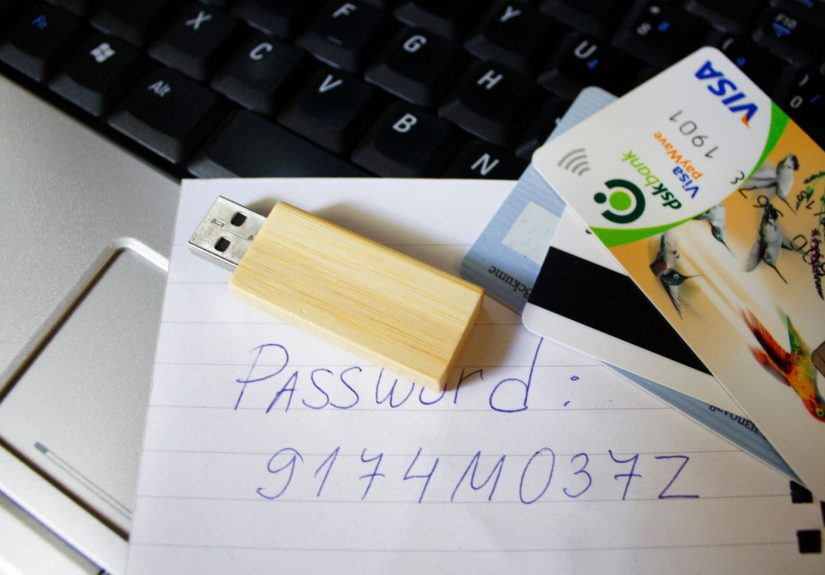
If you must write something down, store it like a valuable documentlocked away, not on a sticky note under your keyboard like a secret treasure map for villains.
Quick checklist: is my password strong?
- ✅ At least 15 characters (or as long as the site allows)
- ✅ Unique for this account only
- ✅ Not based on personal info or a common phrase
- ✅ Not a predictable “Password1!”-style pattern
- ✅ Stored in a password manager (or otherwise secured)
- ✅ MFA or passkeys enabled
FAQ
Should I use special characters?
If a site allows them, sure. But don’t let symbols distract you from the two biggest wins: length and uniqueness. A long passphrase can beat a short “complex” password.
Is a passphrase really safe?
Yesif it’s made from random words and is long enough. A famous quote or lyric is not random. “Random” is the magic ingredient.
What about the sites that have weird password rules?
Some sites still limit length or block pasting. That’s outdated. When possible, use the maximum length allowed, avoid predictable patterns, and lean on MFA/passkeys to compensate.
Conclusion
Creating a strong password is less about becoming a human encryption machine and more about choosing a strategy you’ll actually follow. Use long passwords (or passphrases), make them unique, store them in a password manager, and add MFA or passkeys wherever you can. Do that, and you’ll be miles ahead of the “Summer2025!” crowdwithout needing a spreadsheet of regrets.
Real-World Experiences: What People Learn the Hard Way (and How You Can Skip the Drama)
Note: The stories below are composite scenarios based on common account-security situations many users and support teams reportnot personal anecdotes. The details change, but the patterns are weirdly consistent.
1) The “It Was a Strong Password… Until It Wasn’t” moment.
A lot of people start with one decent password and reuse it everywhere because, honestly, life is busy. Then one random site gets breachedmaybe an old forum account you forgot existed. Attackers take that leaked password and try it on email, shopping, and banking sites. This is where people discover that a “strong” password reused across accounts becomes a single point of failure. The lesson: uniqueness beats heroics. One password per account isn’t paranoiait’s basic hygiene.
2) The “Password reset treadmill.”
Another classic experience: a workplace or website forces password changes every month. People respond like humans: they pick a base password and increment a number. RocketDog!01 becomes RocketDog!02 and everyone feels productive… until an attacker guesses the pattern. The better approachnow widely recommended in modern guidanceis to change passwords when there’s evidence of compromise, and otherwise keep a strong, unique password plus MFA. Constant rotation can accidentally train people to make predictable passwords.
3) The “I forgot it, so I made it weaker” slide.
Memory is a limited resource. When someone tries to memorize 40 passwords, what usually happens is they start simplifying: shorter passwords, repeated patterns, personal references, or “I’ll just write it down somewhere.” This is exactly why password managers are so effective in real life: they remove the memory burden. People who switch to a manager often report a strange new feeling: calm. Suddenly every account can have a ridiculous, unique password like tR8!mQ2#vZpL7$hN9and no one has to memorize it.
4) The “MFA saved me” message.
One of the most common positive experiences goes like this: someone gets a login alert, or a password-check tool warns them about a compromised password, but the attacker still can’t get in because MFA blocks the attempt. It’s not that MFA makes you invinciblephishing and social engineering still existbut it adds a second locked door. People often realize, in hindsight, that MFA should have been enabled first on their email account (because email resets everything else) and on any financial services.
5) The “Security questions are not security” awakening.
Many people have at least one account with security questions like “What’s your mother’s maiden name?” The problem is that answers can be guessed, researched, or socially engineered. A common workaround experience is treating security-question answers like extra passwords: long, random, unique answers that don’t reflect reality. Example: if asked for “first pet,” the answer might be tulip-hammer-satellite-espresso. You’re not lying; you’re protecting your account from trivia night.
6) The “passkeys made it boring (in a good way)” transition.
As passkeys appear in more apps, some users notice sign-ins become both easier and saferno typing passwords into a page that could be fake. The “experience” shift is that account security stops being a daily chore and becomes more automatic: device-based sign-in, biometric checks, and fewer password resets. Passkeys aren’t everywhere yet, so most people live in a hybrid world (passwords + passkeys + MFA), but the direction is clear: fewer typed secrets, fewer successful phishes.
Bottom line from these experiences: the best password is the one you’ll actually use correctlylong, unique, stored safelyand backed up by MFA or passkeys so one mistake doesn’t become a catastrophe.




 Close
Close