Table of Contents >> Show >> Hide
- The Myth-Hunter’s Master Key: 7 Rules That Beat Almost Any Monster
- 1) Learn the monster’s “rule set” before you meet it
- 2) Don’t fight the monster’s home-field advantage
- 3) Use boundaries, not bravado
- 4) Bring the one tool that matters (and it’s rarely “a bigger sword”)
- 5) Recruit help (because teamwork is a mythological superpower)
- 6) “Defeat” doesn’t always mean “kill”
- 7) Plan for the sequel: contamination, curses, and consequences
- Creature Playbook: Classic Legendary Monsters and How Heroes Beat Them
- Medusa (The Gorgon): Win by refusing eye contact
- The Lernaean Hydra: If the problem multiplies, you need process
- The Minotaur: Don’t just survive the fightsurvive the map
- Sirens: Defeat temptation with pre-commitment
- Polyphemus the Cyclops: Outsmart the appetite
- Fenrir (Norse Myth): Some monsters are contained, not slain
- Grendel: Close the distance and refuse the monster’s advantage
- Vampires (Folklore + Pop Culture): Control access, control the threat
- Werewolves: Separate the person from the curse
- Dragons: Know which dragon you’re fighting
- The Kraken (Sea Monsters): Survive the ocean, not the tentacles
- How to Write “Defeat Legendary Monsters” Scenes That Don’t Feel Like a Video Game Boss Fight
- Common Mistakes (a.k.a. How to Become a Footnote in Someone Else’s Epic)
- Bonus: “Experience” Notes From a Totally Hypothetical Monster-Hunting Career (About )
- Conclusion: The Real Secret to Defeating Mythological Creatures
Important disclaimer (because lawyers, bards, and moms insist): the “monsters” in this guide are from mythology and folklore. This is a storytelling playbookhow heroes win in the original legends, and how you can write (or roleplay) smarter monster encounters without turning your protagonist into a crispy cautionary tale.
Across cultures, legendary monsters aren’t just big teeth with a gym membership. They’re rules in creature form: temptation (Sirens), taboo (Medusa’s gaze), chaos that multiplies (Hydra), or fear that must be contained (Fenrir). That’s why heroes rarely win by “hitting it harder.” They win by learning the creature’s logicthen using preparation, boundaries, and one very specific trick that sounds ridiculous until it saves everyone’s life.
This article breaks down the repeatable patterns behind defeating mythological creatures, then walks through famous examplesso you can build your own “how to defeat legendary monsters” strategy that feels authentic to real myths (and way more interesting than another generic sword-swinging montage).
The Myth-Hunter’s Master Key: 7 Rules That Beat Almost Any Monster
If you only remember one thing, remember this: in myth, monsters are specialized. So the winning move is usually specialized too. Here are seven rules you’ll see again and again in legendary monster defeats.
1) Learn the monster’s “rule set” before you meet it
Heroes who survive do homework. They ask elders, consult prophets, listen to witches (carefully), and treat local warnings like GPS directionsignore them and you will absolutely “recalculate” into disaster. In story terms, this is your foreshadowing engine and your plausibility shield.
2) Don’t fight the monster’s home-field advantage
Labyrinths, swamps, caves, open seathese aren’t backgrounds, they’re weapons. Smart heroes change the battlefield or change how they interact with it. If the monster owns the environment, your hero needs a workaround: a thread, a map, a bind, a lure, or a rule that flips the advantage.
3) Use boundaries, not bravado
Many mythological creatures are defeated by limits: plug your ears, don’t look directly, don’t accept the invitation, don’t step inside the ring, don’t say the name, don’t break the taboo. It’s less “I’m fearless” and more “I’m not giving the monster the conditions it needs to win.”
4) Bring the one tool that matters (and it’s rarely “a bigger sword”)
Myths love a signature solution: reflective shield, magic chain, wax, firebrand, thread, or a simple disguise. The tool is usually symbolicrepresenting wisdom, restraint, or divine favorbut it also functions like a practical hack in the story’s physics.
5) Recruit help (because teamwork is a mythological superpower)
Solo heroes make great statuessometimes literally. Many famous victories require allies: a guide, a helper who seals a wound, a goddess who provides an item, a crew that follows instructions, or a community that holds the line.
6) “Defeat” doesn’t always mean “kill”
Some monsters are too cosmic to stab. Myths often prefer binding, outwitting, banishing, or sealing. That’s also a storytelling gift: it leaves consequences, prophecies, and future trouble.
7) Plan for the sequel: contamination, curses, and consequences
In folklore, beating the monster is step one. Step two is not getting haunted by what you just did. Poison blood, cursed trophies, vengeful relatives, broken oathsmyths practically invent the “fine print.” Great monster stories include that aftershock.
Creature Playbook: Classic Legendary Monsters and How Heroes Beat Them
Now let’s get specific. Below are famous mythological creatures and the canonical “how to defeat” methods that show up in well-known versions of the stories. Think of these as templates you can remix.
Medusa (The Gorgon): Win by refusing eye contact
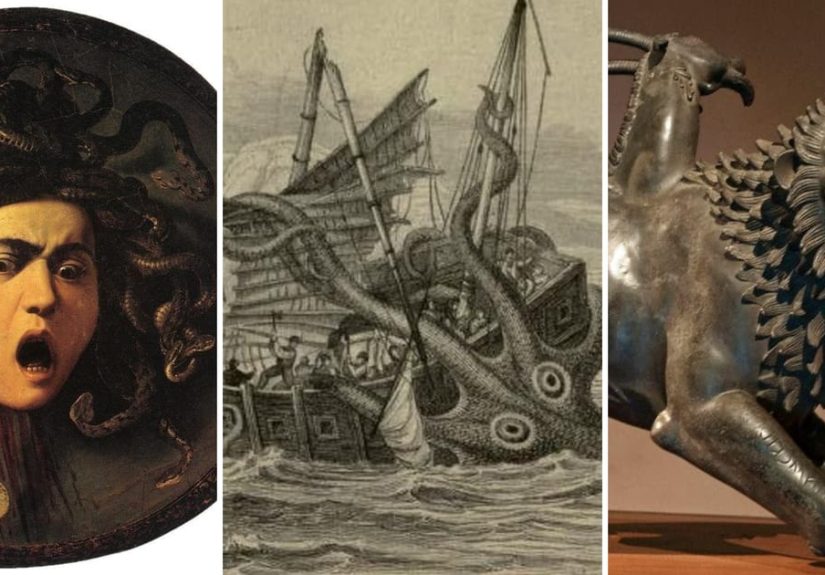
Medusa’s power isn’t just strengthit’s the gaze. So the winning strategy is boundary-based: Perseus avoids direct eye contact by using reflection (a polished shield in many tellings) and attacks while the Gorgons sleep. This is the mythic blueprint for defeating a monster that weaponizes attention: don’t meet it on its terms; change how you perceive it.
Story lesson: When the monster’s power is psychological (fear, obsession, temptation), your hero wins with systems and safeguards, not ego.
The Lernaean Hydra: If the problem multiplies, you need process
The Hydra turns brute force into a trap: cut off one head and you get more. In the classic solution, Heracles brings helphis nephew Iolaus cauterizes the neck stumps so the heads can’t regrow, turning chaos into something manageable. Then the immortal head is dealt with separately (often buried under a heavy rock).
Story lesson: Some threats are “Hydra problems”every quick fix spawns two new issues. Your hero needs containment, tools, and a method.
The Minotaur: Don’t just survive the fightsurvive the map
The Minotaur’s terror is half monster, half architecture. The labyrinth is designed to make victory meaningless because you can’t escape afterward. That’s why Ariadne’s thread (or other guiding clue) matters as much as Theseus’s weapon. The myth quietly says: the real boss fight is getting out.
Story lesson: A smart monster story asks, “What happens after you win?” Escape routes, exits, and recovery plans are heroic.
Sirens: Defeat temptation with pre-commitment
The Sirens are a masterclass in “you can’t out-willpower a supernatural temptation.” Odysseus wins with rules he sets before the danger: wax in the crew’s ears so they can’t hear the song, and Odysseus tied to the mast so even his future, song-drunk self can’t steer the ship into ruin. It’s basically ancient Greece inventing “accountability buddies.”
Story lesson: If the monster is temptation, the hero needs guardrailsideally ones they can’t revoke in a dramatic moment.
Polyphemus the Cyclops: Outsmart the appetite
When Odysseus faces Polyphemus, he doesn’t win by wrestling. He wins by turning the Cyclops’s needs against him: making him drunk, blinding him with a burning stake while he sleeps, and escaping by clinging beneath sheep as they’re led out. This is the “predator defeated by routine” pattern: the monster is strong, but predictable.
Story lesson: Your hero doesn’t need more muscle; they need a plan that exploits the monster’s habits.
Fenrir (Norse Myth): Some monsters are contained, not slain
Fenrir is destiny with teeth. The gods fear his strength and bind him with a magical chain described as being made from impossibilities (like the sound of a cat’s footsteps), and the bargain costs the god Týr his hand. This is a hard myth: victory has a price, and even the “defeat” is temporary in the shadow of Ragnarök.
Story lesson: Containment stories are powerful because they admit that some threats can only be delayedand that delay changes everyone.
Grendel: Close the distance and refuse the monster’s advantage
In Beowulf, Grendel terrorizes a hall with brutal raids. Beowulf famously refuses to use a weapon and grapples with the monster, mortally wounding him by sheer force. The point isn’t “no swords allowed.” It’s that Beowulf denies Grendel the comfort of easy slaughter and meets him on a different set of terms.
Story lesson: Sometimes the hero wins by taking away the monster’s “script”the pattern it relies on.
Vampires (Folklore + Pop Culture): Control access, control the threat
Vampire stories vary by region, but one theme is remarkably consistent: vampires thrive on accessto your home, your blood, your attention, your night. That’s why classic defenses focus on boundaries and banishment: garlic as a protective folk remedy, sunlight as a limiter in many modern versions, and narrative rules like “don’t invite the danger inside.” Vampire myths also intersect with cultural attempts to explain disease, death, and the scary mysteries of the body.
Story lesson: Vampires are the monster of consent, invitation, and vulnerability. Winning often looks like community rules and personal boundaries, not a single dramatic stab.
Werewolves: Separate the person from the curse
In European folklore, the werewolf is often a person under transformationpredatory at night, human by day. Later storytelling popularized the idea of silver as a way to kill or repel a werewolf (especially through modern literature and film). But the deeper mythic tension is moral: is this creature evil, or cursed? The most compelling werewolf defeats treat the “monster” as a two-layer problemhuman plus curse.
Story lesson: The best werewolf stories make “defeat” a choice: kill the beast, or break the curse and save the person.
Dragons: Know which dragon you’re fighting
“Dragon” isn’t one monsterit’s a category. In many European legends, dragons are destructive threats to be confronted; in many Asian traditions, dragons may be wise, powerful, and connected to nature. So the correct strategy depends on the cultural dragon logic: are you slaying a villain, bargaining with a force, or earning a blessing?
Story lesson: Before your hero charges in, decide what the dragon represents. Then make the “defeat” match: battle, bargain, riddle, sacrifice, or service.
The Kraken (Sea Monsters): Survive the ocean, not the tentacles
The Kraken sits at the intersection of myth and marine awegiant sea monster tales that echo real fears of the deep and (possibly) sightings of enormous squids. In narrative terms, the Kraken is often unbeatable in a straight fight. The classic “defeat” is escape: out-sail it, distract it, sacrifice cargo, or exploit the environment (reefs, storms, shallow water) to break contact.
Story lesson: Some monsters are natural disasters with a face. The heroic move is survival, not conquest.
How to Write “Defeat Legendary Monsters” Scenes That Don’t Feel Like a Video Game Boss Fight
Myths survive because they’re not just actionthey’re meaning. If you want your monster encounters to feel myth-true (and SEO-friendly for readers searching “how to defeat mythological creatures”), build the scene around three layers:
Layer 1: The practical hack
The audience should be able to say, “Oh, that makes sense in this world.” Wax blocks Siren song. A reflective surface dodges a lethal gaze. Fire stops regrowth. A thread beats a maze.
Layer 2: The symbolic win
The method should mirror the theme. Boundaries defeat seduction. Process defeats multiplication. Humility defeats pride. Community defeats isolation.
Layer 3: The cost
In many myth cycles, victories demand payment: a sacrifice, a wound, a broken promise, a haunted trophy, or a future consequence. That cost makes the “defeat” feel earnedand keeps your story from turning into a highlight reel.
And if you want the most myth-flavored structure of all, remember the classic hero pattern: a call to adventure, trials, helpers, and transformation. Monster defeats often happen after the hero changesnot before.
Common Mistakes (a.k.a. How to Become a Footnote in Someone Else’s Epic)
- Ignoring local advice: Myths treat “the villagers warned you” like a legally binding document.
- Going alone: Even legendary heroes bring allies, guides, or divine tools.
- Assuming the monster is dumb: Many creatures have one weaknessmeaning they’ve survived everything else.
- Taking trophies without precautions: Congratulations on your cursed souvenir.
- Winning the fight but losing the exit: See also: labyrinths, swamps, burning cities, and your poor life choices.
Bonus: “Experience” Notes From a Totally Hypothetical Monster-Hunting Career (About )
Let’s pretendpurely for research purposes, of coursethat I’ve spent a suspicious number of evenings in the company of mythical creatures. Not in a “call a documentary crew” way, but in the more realistic modern ritual: books open, snacks deployed, dice rolling, and someone arguing that a haunted lake “probably isn’t important.”
Here’s what those story-and-game “experiences” taught me about how to defeat legendary monsters (without turning your party into an interpretive dance about regret).
First: the scariest monsters are the ones that change your behavior before you even see them. A Medusa-style threat doesn’t need to show up and swing a clubit just needs you to panic and look in the wrong direction. In tabletop campaigns, the “gaze monster” always wins against the impulsive player who says, “I peek around the corner!” The smart group starts using mirrors, reflections in water, or indirect scouting. The real victory happens in the planning phase, when everyone agrees that ego is not a viable strategy.
Second: Hydra problems absolutely exist outside mythology. I’ve watched groups try to “solve” an expanding threat by hacking at it fasteronly to realize the threat scales with their effort. That’s when someone finally asks the mythic question: “What stops it from growing back?” Suddenly, the party stops swinging and starts thinking: fire, sealing, containment, or removing the source. It’s the moment the story becomes satisfyingbecause the hero earns the win by changing approaches.
Third: the Minotaur’s true superpower is bad navigation. In every retelling, the labyrinth is a character. In every game, the maze is a mood. Once, a group “defeated” the monster and still nearly lost because they couldn’t retrace their steps. That’s when the Ariadne lesson hits: bring a thread. Bring chalk. Bring a system. Heroes don’t just fight; they manage logistics. Yes, this makes the “inventory nerd” the MVP, and honestly? It’s about time.
Fourth: Siren encounters prove that temptation beats intention. Players swear they won’t fall for ituntil the song shows up wearing their exact emotional weaknesses like a perfectly tailored suit. The best solutions are always pre-commitments: plug ears, tie the captain down, assign a buddy to enforce the plan, and refuse to negotiate mid-crisis. It’s a mythic reminder that discipline is easier to build before the storm than during it.
Finally: every monster defeat becomes better when you add a consequence. Did you bind Fenrir? Someone paid for that. Did you kill the dragon? The town now expects you to solve every problem forever. Did you “defeat” the vampire? Coolnow you’re carrying a secret that makes people afraid of you. Those aftershocks turn a fun fight into a story readers remember. In other words: the monster is the test, but the aftermath is the meaning.
Conclusion: The Real Secret to Defeating Mythological Creatures
Legendary monsters aren’t beaten by luck. They’re beaten by understanding what the creature represents, learning its rules, and choosing a strategy that fits the myth’s internal logic. Perseus wins by refusing direct sight. Heracles wins by turning a multiplying problem into a process. Odysseus wins by setting boundaries in advance. Norse gods “win” by binding what can’t yet be destroyedat a cost. And that’s the heart of myth: the victory is clever, specific, and never free.
If you’re writing, gaming, or just daydreaming your way through a world of legendary beasts, the best question isn’t “How do I hit it?” It’s: What does this monster demand from meand how do I deny it?