Table of Contents >> Show >> Hide
- Before You Start: Hot Stone Massage Safety Comes First
- What You Need for a Safe Hot Stone Massage
- How to Do Hot Stone Massage: 13 Steps
- Step 1: Screen for contraindications and ask for consent
- Step 2: Set up the room for comfort (not chaos)
- Step 3: Heat the stones safely and verify the temperature
- Step 4: Wash hands and prep the stones and skin
- Step 5: Test every stone before it touches the person
- Step 6: Start with a manual warm-up massage
- Step 7: Place stones strategically with a towel or sheet barrier
- Step 8: Glide the stone slowly using broad strokes
- Step 9: Alternate stones as they cool
- Step 10: Avoid high-risk areas and bony pressure points
- Step 11: Check in frequently more than you think you need to
- Step 12: Finish with a calming cool-down using your hands
- Step 13: Post-massage aftercare and safety follow-up
- Common Hot Stone Massage Mistakes to Avoid
- Can You Do Hot Stone Massage at Home?
- Experience Notes: What Hot Stone Massage Really Feels Like (And What People Learn)
- Final Thoughts
Hot stone massage sounds luxurious (because it is), but it’s also a technique that requires real care, real temperature control, and real communication. In other words: this is not the time to “wing it” with random rocks from the garden and a microwave. We’re going for calm spa energy not a skin-burn horror story.
This guide walks you through how to do hot stone massage in 13 steps with a strong focus on safety, comfort, and beginner-friendly technique. It’s written for educational purposes and light at-home relaxation massage only. If you want to perform hot stone massage professionally, get formal training first.
Before You Start: Hot Stone Massage Safety Comes First
Hot stone massage can help with relaxation, muscle tension, and stress relief, but hot stones are still a heat tool. That means the biggest risks are burns, discomfort, and poor technique on sensitive areas. Professional guidance consistently emphasizes temperature monitoring, barriers between stones and skin (when stones are placed), and checking in often.
Do not perform hot stone massage (or get medical clearance first) if the person has conditions such as blood clots, bleeding disorders, blood thinner use, open wounds, burns, infection, recent surgery, severe osteoporosis, uncontrolled health conditions, reduced sensation/neuropathy, or a high-risk pregnancy. When in doubt, pause and ask a healthcare provider.
Pro tip: If the person cannot feel heat normally (for example, due to neuropathy), hot stone massage is not a good DIY experiment.
What You Need for a Safe Hot Stone Massage
- Smooth massage stones (basalt stones are commonly used because they hold heat well)
- A professional massage stone heater (best option for controlled heating)
- Thermometer (digital or calibrated temperature gauge)
- Massage oil or lotion (to help stones glide without drag)
- Clean towels and/or a sheet (for draping and stone barriers)
- A comfortable massage surface (massage table or firm bed)
- Pillow or bolsters for comfort under ankles/knees
- A bowl of cool water / cool towel (for comfort adjustments)
Important: Many safety-forward sources recommend a professional stone heater and not improvised heating methods. Temperature control matters more than convenience.
How to Do Hot Stone Massage: 13 Steps
Step 1: Screen for contraindications and ask for consent
Before you warm a single stone, ask a few simple questions: “Any medical conditions? Any recent injuries or surgeries? Are you sensitive to heat? Any areas you don’t want touched?” Also ask what they want from the session: relaxation, shoulder tension relief, lower back comfort, etc.
Get clear consent for massage and for using heated stones. Tell them they should speak up immediately if anything feels too hot, too cold, too painful, or just plain weird.
Step 2: Set up the room for comfort (not chaos)
Create a calm space: clean linens, soft lighting, and a warm room so the person doesn’t get chilly between strokes. Place towels within reach. If you have to walk across the room every 10 seconds while holding oily stones, the “relaxing experience” becomes a slapstick routine.
Step 3: Heat the stones safely and verify the temperature
Heat stones in a proper stone heater and check the temperature with a thermometer. A commonly referenced working range is roughly 120–130°F for hot stone massage, with adjustments for age, skin sensitivity, body area, and comfort. If the stone feels too hot in your hand, it is too hot to use.
For beginners at home, stay on the lower end and think warm and comfortable, not “extra hot for extra results.” That is not how skin works.
Step 4: Wash hands and prep the stones and skin
Sanitation matters. Wash your hands thoroughly and use clean stones, clean towels, and clean linens. Apply a small amount of massage oil or lotion to the treatment area and to the stone if you’ll be gliding it over the skin. This reduces friction and helps prevent dragging.
Step 5: Test every stone before it touches the person
Do a temperature test on your forearm or palm first. Then briefly touch the stone to the person’s skin and ask, “How does this feel?” Repeat this often, especially when switching to a new body area. A stone that feels fine on the back may feel too warm on the arms or calves.
Step 6: Start with a manual warm-up massage
Begin with your hands for a few minutes using light Swedish-style strokes (effleurage). This helps relax the person, spreads oil evenly, and lets you identify tight areas before introducing heat. Think of this as the opening act before the hot stones take the stage.
Step 7: Place stones strategically with a towel or sheet barrier
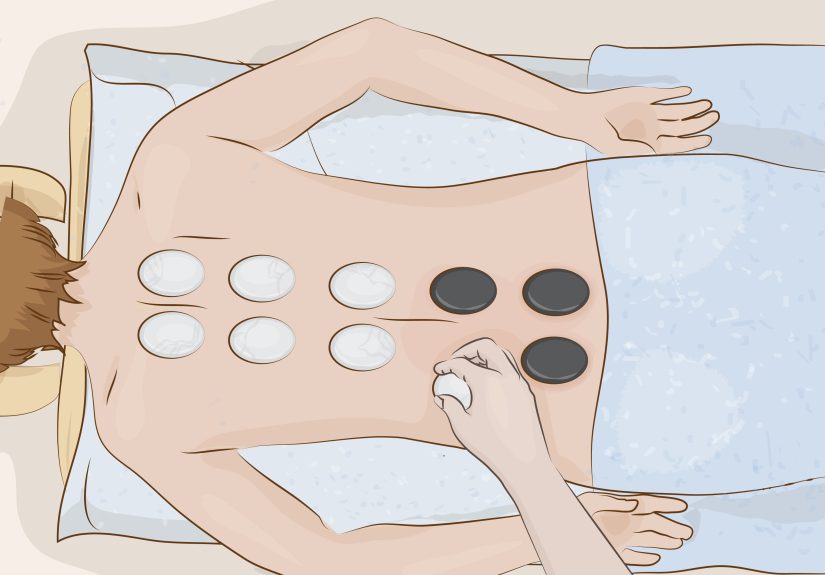
When placing stones (rather than moving them), use a towel, sheet, or clothing barrier between the stone and bare skin. This is a key burn-prevention step. Common placement areas for a beginner session include the upper back (away from the spine’s bony points), shoulders, or palms but always avoid injured, irritated, or highly sensitive skin.
Do not place stones and walk away. Stay present and monitor comfort continuously.
Step 8: Glide the stone slowly using broad strokes
Hold a stone comfortably and use slow, gliding strokes over larger muscle groups like the upper back, shoulders, and calves. Keep the motion smooth and steady. Let the heat do part of the work so you don’t need aggressive pressure.
Use light to moderate pressure only, especially if you are new. Hot stone massage is not a contest to “find every knot and defeat it.”
Step 9: Alternate stones as they cool
Stones cool as you work, so rotate them out as needed. A lukewarm stone isn’t dangerous, but it becomes less effective and may feel oddly clammy. Keep a few stones heating while you work so you can switch smoothly without interrupting the flow.
Step 10: Avoid high-risk areas and bony pressure points
Do not press hot stones directly into superficial bones (shins, elbows, spine, kneecaps, collarbone) or use strong pressure on joints. Avoid the front of the neck, broken skin, bruises, varicose veins, inflamed areas, rashes, and any place the person says feels “off.”
Remember: comfort is the goal. If the person tenses up, you’re doing the opposite of what hot stone massage is meant to do.
Step 11: Check in frequently more than you think you need to
Ask short, clear questions throughout the massage: “Temperature okay?” “Pressure okay?” “Any spot too sensitive?” People can get deeply relaxed and may not speak up quickly, so don’t assume silence means perfect comfort. Watch for redness, flinching, or muscle guarding.
Step 12: Finish with a calming cool-down using your hands
End the session by setting stones aside and returning to gentle hand massage. This helps transition the body from heat-based work to a neutral finish. Use slow strokes on the shoulders, back, or arms and reduce pressure gradually. A rushed ending can feel jarring, like ending a lullaby with a car horn.
Step 13: Post-massage aftercare and safety follow-up
Help the person sit up slowly. Offer water and encourage a few minutes of rest. Mild soreness can happen, especially if the person is new to massage, but pain is not the goal and should be discussed immediately.
If the skin looks irritated or the person reports lingering heat discomfort, stop further hot stone use. If a minor burn occurs, cool the area with cool tap water or a cool wet compress for about 10 minutes (don’t use butter, toothpaste, or other home remedies).
Common Hot Stone Massage Mistakes to Avoid
- Using stones that are too hot: If you can’t comfortably hold them, don’t use them.
- Skipping the thermometer: Guessing temperature is not a safety plan.
- No barrier for placed stones: Use a towel/sheet barrier to reduce burn risk.
- Too much pressure: Heat already softens tissues; brute force is unnecessary.
- Poor communication: Check in often, even if the person looks relaxed.
- Using hot stones on contraindicated clients: When in doubt, skip the stones.
- Improvised tools and dirty setup: Sanitation and stable equipment matter.
Can You Do Hot Stone Massage at Home?
Yes but keep it simple and conservative. A safe at-home version is best used for relaxation and light muscle tension relief, not clinical treatment. If you want deeper work, chronic pain support, or full-body hot stone therapy, book a licensed massage therapist trained in hot stone massage.
At-home rule of thumb: start with fewer stones, lower heat, shorter sessions, and lots of feedback.
Experience Notes: What Hot Stone Massage Really Feels Like (And What People Learn)
One of the most common first-time reactions to hot stone massage is surprise not because it hurts, but because the heat changes the entire feel of the massage. People often expect “just a regular massage, but with hot rocks.” In reality, a well-done hot stone session feels slower, heavier (in a good way), and more grounding. The warmth can make tight shoulders feel like they finally got permission to unclench.
A beginner giving a hot stone massage often learns the same lesson within the first five minutes: temperature matters more than technique tricks. Even if your hand skills are basic, a comfortably warm stone used slowly can feel amazing. But a stone that is just a little too hot instantly ruins trust. The person receiving the massage will tense up, hold their breath, and mentally leave the spa fantasy. So the biggest “experience upgrade” is usually not a fancy stroke it’s careful testing, a calm pace, and frequent check-ins.
Another common experience: people don’t always speak up soon enough. They may think, “Maybe this is normal,” or they don’t want to interrupt. That’s why the best results happen when the person giving the massage keeps asking short questions like, “Still comfortable?” This turns the session into a team effort instead of a guessing game. And honestly, that’s what makes the massage feel professional, even in a home setting.
Many people also notice that hot stone massage can feel especially good on the upper back, shoulders, and calves places that tend to hold stress from desk work, workouts, or standing all day. The heat helps those areas soften so lighter pressure feels more effective. This is great news for beginners because it means you don’t need superhero thumbs. A slow glide with a warm stone over a tense shoulder can sometimes do more than ten minutes of poking at one knot like you’re trying to crack a safe.
There’s also a practical side that people don’t talk about enough: setup and cleanup are part of the experience. Clean stones, clean towels, and an organized station make everything smoother. If you’re fumbling for towels with oily hands or juggling overheated stones, the session stops feeling restorative. A little preparation goes a long way.
Finally, people often report that the best hot stone massage sessions are the ones that don’t try to do too much. A 20–30 minute focused session on the shoulders/back can feel better than a long, complicated full-body attempt. Start simple, do it safely, and build skill gradually. That’s how hot stone massage becomes a genuinely relaxing experience instead of a chaotic “well, we tried” story.
Final Thoughts
If you’re learning how to do hot stone massage, think of safety as part of the technique not a separate checklist. The best sessions come from controlled heat, clean tools, gentle pressure, and clear communication. Follow the 13 steps above, keep the session simple, and prioritize comfort every minute.
And if you want the full luxury experience with advanced placement patterns and deeper therapeutic work, a trained licensed massage therapist is the gold standard.