Table of Contents >> Show >> Hide
- Why You Should Hide a Propane Tank the Smart Way
- Start With Safety Before Style
- Best Ways to Hide a Propane Tank From an Outdoor Fire Pit
- 1. Use a Propane Tank Cover That Doubles as a Side Table
- 2. Choose a Fire Pit Table With Built-In Tank Storage
- 3. Place the Tank Behind a Decorative Outdoor Screen
- 4. Use Planters to Camouflage the Tank
- 5. Try a Faux Stone or Landscape-Style Propane Tank Cover
- 6. Build a Ventilated DIY Tank Hideaway
- How to Manage the Propane Hose Without Making It Ugly
- Where Should You Place the Hidden Propane Tank?
- Common Mistakes to Avoid
- Design Ideas for Different Patio Styles
- Step-by-Step: A Simple Safe Tank-Hiding Setup
- Experience Notes: What Actually Works in Real Outdoor Spaces
- Conclusion
- SEO Tags
A beautiful outdoor fire pit can turn an ordinary patio into the neighborhood’s favorite gathering spot. The flames glow, the chairs are cozy, the marshmallows are mentally preparing for greatnessand then there it is: a propane tank sitting in the corner like an awkward metal guest who was not told about the dress code.
The good news is that hiding a propane tank from your outdoor fire pit is absolutely possible. The even better news is that you do not have to choose between safety and style. With the right propane tank cover, smart patio layout, proper ventilation, and a little design strategy, you can make your fire pit area look polished without creating a risky setup.
This guide explains practical, attractive, and safe ways to conceal a propane tank outdoors. We will cover tank hideaway tables, decorative screens, planter arrangements, faux stone covers, built-in fire pit options, hose management, and the safety rules that should never be ignored. Because yes, the tank should disappear visuallybut it should never be trapped, overheated, tipped over, or hidden so well that you forget where the shutoff valve is.
Why You Should Hide a Propane Tank the Smart Way
A standard 20-pound propane tank is useful, reliable, and not exactly a design masterpiece. Most tanks are made to work, not to win “Best Supporting Patio Accessory.” Exposed tanks can interrupt the look of a modern outdoor room, create hose clutter, and become a tripping hazard if they are placed casually beside a fire pit.
However, propane is a flammable fuel, so hiding the tank is not the same as stuffing it into any random box and calling it a day. A safe propane tank hiding solution should meet four basic goals:
- Keep the tank upright on a stable, level surface.
- Allow plenty of ventilation so propane vapor cannot collect.
- Keep the valve and hose connection easy to reach.
- Place the tank away from flames, heat, traffic paths, and combustible materials.
The best propane tank concealment ideas do not fight these rules. They work with them. Think of your goal as “stylish camouflage,” not “secret bunker.”
Start With Safety Before Style
Before shopping for a decorative propane tank cover or building a DIY screen, check the owner’s manual for your outdoor fire pit. Many propane fire pits are designed for a standard 20-pound tank, and some include specific instructions for tank placement, hose routing, ventilation, and clearance. If your manual says the tank must be outside the fire pit body, do not improvise a hidden compartment inside it. The manual wins.
Keep the Tank Upright
A propane tank should stay in an upright, vertical position during use and storage. This helps the cylinder work as designed and keeps the pressure relief valve in the proper position. A cover, table, or screen should never require the tank to lie on its side. If your hiding idea starts with, “What if we just tip it sideways under the bench?” the answer is no, and the bench should apologize.
Never Use an Airtight Enclosure
Propane is heavier than air. If it leaks in an enclosed space, it can settle and build up instead of floating away. That is why ventilation is essential. Any propane tank cover, side table, screen, or cabinet should have openings that allow air to move freely. Vents near the lower portion of the enclosure are especially useful because propane vapor tends to sink.
Keep the Shutoff Valve Accessible
A hidden propane tank still needs to be easy to operate. You should be able to reach the tank valve quickly to turn the gas off after use or during an emergency. A good hideaway table or tank cover usually has a lift-off top, hinged door, or side opening. A beautiful setup that requires removing six planters, two cushions, and your dignity just to shut off the gas is not practical.
Best Ways to Hide a Propane Tank From an Outdoor Fire Pit
There are several attractive ways to hide a propane tank, from simple store-bought covers to more custom patio design solutions. The right option depends on your fire pit style, available space, budget, and how often you need to swap tanks.
1. Use a Propane Tank Cover That Doubles as a Side Table
A propane tank cover table is one of the easiest and most popular solutions. These covers are designed to fit over a standard 20-pound propane cylinder while blending into outdoor furniture. Many look like small side tables made of steel, concrete-look composite, resin wicker, magnesium oxide, or faux stone.
The main advantage is convenience. The tank disappears, and you gain a tabletop for drinks, snacks, a lantern, or the mysterious third pair of sunglasses that appears at every patio party. Many models include hose openings, adjustable feet, removable lids, or access doors, making them easier to use safely than a homemade closed box.
When choosing a propane tank table, look for weather-resistant construction, stable feet, ventilation openings, and enough interior room for your tank and regulator. Avoid any product that looks decorative but does not clearly allow airflow or hose access.
2. Choose a Fire Pit Table With Built-In Tank Storage
If you are still shopping for an outdoor fire pit, consider a propane fire pit table with built-in tank storage. These units are designed with a compartment inside the base where the tank sits upright behind a door or panel. The result is clean, compact, and tidy.
This option works especially well for small patios because you do not need a separate tank cover or long visible hose. The fire pit itself becomes the hiding place. Just make sure the unit is specifically built for internal propane tank storage and has manufacturer-designed ventilation. Do not modify a fire pit without built-in storage by cutting a hole and sliding a tank inside. That is less “DIY genius” and more “future cautionary tale.”
3. Place the Tank Behind a Decorative Outdoor Screen
A freestanding privacy screen can hide a propane tank while still allowing airflow. Screens made of powder-coated metal, slatted wood, resin panels, or outdoor-safe composite can create a neat visual barrier without boxing the tank in completely.
This approach is great when the tank must sit a short distance from the fire pit and you want to disguise the hose line. Place the screen between the viewing area and the tank, leaving open space around the cylinder. A three-sided screen can work well if it does not trap heat or block ventilation. Leave room to walk behind it and reach the valve.
For a more finished look, match the screen to your patio style. Black metal panels suit modern spaces, cedar slats look warm and natural, and woven-look resin screens pair nicely with casual outdoor seating.
4. Use Planters to Camouflage the Tank
Planters are the magicians of outdoor design. They hide awkward corners, soften hard surfaces, and make people think you have your life together. A few tall planters can also help disguise a propane tank, as long as you use them wisely.
The trick is to create a visual screen, not a sealed wall. Use tall grasses, compact evergreens, lavender, rosemary, ornamental sedge, or other outdoor plants that fit your climate. Place the planters in front of or beside the tank from the main viewing angle, but keep the tank itself accessible and ventilated.
Avoid placing dry leaves, mulch, or combustible decorations directly against the tank, hose, or fire pit. Also avoid plants that drop lots of debris near the burner area. Your fire pit should not have to fight a maple tree every weekend.
5. Try a Faux Stone or Landscape-Style Propane Tank Cover
Faux stone propane tank covers are ideal for naturalistic patios, garden fire pits, poolside spaces, and yards with boulders or water features. These covers are often made from lightweight concrete-look or glass-fiber-reinforced materials and are shaped to blend into landscaping.
A good faux rock cover should include ventilation and easy lifting or access points. It should look like a landscape feature while still functioning as a safe propane tank cover. This is a clever choice if a side-table-style cover would look too furniture-like in your space.
6. Build a Ventilated DIY Tank Hideaway
A DIY propane tank hideaway can work beautifully if you keep safety at the center of the design. The safest DIY versions are more like open-air screens or ventilated covers than cabinets. Use slats, perforated metal, lattice, or spaced boards so air can flow through the structure.
Design the hideaway with a removable top or hinged access door. Leave enough clearance around the cylinder so the hose does not kink, rub against sharp edges, or sit under tension. Add a stable base such as pavers or a concrete pad to keep the tank level and dry.
Do not build a sealed wooden box with no vents. Do not place the tank inside a storage bench full of cushions. Do not hide it under a deck, inside a crawl space, in a garage, or in a shed attached to the home. A DIY project should make your patio prettier, not turn your Saturday into a fire department training exercise.
How to Manage the Propane Hose Without Making It Ugly
Even when the tank is hidden, the hose can still give away the secret. A visible black hose running across the patio can look messy and create a tripping hazard. The goal is to route the hose neatly while keeping it safe, visible enough to inspect, and away from hot surfaces.
Use the Shortest Safe Route
Place the tank so the hose takes a direct path to the fire pit without stretching. The hose should not cross walkways, run under rugs, pass through doorways, or snake through seating areas. If people have to step over it, someone eventually will not. Gravity is undefeated.
Do Not Bury or Permanently Conceal the Hose
It may be tempting to bury the hose under mulch, tuck it beneath stones, or hide it under an outdoor rug. Avoid that. You need to inspect the hose for wear, cracking, rubbing, leaks, or damage. Concealing it too completely can make maintenance harder and problems easier to miss.
Use Hose Openings and Edge Protection
If your tank cover has a hose port, use it as intended. For DIY screens, smooth any edges where the hose passes through. A sharp metal or wood edge can damage the hose over time. Keep the hose away from the fire pit body, burner area, and any surface that becomes hot during use.
Where Should You Place the Hidden Propane Tank?
The best hiding spot is not always the closest spot. Choose a location that balances appearance, hose length, airflow, and access. The tank should sit on a flat, solid outdoor surface such as concrete, pavers, stone, or a stable deck surface approved for your appliance setup.
Keep the tank away from open flames, excessive heat, building openings, and high-traffic areas. Avoid damp corners where water pools, because moisture can speed up rust and make the tank harder to keep in good condition. A shaded, well-ventilated location is usually better than a spot that bakes in direct sun all afternoon.
If your fire pit manual gives specific clearance requirements, follow those instructions first. Local codes may also apply, especially for larger propane cylinders, permanent installations, or outdoor kitchens. When in doubt, ask a qualified propane professional or local code office before making changes.
Common Mistakes to Avoid
Hiding a propane tank is simple, but a few mistakes can turn a good idea into a bad one. Here are the big ones to skip.
Do Not Store a Spare Tank Under or Near the Fire Pit
A connected tank may be part of the appliance setup, but a spare tank should not sit under or near the fire pit. Store spare propane cylinders outdoors in a well-ventilated area, upright, and away from heat or ignition sources.
Do Not Block Ventilation With Decor
Pillows, outdoor blankets, firewood bundles, plastic bins, and decorative panels can accidentally block airflow. Keep the area around the tank cover clear enough for air to move and for you to inspect the setup.
Do Not Ignore Rust, Dents, or Valve Damage
Before hiding the tank, inspect it. A rusty, dented, or damaged propane cylinder should be checked by a propane supplier. Do not try to repair a tank valve yourself. If something looks wrong, treat it seriously.
Do Not Skip the Leak Test
A simple soapy water test can help detect leaks at the connection points. Apply a soap-and-water solution to fittings, open the valve with the appliance off, and watch for bubbles. If bubbles appear, turn off the gas, disconnect if safe to do so, and have the issue corrected before using the fire pit.
Design Ideas for Different Patio Styles
Modern Patio
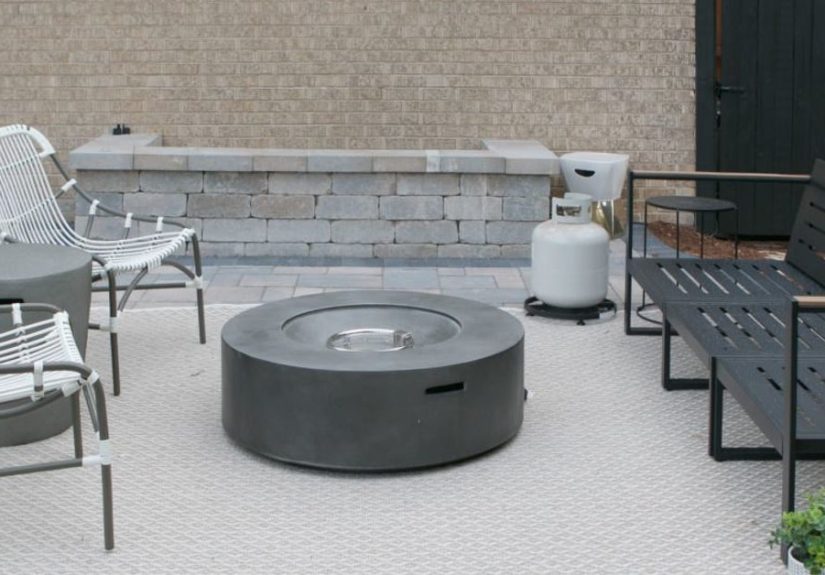
Choose a square steel or concrete-look tank cover in black, charcoal, or light gray. Pair it with low-profile lounge chairs, a rectangular fire table, and a minimal outdoor rug. Keep the tank cover close enough for hose reach but slightly offset so it reads as a side table.
Rustic Backyard
Use a slatted cedar screen or faux stone cover. Add gravel, pavers, Adirondack chairs, and warm string lights. The tank becomes part of the rustic scene instead of an industrial interruption.
Garden Fire Pit Area
Use tall planters and a ventilated faux rock cover. Ornamental grasses, boxwood, rosemary, or native plants can soften the area while leaving the tank accessible. Keep dry plant material away from the hose and flame zone.
Small Balcony or Compact Patio
Use a fire pit table with built-in tank storage if allowed by your building rules and appliance instructions. If using a separate tank cover, choose one that doubles as a side table to avoid wasting floor space. Always confirm that the fire pit is approved for your outdoor surface and that the area is open and well ventilated.
Step-by-Step: A Simple Safe Tank-Hiding Setup
- Read your fire pit manual. Confirm the approved tank size, placement, ventilation, and hose instructions.
- Choose a tank cover or screen. Select one designed for outdoor propane use with ventilation and access.
- Prepare a stable base. Use pavers, concrete, or another flat, solid surface.
- Position the tank upright. Make sure it cannot easily tip, roll, or be bumped by foot traffic.
- Route the hose safely. Keep it away from walking paths, hot surfaces, sharp edges, and tight bends.
- Check the valve access. You should be able to shut off the gas quickly.
- Test for leaks. Use soapy water at connections before lighting the fire pit.
- Keep the area clear. Do not block vents with pillows, plants, blankets, or decor.
- Turn off the gas after use. Let the fire pit cool, then cover the appliance if recommended.
Experience Notes: What Actually Works in Real Outdoor Spaces
The most successful propane tank hiding setups usually look intentional. The tank cover is not just dropped beside the fire pit like an afterthought; it becomes part of the seating plan. For example, placing a tank hideaway table between two lounge chairs makes it feel like a useful side table, not a disguise. Guests see a place for drinks, not a fuel cylinder doing undercover work.
One practical lesson from many patio layouts is that access matters more than people expect. At first, homeowners often want the tank hidden as completely as possible. After a few evenings of opening panels, moving chairs, and wrestling with the valve in the dark, they usually prefer a setup that is slightly more visible but much easier to use. A removable lid, hinged side door, or open-backed screen can make the difference between “easy and safe” and “why did we build this puzzle box?”
Another experience-based tip is to think about the view from inside the house. Many people design the fire pit area from the patio outward, but the tank is often most noticeable from the kitchen window, sliding door, or back steps. Walk around and look at the setup from several angles before deciding where the cover or screen should go. Sometimes moving the tank two feet to the left solves the entire visual problem.
Weather also teaches lessons quickly. Lightweight covers can shift in strong wind, while very heavy covers can be annoying when it is time to change the tank. A balanced choice is best: sturdy enough to stay put, but not so heavy that swapping cylinders becomes a gym workout. If the cover has adjustable feet, use them. A wobbly tank table is irritating, especially when someone sets a drink on it and suddenly everyone is watching physics happen.
Planters are beautiful, but they need maintenance. Tall grasses and shrubs can grow into access areas, drop debris, or block ventilation if ignored. Leave a little more space than you think you need. Plants have ambition. They will take the extra inch.
For families with kids or pets, a screen or tank cover can also reduce accidental bumps. Still, the tank area should not become a play corner, toy storage zone, or dog leash anchor. The safest designs quietly discourage traffic around the cylinder while keeping the shutoff valve reachable for adults.
Lighting helps too. A small solar path light or low-voltage landscape light near the tank cover can make evening shutoff easier without shining directly into the seating area. This is especially useful in fall, when fire pit season gets cozy and sunset starts arriving before dinner like an overachiever.
Finally, the best-looking setups usually repeat materials. If your fire pit is dark metal, choose a dark metal or charcoal cover. If your patio has stone pavers, use a faux stone or concrete-look tank cover. If your furniture is wicker, a woven resin cover may blend best. Repetition makes the tank cover feel like furniture, not camouflage. That is the design sweet spot: safe, accessible, ventilated, and attractive enough that nobody asks where the tank went.
Conclusion
Hiding a propane tank from your outdoor fire pit is one of those small upgrades that can make a patio feel dramatically more finished. A visible tank may be practical, but it rarely supports the cozy, polished look most people want around a fire pit. With a well-designed propane tank cover, hideaway side table, ventilated screen, faux stone enclosure, or built-in fire pit table, you can keep the fuel source out of sight while keeping safety front and center.
The key is to avoid over-hiding. The tank must remain upright, ventilated, accessible, and positioned according to the fire pit manufacturer’s instructions. Keep hoses protected but inspectable. Keep the valve easy to reach. Keep spare tanks away from the fire pit. And if a design idea blocks airflow or traps the tank in a sealed space, skip it no matter how cute it looks on social media.
A great outdoor fire pit area should feel effortless: warm flames, comfortable chairs, clear walkways, and no awkward propane cylinder stealing the spotlight. Hide the tank wisely, and your patio gets the clean, inviting look it deserveswithout asking safety to sit in the corner.