
Table of Contents >> Show >> Hide
- Why Proper Leopard Gecko Handling Matters
- Step 1: Prepare Before You Pick Up Your Leopard Gecko
- Step 2: Scoop and Support Your Leopard Gecko Correctly
- Step 3: Keep Handling Calm, Short, and Positive
- Common Mistakes When Holding a Leopard Gecko
- How to Build Trust With Your Leopard Gecko
- Signs Your Leopard Gecko Is Comfortable Being Held
- Signs You Should Put Your Leopard Gecko Back
- Experience-Based Tips for Holding a Leopard Gecko
- Conclusion
Leopard geckos may look like tiny prehistoric dragons with polka dots, but they are not action figures, stress balls, or shoulder parrots. They are small, delicate reptiles with soft bellies, quick feet, and a very dramatic emergency escape feature: a detachable tail. That means learning how to hold a leopard gecko properly is not just about getting a cute photo. It is about helping your gecko feel safe, preventing injuries, and building trust one calm handling session at a time.
The good news? Leopard geckos are generally known for being docile, curious, and easier to handle than many other pet reptiles. The not-so-good news? They still need patience. If you scoop them up too fast, grab them from above, squeeze their body, or touch their tail like it is a fuzzy keychain, your gecko may panic. And when a leopard gecko panics, nobody has a good time.
This guide explains how to hold a leopard gecko in 3 simple steps: prepare the environment, scoop and support the body correctly, and keep handling sessions short, calm, and positive. Whether you are a first-time reptile keeper or you have already been politely rejected by your gecko’s side-eye, these tips will help you handle your spotted roommate with confidence.
Why Proper Leopard Gecko Handling Matters
Before we jump into the three steps, let’s talk about why handling technique matters. Leopard geckos are prey animals. In the wild, being grabbed from above usually means something with teeth has entered the chat. Even in captivity, sudden movements can trigger that same survival response. A calm, supported hold tells your gecko, “You are safe.” A rushed grab says, “Congratulations, you are being abducted by a giant mammal.”
Safe handling also protects your gecko’s body. Leopard geckos have small limbs, a soft underside, and a thick tail used for fat storage. The tail is especially important. If a leopard gecko feels severely threatened, it can drop its tail as a defense mechanism. The tail can regrow, but regrowth takes energy and the new tail often looks different from the original. In other words, tail dropping is not a party trick. It is a stress response you want to avoid.
Finally, proper handling helps your gecko associate you with calm, predictable experiences. Over time, many leopard geckos learn that a hand in the enclosure is not a monster claw. It is more like a warm, moving platform that occasionally brings snacks. That is the dream.
Step 1: Prepare Before You Pick Up Your Leopard Gecko
The best leopard gecko handling session begins before your gecko ever touches your hand. Preparation is the difference between a peaceful moment and a tiny lizard sprinting under the dresser while you question every life choice that led here.
Wash Your Hands First
Always wash your hands before and after handling your leopard gecko. Washing before handling removes lotions, food smells, soap residue, and anything else your gecko should not lick or walk through. Washing afterward helps reduce the risk of spreading germs from reptiles or their habitats. Reptiles can appear perfectly healthy while still carrying bacteria, so good hygiene is part of responsible care.
Use plain soap and warm water, then rinse well. Strong perfume, scented lotion, or hand sanitizer residue may bother your gecko’s sensitive senses. If your hands smell like chicken nuggets, your gecko may not understand that your finger is not dinner. That is an awkward misunderstanding for everyone.
Choose the Right Time
Leopard geckos are crepuscular to nocturnal, meaning they are usually more active in the evening and at night. A gecko that is sleeping deeply in a hide during the day may not appreciate being dragged into social hour. Wait until your gecko is awake, alert, and calmly moving around.
Avoid handling right after your gecko eats a big meal. Give it time to digest. Handling too soon after feeding can cause stress and may interfere with normal digestion. Also avoid handling during shedding if your gecko seems uncomfortable, dull-colored, or focused on removing old skin. Think of it like asking someone to attend a meeting while wearing a sweater made of cling wrap. Not ideal.
Let New Geckos Settle In
If your leopard gecko is new, resist the urge to handle it immediately. New environments are stressful. Your gecko has just been moved into a different enclosure with new smells, lighting, temperature zones, hides, and a huge human face hovering nearby like a curious moon. Give your gecko time to settle before regular handling begins.
During the first days or weeks, focus on routine care: feeding, water, temperature checks, and quiet observation. Let your gecko learn that you are predictable. You can place your hand flat inside the enclosure for short periods without chasing or grabbing. This allows your gecko to investigate on its own terms.
Prepare a Safe Handling Area
Handle your leopard gecko close to a surface, especially when you are still learning. A bed, couch, carpeted floor, or low table with a towel can provide a safer area than standing over tile or hardwood. Leopard geckos can move suddenly, and even a short fall can injure them.
Close doors, block small gaps, and remove hazards before handling. A startled gecko can turn into a spotted noodle with rocket boosters. You do not want it disappearing behind furniture, under appliances, or into a pile of laundry where every sock suddenly looks suspicious.
Step 2: Scoop and Support Your Leopard Gecko Correctly
Now we arrive at the main event: actually picking up your leopard gecko. The golden rule is simple: scoop, support, and never squeeze.
Approach Slowly From the Side
Do not swoop down from above. Your hand coming from overhead can feel like a predator attack. Instead, move slowly from the side or front where your gecko can see you. Keep your movements smooth and predictable. Let your gecko notice your hand before you try to lift it.
If your gecko walks away, pauses, waves its tail, squeaks, arches its body, or tries to hide, take the hint. Handling should not feel like a chase scene. Give your gecko a break and try again later.
Use the Scoop Method
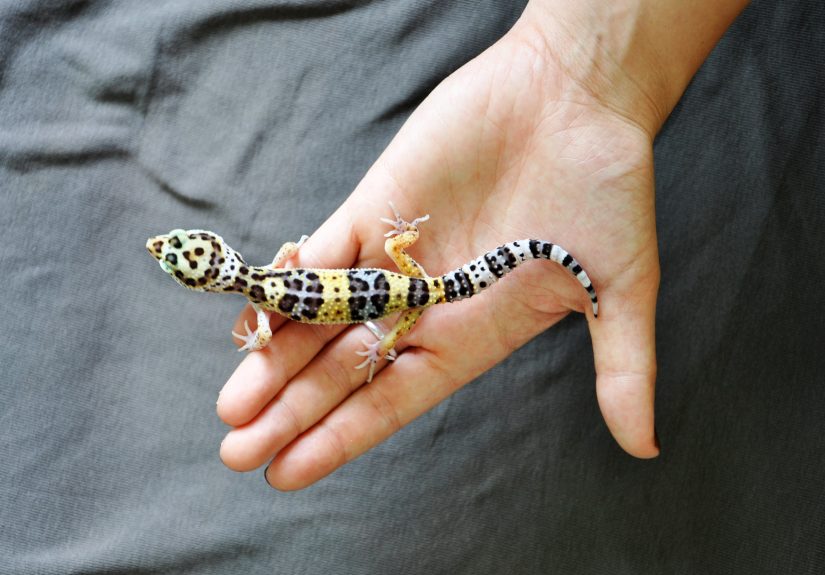
Place one hand flat in front of or beside your gecko. With your other hand, gently guide the gecko toward your open palm. When the gecko steps onto your hand, slowly lift from underneath. Your palm should support the belly, chest, and feet.
Never pick up a leopard gecko by the tail, legs, neck, or loose skin. Do not pinch around the middle like you are grabbing a TV remote. A leopard gecko should feel supported, not trapped. Imagine you are holding a tiny living water balloon with opinions.
Support the Feet, Body, and Tail
Once your gecko is in your hand, keep both hands available. Let the gecko rest on your palm and fingers. Use your second hand as a gentle barrier or moving platform. If the gecko walks forward, place one hand in front of the other so it can continue walking safely. This “hand treadmill” method is especially useful for active geckos.
Support matters because leopard geckos feel more secure when their feet have contact with something solid. Dangling legs can make them nervous. A gecko with all four feet supported is more likely to remain calm than one suspended in midair like it has been cast in a reptile magic show.
Never Grab the Tail
The tail is one of the most important handling rules. Leopard geckos store fat in their tails, and the tail can detach when the animal feels threatened. Tail dropping can happen from rough handling, sudden restraint, predator-like grabbing, or intense stress.
If your gecko’s tail looks thick and healthy, that is a good sign. Respect it. Do not tug it, pinch it, hold it, or use it to stop your gecko from walking away. If your gecko starts moving too fast, lower your hands closer to a safe surface and calmly guide the body instead.
Step 3: Keep Handling Calm, Short, and Positive
Holding a leopard gecko is not a marathon. It is more like a short, polite coffee meeting. You want to end before anyone gets stressed, bored, or suddenly determined to leap into a houseplant.
Start With Short Sessions
For beginners or newly tamed geckos, start with short handling sessions of about five minutes. Over time, you can gradually increase the length if your gecko stays relaxed. Some leopard geckos tolerate handling well; others prefer brief contact and then a return to their hide. Personality matters.
Watch your gecko’s body language. A relaxed leopard gecko may walk slowly, explore your hands, or sit calmly. A stressed gecko may breathe rapidly, try to flee, vocalize, wave its tail, freeze stiffly, or repeatedly attempt to hide. If you see stress signals, calmly return your gecko to its enclosure.
Stay Low and Move Slowly
Keep your gecko close to a soft surface. Even experienced keepers should avoid holding a leopard gecko high above the floor. These lizards are not designed for dramatic balcony moments. Their confidence may exceed their landing skills.
Move slowly while handling. Avoid loud noises, sudden laughter near the enclosure, quick hand movements, or passing the gecko from person to person too much. A calm room creates a calmer gecko.
Return Your Gecko Gently
When the session is over, lower your hand into the enclosure and let your gecko walk off by itself. Do not drop it into the tank or push it into a hide. Letting your gecko choose to step down helps end the interaction peacefully.
After handling, wash your hands again. Then give your gecko space. It may go to a hide, lick its lips, explore, or stare at you with the ancient wisdom of a creature that has judged your technique and found it “acceptable, for a giant.”
Common Mistakes When Holding a Leopard Gecko
Even caring owners can make mistakes. The key is to learn quickly and adjust. Leopard geckos are forgiving when handled gently, but repeated stressful experiences can make them fearful.
Mistake 1: Chasing the Gecko Around the Enclosure
If you chase your gecko with your hand, it learns that handling equals danger. Instead, use patient introduction. Let your gecko see your hand, smell it, and approach when ready. Trust is built slowly, not by surprise capture.
Mistake 2: Holding Too Tightly
A tight grip may feel secure to you, but it feels scary to your gecko. Use open hands and gentle barriers rather than squeezing. The goal is to prevent falls while allowing the gecko to feel supported.
Mistake 3: Handling Too Often
Leopard geckos are not pets that need constant cuddling. Overhandling can cause stress, especially in young geckos. Short, consistent sessions are better than long, unpredictable ones. Quality beats quantity.
Mistake 4: Ignoring Temperature and Environment
Because leopard geckos are reptiles, their body temperature depends on their environment. Do not keep your gecko away from its heated habitat for too long, especially in a cold room. A brief handling session is usually fine, but extended time outside the enclosure can become uncomfortable.
Mistake 5: Letting Children Handle Without Supervision
Children can enjoy leopard geckos, but handling should always be supervised by an adult or experienced caregiver. Kids may accidentally squeeze, drop, or startle the gecko. Teach them to sit down, keep hands low, and use slow movements. The gecko is a pet, not a toy with spots.
How to Build Trust With Your Leopard Gecko
Trust is not created in one heroic handling session. It comes from consistency. Feed on a routine, keep the enclosure clean, maintain proper temperatures, and avoid unnecessary stress. A healthy, secure gecko is more likely to tolerate handling.
Try placing your hand inside the enclosure for a few minutes without touching your gecko. Let it approach, sniff, or walk over your fingers. You can also use feeding tongs during meals so your gecko associates your presence with positive experiences. Just avoid hand-feeding in a way that teaches your gecko to mistake fingers for insects. Your fingers are not mealworms, no matter what your gecko’s enthusiastic face suggests.
Another useful habit is speaking softly before opening the enclosure. Your gecko may not understand your words, but it can learn patterns. A calm voice, slow door opening, and gentle hand placement can become familiar signals.
Signs Your Leopard Gecko Is Comfortable Being Held
A comfortable leopard gecko usually moves slowly, keeps its body relaxed, and explores without frantic attempts to escape. It may pause on your palm, lick the air, or climb from one hand to the other. Some geckos even choose to walk onto a familiar hand when the enclosure door opens.
Do not expect your leopard gecko to behave like a dog or cat. Reptile affection is subtle. Your gecko may not cuddle, wag, purr, or write you a thank-you note. Comfort may simply look like not running away. In leopard gecko language, that is practically a friendship bracelet.
Signs You Should Put Your Leopard Gecko Back
Return your gecko to the enclosure if it shows repeated escape attempts, fast breathing, tail waving, squeaking, defensive posture, biting, or sudden freezing. Also stop handling if your gecko seems weak, injured, dehydrated, or unusually lethargic. In those cases, consult a reptile veterinarian.
If your gecko drops its tail, do not panic, but do take it seriously. Keep the enclosure clean, reduce handling, monitor the wound area, and contact a reptile veterinarian for guidance if there is bleeding, swelling, discharge, appetite loss, or any sign of infection.
Experience-Based Tips for Holding a Leopard Gecko
One of the most useful lessons in leopard gecko handling is that confidence should be quiet. Many new keepers get nervous, and nervous hands tend to hover, twitch, and make sudden corrections. Your gecko notices that. A steady, calm hand is much more reassuring than a hand that behaves like it just drank three iced coffees.
A practical first experience is to sit on the floor or on a bed with your gecko. Keep your hands low and cupped. Let the gecko walk from one hand to the other instead of trying to make it stay still. This helps you learn your gecko’s speed and personality without risking a fall. Some leopard geckos are slow explorers. Others suddenly discover parkour. Both types need support.
Another experience many keepers share is that evening handling often goes better than daytime handling. A gecko that has just woken up and is naturally active may be more curious than one pulled from a hide at noon. If your gecko seems grumpy during the day, it may not hate you. It may simply be operating on gecko business hours.
It also helps to create a small ritual. Wash your hands, open the enclosure slowly, place your palm down, wait, then scoop only if your gecko is calm. Repeating the same routine makes handling less surprising. Leopard geckos may not read calendars, but they do learn patterns.
Be realistic about progress. Some geckos become comfortable within days; others need weeks or months. A shy gecko is not a “bad” gecko. It is simply cautious. If you respect its pace, you are more likely to build long-term trust. Forcing interaction may create setbacks, while patient handling can turn a nervous gecko into a calm companion.
One common beginner mistake is trying to hold the gecko still for a photo. A better approach is to let the gecko settle naturally on your palm or a safe surface and take the photo quickly. Flash, loud voices, and lots of repositioning can stress the animal. Your gecko does not care about your social media grid. Honestly, that may be its healthiest trait.
If you are nervous about being bitten, remember that leopard gecko bites are usually a defensive reaction or a feeding mistake. Move slowly, avoid smelling like feeder insects, and do not poke your gecko’s face. If a bite happens, stay calm. Jerking your hand away can injure the gecko. Gently place it back in the enclosure and review what caused the stress.
The best handling experiences happen when the gecko has choices. Let it walk onto your hand when possible. Let it step off when the session ends. Keep sessions short enough that your gecko finishes calm rather than exhausted. Over time, your hand becomes less like a scary crane and more like familiar furniture.
Finally, remember that holding is only one part of bonding. A clean habitat, proper heat, good hides, fresh water, nutritious insects, and respectful routines matter just as much. A leopard gecko that feels secure in its home is much easier to handle. Great handling begins with great husbandry.
Conclusion
Learning how to hold a leopard gecko is really learning how to communicate safety. Prepare first, scoop from underneath, support the entire body, avoid the tail, keep sessions short, and pay attention to body language. When you move slowly and respect your gecko’s limits, handling becomes less stressful and more enjoyable for both of you.
A leopard gecko may never fetch your slippers or greet you at the door, but it can learn to trust your hands. And when a tiny spotted reptile calmly walks onto your palm, that is a small but wonderful victory. Handle gently, stay patient, and let your gecko be the adorable little weirdo it was born to be.





 Close
Close