
Table of Contents >> Show >> Hide
- Alaskan Malamute vs Siberian Husky: The Big Picture
- 1. Compare Size and Weight First
- 2. Check the Eyes: Blue Is a Huge Clue
- 3. Study the Head and Face
- 4. Look at the Ears
- 5. Tail Shape and Carriage Tell a Story
- 6. Coat Texture and Length Matter
- 7. Movement: Power Walk vs Effortless Trot
- 8. Temperament Differences You Can Notice
- 9. Color and Markings: Helpful, But Not Definitive
- 10. Common Mistakes When Identifying These Breeds
- A Simple Identification Checklist
- Real-Life Experience Notes: How to Tell Them Apart in Person
- Conclusion: The Fastest Way to Know What You Are Seeing
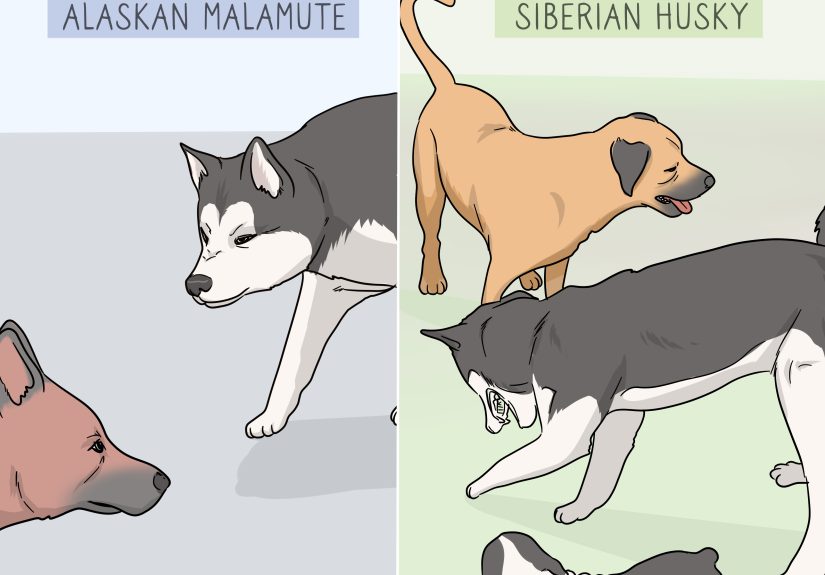
At first glance, an Alaskan Malamute and a Siberian Husky can look like two versions of the same snow-ready superstar: thick coat, pointy ears, curled tail, dramatic markings, and that “I definitely belong in a winter adventure movie” expression. But once you know what to look for, telling them apart becomes much easier. The Alaskan Malamute is the heavyweight freighter of the sled-dog world, built for strength, power, and hauling heavy loads. The Siberian Husky is the lighter, faster endurance runner, bred to move efficiently over long distances with a team.
The simplest way to begin is this: if the dog looks massive, broad, deeply built, and bear-like, you may be looking at a Malamute. If the dog looks lighter, quicker, racier, and more fox-like, it may be a Siberian Husky. Of course, real dogs do not always read breed manuals before being born. Mixed breeds, puppy growth stages, grooming, weight, and coat condition can blur the picture. That is why the smartest identification method uses several clues together: size, eyes, ears, head shape, tail carriage, coat texture, movement, and temperament.
Alaskan Malamute vs Siberian Husky: The Big Picture
The Alaskan Malamute and Siberian Husky are both northern working dogs, but they were shaped by different jobs. The Malamute was developed in Alaska as a powerful freight dog. Its job was not to win a sprint; it was to pull serious weight through harsh conditions. Think of the Malamute as the strong friend everyone calls when a couch needs moving.
The Siberian Husky, by contrast, was developed in northeastern Asia and later became famous in Alaska for sled racing and long-distance travel. Huskies were built to pull lighter loads at moderate speed over great distances. Think of the Husky as the friend who shows up to a 5K “just for fun” and somehow makes it look easy.
This difference in purpose explains many physical traits. A Malamute usually has heavier bone, a broader chest, a larger head, and a more powerful frame. A Siberian Husky is medium-sized, balanced, agile, and smoother in outline. Both are athletic, but their athleticism has a different flavor: the Malamute says “power,” while the Husky says “speed and stamina.”
1. Compare Size and Weight First
Size is one of the fastest clues. A mature Alaskan Malamute is usually larger and heavier than a Siberian Husky. Standard Malamute “freighting” size is commonly around 23 inches and 75 pounds for females and 25 inches and 85 pounds for males. Many Malamutes look even more substantial because of their dense coat, broad body, and heavy bone.
Siberian Huskies are noticeably smaller. Females are often around 35 to 50 pounds, while males are usually around 45 to 60 pounds. They typically stand about 20 to 23.5 inches tall at the shoulder. A Husky can still look impressive, especially when fully coated, but it should not look bulky or lumbering. If the dog resembles a compact athlete in a fur coat, Husky is more likely. If it resembles a furry snow tractor with feelings, consider Malamute.
Quick Size Test
Stand back and look at the dog’s overall build. Does the dog look like it was designed to pull a heavy sled slowly and steadily? That points toward Alaskan Malamute. Does the dog look lighter, springier, and built to trot for miles? That points toward Siberian Husky.
2. Check the Eyes: Blue Is a Huge Clue
Eye color is one of the most useful differences. Siberian Huskies can have brown eyes, blue eyes, one brown and one blue eye, or parti-colored eyes. This is one reason Huskies are famous for their striking stare. A blue-eyed dog with a northern look is not automatically a Husky, but blue eyes make a purebred Alaskan Malamute unlikely.
Alaskan Malamutes have brown, almond-shaped eyes. Darker brown is often preferred in breed descriptions, but shades can vary. Blue eyes are not considered correct for a purebred Malamute. So if you are trying to identify a dog and it has icy blue eyes, you should strongly consider Siberian Husky, Husky mix, or another northern-type breed rather than a purebred Malamute.
Important Exception
Do not rely on eye color alone. Some Siberian Huskies have brown eyes and can be mistaken for Malamutes. Also, mixed-breed dogs may inherit surprising combinations. Eye color is powerful evidence, not the entire detective case.
3. Study the Head and Face
The Malamute head is broad and deep, with a strong muzzle that is not overly pointed. The expression is typically soft, affectionate, and dignified. The face often has a cap, mask, or bar markings, giving the dog a bold, classic Arctic look. The overall impression is sturdy and powerful.
The Siberian Husky head is more refined. Its expression is keen, friendly, alert, and sometimes mischievous. A Husky often looks like it knows where the treats are hidden and has already formed a committee to retrieve them. The muzzle is medium in length, the skull is balanced, and the face usually appears more fox-like than bear-like.
4. Look at the Ears
Both breeds have triangular, erect ears, but their placement and proportion differ. Alaskan Malamute ears are medium-sized but often appear smaller in relation to the broad head. They are set wider apart and may look slightly rounded at the tips. Because the head is large, the ears can seem modest, almost as if the dog ordered them in size “practical.”
Siberian Husky ears are also triangular and upright, but they are set high and closer together on the head. They tend to look more alert and sharply expressive. On a Husky, the ears often add to the quick, lively, ready-to-run appearance.
5. Tail Shape and Carriage Tell a Story
The Alaskan Malamute has a well-furred plume tail carried over the back. It should look full, waving, and substantial. A Malamute tail often gives the impression of a luxurious feather duster designed for Arctic royalty.
The Siberian Husky also has a furry tail, but it is usually more fox-brush-like and may be carried in a graceful sickle curve when the dog is alert. When relaxed, many Huskies carry the tail lower. A Husky tail should not look tightly curled or heavily plumed in the same way a Malamute tail often does.
Tail Tip
If the tail is thick, plumed, and comfortably riding over the back, lean Malamute. If the tail is more moderate, brush-like, and carried up mainly when alert or moving, lean Husky.
6. Coat Texture and Length Matter
Both breeds have double coats made for cold weather. That means a dense undercoat and protective outer hairs. However, the Malamute coat tends to be thicker, coarser, and longer around the neck, shoulders, back, rear, and tail. It often creates a heavier outline.
The Siberian Husky coat is also dense, but it is usually more even in length over the body and lies smoother. Huskies should not look shaggy, overly long-coated, or heavy like a freighting dog. Their coat supports endurance and weather protection without making them look bulky.
Both breeds shed. Not “a little hair on your sweater” shed. More like “congratulations, your house now has seasonal indoor snow.” Regular brushing is not optional if you value your furniture, clothing, and sanity.
7. Movement: Power Walk vs Effortless Trot
Watch the dog move. A Malamute should move with strength, balance, and steady power. The gait may look efficient, but the body still communicates weight and muscle. It is the movement of a dog built to work hard against resistance.
A Siberian Husky usually moves with a smooth, light, effortless trot. The breed was designed to cover ground efficiently, so movement often looks fluid and economical. A correct Husky should not seem clumsy, heavy, or overbuilt. When trotting, a Husky may look as if it could keep going long after everyone else has started searching for a coffee shop.
8. Temperament Differences You Can Notice
Both breeds are often friendly, social, and people-oriented, but there are subtle differences. Alaskan Malamutes are commonly described as affectionate, loyal, playful, and dignified. They can be strong-willed and may show a more independent, grounded personality. They are powerful dogs, so training, structure, and early socialization matter.
Siberian Huskies are famously friendly, outgoing, energetic, and sometimes comically vocal. They are not usually natural guard dogs because many greet strangers like long-lost sled teammates. Huskies can also be escape artists, runners, diggers, and expert negotiators of household rules. If a fence has a weakness, a bored Husky may submit a full engineering report by leaving through it.
Temperament should never be used as the only identification tool. Training, environment, age, and individual personality all matter. Still, a heavier, calmer, more powerful dog with a dignified presence may suggest Malamute, while a lighter, bouncier, chattier, high-energy dog may suggest Husky.
9. Color and Markings: Helpful, But Not Definitive
Both breeds come in many northern-style colors and markings. You may see gray and white, black and white, red and white, sable, agouti-like tones, or solid white depending on the breed and line. Face masks, caps, bars, and dramatic contrast can appear in both, which is why color alone is a weak identification method.
Malamutes often have bold face markings and a heavier, more classic mask. Huskies can display an enormous variety of facial patterns, from clean white faces to dramatic masks that make them look permanently ready for a superhero audition. Use markings as supporting evidence, not proof.
10. Common Mistakes When Identifying These Breeds
Mistake 1: Calling Every Blue-Eyed Northern Dog a Husky
Blue eyes strongly suggest Siberian Husky or Husky ancestry, but other breeds and mixes can also have light eyes. Always combine eye color with size, structure, coat, and movement.
Mistake 2: Assuming Every Giant Husky Is a Malamute
Some Huskies are overweight, woolly-coated, or mixed with larger breeds. A big dog with Husky markings is not automatically a Malamute. Look for the Malamute’s broad head, heavy bone, plume tail, and brown eyes.
Mistake 3: Confusing Alaskan Husky with Alaskan Malamute
An Alaskan Husky is not the same thing as an Alaskan Malamute. Alaskan Huskies are performance-bred sled dogs and can vary widely in appearance. They may look leaner, rangier, or less standardized than either purebred Malamutes or Siberian Huskies.
Mistake 4: Judging Puppies Too Early
Puppies are adorable little agents of confusion. A Malamute puppy may not yet show its full power, and a Husky puppy may look fluffy and chunky for a while. Adult structure is easier to identify than puppy cuteness, because puppy cuteness is legally unfair.
A Simple Identification Checklist
- Size: Malamute is usually larger and heavier; Husky is medium-sized and lighter.
- Build: Malamute is powerful and broad; Husky is agile and balanced.
- Eyes: Malamute has brown eyes; Husky may have blue, brown, mixed, or parti-colored eyes.
- Head: Malamute has a broader, deeper head; Husky has a more refined, fox-like head.
- Ears: Malamute ears look smaller relative to the head and wider set; Husky ears are higher and closer.
- Tail: Malamute tail is heavily plumed over the back; Husky tail is more brush-like and often sickle-shaped.
- Coat: Malamute coat is coarser and heavier; Husky coat is dense but smoother and more even.
- Movement: Malamute moves with power; Husky moves with light endurance.
Real-Life Experience Notes: How to Tell Them Apart in Person
In real life, identifying an Alaskan Malamute from a Siberian Husky is less like reading a chart and more like solving a friendly, fluffy mystery at the dog park. Photos can be misleading because camera angles, grooming, and posture change everything. A Husky photographed from below can look enormous. A Malamute standing beside a large person may look merely “big-ish.” The best experience-based approach is to observe the dog from several angles and give yourself a minute before deciding.
Start with the first impression. A Malamute often fills more space. Even when calm, it has a substantial presence: broad chest, strong legs, thick neck, and a head that looks built for serious work. When it stands still, it may look like a compact snow bear wearing a friendly face. A Siberian Husky usually gives a quicker impression. The dog may appear spring-loaded, lighter on its feet, and more visually streamlined. Even when relaxed, many Huskies look as though they are considering a recreational jog to another ZIP code.
Next, watch how people react when they approach. Many Huskies are famously social and expressive. They may bounce, vocalize, lean, spin, or offer a dramatic opinion about the leash, the weather, the snack situation, or the emotional state of the universe. Malamutes can be playful too, but their energy often feels heavier and more deliberate. A Malamute greeting may involve a big lean, a dignified wag, or a powerful body nudge that says, “Hello, I am affectionate and also approximately furniture-sized.”
Look at the dog in motion. This is one of the best practical tests. A Husky often trots with a smooth, floating rhythm. The movement looks efficient, almost effortless. The feet land neatly, the body stays balanced, and the dog seems designed to keep going. A Malamute moves with more visible strength. The stride may still be smooth, but you can see the power behind it. The body looks like it could pull weight, not just cover distance.
At grooming salons, veterinary waiting rooms, or adoption events, coat can offer another clue. A Malamute coat often feels denser and coarser, especially around the shoulders, neck, back, and tail. The tail is usually a major giveaway: full, plumed, and carried proudly over the back. A Husky coat is thick but often neater and more uniform, and the tail is usually less plume-heavy. During shedding season, both breeds can produce enough loose fur to make a second decorative dog, so do not identify by hair volume alone.
Finally, ask the owner or shelter staff about the dog’s history, but keep an open mind. Many dogs are mixes, and many people use “Husky” as a casual label for any northern-looking dog. If identification matters for adoption, training, exercise planning, or housing, consider a veterinarian’s opinion or a reputable DNA test. For casual recognition, use the full pattern: Malamute equals bigger, broader, brown-eyed, power-built, plume-tailed; Siberian Husky equals smaller, lighter, often blue-eyed, faster-looking, and more endurance-built. Once you see the difference in person, the two breeds stop looking like twins and start looking like cousins with very different gym memberships.
Conclusion: The Fastest Way to Know What You Are Seeing
To identify an Alaskan Malamute from a Siberian Husky, do not depend on one feature. Instead, build a complete picture. The Alaskan Malamute is typically larger, heavier, broader, brown-eyed, and powerfully built, with a thick coat and a well-furred plume tail carried over the back. The Siberian Husky is usually smaller, lighter, quicker-looking, and more agile, with possible blue or mixed-color eyes and a smoother, endurance-ready outline.
The easiest mental shortcut is this: Malamute equals strength and freight; Husky equals speed and distance. If the dog looks like it could pull a loaded sled through deep snow with calm determination, you may be admiring a Malamute. If it looks like it could run all morning and still argue cheerfully about dinner, you may be looking at a Siberian Husky. Either way, you are in the presence of a remarkable northern breed with a big personality, a serious coat, and a talent for making ordinary walks feel like small Arctic expeditions.






 Close
Close