Table of Contents >> Show >> Hide
- Quick Start: Play the Song in 60 Seconds
- Before You Play: 3 Beginner Setup Rules That Make Everything Easier
- Find Your Note Neighborhood Fast (No Theory Headache)
- Step-by-Step Melody Tutorial (Right Hand)
- Finger Plan That Feels Natural
- How to Count the Rhythm Without Reading Notation
- Add Left Hand (Optional but Very Cool)
- Play by Ear: The Secret Skill Most Beginners Skip
- Transpose the Song in 2 Minutes (Sound Fancy, Stay Simple)
- Common Beginner Mistakes (and Fixes)
- 7-Day Micro Practice Plan (10 Minutes a Day)
- How to Make It Sound Musical (Not Robotic)
- Conclusion
- Extended Experiences: What Learning This Song Feels Like in Real Life (About )
If you’ve ever sat at a keyboard, pressed one key, and thought, “Wow, that sounded expensive,” this guide is for you.
You do not need sheet music to play your first song. In fact, one of the best beginner piano songs is
Twinkle Twinkle Little Star because it teaches melody shape, rhythm, finger control, and confidence in under 10 minutes.
This tutorial is built for absolute beginners: no notation, no music degree, no mysterious Italian words shouted across the room.
You’ll learn a simple note pattern, a practical finger-number method, and a
practice routine that helps you sound musical fast.
By the end, you’ll be able to play the melody smoothly, add a left-hand accompaniment, and even transpose the song to a new starting note.
Quick Start: Play the Song in 60 Seconds
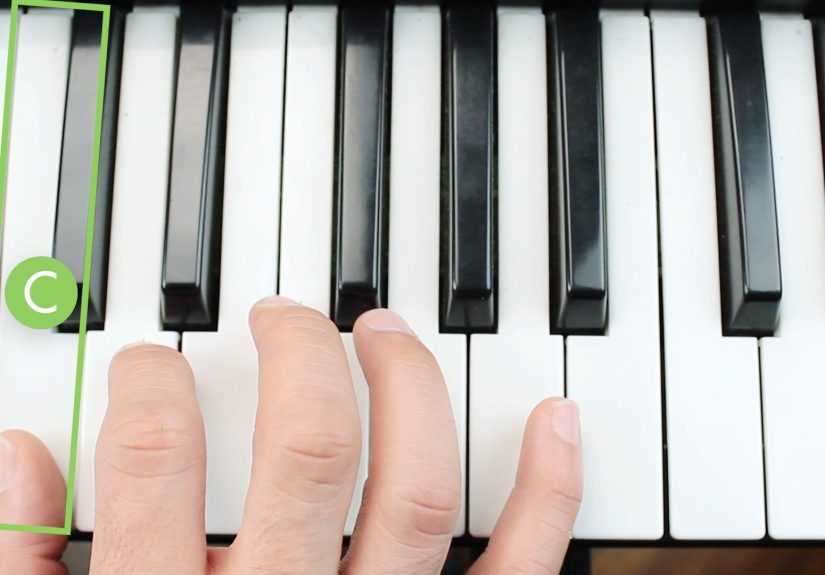
Start by finding Middle C (the white key just to the left of a group of two black keys near the center of your keyboard).
Now play this pattern with your right hand:
C C G G A A G | F F E E D D C
Congrats. You just played the core melody.
If that felt clunky, perfect. Clunky is just “future smooth” in disguise.
Before You Play: 3 Beginner Setup Rules That Make Everything Easier
1) Sit at the right height
Your forearms should be roughly level with the keys. If your elbows are too low, your wrists collapse.
Too high, and your shoulders turn into stressed office interns.
Sit toward the front half of your bench or chair, feet stable, back tall.
2) Curve your fingers (don’t poke)
Think “holding a small orange.” Your fingers should be gently curved, with relaxed knuckles.
Flat fingers create tension and make fast changes harder.
3) Use finger numbers
Pianists number fingers like this:
- 1 = thumb
- 2 = index
- 3 = middle
- 4 = ring
- 5 = pinky
Using finger numbers is a game-changer for learning keyboard songs without sheet music, because it gives you a repeatable “map.”
Find Your Note Neighborhood Fast (No Theory Headache)
The white keys repeat letter names in a loop:
A B C D E F G, then back to A.
That means once you find one C, you can find every C.
For this song in the easiest version, we stay in a comfortable area around Middle C and use mostly white keys.
You do not need to memorize all 88 keys today. You need maybe 7 keys. That’s less than your Wi-Fi password.
Step-by-Step Melody Tutorial (Right Hand)
Phrase 1: “Twinkle, twinkle, little star”
C C G G A A G
Phrase 2: “How I wonder what you are”
F F E E D D C
Phrase 3: “Up above the world so high”
G G F F E E D
Phrase 4: “Like a diamond in the sky”
G G F F E E D
Phrase 5: Repeat opening
C C G G A A G | F F E E D D C
Why this works
You’re not just memorizing random keys; you’re learning melodic contour (up, down, and repeat).
The song uses short, predictable chunks, so your brain can store it quickly.
This is exactly why Twinkle is a classic beginner keyboard tutorial.
Finger Plan That Feels Natural
Use this starter fingering in C position (right hand over C-D-E-F-G):
| Note | Suggested Finger |
|---|---|
| C | 1 (thumb) |
| D | 2 |
| E | 3 |
| F | 4 |
| G | 5 |
| A | 3 (reach or shift slightly) |
Don’t panic about the A. Beginners can either:
- Briefly shift the hand to reach A, or
- Use finger 5 on G, then move and play A with finger 3 or 4.
There isn’t one “piano police approved” solution at this stage.
Choose the movement that feels relaxed and repeatable.
How to Count the Rhythm Without Reading Notation
Keep a steady pulse and count: 1-2-3-4.
Most beginner versions of this song work well with one beat per note for the opening pattern.
The key is consistency, not speed.
Practice with this voice rhythm:
- Say note names out loud while playing slowly.
- Then say finger numbers while playing.
- Then hum the melody while playing quietly.
If you rush, the melody sounds like a squirrel late for class.
Slow = musical. Fast can come later.
Add Left Hand (Optional but Very Cool)
Once the right hand feels secure, add simple left-hand support.
Start with single bass notes first:
- Play C in left hand for Phrase 1
- Play F in left hand for Phrase 2
- Play C then G for Phrase 3–4
- Return to C to finish
Want fuller sound? Use basic triads:
C (C-E-G), F (F-A-C), G (G-B-D).
Keep rhythm simple: one chord per phrase to start.
Play by Ear: The Secret Skill Most Beginners Skip
If your goal is learn piano without sheet music, ear training is your unfair advantage.
Try this:
- Sing the first line.
- Play one note at a time until you match what you sing.
- Repeat for each phrase.
This builds listening-muscle and helps you learn songs faster in the long run.
It also makes you less dependent on written notation and more flexible as a player.
Transpose the Song in 2 Minutes (Sound Fancy, Stay Simple)
The melody pattern is based on relationships, not one fixed key.
Keep the same pattern shape and start on a different note.
Example:
- Start on G instead of C.
- Use the same “same-same-jump-jump-step-step” structure.
- You now have a new key and a stronger ear.
Translation: you’re doing real musicianship, not just memorizing one keyboard trick.
Common Beginner Mistakes (and Fixes)
Mistake 1: Looking only at your hands
Fix: Glance at your hands to place notes, then look forward and listen.
Develop touch memory.
Mistake 2: Practicing from the top every time
Fix: Practice in chunks (Phrase 1 alone, Phrase 2 alone, then combine).
Mistake 3: Playing too fast too early
Fix: Slow enough that every note sounds intentional.
Increase speed only after three clean repeats in a row.
Mistake 4: Tension in wrists and shoulders
Fix: Pause, shake out hands, reset posture, restart slower.
7-Day Micro Practice Plan (10 Minutes a Day)
- Day 1: Find notes and play Phrase 1 slowly.
- Day 2: Learn Phrase 2 + connect with Phrase 1.
- Day 3: Learn Phrase 3–4.
- Day 4: Play full melody with steady count.
- Day 5: Add left-hand single bass notes.
- Day 6: Record yourself, identify one improvement target.
- Day 7: Perform for a friend, parent, sibling, pet, or houseplant.
Yes, even your houseplant counts as an audience.
Ferns are surprisingly supportive.
How to Make It Sound Musical (Not Robotic)
Once you can hit the right notes, add expression:
- Play the first phrase softly, then slightly louder in phrase three.
- Use gentle phrasing: tiny lifts between lines, like taking a breath while speaking.
- End the final note a little longer for a clean cadence.
Musicality is not “advanced stuff.” It’s the difference between pressing keys and telling a story.
Conclusion
Learning Twinkle Twinkle Little Star on keyboard without reading sheet music is one of the fastest ways
to start playing real music. You used note patterns, finger numbers, rhythm counting, and ear trainingthe same building blocks
used in bigger songs later.
Keep this mindset: small chunks, steady pulse, relaxed hands, repeat with intention.
Do that for one week, and you won’t just know one nursery songyou’ll understand how songs are built.
That’s when keyboard practice becomes fun, creative, and actually addictive (the good kind).
Extended Experiences: What Learning This Song Feels Like in Real Life (About )
Most beginners assume learning piano is a dramatic before-and-after moment.
In reality, it’s more like upgrading your operating system in tiny background patches.
Day one often feels awkward. Your fingers hesitate, your timing drifts, and your brain says,
“I was promised instant talent.” Totally normal.
A common first experience is the “note hunting phase.” You know the melody in your head,
but your hand keeps landing one key too far left or right. At first, that feels frustrating.
Then something cool happens: by the third or fourth short session, you stop guessing and start predicting.
Your hand remembers where C lives. G no longer feels like a random destination.
This is the moment beginners realize they’re not just copying a songthey’re building keyboard geography.
Another very real experience is rhythm wobble. You’ll play the right notes but with timing that sounds like
a shopping cart wheel with commitment issues. Again, normal. As soon as you count a steady pulse out loud,
your version improves fast. Not perfect, but noticeably better. That quick feedback is powerful.
It gives new players proof that technique beats luck.
Many learners also discover that singing while playing unlocks progress.
When you hum “Twinkle, twinkle…” and let your fingers chase your voice,
your ears become your guide. Suddenly, the keyboard feels less like a puzzle and more like conversation.
You sing, the keys answer. That back-and-forth is often the first time beginners feel genuinely musical.
Families report a funny pattern too: the player practices for “just five minutes,”
then accidentally loops the song for twenty. Why? Because repetition with small improvements is rewarding.
One cleaner phrase, one smoother transition, one less wrong notethese micro wins create momentum.
It’s the same psychology behind leveling up in games, except with better soundtrack options.
A big emotional shift happens when you add the left hand.
Even if it’s just one bass note per phrase, the sound becomes fuller and more cinematic.
Beginners often react with, “Wait… that sounded like real piano.”
That reaction matters. It builds confidence and makes people practice more consistently.
Then comes the “performance moment.” Maybe you play for a sibling, a parent, a roommate, or your phone camera.
You’ll probably feel nervous. Your hands may shake a little. But when you finish the final note cleanly,
you get a unique kind of pride: you created music from memory, without sheet music, from pure understanding.
Over time, this one song becomes a reference point.
When new songs feel hard, you remember:
“I learned this once from scratch. I can do it again.”
That’s the deeper value of learning Twinkle Twinkle Little Star this way.
It’s not just a beginner tune. It’s your first lesson in pattern recognition, musical listening,
patient repetition, and self-trust.
So if your current version still sounds a little bumpy, keep going.
Every pianist you admire has played uneven notes, rushed phrases, and accidental “mystery chords.”
Progress is rarely dramaticbut it is dependable.
Ten calm minutes a day can turn “I can’t play” into “play that again.”