
Table of Contents >> Show >> Hide
- Why Spot Cleaning Works Better Than Full-Scale Panic
- Your Rug Spot-Cleaning Kit: Household Staples That Actually Help
- Before You Clean: Know What Kind of Rug You Have
- How to Spot Clean Rugs Step by Step
- Best Household Staple Solutions for Common Rug Problems
- Fresh drink spills: dish soap and water
- Odors: baking soda
- Greasy spots: baking soda first, then soap
- Mild food stains: vinegar and dish soap
- Fresh wine or colorful spills: club soda or a baking soda paste
- Pet accidents: household staples can help, but know their limits
- Stubborn light-colored stains: hydrogen peroxide with caution
- What Not to Do When Spot Cleaning Rugs
- When to Call a Professional Instead
- Quick Spot-Cleaning Cheat Sheet
- Conclusion
- Real-Life Experiences With Spot Cleaning Rugs Using Household Staples
Rugs are the quiet overachievers of the home. They soften footsteps, warm up rooms, and politely pretend they did not notice that entire spoonful of pasta sauce you dropped during dinner. But when spills happen, panic-cleaning with whatever is under the sink is not exactly a winning strategy. A smarter move is learning how to spot clean rugs using household staples you probably already have on hand.
The good news is that many common rug messes can be handled with simple supplies like dish soap, baking soda, white vinegar, club soda, clean white towels, and cool water. The less-good news is that not every rug likes the same treatment. Wool can be fussy. Jute can be dramatic. Antique rugs can react like you insulted their ancestors. That means good spot cleaning is not just about what you use. It is also about how gently, quickly, and carefully you use it.
In this guide, you will learn how to treat fresh spills, lift common stains, reduce odors, and avoid the classic mistakes that turn a tiny spot into a large personal regret. Let’s save the rug before the stain becomes part of the decor.
Why Spot Cleaning Works Better Than Full-Scale Panic
Spot cleaning targets a specific mess without soaking the entire rug. That matters because too much water can leave behind residue, create musty smells, weaken adhesives in some rugs, and even cause color bleeding. A focused approach is faster, safer, and usually more effective for everyday stains.
It also helps preserve the life of the rug. Aggressive scrubbing can rough up fibers, flatten texture, and spread the stain deeper into the pile. Spot cleaning, when done properly, lifts the mess while leaving the rest of the rug alone. In other words, it is the “do no harm” version of cleaning.
Your Rug Spot-Cleaning Kit: Household Staples That Actually Help
You do not need a science lab. You need a calm hand and a short list of basics:
1. Mild dish soap
This is the MVP for many water-safe rugs. A tiny amount mixed with water can help lift food spills, muddy marks, and everyday grime without being too harsh.
2. White vinegar
Useful in diluted amounts for certain stains and mild odor control. It is not magic, but it can be effective when paired with blotting and rinsing. The key word is diluted, not “let’s pour the whole bottle and hope for the best.”
3. Baking soda
Great for absorbing moisture and odors. It is especially handy after blotting a spill or for refreshing a rug that smells a little too lived-in.
4. Club soda
Helpful on some fresh spills, especially when you need a quick rinse-and-blot approach. It is most useful in the early moments before a stain settles in and starts acting like it pays rent.
5. Hydrogen peroxide
This can help with some stubborn organic stains, but use it with caution. It may lighten certain fibers or colors, especially darker rugs. Always test first and skip it on delicate or richly dyed rugs unless you are very sure it is safe.
6. White cloths or paper towels
Use white, not colored, so you do not transfer dye onto the rug while trying to remove dye from the rug. That would be an extremely unhelpful plot twist.
7. Cool or lukewarm water
Water helps rinse and dilute, but overdoing it can create new problems. Think damp, not drenched.
Before You Clean: Know What Kind of Rug You Have
Spot cleaning starts before the cleaner touches the stain. Check the rug material and construction if you know it. Synthetic rugs tend to be more forgiving. Wool rugs can shrink or felt if handled too roughly. Jute and sisal do not love moisture. Delicate, hand-knotted, vintage, or antique rugs deserve extra caution and sometimes professional care.
If the rug has a care tag, read it. If it came with manufacturer instructions, even better. If not, treat the rug conservatively. And always test any solution on a hidden corner first. Wait until it dries before deciding whether the cleaner is safe. Yes, that takes patience. Yes, patience is annoying. It is still cheaper than replacing the rug.
How to Spot Clean Rugs Step by Step
Step 1: Remove solids or excess liquid first
If the mess is chunky, thick, or muddy, remove as much of it as possible before adding moisture. Use a spoon, dull knife, or paper towel to lift solids gently. If it is a liquid spill, blot right away with a clean towel. Press firmly, then switch to a dry section and blot again.
Do not rub. Rubbing pushes the stain deeper and spreads it outward. Instead, work from the outside edge toward the center so the mess does not get bigger.
Step 2: Choose the mildest effective cleaner
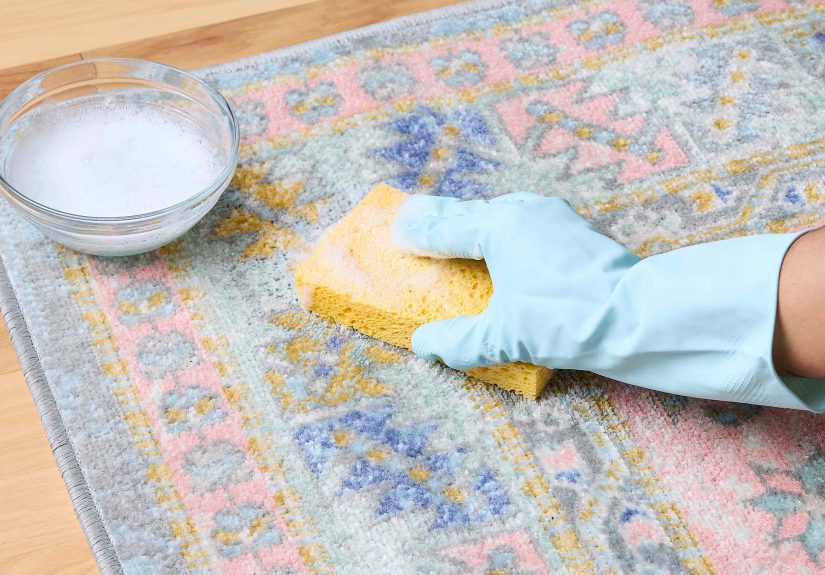
For many fresh stains, start with the gentlest option: a small amount of dish soap mixed into water. A simple mix is usually enough to handle everyday spills. If needed, move to a vinegar-and-water blend or another targeted treatment. Do not jump straight to the strongest thing in the cabinet like you are in a cleaning action movie.
Step 3: Dampen a cloth, not the rug
Put the cleaning solution on a cloth first whenever possible. That gives you more control and reduces the chance of over-wetting. Blot the stained area gently. Repeat with clean sections of the cloth until you see improvement.
Step 4: Rinse lightly
Once the stain begins to lift, blot with a cloth dampened only with clean water to remove soap or vinegar residue. Leftover residue can attract dirt later, which is a cruel and unnecessary sequel.
Step 5: Dry thoroughly
Blot the area with dry towels. Then let it air dry fully. If possible, place a fan nearby or increase ventilation. A rug that stays damp too long can smell musty or develop issues in the backing or underneath the rug.
Step 6: Restore the pile
Once dry, vacuum lightly or brush the fibers gently in the natural direction of the pile. This helps the cleaned area blend back in with the rest of the rug.
Best Household Staple Solutions for Common Rug Problems
Fresh drink spills: dish soap and water
For coffee, tea, juice, or soda, blot immediately. Then use a mild dish soap solution on a white cloth and dab the stain. Rinse lightly with clean water and blot dry. This is often the most reliable first response for fresh liquid spills.
Odors: baking soda
If the rug smells stale or slightly sour after a spill, sprinkle baking soda over the fully or mostly dry area. Let it sit for several hours or overnight, then vacuum thoroughly. Baking soda is better at deodorizing than it is at solving every stain in the history of flooring, so use it for what it does best.
Greasy spots: baking soda first, then soap
For butter, oily food, or greasy residue, blot away excess first. Sprinkle baking soda on the area to absorb oil, let it sit, then vacuum. After that, use a little dish soap solution to treat what remains. Grease is stubborn, but it often gives up in stages.
Mild food stains: vinegar and dish soap
A mix of water, a small amount of dish soap, and a little white vinegar can help with many food-related spots. Apply with a cloth, blot gently, then rinse. Keep the mixture mild and the touch light.
Fresh wine or colorful spills: club soda or a baking soda paste
Blot first, always. Club soda can help loosen a fresh stain before it sets. For some lingering marks, a baking soda paste made with water can be dabbed onto the spot, left to dry, and then vacuumed away. Just make sure the rug can handle moisture and that you do not leave behind a crusty residue parade.
Pet accidents: household staples can help, but know their limits
For a fresh pet accident, blot aggressively with towels, then use a mild dish soap or diluted vinegar solution for initial cleanup. Follow with a light rinse and thorough drying. If odor lingers, a household fix may not be enough. That is where an enzyme-based cleaner often works better because it targets the organic material causing the smell. Sometimes the nose knows before your eyes do.
Stubborn light-colored stains: hydrogen peroxide with caution
On some light or colorfast rugs, a carefully tested hydrogen peroxide treatment may help with organic stains. Test in a hidden area first, use only a small amount, and blot rather than soak. Avoid this on dark, richly colored, delicate, wool, or antique rugs unless you are completely sure it is safe.
What Not to Do When Spot Cleaning Rugs
Do not oversaturate
Too much water can spread the stain, weaken the backing, and trap moisture underneath. The rug should never feel swampy.
Do not rub aggressively
Scrubbing can damage fibers, fuzz the surface, and make the stain larger. Blotting is slower, but it is kinder and usually more effective.
Do not skip the patch test
Even common household staples can affect dye, fiber texture, or backing. Hidden-corner testing is boring but wise. Wisdom often is.
Do not mix random cleaners
Stick to simple, intentional combinations. Mixing products without understanding them can create residue, damage fibers, or produce fumes you definitely did not invite into your living room.
Do not treat every rug the same
Wool, jute, sisal, silk-blend, shag, vintage, and hand-knotted rugs all have different needs. A solution that works beautifully on a synthetic runner may be a terrible idea on a natural-fiber statement piece.
When to Call a Professional Instead
Some situations call for backup. Consider professional cleaning if the rug is antique, handmade, silk, heavily stained, water-damaged, or affected by pet odor that keeps returning. The same goes for color bleeding, severe muddy buildup, or stains that have already survived several heroic attempts.
A professional is also worth it when the rug is more valuable than your confidence level. That is not defeat. That is good decision-making dressed as humility.
Quick Spot-Cleaning Cheat Sheet
- Fresh spill: Blot immediately with white towels.
- Everyday stain: Use mild dish soap and water.
- Odor: Use baking soda after the area is mostly dry.
- Grease: Use baking soda first, then dish soap solution.
- Food stain: Try a mild vinegar and soap mix.
- Pet mess: Blot first, household cleaning second, enzyme cleaner if odor remains.
- Delicate rug: Test carefully and use minimal moisture, or call a professional.
Conclusion
Learning how to spot clean rugs using household staples is less about secret formulas and more about smart technique. Blot fast, clean gently, use the mildest effective solution, rinse lightly, and dry thoroughly. Dish soap, baking soda, vinegar, club soda, and careful use of hydrogen peroxide can solve many everyday rug problems without a last-minute trip to the store.
The real trick is respecting the rug. A synthetic hallway rug may handle a basic DIY approach with no drama. A wool or jute rug may need a softer touch. And an heirloom rug may deserve professional attention the moment trouble appears. When you match the cleaner to the stain and the method to the material, spot cleaning becomes less intimidating and much more successful.
So the next time coffee splashes, salsa flies, or your pet makes a “creative decision,” do not panic. Grab a white towel, take a breath, and remember that the rug still has a fighting chance.
Real-Life Experiences With Spot Cleaning Rugs Using Household Staples
Anyone who has ever owned a rug long enough to enjoy it has probably also spilled something on it. That is just the social contract between humans and soft furnishings. Over time, people tend to discover that successful spot cleaning has less to do with fancy products and more to do with timing, restraint, and repetition.
One of the most common experiences is the “I made it worse” moment. It usually starts with a spill, followed by frantic rubbing, too much water, and a towel that is somehow both unhelpful and emotionally judgmental. Then the person steps back and realizes the stain is now bigger, fuzzier, and somehow more committed to staying. That is usually the moment they learn the golden rule: blot, do not scrub. It feels less satisfying in the moment, but it works better in real life.
Another familiar experience is discovering that a tiny amount of dish soap can do more than a dramatic amount of almost anything else. Many people expect that stronger-smelling equals stronger-cleaning, but rugs often respond better to mild solutions used patiently. A little dish soap in water, applied with a white cloth, can quietly handle the kind of stains that seem much scarier when they first happen. The lesson is simple: calm cleaning beats aggressive cleaning.
Baking soda also earns its reputation in real homes, especially where pets, kids, or mystery odors are involved. People often notice that the stain may already be gone, but the smell lingers like an unwanted guest. That is where baking soda tends to shine. Sprinkle, wait, vacuum, and suddenly the rug smells less like a long weekend and more like a functioning household. It is not glamorous, but it is deeply appreciated.
Then there is the vinegar experience. Some people love it because it is inexpensive and useful. Others dislike the temporary smell and expect instant miracles. In practice, vinegar is usually most helpful when diluted, paired with blotting, and used for the right type of problem. It is not a universal fix, but it is often a solid supporting actor. Think of it as the dependable character actor of rug care: not flashy, but very capable when cast correctly.
Many households also learn the hard way that rug material changes everything. A synthetic rug in a busy entryway may bounce back beautifully after simple spot treatment. A jute rug, on the other hand, may respond to too much water by looking offended for a week. Wool can be resilient but still deserves a gentler hand. These experiences teach people to stop asking, “What removes stains?” and start asking, “What removes stains safely on this rug?” That tiny shift in thinking saves a lot of regret.
Perhaps the most reassuring real-life lesson is that not every stain needs perfection. Sometimes the goal is not to erase every trace of the accident on the first try, but to prevent damage, lift the worst of the spot, and keep the rug looking good over time. Many people find that two or three light treatments, with full drying in between, work better than one dramatic cleaning marathon. Rug care rewards patience more than heroics.
In the end, spot cleaning becomes one of those everyday skills that feels surprisingly empowering. Once you have rescued a rug from coffee, muddy paw prints, dripped dressing, or an unfortunate birthday-cake incident, you stop seeing spills as disasters and start seeing them as manageable interruptions. The rug survives, your confidence grows, and your household staples earn a little more respect. Not bad for a bottle of dish soap and a box of baking soda.





 Close
Close