Table of Contents >> Show >> Hide
- Why the North Star Matters
- How to Spot the North Star in 9 Steps
- Step 1: Choose the Right Night and Location
- Step 2: Face North as Best You Can
- Step 3: Find the Big Dipper First
- Step 4: Identify the Pointer Stars
- Step 5: Extend the Line About Five Times
- Step 6: Confirm You Have the Right Star
- Step 7: Use Cassiopeia as a Backup Guide
- Step 8: Notice How High Polaris Sits
- Step 9: Practice Until It Becomes Automatic
- Common Mistakes When Looking for the North Star
- Tips to Make North Star Spotting Easier
- Real-World Examples of Finding Polaris
- Field Notes and Experiences: What Finding the North Star Actually Feels Like
- Conclusion
If you have ever looked up at the night sky and thought, “Wow, that is a lot of stars and exactly zero labels,” you are not alone. Finding the North Star can feel a little like trying to spot one reliable friend in a crowd of glittery strangers. The good news is that Polaris, better known as the North Star, is one of the easiest stars to learn once you know what to look for.
Even better, learning how to spot the North Star is not just a fun stargazing trick. It can help you find true north, understand the movement of the night sky, and build confidence for identifying other constellations. Whether you are camping, hiking, teaching kids about astronomy, or simply trying to look dramatically wise in a backyard lawn chair, this skill is worth having.
In this guide, you will learn exactly how to find Polaris in 9 practical steps, along with common mistakes to avoid, real-world examples, and hands-on experiences that make the process stick. No telescope required. No wizard robes required either, though the stars would probably respect the effort.
Why the North Star Matters
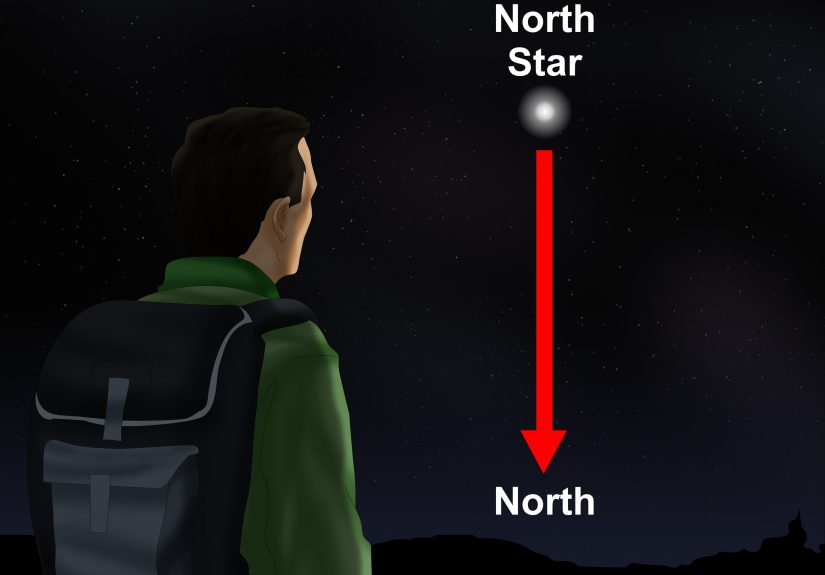
The North Star is special because it sits very close to the north celestial pole, which means it appears to stay in nearly the same place while the rest of the northern sky seems to circle around it. That makes Polaris a reliable reference point for navigation and skywatching. It is not the brightest star in the sky, which surprises a lot of beginners, but it is important because of its position, not because it is trying to win a cosmic talent show.
For people in the Northern Hemisphere, Polaris points the way to true north. It also gives you a rough idea of your latitude. If you are in Miami, Polaris appears relatively low in the northern sky. If you are in Chicago, it sits higher. If you were standing at the North Pole, it would be almost directly overhead. That simple relationship is one reason Polaris has been useful for travelers, sailors, and curious night owls for generations.
How to Spot the North Star in 9 Steps
Step 1: Choose the Right Night and Location
Your first job is not actually to look for Polaris. Your first job is to give yourself a fair chance of seeing it. Go outside on a clear night with as little light pollution as possible. You do not need perfect wilderness darkness, but you do want to avoid bright porch lights, parking lots, and that one neighbor who treats their backyard like a small airport runway.
Let your eyes adjust to the dark for at least 15 to 20 minutes. Put your phone brightness low, or better yet, keep it in your pocket unless you are using a stargazing app briefly. The darker your environment, the easier it will be to spot the surrounding star patterns that lead you to the North Star.
Step 2: Face North as Best You Can
You do not need to know exactly where north is yet, but you should have a rough sense of direction. Use a compass app, a map, or the sunset position from earlier in the evening to get your bearings. This matters because Polaris lives in the northern sky. If you are staring due south and waiting for the North Star to wander over, you may be out there a while.
If you are in the Southern Hemisphere, this method will not work because Polaris is not visible there. But anywhere in much of the Northern Hemisphere, including the continental United States, Canada, Europe, and much of Asia, Polaris is your dependable northern marker.
Step 3: Find the Big Dipper First
The easiest way to locate Polaris is usually by first finding the Big Dipper. The Big Dipper is not a constellation itself. It is an asterism, which is a recognizable star pattern inside the constellation Ursa Major. Think of it as the sky’s most famous ladle.
Look for a pattern of seven bright stars: four stars form the bowl and three stars make the handle. In spring and summer evenings, the Big Dipper is often easy to spot high in the northern sky. In fall, it can sit lower near the horizon. In winter, it may appear rotated in a different orientation. Do not worry if it looks upside down or tilted. The sky loves spinning its furniture around.
Step 4: Identify the Pointer Stars
Once you find the Big Dipper, focus on the two stars at the outer edge of the bowl, opposite the handle. These are called the pointer stars. Their names are Dubhe and Merak. You do not need to memorize the names to find Polaris, but learning them makes you sound impressively prepared.
Imagine a straight line running from Merak through Dubhe and continuing onward into the sky. These two stars point almost directly to Polaris. This is the classic method taught in astronomy guides because it is fast, accurate, and much easier than randomly guessing which star looks important.
Step 5: Extend the Line About Five Times
Here is the trick that makes the pointer-star method work. Take the distance between Merak and Dubhe, then visually extend that line about five times farther. At the end of that imaginary path, you should arrive at Polaris.
This is one of the most useful visual estimates in beginner stargazing. You do not need ruler-level precision. You just need a steady sense of proportion. If you overshoot a little, slow down and scan the area. Polaris is moderately bright, but it is not blazing like Venus or Sirius. It is more like the dependable friend who shows up on time instead of making a dramatic entrance.
Step 6: Confirm You Have the Right Star
Before you declare victory, double-check that the star you found makes sense in context. Polaris is located at the end of the handle of the Little Dipper, which is part of Ursa Minor. The Little Dipper is much fainter than the Big Dipper, so beginners often see Polaris first and then struggle to make out the rest of the pattern.
If the sky is dark enough, look for a faint bowl extending away from Polaris. You might also spot Kochab and Pherkad, two stars in the bowl of the Little Dipper. If you can see even part of that shape, it is a strong sign that you have found the right star.
Step 7: Use Cassiopeia as a Backup Guide
What if the Big Dipper is low on the horizon, hidden behind trees, or playing hard to get? Use Cassiopeia. This bright constellation looks like a large W or M depending on the time of year and its position in the sky. Cassiopeia sits on the opposite side of Polaris from the Big Dipper and also circles around it over the course of the night.
Once you find the W shape, imagine Polaris sitting roughly between Cassiopeia and the Big Dipper. This is not as exact as the pointer-star method, but it is extremely helpful when one of those patterns is easier to see than the other. Many experienced stargazers use both patterns together because the sky is more cooperative when you give yourself two clues instead of one.
Step 8: Notice How High Polaris Sits
One of the coolest things about Polaris is that its altitude above the northern horizon roughly matches your latitude. That means if you are at 40 degrees north latitude, Polaris will appear about 40 degrees above the horizon. You do not need to do math in the dark, but this relationship can help confirm your sighting.
For example, in Seattle, Polaris appears nearly halfway between the horizon and the point straight overhead. In Dallas, it sits lower. In Honolulu, it is much closer to the northern horizon. So if you think you found Polaris high overhead while standing in Florida, you may want to gently challenge that conclusion.
Step 9: Practice Until It Becomes Automatic
The first time you find Polaris, it may take several minutes. The second time, it gets easier. After a few sessions, you will start recognizing the Big Dipper, Cassiopeia, and the northern sky almost instantly. That is when stargazing becomes a lot more fun. Instead of hunting in confusion, you start orienting yourself with confidence.
Practice during different seasons so you can learn how the patterns rotate around Polaris. The Big Dipper may appear high, low, sideways, or upside down depending on the time of year and the time of night. Polaris, however, stays put. Once you get used to that steady anchor point, the night sky suddenly feels a lot less mysterious and a lot more welcoming.
Common Mistakes When Looking for the North Star
One of the biggest mistakes beginners make is assuming the North Star must be the brightest star in the northern sky. It is not. That myth causes a lot of misplaced confidence and some spectacularly wrong finger-pointing. Another common mistake is using the wrong two stars in the Big Dipper. Make sure you are using the stars on the outer edge of the bowl, not the handle.
Light pollution is another problem. In bright urban areas, you may spot Polaris but miss the Little Dipper entirely. That does not mean you failed. It just means the sky is competing with streetlights. Also, do not forget seasonal orientation changes. The Big Dipper does not always look like it does in textbook diagrams, which can throw people off. Learn the shape, not just one angle.
Tips to Make North Star Spotting Easier
- Use a printed star chart or a reliable sky app before heading outside.
- Start on moonless or low-moon nights for better contrast.
- Look from a place with a clear northern horizon.
- Give your eyes time to adjust to darkness.
- Practice with a friend so one of you can be wrong confidently while the other fixes it.
Real-World Examples of Finding Polaris
Imagine you are camping in northern Michigan on a crisp fall night. The Big Dipper is low, and trees block part of the horizon. Instead of giving up, you find Cassiopeia’s W shape higher in the sky. You trace the area between Cassiopeia and the northern horizon, then spot Polaris standing calmly in place while nearby stars seem to drift around it. Suddenly, north is no longer a guess.
Or maybe you are on a summer beach trip in North Carolina. The northern horizon is wide open, and the Big Dipper is easier to see. You identify the bowl, follow the pointer stars, and there it is: Polaris, sitting above the horizon at a height that makes sense for your location. Once you find it, you start noticing how the rest of the sky arranges itself around that single steady point.
Field Notes and Experiences: What Finding the North Star Actually Feels Like
The first time most people try to find Polaris, they expect a dramatic moment. Trumpets. Fireworks. A celestial spotlight. Instead, the real experience is usually quieter and, honestly, better. You step outside, look up, and realize the sky is bigger than your confidence. At first, every star seems equally determined to confuse you. The Big Dipper looks almost right, then not right, then suspiciously spoon-like again. You second-guess everything, including your sense of north and perhaps your entire educational background.
Then something changes. You slow down. You stop trying to force the answer. Your eyes adjust. The bowl of the Big Dipper becomes obvious. The pointer stars start making sense. You trace the line outward, and there it is: a single star that seems oddly calm compared with everything around it. That moment does not feel flashy. It feels grounding. You are not just seeing a star. You are seeing structure in what used to feel like chaos.
Many people remember the setting as much as the star itself. Maybe it is a family camping trip where someone keeps insisting they found Polaris three times before actually finding it once. Maybe it is a cold evening on a porch, wrapped in a blanket, with the kind of silence that makes you hear distant dogs and your own breathing. Maybe it is a school field trip where the instructor points to Cassiopeia, and suddenly the sky transforms from random glitter into a map with landmarks.
There is also a practical satisfaction in finding Polaris. Once you know where north is, the rest of the sky becomes easier to learn. You can start noticing how constellations rotate over the hours. You can compare one season to another. You can walk outside in winter, spring, summer, or fall and orient yourself in seconds. That familiarity builds confidence fast. Stargazing stops feeling like a puzzle designed to embarrass you and starts feeling like a conversation you finally understand.
One of the most memorable parts of the experience is how repeatable it becomes. The first attempt may take 20 minutes. The next one may take five. After a while, you can glance up, find the Dipper or Cassiopeia, and lock onto Polaris almost automatically. That shift is deeply satisfying because it turns a piece of textbook knowledge into something lived and personal. You are no longer reading about the night sky. You are using it.
And that, really, is why learning to spot the North Star sticks with people. It is simple, useful, and quietly awe-inspiring. It gives you direction in a literal sense, but it also gives you a small feeling of connection to everyone who has ever stood under a dark sky and looked for something steady. Not bad for one modest star doing its job without demanding applause.
Conclusion
Learning how to spot the North Star is one of the easiest ways to get comfortable with the night sky. You do not need expensive gear or advanced astronomy knowledge. You just need a clear night, a rough sense of north, and the patience to use the Big Dipper or Cassiopeia as your guide. Once you find Polaris, you gain more than a star. You gain a reference point that helps the entire sky make sense.
Use these 9 steps a few times in different seasons, and the process becomes second nature. Before long, you will be the person confidently pointing north while everyone else is still arguing with their compass app. That is a pretty solid upgrade for one evening under the stars.