
Table of Contents >> Show >> Hide
- Step 1: Slow Everything Down Immediately
- Step 2: Take a Careful Look Before You Assume It Is a Sprain
- Step 3: Check the Severity of the Limp
- Step 4: Use a Cold Compress the Right Way
- Step 5: Restrict Activity for Several Days
- Step 6: Do Not Give Human Pain Medicine
- Step 7: Be Careful With Wraps, Braces, and DIY Bandages
- Step 8: Watch for Red Flags That Mean Vet Care Is Needed
- Step 9: Help Recovery the Smart Way
- Common Questions About a Dog’s Sprained Ankle
- Final Thoughts
- Real-Life Experiences: What Dog Owners Often Notice First
- SEO Tags
If your dog suddenly starts limping, holding up a paw, or giving you that dramatic “I have been wronged by the universe” look, it is easy to assume they sprained an ankle. Sometimes that guess is right. Sometimes it is very wrong. A sprain is a soft-tissue injury involving ligaments around a joint, but limping can also come from a nail injury, paw pad problem, strain, torn ligament, fracture, sting, foreign object, or something deeper in the joint. That is why smart first aid for a dog’s sprained ankle is less about playing canine orthopedic surgeon and more about staying calm, reducing stress on the leg, and knowing when home care is enough and when the vet should take over.
The good news is that mild soft-tissue injuries in dogs often improve with rest, careful monitoring, and a little common sense. The less fun news is that dogs are terrible at “taking it easy” when a squirrel is involved. This guide breaks the process into nine practical steps so you can help your dog safely, avoid common mistakes, and know when that limp has crossed the line from “watch closely” to “call the vet now.”
Step 1: Slow Everything Down Immediately
The first thing to do when you suspect a sprained ankle on a dog is simple: stop the action. No zoomies. No fetch. No heroic stair sprints. No backyard wrestling with the invisible enemy only your dog can see.
Even a mild sprain can get worse when a dog keeps running on it. A small ligament injury can turn into a bigger problem if the joint keeps twisting, sliding, or taking impact. Bring your dog inside, keep them calm, and move them to a quiet area with good traction. Hardwood floors may look stylish, but they are not doing an injured dog any favors. Lay down rugs, towels, or yoga mats if the floor is slippery.
If your dog is small, carry them when possible. If your dog is large, use a leash and guide them slowly. The goal is not perfection. The goal is fewer bad decisions made at high speed.
Step 2: Take a Careful Look Before You Assume It Is a Sprain
Before you decide your dog sprained an ankle, do a calm visual check. Start at the paw and work upward. Look for obvious causes of pain, including:
- Broken nails
- Thorns, burrs, glass, or foxtail-type debris
- Bleeding or torn paw pads
- Swelling around the foot, wrist, or hock
- Heat, redness, or bruising
- An unnatural angle or obvious deformity
If your dog allows it, gently compare the sore leg with the healthy one. Is one ankle puffier? Warmer? More sensitive when touched? These clues matter. A dog sprained ankle may show mild to moderate swelling, tenderness, and limping, but a severe reaction, visible deformity, or sudden inability to bear weight raises concern for a more serious injury.
Do not force the joint to bend or twist to “test” it. This is not a home game show called Guess That Ligament. If your dog yelps, pulls away hard, or tries to nip, stop the exam and move on to safer care.
Step 3: Check the Severity of the Limp
Not all limps are created equal. A dog that lightly taps the paw down but still walks is in a different category from a dog that will not put the leg down at all.
Mild limp
Your dog is walking, but awkwardly. They may shorten their stride, hesitate on stairs, or seem stiff after resting. This can happen with a mild sprain or strain.
Moderate limp
Your dog is clearly favoring the leg, moving slowly, or refusing to jump. This deserves close monitoring and often a vet call, especially if swelling is present.
Severe limp
Your dog refuses to bear weight, cries out, trembles, has visible swelling or deformity, or the injury followed a fall, collision, or other trauma. That is not a “wait and see all weekend” situation. That is a “call your veterinarian or emergency clinic” situation.
One of the trickiest parts of canine pain is that some dogs act stoic. No crying does not mean no pain. A quiet dog can still have a significant orthopedic injury.
Step 4: Use a Cold Compress the Right Way
If the area looks swollen and your dog will tolerate gentle handling, apply a cold compress. This can help reduce swelling and calm inflammation in the first day or two after injury.
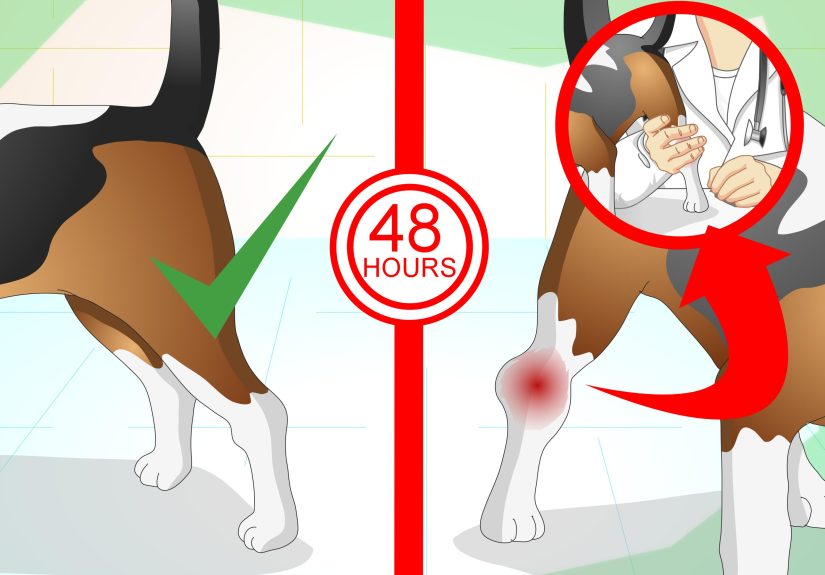
Wrap an ice pack or bag of frozen peas in a thin towel. Never place ice directly on your dog’s skin. Hold it against the swollen area for about 10 to 15 minutes. You can repeat this a few times a day during the first 24 to 48 hours, as long as your dog stays comfortable.
Do not turn your kitchen into an experimental rehab center. Longer is not better. A short, controlled cold compress is helpful; an overenthusiastic arctic treatment session is not.
If your dog hates it, stop. Wrestling an injured dog to prove you are “helping” is not actually helping.
Step 5: Restrict Activity for Several Days
Rest is the least glamorous part of dog sprain treatment, but it is usually the most important. For a suspected mild sprained ankle in a dog, activity restriction should start right away.
That means:
- Leash walks only for bathroom breaks
- No running, jumping, or rough play
- No off-leash yard time if your dog tends to sprint
- No stairs unless absolutely necessary
- No couch launches, bed leaps, or Olympic-level greetings at the front door
Most owners underestimate how much movement dogs do inside the house. Even pacing from window to window can keep an ankle irritated. Use a crate, pen, or small room if needed. Think of it as a temporary “boring but healing” phase.
If the limp improves steadily over a day or two, that is encouraging. If it stays the same, worsens, or comes back the moment your dog gets active, it is time for a professional evaluation.
Step 6: Do Not Give Human Pain Medicine
This step deserves big letters and maybe a parade: do not give your dog human pain relievers unless your veterinarian specifically tells you to.
Many owners reach for ibuprofen, naproxen, aspirin, or acetaminophen because they use those drugs themselves. That is risky. Some human medications can seriously harm dogs, and even medications that seem familiar can cause stomach ulcers, kidney injury, liver injury, or dangerous dosing mistakes when used without veterinary guidance.
If your dog seems painful, call your veterinarian and ask what is safe. Your vet may recommend an approved dog-specific anti-inflammatory or another treatment based on your dog’s size, age, health history, and the likely cause of the limp.
In other words, your dog needs a vet-approved plan, not a home pharmacy roulette wheel.
Step 7: Be Careful With Wraps, Braces, and DIY Bandages
It is tempting to wrap the ankle and feel like you have taken charge of the situation. Sometimes light support is used in veterinary care, but home bandaging is easy to get wrong. A wrap that is too tight can reduce circulation. A wrap that is too loose can slip, bunch, rub the skin, or create a fresh problem.
If there is an open wound on the paw or pad, basic wound dressing may be appropriate, but for a suspected sprain alone, a random ankle wrap is not always helpful. Most dogs do better with rest and veterinary advice than with an ambitious internet-inspired bandage job.
If your vet has previously shown you how to use a soft wrap or brace on your specific dog, follow those instructions exactly. Otherwise, skip the DIY engineering project and focus on safe confinement, traction, and observation.
Step 8: Watch for Red Flags That Mean Vet Care Is Needed
Home care is only appropriate for a mild injury when your dog is otherwise acting normal and the limp is already starting to improve. You should contact a veterinarian promptly if you notice any of the following:
- Your dog will not bear weight on the leg
- The limb looks crooked, unstable, or deformed
- There is significant swelling, heat, or pain
- The limp started after a fall, collision, or other trauma
- Your dog is crying, shaking, panting, or seems distressed
- There is a cut, puncture, broken nail, or bleeding pad
- Your dog has repeated licking or chewing at the joint
- The limp lasts more than a couple of days
- The limp keeps returning after exercise
- Your dog is very young, very large, elderly, or already has joint disease
These signs matter because what looks like a dog ankle sprain can actually be a fracture, torn ligament, dislocation, paw injury, or chronic orthopedic problem that needs imaging, medication, or rehab.
Step 9: Help Recovery the Smart Way
Once your dog starts improving, resist the urge to declare victory after one better walk. Soft-tissue injuries often feel better before they are fully healed. That is why dogs re-injure themselves doing something ridiculous on day three.
Return to normal activity gradually. Start with short, slow leash walks. Keep floors non-slip. Prevent jumping if possible. If your dog is overweight, talk with your vet about weight management, because extra pounds add extra stress to sore joints. If limping becomes a repeat performance, your vet may recommend x-rays, a lameness exam, or physical rehabilitation.
Long term, injury prevention matters too. Warm up active dogs before intense exercise. Avoid repetitive leaps off tall furniture. Keep nails trimmed for better traction. Use care on slick floors and steep stairs. Weekend warrior energy is cute until someone pulls something.
Common Questions About a Dog’s Sprained Ankle
How long does a sprained ankle take to heal in a dog?
A mild sprain may start improving within a few days, but full recovery can take longer depending on severity and how well your dog rests. If there is no clear improvement quickly, the diagnosis may not be a simple sprain.
Can a dog walk on a sprained ankle?
Some dogs can still walk, but that does not mean they should stay active. Limiting movement helps protect the joint and reduce inflammation.
Should I massage the area?
Not right away unless your veterinarian recommends it. Fresh injuries often do better with rest and careful handling, not enthusiastic ankle spa services.
Can I use heat instead of cold?
For fresh swelling, cold therapy is usually the safer starting point. Heat may feel cozy, but early on it can be the wrong move for an actively inflamed injury.
Final Thoughts
Knowing how to treat a sprained ankle on a dog starts with one big truth: not every limp is a simple sprain. The best first aid is calm observation, immediate rest, a brief cold compress for swelling, and a healthy respect for what you cannot diagnose at home. If your dog has only a mild limp and improves quickly, careful home management may be enough. If the pain is significant, the limp is severe, or things do not improve fast, let your veterinarian step in.
Your dog does not need a motivational speech about walking it off. Your dog needs traction, quiet, patience, and someone wise enough to know when to pick up the phone. Fortunately, that someone is you.
Real-Life Experiences: What Dog Owners Often Notice First
One of the most interesting things about a suspected dog ankle sprain is how ordinary it can look at first. Many owners do not witness a dramatic injury. They simply notice that something is off. A dog that usually launches out the door like a furry rocket suddenly hesitates at the threshold. A champion stair climber pauses halfway up. A fetch addict trots after the ball, then remembers that maybe today is actually a day for emotional support lounging.
In real households, the first clue is often not a yelp. It is a change in routine. Owners say things like, “He did not want to jump into the car,” or “She kept licking her foot,” or “He was fine until after the park.” Those little changes matter. Dogs are often subtle before they are obvious. By the time a limp is dramatic, the discomfort may have been building for hours or even days.
Another common experience is that the limp looks worse after rest, then slightly better once the dog starts moving. That can fool people into thinking the problem is already resolving. In reality, stiffness after lying down is a sign worth taking seriously. On the flip side, some dogs look worse during activity and better after a calm evening indoors. Either pattern tells you something important: the leg is not normal, and your dog is compensating.
Owners also frequently describe feeling unsure whether the pain is in the paw, ankle, knee, or hip. That confusion is normal. Dogs shift weight in ways that make the source of pain tricky to identify. A sore paw can make a dog move as if the whole leg is broken. A knee issue can make an owner think the ankle is sprained. This is why home observation is helpful, but home certainty is overrated.
Then there is the classic recovery mistake: the dog seems better, so normal life resumes immediately. The next thing you know, the dog spots a squirrel, bolts across the yard, and returns with the exact same limp plus an expression that says this was somehow not their fault. Many owners learn the same lesson the hard way: improvement is not the same as full healing. A few extra days of boring leash walks can save you from another two weeks of setbacks.
Perhaps the most reassuring experience owners share is this: when they respond early, outcomes are usually better. Catching swelling early, restricting movement, and calling the vet before a mild injury turns into a major one can make a huge difference. So if your gut says your dog is not moving right, trust it. Dogs may be resilient, goofy, and occasionally determined to make terrible choices at top speed, but they still benefit most from calm, timely care.






 Close
Close