Table of Contents >> Show >> Hide
- Why Lipton Onion Soup Mix Works So Well in Meatloaf
- Ingredients
- Step-by-Step: How to Make Lipton Onion Soup Meatloaf
- Meatloaf “Science” (The Helpful Kind, Not the Homework Kind)
- Flavor Variations (So You Don’t Get Bored)
- What to Serve with Lipton Onion Soup Meatloaf
- Make-Ahead, Storage, and Reheating Tips
- Troubleshooting: Common Meatloaf Problems (Solved)
- Meatloaf Memories: The “Experience” Side of This Recipe (About )
Meatloaf has a reputation problem. Say the word and someone will immediately picture a sad beige brick from 1987, served with a side of regret. But here’s the twist: Lipton Onion Soup Meatloaf is the version that makes meatloaf believers out of skepticsbecause that little packet of onion soup mix does a shocking amount of work for one ounce of seasoning.
This recipe is weeknight-friendly, pantry-smart, and reliably juicy (the holy trinity). It’s also the kind of dinner that magically turns into tomorrow’s best sandwichespecially if you toast the bread and act like you’re running a five-star deli out of your kitchen.
Why Lipton Onion Soup Mix Works So Well in Meatloaf
Classic meatloaf needs three things: flavor, moisture, and structure. Onion soup mix helps with all three by combining dried onions and savory seasonings in a way that spreads evenly through the meat. Translation: you get big “cooked-all-day” flavor without actually, you know, cooking all day.
- Flavor: Onion + beefy savory notes = instant depth.
- Consistency: The fine seasoning blend distributes evenly, so every slice tastes like the good part.
- Simplicity: It replaces a bunch of individual spices you’d otherwise measure (and then spill, and then deny spilling).
Ingredients
This version stays close to the classic Lipton-style formula, with a couple of optional upgrades for extra tenderness and a glossy top. If you want “true vintage,” you can keep it super simple. If you want “best meatloaf of your life,” keep reading.
Meatloaf
- 2 pounds ground beef (80/20 is juicy; 85/15 is a bit leaner)
- 1 envelope Lipton Recipe Secrets Onion Soup Mix (or Beefy Onion Soup Mix)
- 3/4 cup plain dry breadcrumbs or quick-cooking oats
- 2 large eggs
- 3/4 cup milk or water (milk = more tender, water = classic)
- 1/3 cup ketchup (some goes inside, some can go on top)
- Optional but tasty: 1–2 tsp Worcestershire sauce, 1/2 tsp black pepper, 1 minced garlic clove
Glaze (Optional, but Highly Encouraged)
- 1/2 cup ketchup
- 1–2 Tbsp brown sugar (for that sticky diner-style finish)
- 1 tsp apple cider vinegar (or balsamic) for balance
Salt note: Onion soup mix already brings salt. Hold off on adding extra salt until you’ve tried it once. You can always salt your slice at the tablelike a classy person with a salt cellar, not a goblin with a shaker.
Step-by-Step: How to Make Lipton Onion Soup Meatloaf
1) Heat the oven and prep the pan
Preheat your oven to 350°F. Line a sheet pan with foil or parchment for easy cleanup, or use a 9×5-inch loaf pan. If you use a loaf pan, consider placing it on a baking sheet (insurance for any bubbly juices).
2) Hydrate the binder (small step, big payoff)
In a large bowl, stir together the breadcrumbs (or oats) and milk (or water). Let it sit for 2 minutes so the binder soaks up liquid. This helps your onion soup mix meatloaf stay tender instead of tight and crumbly.
3) Add seasoning and wet ingredients
Add the onion soup mix, eggs, and 1/3 cup ketchup (plus Worcestershire/pepper/garlic if using). Stir until combined.
4) Add the beefthen mix gently
Add ground beef and mix with clean hands or a fork until everything is evenly combined. Do not overmixthat’s how you get dense meatloaf that slices like a doorstop. Stop mixing as soon as it looks uniform.
5) Shape and top
For a sheet-pan loaf: shape the mixture into a neat, even loaf (about 9×5 inches). This cooks more evenly and develops more crust. For a loaf pan: press it in gentlyfirm enough to hold shape, not so firm it becomes compacted.
Spread glaze over the top (or just brush on ketchup if you want classic simplicity).
6) Bake until safe and juicy
Bake for about 55–70 minutes, depending on thickness. Start checking around 55 minutes. Meatloaf is done when the center reaches 160°F on an instant-read thermometer (ground beef safety standard).
7) Rest, then slice like a pro
Rest the meatloaf for 10–15 minutes before slicing. This keeps juices in the loaf instead of on your cutting board. (Aka: the difference between “wow” and “why is my meatloaf weeping?”)
Meatloaf “Science” (The Helpful Kind, Not the Homework Kind)
If you’ve ever had meatloaf that’s dry, crumbly, or oddly rubbery, it usually comes down to one of these:
Moisture management
Breadcrumbs/oats plus liquid create a soft binder that keeps the loaf tender. Many classic recipes rely on a bread-and-milk approach (sometimes called a panade) to prevent the meat proteins from tightening too much during baking.
Don’t overmix
Mixing aggressively packs the meat and encourages a tighter texture. Mix lightly, shape gently, and you’ll get slices that are cohesive but not heavy.
Thermometer > guesswork
Color can lie. A thermometer doesn’t. Pulling the loaf at the right internal temperature keeps it safe and prevents overbaking.
Flavor Variations (So You Don’t Get Bored)
Once you’ve mastered the classic Lipton onion soup mix meatloaf, you can riff without losing the point (easy + delicious).
BBQ-Style
- Swap glaze for BBQ sauce + a little brown sugar.
- Add 1/2 tsp smoked paprika if you’re feeling bold.
Cheddar & Crunch
- Fold in 1 cup shredded cheddar.
- Top with crushed buttery crackers during the last 15 minutes for texture.
Turkey Version (Lighter, Still Tasty)
- Use ground turkey and milk instead of water.
- Add 1 Tbsp olive oil for richness.
- Cook to 165°F if using poultry.
Mini Meatloaves (Fast Weeknight Hack)
- Shape into 4–6 mini loaves on a sheet pan.
- Bake ~25–35 minutes, checking temperature early.
What to Serve with Lipton Onion Soup Meatloaf
Meatloaf loves a supporting cast. Here are crowd-pleasers that feel classic without feeling stuck in a time capsule:
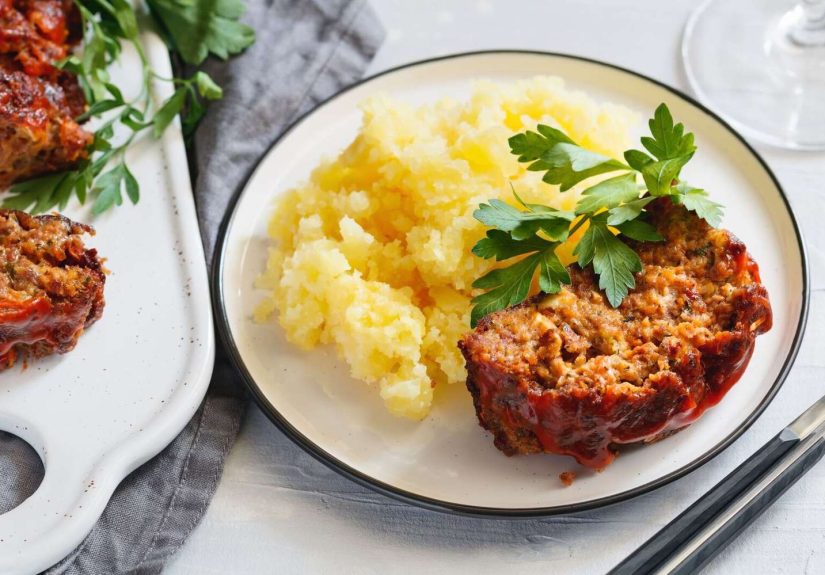
- Mashed potatoes (obvious, yes, but correct)
- Roasted green beans or broccoli with lemon
- Mac and cheese for full comfort-food commitment
- Simple salad with a tangy vinaigrette to balance the richness
Make-Ahead, Storage, and Reheating Tips
Make-ahead
You can mix and shape the loaf up to a day ahead. Cover tightly and refrigerate. Add glaze right before baking.
Refrigerate
Store leftovers in an airtight container and use within 3–4 days.
Freeze
Meatloaf freezes beautifully. Wrap slices (or the whole loaf) tightly and freeze for best quality within a couple of months. Thaw overnight in the fridge for easier reheating.
Reheat without drying out
- Oven: Cover with foil and warm at 325°F until hot (add a splash of broth or water to the pan).
- Microwave: Cover and heat in short bursts to avoid rubbery edges.
- Safety tip: Reheat leftovers to 165°F for best food-safety practice.
Troubleshooting: Common Meatloaf Problems (Solved)
“My meatloaf fell apart!”
Usually: not enough binder/egg, or it was sliced too soon. Next time, measure the breadcrumbs/oats and let it rest before cutting.
“It’s dry.”
Usually: too lean meat, too long in the oven, or not enough liquid. Try 80/20 beef, use milk, and pull it right at temperature.
“It’s greasy.”
Use a slightly leaner blend (85/15), shape on a sheet pan (fat can run off), or let it rest and blot gently before slicing.
Meatloaf Memories: The “Experience” Side of This Recipe (About )
There’s a reason meatloaf keeps showing up in American kitchens like an old friend who doesn’t text back but always remembers your birthday. It’s not flashy. It’s not trying to go viral. It’s just… dependable. And Lipton Onion Soup Meatloaf takes that dependable energy and adds a shortcut that feels almost unfair.
For a lot of people, this is the meatloaf they remember from childhoodserved on a Tuesday, when everyone was hungry and nobody wanted to negotiate dinner. A parent (or grandparent) would pull out a mixing bowl the size of a birdbath, toss in ground beef, crack a couple eggs with the casual confidence of someone who has done this a thousand times, and thenlike a magic tricktear open that onion soup packet. The smell alone is basically a time machine: savory onion, cozy beefy seasoning, and the promise of a hot meal that doesn’t require a culinary degree.
Meatloaf is also a “social” food in a very specific way. It shows up at potlucks, church suppers, and neighborhood meal trains because it travels well, reheats well, and feeds a small crowd without drama. It’s the kind of dish that quietly signals, “I care about you,” without writing it on a frosting banner. And because it slices neatly, it’s one of those dinners that makes you feel like you have your life togetherat least long enough to plate it.
The leftovers are half the experience. Cold meatloaf in the fridge is basically tomorrow’s lunch wearing sweatpants. Warm it gently and you’ve got a repeat performance. Slice it thin for sandwiches and suddenly it’s a completely different mealespecially with pickles, mustard, and a swipe of mayo (or extra ketchup if you’re loyal to the classic). Some people even pan-sear slices for crispy edges, which is less a “tip” and more a public service announcement.
And then there’s the emotional comfort angle. Meatloaf is what you make when the week is chaotic and you need dinner to be predictable. It’s what you make when you want the house to smell like something good is happening. It’s what you make when you’re hosting people who don’t want “experimental,” they want “delicious.” That’s why this recipe sticks: it’s low effort, high reward, and almost impossible to overcomplicate. Even if your day is a mess, your meatloaf can still be excellent.
So yesthis is an easy, flavorful recipe. But it’s also a small act of domestic optimism: you mix a few simple ingredients, bake them into something warm and satisfying, and for one evening, the world feels a little more manageable. Plus, you get sandwiches tomorrow. That alone deserves a round of applause.