Table of Contents >> Show >> Hide
- What Is TRS MIDI?
- Why the MIDI Association Spec Matters
- The Big Reason: Modern Music Gear Got Smaller
- Type A vs. Type B: The Tiny Cable Drama
- Is a TRS MIDI Cable the Same as an Audio Cable?
- What the Spec Means for Musicians
- What the Spec Means for Manufacturers
- Does This Replace Five-Pin DIN MIDI?
- Common Compatibility Mistakes to Avoid
- Real-World Example: A Compact Synth Setup
- Why This Small Spec Had a Big Impact
- The Cable Drawer Test
- Experience Notes: Living With TRS MIDI in the Real World
- Conclusion
The humble MIDI connector has lived a long, honorable life. For decades, the five-pin DIN plug was the tiny round doorway through which keyboards, drum machines, sequencers, synth modules, guitar pedals, grooveboxes, and computers whispered musical instructions to one another. It was sturdy. It was recognizable. It also took up a suspicious amount of real estate on devices that kept getting smaller.
Then came the compact music gear revolution. Pocket synths, Eurorack modules, boutique pedals, desktop sequencers, and tiny controllers all wanted MIDI, but not every circuit board had room for the classic DIN connector. Manufacturers found an obvious-looking solution: use a small TRS jack, the same tip-ring-sleeve style connector most people recognize from stereo mini cables. Simple, right?
Well, almost. In classic technology fashion, the idea was brilliant until everyone did it differently.
The MIDI Association’s release of a specification for TRS jacks was an important step toward cleaning up that cable drawer chaos. The official specification explains how TRS connectors should be wired for MIDI devices, how adapter cables should behave, and what kind of electrical design considerations manufacturers should follow. For musicians, it means fewer mystery dongles. For gear makers, it means a clearer path to smaller products. For anyone who has ever stared at two identical-looking 3.5mm MIDI adapters and wondered why one works while the other sulks silently, it is a very welcome bit of order.
What Is TRS MIDI?
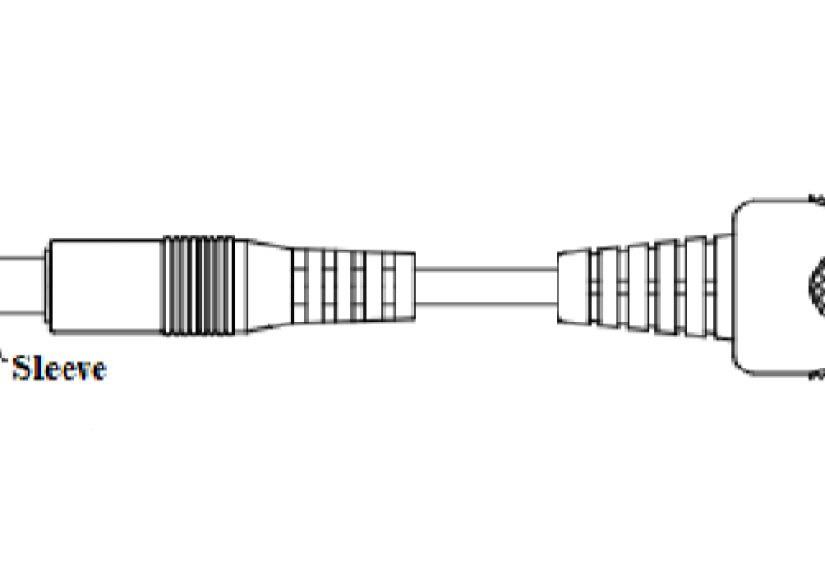
TRS stands for tip-ring-sleeve. It describes the three contact points on a plug: the tip at the end, the ring in the middle, and the sleeve near the cable. Many people know TRS from stereo audio cables, but TRS can carry different kinds of signals depending on how a device is designed. In this case, the connector is being used for MIDI data, not audio.
That distinction matters. MIDI does not transmit sound. It sends performance information: note on, note off, velocity, pitch bend, modulation, clock, program changes, control messages, and other digital instructions. If audio is the meal, MIDI is the recipe card, the cooking timer, and the bossy chef telling the synthesizer when to hit the snare.
Traditional MIDI over five-pin DIN uses specific pins for current source, current sink, and shield. A TRS connector also has three contact points, so the basic idea is elegant: map the three MIDI connections to tip, ring, and sleeve. The problem was that before the specification, different manufacturers chose different mappings. That is how the music world ended up with TRS MIDI Type A, Type B, and a few other less common variations.
Why the MIDI Association Spec Matters
The release of a TRS jack specification gave manufacturers an official reference instead of letting every product designer make an educated guess with a soldering iron and a dream. The document defines how TRS connectors should be wired for MIDI devices and describes the cable and device circuitry needed to support MIDI communication over those smaller jacks.
The most practical outcome is standardization. In the TRS MIDI world, Type A became the official direction. With Type A wiring, the current sink is assigned to the tip, the current source is assigned to the ring, and the shield is assigned to the sleeve. In plain English: the plug may look like an ordinary stereo mini connector, but the wiring order is specific. If the adapter is wrong, your gear may not communicate.
That sounds boring until you are onstage, your sequencer refuses to start your drum machine, and your “probably fine” cable turns out to be the tiny villain of the evening. Standards are not glamorous, but neither is troubleshooting a silent synth while the audience watches you perform a one-person mime routine called “Where Is My Clock Signal?”
The Big Reason: Modern Music Gear Got Smaller
The old five-pin DIN connector is not enormous, but in compact gear design every millimeter counts. A Eurorack module may have to fit jacks, knobs, LEDs, screens, switches, and circuit boards into a narrow panel. A pedalboard device may need MIDI, audio, power, USB, expression control, and footswitches in a stompbox-friendly enclosure. A pocket synth may barely have room for the word “MIDI,” never mind the connector.
TRS jacks help solve that space problem. A 3.5mm or 2.5mm jack can fit where a DIN port cannot. It can reduce manufacturing complexity, free up panel space, and make it possible for tiny devices to join larger MIDI setups. That is why TRS MIDI became common in boutique synths, compact controllers, guitar pedals, drum machines, and modular gear.
The MIDI Association spec did not invent the practice. Manufacturers were already using minijack-style MIDI connections before the official release. What the spec did was bless the format, define expectations, and push the industry toward a common wiring method. It turned a useful hack into a more dependable ecosystem.
Type A vs. Type B: The Tiny Cable Drama
To understand why the specification mattered, you need to meet the two main characters in the TRS MIDI soap opera: Type A and Type B.
Type A MIDI TRS
Type A is the official MIDI Association standard for TRS MIDI. In the common 3.5mm adapter world, it maps the MIDI current sink to the tip, the current source to the ring, and the shield to the sleeve. Many modern devices and cable makers now label Type A clearly because it is the safest default for new purchases.
Type B MIDI TRS
Type B swaps the tip and ring assignments compared with Type A. It can work perfectly well when both devices and adapters expect Type B, but it is not the official standard adopted by the MIDI Association. Some popular products used Type B before the standard settled, which is why musicians still run into compatibility surprises.
Why They Are Not Automatically Interchangeable
A Type A adapter and a Type B adapter may look identical from across the room. They may even look identical from six inches away, unless the manufacturer printed the type on the plug. The difference is inside the wiring. Plugging the wrong type into a device is like giving excellent directions in the wrong language. Everyone is trying, nobody is being rude, but the message still does not arrive.
This is why the phrase “TRS MIDI cable” is not always specific enough. A buyer should look for “TRS MIDI Type A” or “TRS MIDI Type B,” depending on the device manual. When connecting two devices with TRS MIDI ports directly, both sides need compatible wiring. When connecting TRS MIDI to five-pin DIN, the adapter must match the TRS device type.
Is a TRS MIDI Cable the Same as an Audio Cable?
Physically, a 3.5mm TRS cable may look like a stereo audio cable. In some direct TRS-to-TRS MIDI situations, a normal stereo TRS cable can work if both devices use the same TRS MIDI wiring standard and are designed for direct connection. However, the moment a five-pin DIN adapter enters the party, wiring type matters.
The confusion comes from the shared connector shape. A TRS jack does not guarantee the same signal type. It may carry left and right audio. It may carry balanced mono audio. It may carry expression pedal information. It may carry sync. It may carry MIDI. The connector is just the doorway; the signal is the guest.
That is why the MIDI Association specification also matters for safety and reliability. Devices should include appropriate protection because someone, somewhere, will plug headphones into the wrong jack. Humans are curious. Musicians are tired. Dark stages are dark. Good engineering assumes at least one person will connect something silly at 1:00 a.m. and designs accordingly.
What the Spec Means for Musicians
For everyday musicians, the specification brings several practical benefits. First, it makes new gear easier to understand. If a device says it supports TRS MIDI Type A, buyers know what adapter to get. Second, it reduces the chance of buying a cable that looks correct but does absolutely nothing. Third, it helps more compact devices include MIDI without forcing designers to sacrifice valuable panel space.
Imagine a small live rig: a compact sequencer, a drum machine, a desktop synth, and a pedal with MIDI-controlled presets. With TRS MIDI, that entire setup can be lighter, smaller, and cleaner than a tangle of full-size DIN cables. The spec helps make that dream less like a puzzle box and more like a normal workflow.
It also helps retailers and cable makers. Clear Type A labeling gives buyers confidence. A product page that says “3.5mm TRS MIDI Type A to five-pin DIN” is much more useful than one that says “MIDI cable” and leaves everyone to solve the mystery using forum archaeology and emotional resilience.
What the Spec Means for Manufacturers
For manufacturers, the TRS specification offers a common design target. That matters because MIDI is an ecosystem. A synth is more valuable when it communicates easily with controllers, sequencers, interfaces, pedals, and software. A single manufacturer can make a great product, but music technology becomes powerful when many products work together.
Standardization also reduces support headaches. Every incompatible cable becomes a potential email, return, bad review, or forum thread. When companies follow the same wiring standard and label their products clearly, customers spend more time making music and less time asking whether the ring is source, sink, shield, magic, or cursed.
The spec also encourages better electrical design. Because TRS jacks are familiar from audio gear, manufacturers need to think about accidental connections. Protection circuitry is not exciting marketing copy, but it is part of making compact MIDI devices durable in the real world.
Does This Replace Five-Pin DIN MIDI?
No. Five-pin DIN MIDI is still alive, useful, and widely supported. In many studios, it remains the most straightforward option because it is instantly recognizable and less likely to be confused with audio. Full-size MIDI ports are especially common on keyboards, rack units, interfaces, drum machines, and older hardware.
TRS MIDI is best understood as an additional connector format, not a replacement for the protocol itself. MIDI is the language. DIN, TRS, USB, Bluetooth, and other transports are ways to carry that language. The MIDI Association’s TRS spec simply makes one of those smaller physical connection methods more predictable.
In other words, the five-pin DIN connector is not being evicted. It is just getting a smaller roommate.
Common Compatibility Mistakes to Avoid
Buying an Adapter Without Checking Type
The most common mistake is buying a TRS-to-DIN adapter without checking whether it is Type A or Type B. If the listing does not say, be careful. A vague cable description can turn into a very specific problem.
Assuming All 3.5mm Jacks Are Audio
A 3.5mm jack on a synth or pedal may be audio, MIDI, clock, sync, expression, or something else. Read the label and manual. The jack is small, but its ability to cause confusion is full-sized.
Mixing Devices With Different TRS Standards
If one device uses Type A and another uses Type B, a normal straight TRS cable may not solve the problem. You may need the correct adapter, a crossover cable, or a manufacturer-approved solution.
Forgetting That MIDI Is Directional
MIDI In, MIDI Out, and MIDI Thru are not decorative words. They describe signal direction. If nothing works, check the routing before blaming the cable, the firmware, the moon phase, or your drummer.
Real-World Example: A Compact Synth Setup
Consider a small desktop synth with a 3.5mm TRS MIDI input. You want to control it from a controller keyboard that has standard five-pin MIDI output. The correct solution is not just “any tiny MIDI adapter.” You need an adapter that matches the synth’s TRS MIDI type. If the synth follows the official Type A standard, you need a Type A TRS-to-DIN adapter.
Now imagine a second setup where a sequencer and drum machine both have 3.5mm TRS MIDI ports. If both use Type A, a proper TRS cable may connect them neatly. If one uses Type A and the other uses Type B, you may get silence instead of sync. Nothing is broken; the wiring simply does not line up.
This is the everyday value of the MIDI Association’s spec. It gives the industry a shared direction and gives users a more reliable way to buy cables without needing a multimeter, a soldering station, and a support group.
Why This Small Spec Had a Big Impact
The TRS jack specification may not sound as dramatic as MIDI 2.0, expressive controllers, or futuristic wireless rigs. But standards like this quietly shape the gear we use. They determine whether a pedalboard can be compact, whether a Eurorack module can squeeze in MIDI, and whether a portable synth can talk to the rest of a studio without wearing a giant connector backpack.
Small connectors also influence design trends. Once manufacturers can rely on an accepted TRS MIDI format, they are more likely to include MIDI in devices that might otherwise skip it. That is good for musicians because MIDI remains one of the most useful technologies in music production. It synchronizes gear, recalls patches, automates parameters, triggers notes, and keeps hybrid hardware-software setups organized.
The release of the spec also acknowledges reality. Musicians had already moved into a world of tiny devices and portable rigs. The standard did not force a new behavior; it brought order to something already happening. That is often how good standards work. They do not stop innovation. They put rails under it so everyone’s train is not wobbling in a different direction.
The Cable Drawer Test
Here is a practical test: open the cable drawer of any electronic musician. You will probably find USB cables, audio patch cables, MIDI cables, adapters, power supplies, mystery dongles, and one cable that nobody remembers buying but everyone is afraid to throw away. TRS MIDI used to add another layer of uncertainty to that drawer.
The MIDI Association’s TRS spec helps make the drawer less haunted. If cables are clearly labeled Type A or Type B, and if device manuals state the required type, musicians can build rigs with more confidence. The result is not just technical tidiness. It is creative momentum. Fewer connection problems mean more time recording the bass line before the idea evaporates.
Experience Notes: Living With TRS MIDI in the Real World
After working with compact MIDI gear, one lesson becomes obvious: label everything. A TRS MIDI adapter is small enough to disappear under a notebook, behind a pedal, or inside the emotional fog of a late-night studio session. If you own both Type A and Type B adapters, add a tiny label or colored marker. Future you will be grateful, and future you is the person most likely to be crawling behind a desk with a flashlight.
Another useful habit is keeping the original adapter that came with a device. Many manufacturers include the correct TRS-to-DIN adapter in the box, and that adapter is often the most reliable reference. Put it in a small bag with the device name written on it. This is not glamorous studio organization, but neither is losing 45 minutes because two adapters look like identical twins with different wiring personalities.
For live performance, always test the exact cable chain before the show. Do not assume that because a cable worked with one synth, it will work with another. TRS MIDI compatibility depends on the device, the adapter type, and the direction of the connection. A rehearsal is the right place to discover a cable mismatch. The stage is the wrong place, unless your artistic concept involves visible panic.
When buying used gear, ask whether the MIDI adapter is included. If it is not, check the manual before ordering a replacement. The phrase “uses 3.5mm MIDI” is only the beginning of the answer. You still need to know whether it expects Type A, Type B, or a less common arrangement. This is especially important for older compact devices made before the official Type A direction became widely understood.
For studio builders, TRS MIDI can be a blessing. It reduces clutter, saves space, and makes compact rigs feel modern. A desktop setup with a small sequencer, a few synth modules, and MIDI-capable pedals can become surprisingly powerful. The key is to document the setup. Keep a simple note listing each device, MIDI channel, connector type, and adapter type. That note may feel unnecessary on day one. By month six, when you add another synth and forget how everything was routed, it becomes a heroic document.
For beginners, the most important experience-based advice is this: do not be embarrassed by MIDI cable confusion. Even experienced musicians get tripped up by TRS MIDI because the connectors look familiar while the wiring is hidden. The problem is not that you “do not understand MIDI.” The problem is that a tiny metal plug is carrying decades of standards history in a very small jacket.
Finally, remember that TRS MIDI is a practical compromise. It gives modern gear designers a way to include MIDI in smaller products, but it asks users to pay attention to adapter type. Once you understand that tradeoff, the format becomes much less mysterious. The MIDI Association’s spec gives the industry a preferred path, and musicians who follow that path get smaller rigs, cleaner setups, and fewer cable-based plot twists.
Conclusion
The MIDI Association’s release of a specification for TRS jacks may seem like a small technical update, but it solved a very real problem in modern music gear. As instruments, pedals, controllers, and modular systems became smaller, manufacturers needed a compact way to support MIDI. TRS jacks offered the physical solution, while the official spec offered the missing agreement.
By defining how TRS connectors should be wired for MIDI devices, the specification helped Type A become the official standard and gave manufacturers, cable makers, and musicians a clearer compatibility path. It did not eliminate every older mismatch, and it did not magically make every adapter in the world behave. But it did turn a messy situation into something easier to label, explain, and manage.
For musicians, the takeaway is simple: TRS MIDI is useful, compact, and increasingly common, but cable type matters. Check the manual, buy clearly labeled adapters, and do not assume that every 3.5mm plug is doing the same job. The connector may be small, but the standard behind it keeps modern MIDI rigs talking instead of silently judging each other.
Note: Before purchasing a TRS MIDI adapter, always confirm whether your device requires Type A, Type B, or another wiring format. The outside of the plug may look identical, but the internal wiring determines whether your MIDI setup works.