
Table of Contents >> Show >> Hide
- A Space Budget With One Foot on Earth and the Other on Mars
- What the New NASA Budget Prioritizes
- Where the Cuts Hit: Earth Science and Education
- Science Programs Face the Toughest Questions
- The Political Reality: Congress Has the Final Word
- Supporters Say the Budget Restores Focus
- Critics Say the Cuts Could Damage U.S. Leadership
- What This Means for Ordinary Americans
- Experience-Based Perspective: Watching NASA’s Priorities Shift
- Conclusion: A Budget That Chooses a Destination, But Risks Losing the Map
Note: This article discusses NASA budget requests and appropriations debates. A presidential budget request is not the same as final law; Congress ultimately decides how much NASA receives and which programs survive.
A Space Budget With One Foot on Earth and the Other on Mars
The latest NASA budget debate feels a little like watching someone pack for a camping trip and decide the tent is optional but the rocket boots are essential. On one side, the proposal sharply reduces science, Earth observation, and education programs. On the other, it puts more emphasis on human space exploration, Artemis, commercial space systems, lunar infrastructure, and the long-promised dream of sending astronauts to Mars.
That contrast is why the phrase “NASA budget cuts” has moved from a dry Washington headline into a national science story. NASA is not just the agency that launches astronauts in sleek white suits. It is also the agency that tracks hurricanes, measures sea-level rise, studies wildfires, watches crop stress, monitors polar ice, funds university research, inspires students, supports small businesses, and builds instruments that quietly help society understand a very complicated planet. Cutting one side of NASA while boosting another is not a simple trim. It is a change in philosophy.
The new direction favors exploration that is visible, dramatic, and easy to describe: return Americans to the Moon, build a lasting presence there, and prepare for human missions to Mars. That is the kind of space policy that fits nicely on a poster. Earth science and education, meanwhile, are less cinematic but deeply practical. Nobody makes summer blockbuster trailers about atmospheric chemistry data, although frankly they should. “Fast & Forecast: Ozone Drift” has potential.
What the New NASA Budget Prioritizes
The budget request places human spaceflight near the center of NASA’s future. Artemis, the Moon-to-Mars campaign, commercial lunar services, future Mars technologies, and low Earth orbit commercialization all receive priority language. The goal is to make NASA less dependent on traditional government-owned systems over time and more connected to private-sector launch, landing, cargo, and station services.
In practical terms, that means more attention to lunar landers, spacesuits, surface power, Mars communications, commercial transportation, and the infrastructure needed for astronauts to live and work beyond Earth orbit. The budget also emphasizes U.S. competition with China, especially in the race to return astronauts to the Moon and establish a durable presence there. This is not just science policy; it is industrial policy, geopolitical messaging, and national branding wrapped in one shiny thermal blanket.
Artemis and the Moon-to-Mars Strategy
Artemis remains the centerpiece. NASA’s modern lunar campaign is designed to do more than repeat Apollo. Apollo was a breathtaking sprint; Artemis is supposed to be a settlement testbed, a place to learn how humans can operate for longer periods on another world. The Moon is close enough for repeated missions but harsh enough to expose every weakness in power systems, habitats, spacesuits, navigation, communications, dust protection, and crew health.
Supporters argue that a stronger exploration budget is necessary because human spaceflight is expensive, technically unforgiving, and strategically important. If the United States wants astronauts on the Moon before rival powers establish a stronger foothold, then hardware, launch cadence, and mission architecture need money now. Waiting until every spreadsheet looks comfortable is not how space races are won.
Commercial Space Gets a Larger Role
The budget also leans heavily into commercial partnerships. That approach builds on trends already visible in NASA programs such as Commercial Crew, Commercial Resupply Services, Commercial Lunar Payload Services, and the planned transition from the International Space Station to commercially operated low Earth orbit destinations. The idea is simple: NASA should buy services where possible instead of owning every vehicle, station, and delivery truck in space.
That model has produced real successes, especially in launch and cargo transportation. But it is not magic dust. Commercial systems still need stable contracts, clear requirements, safety oversight, and enough demand to survive beyond a press conference. A budget that shifts heavily toward commercial exploration must still answer a basic question: what happens when the market is not ready to replace a public science mission?
Where the Cuts Hit: Earth Science and Education
The most controversial part of the new NASA budget is not what it funds, but what it reduces or eliminates. Earth science has repeatedly appeared in the crosshairs of budget-cut proposals, along with NASA’s education and STEM engagement programs. These areas are sometimes described as outside NASA’s “core” mission, but that argument depends on how narrowly one defines NASA’s purpose.
Since its founding, NASA has studied Earth from space. Weather satellites, climate records, ocean measurements, ice-sheet monitoring, atmospheric chemistry, land-use mapping, and disaster response data are not side hobbies. They are central to how modern governments, researchers, farmers, emergency managers, insurers, and local planners understand risk. A satellite does not care whether the data is politically convenient. It just measures what is there, which is probably why satellites rarely get invited to campaign dinners.
Why Earth Science Matters Beyond Climate Politics
Earth science is often reduced to climate change, but NASA’s Earth-observing work is broader. It helps track drought, floods, fires, volcanic ash, air pollution, soil moisture, coastal change, deforestation, crop productivity, and severe storm conditions. These are not abstract academic issues. They affect food prices, shipping routes, insurance costs, military planning, public health, and infrastructure decisions.
For example, Landsat data has helped monitor land use for decades. Missions such as SWOT help scientists and planners better understand surface water. PACE improves observations of oceans and aerosols. GRACE-style measurements help track changes in water storage and ice mass. NISAR, developed with India, is designed to provide radar observations useful for ecosystems, disasters, agriculture, and infrastructure monitoring. Cutting the Earth science pipeline risks creating data gaps that cannot be repaired later with a motivational speech and a coupon code for telescope time.
Education Cuts Could Shrink the Future Workforce
NASA education programs are often small compared with rockets and spacecraft, but they punch above their weight. STEM engagement, Space Grant programs, minority university research partnerships, internships, fellowships, teacher resources, student competitions, museum programs, and university research opportunities help turn space enthusiasm into careers.
Eliminating or reducing those programs saves money in the short term, but it can weaken the long-term talent pipeline. NASA depends on engineers, technicians, computer scientists, machinists, materials researchers, mission planners, astronauts, data scientists, and project managers. Those people do not appear fully formed from a launchpad. Many begin as students who saw a NASA mission, joined a robotics team, won a small research grant, or met a mentor through a STEM program.
The irony is hard to miss: a budget can call for more astronauts on the Moon and Mars while cutting some of the programs that help inspire the students who might one day build the suits, habitats, engines, and life-support systems to get them there.
Science Programs Face the Toughest Questions
NASA science is not one thing. It includes Earth science, planetary science, astrophysics, heliophysics, and biological and physical sciences. Each division supports missions that take years or decades to design, approve, build, launch, operate, and analyze. Sudden cuts do not simply pause a mission like a video game. They can scatter expert teams, break international agreements, strand hardware, and waste money already spent.
Critics of the cuts argue that turning off operating missions is especially wasteful. If taxpayers have already paid to build, launch, and operate a spacecraft, ending it early may save some annual operations money while sacrificing years of scientific return. It is like buying a very expensive oven, baking one cookie, and then unplugging it because electricity costs money.
Planetary Missions and the Mars Question
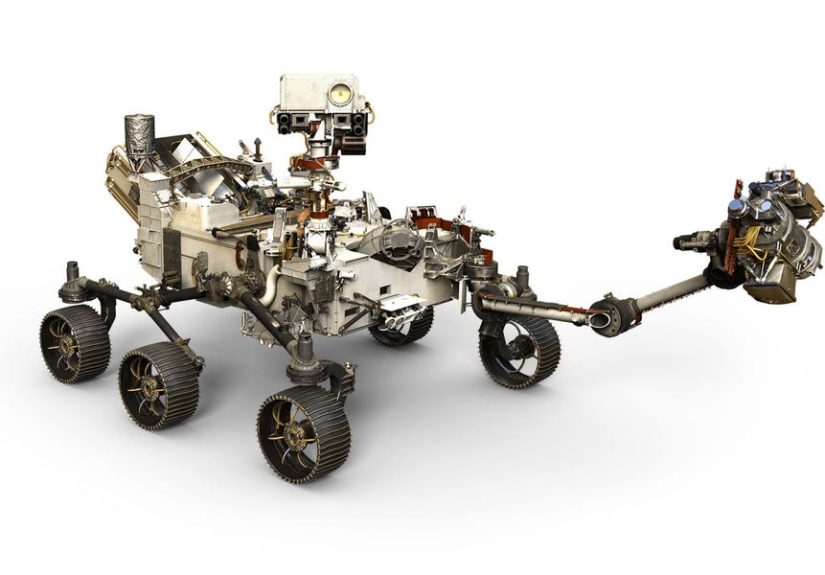
The Mars Sample Return debate shows how complicated this gets. The mission has faced cost growth and schedule problems, so calls for reform are not unreasonable. NASA absolutely must manage big missions with discipline. But canceling or deferring major science programs while funding broader Mars human-exploration technology raises a difficult question: should robotic science be sacrificed to prepare for astronauts, or should robotic science guide where astronauts go?
Robotic missions are not competitors to human exploration. They are scouts. They map hazards, identify resources, study geology, test technologies, and tell mission planners where the most valuable science may be found. A human Mars program without a strong robotic Mars program would be like planning a road trip using vibes, confidence, and a folded napkin that says “red planet somewhere ahead.”
The Political Reality: Congress Has the Final Word
One of the most important facts about NASA budgets is also the easiest to forget: the White House requests, but Congress appropriates. Presidential budget requests are opening arguments. They reveal priorities, but they do not automatically become law. Congress can reject cuts, restore programs, add money, protect missions, and rewrite the plan.
That has happened before. Lawmakers from both parties often defend NASA programs because space spending is spread across many states, universities, companies, research centers, and congressional districts. A mission may be scientifically global, but its supply chain is local. One spacecraft can support jobs in California, Maryland, Texas, Florida, Colorado, Alabama, Ohio, Virginia, Arizona, and beyond.
This is why NASA budget debates are rarely clean ideological fights. A lawmaker may support fiscal restraint in theory while defending a NASA center, contractor, university lab, or mission team in practice. Space policy is lofty; appropriations are geographic.
Supporters Say the Budget Restores Focus
Supporters of the new direction argue that NASA has become stretched too thin. They say the agency is asked to do everything: climate research, planetary exploration, astrophysics, aviation, education, technology development, commercial space, the International Space Station, the Moon, Mars, and more. From that view, a tighter budget forces NASA to focus on the most urgent national priority: human exploration beyond low Earth orbit.
They also argue that commercial space has changed the game. If private companies can reduce launch costs, build reusable vehicles, develop lunar landers, and eventually operate space stations, NASA should redirect its role toward exploration leadership rather than owning every system. This argument has merit in areas where commercial markets are real and growing.
However, the danger is assuming every NASA function has a commercial substitute. Launch services do. Some Earth data services may. But basic planetary science, deep-space probes, climate records, heliophysics observatories, and next-generation space telescopes do not yet have strong private markets. A company can sell satellite imagery. It is much harder to sell a decades-long investigation of dark energy to customers who need quarterly revenue.
Critics Say the Cuts Could Damage U.S. Leadership
Critics see the budget as a false choice. They argue that the United States should not have to choose between studying Earth and exploring Mars, or between inspiring students and flying astronauts. NASA’s strength has always been its balanced portfolio: science discovers, technology enables, aeronautics improves flight, education builds talent, and human exploration captures imagination.
Deep cuts to Earth science and education could weaken that balance. They could also create gaps that competitors may fill. China is investing heavily in lunar exploration, Mars sample return concepts, space stations, robotic science, and Earth observation. Europe, Japan, India, and other partners are also expanding their space ambitions. If the United States narrows NASA too aggressively, it may lead in one category while falling behind in others.
What This Means for Ordinary Americans
NASA budget fights may sound distant, but the results show up in everyday life. Earth-observation data helps agencies respond to floods, wildfires, droughts, and hurricanes. Aeronautics research can improve aircraft efficiency and air traffic management. Space technology investments support materials, sensors, robotics, computing, communications, and advanced manufacturing. STEM programs help students enter technical careers. Space science inspires public trust in discovery at a time when attention spans are being mugged by short videos and suspiciously emotional comment sections.
Human spaceflight matters too. Astronaut missions create shared national moments. They push technology under extreme conditions. They test international partnerships. They generate ambition. A country that sends people to the Moon and Mars tells its citizens something powerful: we are still capable of doing hard things.
The best NASA budget would not treat these benefits as enemies. It would recognize that exploration and science reinforce each other. Earth science makes NASA useful to life here. Deep-space science expands human knowledge. Education creates the workforce. Human flight gives the whole enterprise a beating heart.
Experience-Based Perspective: Watching NASA’s Priorities Shift
Anyone who has followed NASA for years knows the agency lives inside a permanent tug-of-war. One year the public is fascinated by Mars rovers. Another year, the Moon returns to center stage. Then a space telescope sends back an image so beautiful that everyone briefly remembers the universe is bigger than their inbox. Then budget season arrives, wearing sensible shoes and carrying scissors.
The experience of watching NASA budget debates is both inspiring and frustrating. Inspiring, because the agency’s mission remains one of the most ambitious projects any nation has ever attempted. Frustrating, because missions that took decades to build can become bargaining chips in a political cycle that moves much faster than science. A spacecraft team may spend fifteen years designing an instrument to answer a question no human has ever answered, only to discover that its biggest obstacle is not radiation, vacuum, or orbital mechanics. It is a spreadsheet in Washington.
For students, these shifts can feel personal. A young person who dreams of working on climate satellites, planetary probes, or space telescopes may look at education cuts and wonder whether the door is closing. A teacher who uses NASA materials in class may worry that fewer outreach programs mean fewer sparks of curiosity. A university researcher may wonder whether a grant pipeline will survive long enough to support graduate students. These are not abstract losses. They are career paths, laboratories, classrooms, and futures.
For space fans, the emotional reaction is more complicated. Many people genuinely want astronauts on the Moon again. Many want to see bootprints on Mars within their lifetime. The excitement is real. Human exploration has a special power because it puts a face inside the helmet. When astronauts leave Earth, the story becomes immediate and human. We imagine the view, the risk, the silence, the courage. Robotic spacecraft are heroic too, but they do not wave at the camera with gloved hands.
Still, the best exploration stories are built on knowledge. Before astronauts walk safely on distant worlds, someone has to map the terrain, measure radiation, understand dust, test materials, study human biology, and build communication networks. Before we decide how to live beyond Earth, we should understand the only planet where we already know how to live. That is why cutting Earth science and education while boosting human flight feels like upgrading the steering wheel while ignoring the dashboard and driver’s manual.
A balanced NASA does not have to be boring. It can fund astronauts and climate satellites, lunar rovers and student fellowships, Mars technologies and space telescopes. The agency’s magic has never come from doing one thing. It comes from connecting many forms of curiosity into one national project. The Moon inspires. Mars challenges. Earth science protects. Education multiplies. Science explains. Technology enables. Human spaceflight dramatizes the whole adventure.
The real question, then, is not whether NASA should explore space or study Earth. The answer is yes. The question is whether the United States is willing to fund a NASA big enough for the full mission. Because the future does not arrive in neat budget categories. It arrives all at once: storms, satellites, students, astronauts, discoveries, competitors, risks, and opportunities. NASA’s budget should be ready for that reality, not just for the next headline.
Conclusion: A Budget That Chooses a Destination, But Risks Losing the Map
The new NASA budget sends a loud message: human exploration is the priority. The Moon, Mars, Artemis, commercial systems, and astronaut missions are being pushed toward the front of the line. That direction will excite many Americans, especially those who want the country to move faster in space and compete more aggressively with China.
But the cuts to Earth science and education raise serious concerns. NASA’s value is not limited to spectacular launches. It also comes from steady measurements, long-term research, student inspiration, international trust, and scientific patience. A rocket can leave Earth in minutes. Building the knowledge base that makes exploration meaningful takes generations.
If Congress reshapes the proposal, as it often does, the final budget may preserve more of NASA’s science and education portfolio. If the cuts survive, the United States may gain momentum in human exploration while losing capacity in areas that protect Earth, train future scientists, and support long-term discovery. In space policy, as in spaceflight, trajectory matters. A small course correction today can decide where the mission ends up tomorrow.






 Close
Close