Table of Contents >> Show >> Hide
- What “New Orleans Rebuilds” Is Really Saying (Without Shouting)
- Who Is Rashida Ferdinand?
- The House: A Shotgun Home by the River, and a Flood Line You Don’t Forget
- Rebuilding the Lower Ninth Ward: The Portrait’s Quiet Subtext
- From One Home to a Whole Neighborhood: Sankofa and the Second Chapter of Rebuild
- Why the Video Portrait Still Holds Up
- Practical Takeaways for Homeowners and Community Builders
- Conclusion: A Porch, a River, and a Blueprint for Coming Home
- Experiences That Echo Rashida Ferdinand’s Story (Added Section)
Some videos try to impress you with drone shots, dramatic music, and a narrator who sounds like they bench-presses dictionaries. New Orleans Rebuilds (from This Old House) does something braver: it lets a homeowner’s voice carry the weight. In the short “Video Portrait” of Rashida Ferdinand, the camera doesn’t chase spectacleit chases meaning. A porch. A river view. A neighborhood reminder that your grass is getting a little bold. A Sno-ball lady at the curb. And, underneath it all, the quiet reality that two years after Hurricane Katrina, getting back home could still feel like trying to rebuild a ship in a bottle.
This article breaks down what the portrait shows, why it works, and what Rashida’s story reveals about recovery in the Lower Ninth Wardwhere rebuilding isn’t just construction. It’s culture, policy, resilience, and the daily decision to keep showing up for a place that has already asked so much of you.
What “New Orleans Rebuilds” Is Really Saying (Without Shouting)
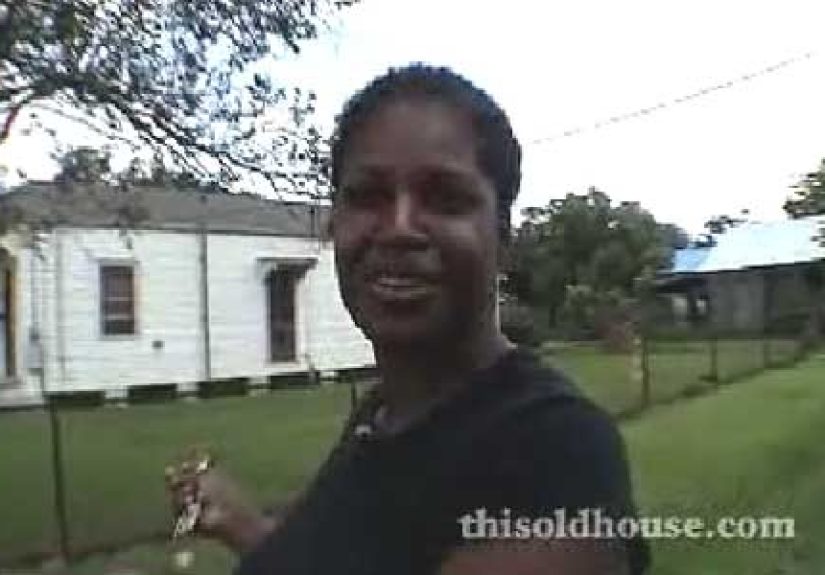
The portrait opens on a simple idea: Rashida is “coming home.” But it doesn’t treat home as a static address. Home is presented as a living relationshipespecially with the Mississippi River flowing near her house. When Rashida talks about the river’s energy, the film describes her body language like a dancer’s: movement as emotion, motion as memory. That choice matters, because Katrina wasn’t only a physical disaster. It was also a rupture in identityneighborhoods scattered, routines erased, the familiar turned unrecognizable.
The portrait also slips in a blunt truth: rebuilding is a struggle, and the timeline isn’t kind. Two years after the storm, many homeowners still weren’t back in their homes. In that gap, life becomes a strange double shift: you’re rebuilding the house and rebuilding your sense of belonging. One can be measured in lumber, permits, and receipts. The other is measured in: “Hey baby, your lawn’s getting tall,” and “You want cherry or nectar?” from a Sno-ball stand.
Who Is Rashida Ferdinand?
In the This Old House materials surrounding the project, Rashida is introduced not only as a homeowner but as an artist and teachersomeone whose work and worldview are shaped by making things. Before Katrina, she had already begun renovating her historic shotgun house. The storm forced evacuation in August 2005, and the recovery became a long, stop-and-start process that stretched for years.
What makes Rashida stand out in the larger New Orleans rebuilding narrative is that her story doesn’t end at “my house.” Over time, she also becomes a neighborhood-scale builder through Sankofa Community Development Corporationwork focused on food access, environmental restoration, and community-led planning in the Lower Ninth. If rebuilding is a marathon, Rashida is the rare person who finishes her mile and then turns around to hand someone else water.
The House: A Shotgun Home by the River, and a Flood Line You Don’t Forget
A quick, practical Shotgun House 101
Shotgun houses are iconic in New Orleans for a reason: they’re compact, efficient, and built for a humid climate. Traditionally, rooms line up front-to-backso the joke (and the name) is that you could fire a shotgun from the front door and the shot would fly straight out the back. In Rashida’s house, the historic character mattered, but the home also needed to function for modern lifecooking, entertaining, and breathing room that doesn’t feel like living inside a hallway.
The renovation problem nobody wants on a postcard
Rashida’s shotgun house, built in the late 1800s, sat near the Mississippi River in the Lower Ninth Ward and took on significant flooding after Katrina. And floodwater isn’t polite. It doesn’t stop at your favorite chair. It moves through drywall, insulation, flooring, wiring, and anything else it can turn into a future mold problem. The “Before” documentation shows the kind of damage that forces hard choices: what can be saved, what must be stripped, and what “restoration” really means when the line between preservation and replacement gets blurry.
Designing “more space” without making the neighborhood pay for it
The “After” project details highlight a surprisingly modern design ethic: don’t expand just because you can. In a neighborhood of modest houses, a huge addition can overwhelm the block and visually rewrite the street. The solution for Rashida’s home is smart and sensitive: a restrained footprint, a porch that adds livable area without looking bulky, and a “camelback” second-story bump-up at the rear. Even with the addition, the design preserves the shotgun’s famous sightlinestand at the front door and you can still see through to the back.
In other words, it’s not “bigger is better.” It’s “better is better.” The porch becomes a social bridge, the river view becomes a reward for persistence, and the house stays in conversation with its neighbors instead of shouting over them.
Rebuilding the Lower Ninth Ward: The Portrait’s Quiet Subtext
The video portrait feels intimate, but it’s also political in the plainest sense: it shows how life is shaped by systems. Katrina’s aftermath in New Orleans included massive displacement, widespread housing loss, and complicated recovery programs. In places like the Lower Ninth Wardhit hard by flooding and long-standing disinvestment“coming home” often depended on paperwork, funding formulas, inspections, and timelines that were not built for speed or fairness.
The money problem: “assistance” that still doesn’t add up
Post-disaster grant programs can be the difference between rebuilding and leaving forever. But the details matter. When aid is tied to home value rather than the real cost to repair, lower-value neighborhoods can receive less even if the damage is total. That dynamic has been widely criticized in analyses of Louisiana’s Road Home program, and it helps explain why “struggle to get back in their homes” isn’t just an emotional phrase. It’s an accounting problem with human consequences.
The culture problem: losing a neighborhood is losing a language
The portrait’s most powerful scenes aren’t about studs and sheetrock; they’re about everyday social glue. A neighbor calling you out for tall grass isn’t naggingit’s belonging. A Sno-ball order isn’t dessertit’s a neighborhood ritual. New Orleans culture lives at street level, and the Lower Ninth Ward has long held deep traditions of family, music, craft, and mutual care. Rebuilding a house without rebuilding those connections is like restoring a piano but never tuning it.
From One Home to a Whole Neighborhood: Sankofa and the Second Chapter of Rebuild
If Rashida’s video portrait is Chapter One (the house, the river, the return), Sankofa is Chapter Two (the neighborhood, the systems, the future). Founded in the years after Katrina, Sankofa Community Development Corporation has become known for turning “vacant” into “valuable”not by erasing history, but by treating community memory as a design requirement.
Why “Sankofa” is the perfect name for a rebuilding story
“Sankofa” is commonly explained as the idea of looking back while moving forward. That’s exactly the Lower Ninth Ward challenge: build resilience for the next storm without sacrificing what made the neighborhood worth saving in the first place. That can mean protecting cultural architecture, supporting longtime residents, and restoring natural features that once helped the area manage water.
The Wetland Park idea: climate resilience with a community heartbeat
One of Sankofa’s most ambitious efforts has been restoring a large, city-owned vacant area into functioning wetlanda project that blends environmental justice, flood protection, and public space. The story is almost painfully New Orleans: land that used to be wetland, used by residents for fishing and hunting, later degraded and treated like a dumping ground. The restoration flips the script. Instead of being “left behind,” the Lower Ninth becomes a place where nature-based solutions are led by residents and built with partners.
A wetland park can sound abstract until you picture what it does: it holds water, slows runoff, and helps reduce flood riskwhile also providing trails, education, and a place to breathe. It’s infrastructure that doesn’t look like infrastructure. It looks like green space. And honestly, after years of debris piles and empty lots, green space can feel like an emotional utility.
Food access, fresh starts, and the unglamorous work of stability
Rebuilding isn’t only about walls. It’s about whether you can buy groceries without a 30-minute round trip, whether elders can access basics, and whether families have reasons to stay rooted. Alongside environmental projects, Sankofa has supported food and community programs in the Lower Ninth, treating health and economic stability as part of the recovery blueprint. The logic is straightforward: a rebuilt house in a neighborhood without services is like a gorgeous phone with no signal.
Why the Video Portrait Still Holds Up
Plenty of hurricane-recovery coverage focuses on devastation first and humanity second. This portrait flips that. It starts with humanity, then lets devastation sit quietly in the background like a scar you don’t need to point at every time. That choice prevents the viewer from reducing Rashidaand by extension, the Lower Ninth Wardto a tragedy story.
It also highlights something underrated: joy as a rebuilding tool. Joy isn’t denial. It’s stamina. A laugh on a front stoop doesn’t erase trauma, but it can make the next permit appointment survivable.
Practical Takeaways for Homeowners and Community Builders
- Design with the block in mind. Additions should respect neighborhood scale; porches and “invisible space” can add function without overpowering.
- Preserve what carries memory. Salvage details when possible, and replicate thoughtfully when replacement is unavoidable.
- Plan for water like it’s a permanent resident. Elevation, drainage, and water-holding landscapes are not extras in coastal citiesthey’re survival features.
- Build partnerships, but keep the community in the driver’s seat. Outside resources help most when local priorities lead.
- Celebrate small returns. A reopened porch, a neighborly check-in, a local treat truckthese are signals that a place is becoming itself again.
Conclusion: A Porch, a River, and a Blueprint for Coming Home
“New Orleans Rebuilds Video Portrait: Rashida Ferdinand” isn’t just a profile of a homeowner. It’s a reminder that recovery is made of both the visible and the invisible: studs and siding, yesbut also belonging, memory, and a stubborn love for the everyday. Rashida’s story lands because it treats the Lower Ninth Ward as more than a disaster zone. It treats it like what it has always been: a neighborhood full of people who know how to make a life, even when the world keeps trying to interrupt it.
And if you take one image from the portrait, let it be this: a person on a front stoop, looking out at the river, not because everything is finished, but because the act of returning is already a kind of victory.
Experiences That Echo Rashida Ferdinand’s Story (Added Section)
People who’ve spent time in post-Katrina neighborhoods often describe a strange mix of progress and pause. You’ll walk past a beautifully restored housefresh paint, tidy porch plants, a new roof that gleams like it’s proud of itselfand then, two doors down, you’ll see an empty lot where a family home used to be. It’s not just a visual contrast. It’s a timeline conflict. One property has found its way back to “normal,” while another is still stuck in the long middle chapter: waiting for funding, waiting for a contractor, waiting for life to stop being a bureaucratic obstacle course.
Volunteers who join cleanups in places like the Lower Ninth Ward frequently talk about how the work changes their idea of what “help” looks like. It’s not always dramatic rebuilding. Sometimes it’s hauling out trash that has been dumped for years, pulling invasive plants, or clearing space so water can move the way it’s supposed to. The tasks can feel humblealmost anticlimacticuntil you realize how these “small” actions add up. A cleared path becomes a trail. A cleaned parcel becomes a community asset. And a neighborhood that has been treated like an afterthought gets visible proof that it is worth the effort.
Homeowners navigating rebuilding programs often describe the paperwork as its own weather systemunpredictable, exhausting, and impossible to ignore. A single missing document can stall a project, and a single formula choice can reshape a family’s future. When people say “the storm changed everything,” they’re not only talking about floodwater. They’re talking about the years afterward: the inspections, the appeals, the phone calls that don’t get returned, the contractor quotes that jump overnight. In that reality, persistence becomes a form of skill, almost like carpentry. You learn how to brace yourself, how to measure twice, how to keep going even when the progress is measured in inches.
And then there’s the emotional experience of returningsomething Rashida’s portrait captures with unusual tenderness. Returning isn’t always a triumphant homecoming with marching bands and confetti (this is New Orleans, so it’s not impossible, but still). Sometimes it’s a quiet moment where you stand in a half-finished room and notice the light hits the wall the same way it did years ago. Sometimes it’s hearing the familiar cadence of a neighbor’s greeting and realizing you didn’t know how much you missed it. Sometimes it’s a small ritualsitting on the stoop, watching the street, catching the breezewhere the house stops being a project and becomes a home again.
Finally, there’s a very New Orleans kind of experience that outsiders don’t always understand at first: the way joy can sit right next to grief without canceling it out. People will talk about loss and, in the same breath, tell you where to get the best Sno-ball. That isn’t avoidance. It’s survival culture. It’s the city’s way of saying: we will mourn what happened, we will remember what was taken, and we will still make room for sweetness because sweetness is part of how we endure. In that sense, Rashida Ferdinand’s story isn’t an exceptionit’s a clear, human example of how New Orleans rebuilds: one porch, one river view, one neighborly reminder, and one determined “I’m coming home” at a time.