Table of Contents >> Show >> Hide
- What Makes Peanut Brittle “Brittle” (and Not a Tooth Workout)
- Ingredients
- Tools You’ll Want (a.k.a. Candy Insurance)
- Step-by-Step: Classic Stovetop Peanut Brittle
- If You Don’t Have a Candy Thermometer
- Pro Tips for Better Peanut Brittle (Less Drama, More Snap)
- Troubleshooting: When Brittle Behaves Badly
- Variations to Keep Things Interesting
- How to Store Peanut Brittle (So It Stays Crunchy)
- FAQ
- Kitchen Notes: Real-World “Experience” You’ll Recognize (500+ Words)
- Conclusion
Peanut brittle is the candy version of a mic drop: you do a little simmering, you do a little stirring, you pour it out like lava from a delicious volcano, and thensnapinstant crunchy greatness. It’s sweet, salty, buttery, and loudly proud of it. Also: it makes your kitchen smell like a holiday movie montage, even if it’s Tuesday and you’re wearing mismatched socks.
This guide gives you a classic peanut brittle recipe (stovetop), explains the “why” behind the steps, and helps you troubleshoot the usual candy chaos (grainy syrup, sticky brittle, mystery scorch, and that one moment where you realize sugar can go from “golden” to “oops” in the time it takes to blink).
Safety note: Hot sugar is no joke. It’s hotter than boiling water and sticks to skin. Keep kids and pets out of the zone, use long utensils, and don’t taste-test the molten syrup. The brittle will forgive you for waiting.
What Makes Peanut Brittle “Brittle” (and Not a Tooth Workout)
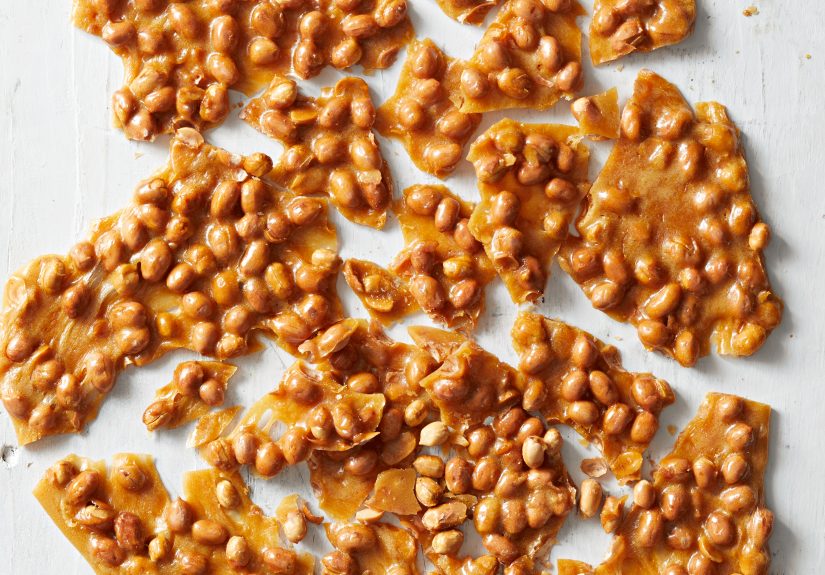
Peanut brittle is basically a sugar syrup cooked to the hard-crack stagearound 300°F to 310°Fso it cools into a glassy, snappy candy. The magic moment happens near the end when you stir in baking soda. In the hot, slightly acidic syrup, baking soda reacts and releases tiny bubbles of carbon dioxide, which aerate the candy and make it lighter, easier to bite, and properly “brittle” instead of dense and jaw-clenching.
Many recipes also include corn syrup (an invert sugar) because it helps discourage crystallization, keeping your brittle shiny instead of sandy. You can make brittle without corn syrup, but your technique needs to be extra disciplinedlike a candy monk.
Ingredients
This version is a classic, reliable, old-fashioned stylebalanced sweetness, lots of peanuts, and that clean snap. Use roasted peanuts for the easiest, most consistent results.
- 2 cups granulated sugar
- 1 cup light corn syrup
- 1/2 cup water
- 2 to 2 1/2 cups peanuts (dry-roasted; salted or unsaltedyour call)
- 4 tablespoons (1/2 stick) unsalted butter
- 1 1/2 teaspoons baking soda (sifted if clumpy)
- 1 teaspoon vanilla extract
- 1/2 teaspoon kosher salt (skip or reduce if peanuts are salted; you can also use flaky salt to finish)
Optional flavor upgrades (highly encouraged)
- Smoked salt or flaky sea salt on top
- Cinnamon (1/4 tsp) or cayenne (a pinch) for sweet heat
- Espresso powder (1/4 tsp) for a deeper caramel vibe
- Chocolate drizzle after cooling (because life is short)
Tools You’ll Want (a.k.a. Candy Insurance)
- Heavy-bottom saucepan (3 to 4 quarts)
- Candy thermometer clipped to the pot (helpful, not optional if you want fewer surprises)
- Wooden spoon or heatproof silicone spatula
- Two rimmed baking sheets or one large sheet
- Butter or neutral oil for greasing the pan(s)
- Parchment paper (optional, but makes life easier)
Step-by-Step: Classic Stovetop Peanut Brittle
1) Prep like a pro (because later you won’t have time)
- Grease a large rimmed baking sheet with butter (or line with parchment, then lightly butter it anyway).
- Measure butter, vanilla, and baking soda into separate small bowls and keep them right next to the stove.
- Have your peanuts ready to go. Candy waits for no one.
2) Start the syrup
- In a heavy saucepan, combine sugar, corn syrup, water, and salt.
- Cook over medium heat, stirring gently until the sugar dissolves and the mixture looks uniform.
- Once it begins to boil, stop stirring. From here on, swirling the pot occasionally is safer than stirring, which can invite crystallization.
3) Cook to hard-crack (this is where brittle becomes brittle)
- Clip on a candy thermometer and continue cooking. The syrup will bubble and gradually deepen in color.
- When the thermometer reads about 280°F, stir in the peanuts (this helps warm them and keeps the syrup cooking evenly).
- Continue cooking, stirring more frequently now to prevent peanuts from scorching on the bottom.
- Cook until the thermometer hits 300°F to 310°F (hard-crack stage). Aim for the low end if you prefer a lighter caramel; closer to 310°F gives a deeper toasted flavor.
4) Finish fast (the foam show)
- Remove the pot from the heat.
- Quickly stir in the butter and vanilla.
- Sprinkle in the baking soda and stir vigorously. The mixture will foam upthis is correct and very satisfying.
- Immediately pour onto your prepared baking sheet. Use a buttered spatula to spread it out a bit (don’t aim for perfection; aim for “not a four-inch mountain”).
- Optional: sprinkle flaky salt over the top while it’s still hot.
5) Cool, break, and “accidentally” eat the jagged pieces
- Let the brittle cool completely at room temperature (30 to 60 minutes).
- Break into pieces with your hands or gently tap with the back of a spoon.
- Store in an airtight container once fully cool and dry.
If You Don’t Have a Candy Thermometer
A thermometer is the easiest route, but you can use the cold-water test in a pinch: drip a small bit of syrup into a cup of cold water. For hard-crack, the syrup should form brittle threads that snap cleanly when you bend them (not chewy, not sticky, not “taffy-ish”).
Real talk: the thermometer pays for itself the first time you don’t have to pretend you meant to make “peanut brittle caramel sauce.”
Pro Tips for Better Peanut Brittle (Less Drama, More Snap)
Keep crystals from crashing the party
- Don’t stir after boiling starts (until peanuts go in).
- Wash down the sides of the pan early in cooking with a wet pastry brush to dissolve stray sugar crystals.
- Use corn syrup (it helps keep the sugar from recrystallizing).
Work on a dry day if you can
Humidity is candy’s sworn enemy. On very humid days, brittle can cool a little sticky or soften faster in storage. You can still make itjust store it aggressively airtight and keep it away from steamy kitchens.
High altitude adjustment (quick and painless)
If you’re cooking well above sea level, water boils at a lower temperature, so candy stages shift. A common rule: reduce target temperatures by about 2°F for every 1,000 feet above sea level. Another practical method: test your water’s boiling point and lower the candy target by the difference from 212°F.
Troubleshooting: When Brittle Behaves Badly
My brittle is sticky or chewy
- Likely cause: It didn’t reach hard-crack (or it absorbed moisture while cooling/storing).
- Fix: Next time, cook to 300–310°F and cool in a dry spot. Store airtight. Avoid the refrigerator.
My brittle tastes bitter or burned
- Likely cause: The syrup got too hot or cooked too long after it started browning.
- Fix: Lower the heat slightly near 280°F and stay glued to the pot. Candy is a “no scrolling” zone.
My brittle is grainy
- Likely cause: Sugar crystallization from stirring, splashes on the pot sides, or undissolved sugar.
- Fix: Dissolve sugar fully before boiling; stop stirring once boiling; wipe down sides with a wet brush; don’t scrape the pot when pouring (crystals like to hitch a ride).
My peanuts look scorched
- Likely cause: Too much direct heat at the bottom or not stirring once peanuts were added.
- Fix: Use a heavy-bottom pot and stir more frequently after adding peanuts.
My pot is a candied crime scene
Fill the pot with hot water and let it sit, or bring it to a gentle boil. Sugar dissolveseventually. Your cookware is not ruined; it’s just being dramatic.
Variations to Keep Things Interesting
1) Old-fashioned “no corn syrup” style
Some traditional versions skip corn syrup for a more purely caramelized sugar flavor. The trade-off is less insurance against crystallization, so use clean tools, avoid stirring after boiling, and consider brushing down the pot sides.
2) Microwave peanut brittle (shockingly legit)
Want the shortcut? There are microwave methods that combine sugar and corn syrup in a large microwave-safe bowl, heat in short bursts, then stir in peanuts, and finish with butter, vanilla, and baking soda. It’s fast, but you still need to move quickly once the baking soda goes in. Use a big bowlthis mixture foams like it’s auditioning for a science fair.
3) Mixed-nut brittle
Swap some peanuts for cashews, almonds, or pistachios. Keep the total nut amount about the same so the syrup still binds everything.
4) Salted chocolate brittle
After cooling, drizzle melted dark chocolate over the top and finish with flaky salt. It’s peanut brittle wearing a tuxedo.
How to Store Peanut Brittle (So It Stays Crunchy)
Peanut brittle loves dry air and hates humidity. Store it at room temperature in an airtight container, with parchment or wax paper between layers to prevent sticking. Avoid the refrigeratorcold + moisture can soften the snap.
- Room temp: Airtight container in a cool, dry spot.
- Layering: Wax/parchment paper between pieces keeps it tidy.
- Freezing: Possible for longer storage if sealed very well; thaw sealed so condensation forms on the container, not the candy.
FAQ
Do I have to use raw peanuts?
Not necessarily. Many reliable recipes use dry-roasted peanuts for convenience and consistent flavor. If you use raw peanuts, they need more time in the syrup to toastso watch closely to avoid scorching the sugar.
Why did my brittle turn cloudy?
Cloudiness can happen from crystallization (grainy syrup) or from stirring/splashing sugar onto the pot sides. It can still taste great, but the best texture comes from a smooth, crystal-free boil and that fast baking soda finish.
Can I double the recipe?
You can, but candy gets harder to control as volume increases. The syrup takes longer to heat evenly, and timing becomes trickier. If you’re new to candy, make one batch at a time and pretend you meant to be “small-batch artisanal.”
Kitchen Notes: Real-World “Experience” You’ll Recognize (500+ Words)
Here’s the part nobody tells you until you’re already holding a sticky spoon and questioning your life choices: making peanut brittle feels calm right up until it suddenly doesn’t. The beginning is deceptively peacefulsugar, water, corn syrup, gentle heat. You stir, it looks like a snowy puddle, and you think, “Wow, candy-making is easy.” That’s the sugar luring you into a false sense of security.
Then the boil starts and the bubbles mean business. It’s not scary, but it’s loud and active, like the pot just remembered it has a deadline. If you’re using a candy thermometer, you’ll notice the temperature climbs quickly at first, then slows down in the middle, then speeds up again as you approach the finish. That last stretchwhere the syrup goes from pale gold to deeper amberhappens fast. It’s the culinary equivalent of watching a sunset: blink and you miss the best color.
The peanuts are a whole vibe. When you stir them in, the mixture thickens and starts smelling toastylike a ballpark snack stand got promoted to a fancy bakery. It’s also the moment you realize why a heavy pot matters: the nuts want to hang out at the bottom, and the bottom is where scorching likes to live. Stirring at this stage feels purposeful, almost athletic. If cooking had a gym class, peanut brittle day would count as cardio.
And then there’s the baking soda momentmy favorite part to describe, because it looks like edible science. You stir it in and the syrup blooms, foams, and puffs like it’s trying to become a sponge. The first time you see it, you might panic and think you “ruined it.” You did not. That foam is your future crunch. This is also why having everything measured and ready matters: once baking soda goes in, you’re on the clock. The mixture thickens as it aerates, and you want it on the pan before it decides to set up in the pot out of spite.
Pouring the brittle is strangely satisfyinglike spreading glossy, peanut-studded amber across a pan. It won’t spread perfectly; peanut brittle has personality. Sometimes it forms thin lacey edges (snackable), and sometimes you get thick center pieces that feel like treasure shards. If you sprinkle flaky salt on top, it sticks into the surface like confetti at the world’s tastiest parade.
Cooling is the patience test. The brittle looks “done” long before it’s ready to break, and if you mess with it too early, it can bend instead of snap. But if you wait, you’ll hear that unmistakable crackle when you break it apart a sound so crunchy it practically has its own soundtrack. This is also when “quality control” mysteriously becomes a full-time job: you taste one piece, then another “for science,” then you find yourself standing over the pan like a peanut brittle gremlin.
Finally, there’s the gifting experience. Peanut brittle is one of those treats that looks impressive with basically zero decorating skills. Put it in a tin or jar, layer with wax paper, and suddenly you’re the person who “makes candy.” People will treat you like you own a secret bakery. You don’t have to tell them your secret is: sugar, heat, and the confidence to stir fast.
Conclusion
A great homemade peanut brittle recipe is equal parts timing, temperature, and a little courage. Cook to hard-crack for the snap, use baking soda for that airy crunch, keep humidity away, and don’t multitask near the finish line. Once you nail your first batch, you’ll have a go-to treat that’s perfect for holidays, gifts, potlucks, and “I just need something crunchy” emergencieswhich, if we’re being honest, happen more often than we admit.