Table of Contents >> Show >> Hide
- What a Red Light Usually Means in the U.S.
- When You Can Turn Right on Red
- When You Can Turn Left on Red
- Red Arrow vs. Red Circle: Not Always the Same Thing
- What About Yellow Lights?
- Flashing Red, Flashing Yellow, and Other Signal Surprises
- Who Has the Right-of-Way at a Red Light?
- Common Red Light Mistakes Drivers Make
- Practical Examples of When to Stop, Turn, or Go
- Real-World Experiences Drivers Have With Red Light Rules
- Conclusion
Red lights look simple. Red means stop, green means go, yellow means “maybe I can make it” except that last one is exactly how drivers end up with tickets, angry pedestrians, and stories that begin with, “Well, technically…”
The truth is that red light laws in the United States are easy in principle and annoyingly specific in practice. In many places, you can turn right on red after a complete stop. In some places, you cannot. In some states, a left turn on red is allowed from a one-way street onto another one-way street. In others, that move earns you a horn concert and possibly a citation. And red arrows? Those are where the plot really thickens.
If you want the safest, smartest way to read a red light, here is the rule of thumb: stop completely, read the sign, check the signal shape, yield to everyone who has the right-of-way, and assume local rules may be stricter than your home state’s. That mindset will keep you out of trouble far better than “I saw somebody else do it, so it must be legal.”
What a Red Light Usually Means in the U.S.
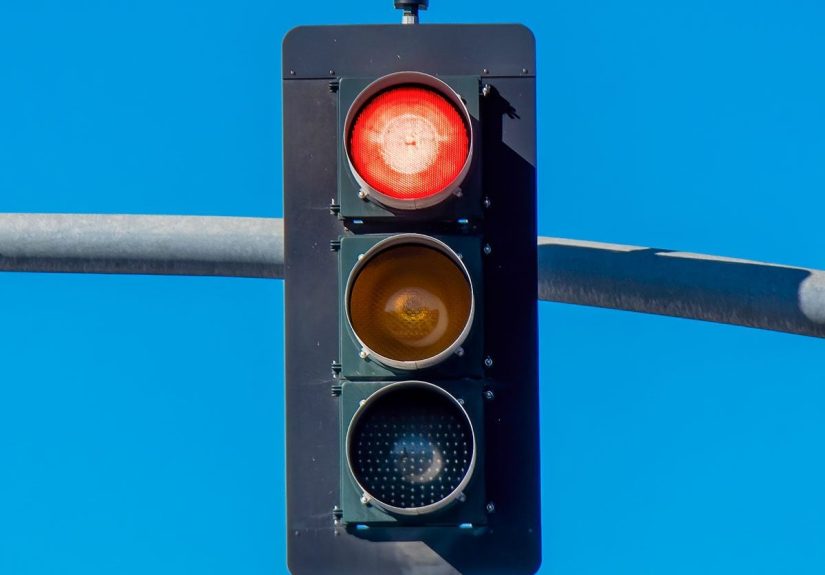
At its most basic, a steady red light means your vehicle must stop. Not roll. Not hover. Not perform that suspicious slow-motion creep drivers use when they want the law to think they stopped. A real stop means your wheels stop moving before the stop line, crosswalk, or intersection.
That order matters. If there is a marked stop line, stop there. If there is no stop line but there is a crosswalk, stop before entering it. If there is neither, stop before entering the intersection. That sequence is important because the law is not just about avoiding cross traffic. It is also about protecting pedestrians, cyclists, and anyone already using the space you are about to invade with two tons of rolling optimism.
Once stopped, whether you may proceed depends on three things: the signal itself, any posted sign, and the law of the state or city you are in. That is why red light laws feel straightforward until you drive in a new place and suddenly discover that your trusted “turn right on red” habit is not universally adored.
When You Can Turn Right on Red
In much of the United States, drivers may turn right on a steady red light after a complete stop, provided there is no sign prohibiting it and the turn can be made safely. “Safely” is the part people skip, usually while staring left at traffic and forgetting that pedestrians and cyclists can appear from the right, the crosswalk, or a bike lane. That is how a legal turn becomes an expensive mistake.
To make a lawful right turn on red in the typical permissive state, you generally must:
- come to a full stop;
- check for a No Turn on Red sign;
- yield to pedestrians in the crosswalk;
- yield to bicyclists and vehicles with the right-of-way; and
- turn only when the lane is clear and the movement is safe.
That sounds easy, but real intersections make it messier. Maybe a pedestrian has the WALK signal. Maybe a cyclist is approaching fast in a bike lane. Maybe your view is blocked by a delivery van the size of a studio apartment. In all of those cases, the legal answer is the same: wait.
Signs Beat Habits
A posted sign can shut down your right-on-red plan immediately. If you see No Turn on Red, that is the end of the discussion. Your personal opinions, your hometown customs, and the driver behind you who thinks honking is a legal argument do not matter.
Some intersections restrict turns only during certain hours, near schools, or when pedestrians are present. So even if right on red is generally legal in that state, the sign at that corner controls that moment.
Big-City Exceptions Matter
One of the most famous exceptions is New York City, where right turns on red are generally not allowed unless a posted sign specifically permits them. That catches many out-of-town drivers by surprise. They arrive with suburban confidence and leave with a very urban ticket.
When You Can Turn Left on Red
This is where many drivers get confused. A left turn on red is not a universal rule, but it is legal in a number of states under a narrow condition: you are on a one-way street and turning left onto another one-way street, after a complete stop, unless a sign prohibits it.
This rule feels weird the first time you hear it, because most people associate left turns on red with instant guilt. But in the states that allow it, the logic is similar to a right turn on red: the movement can be lawful if you stop first, yield properly, and turn only when clear.
The important part is not to overgeneralize. “I once made a left on red in Seattle” does not mean you can do it everywhere. It means you successfully obeyed a local rule in one place. That is all. Treat left-on-red rules as a special exception, not a nationwide tradition.
The One-Way to One-Way Rule
If you are trying to remember the most common version, think: one-way to one-way. That is the phrase that saves people from making illegal left turns from regular streets while muttering, “I thought it was allowed somewhere.” Yes, somewhere. Maybe not here.
And even where it is allowed, the same safety obligations apply. You still must stop fully. You still must yield to pedestrians and other traffic. You still cannot force your vehicle into a gap just because you are feeling bold and late for lunch.
Red Arrow vs. Red Circle: Not Always the Same Thing
If the standard red light is the main character, the red arrow is the plot twist.
Many drivers assume a red arrow works exactly like a circular red light. Sometimes it does not. In several states, a red arrow is stricter and means you may not turn in the direction of the arrow until you get a green light or green arrow. California, New York, Virginia, and Arizona are examples where red arrows are treated as a hard stop for that movement.
But not every state handles red arrows the same way. Florida and Illinois, for example, allow certain turns after stopping and yielding, even at a red arrow, when there is no sign forbidding the movement. In other words, red arrow rules are one of the clearest reminders that traffic law is not fully uniform nationwide.
So if you remember only one thing from this section, let it be this: never assume a red arrow automatically allows the same turn as a red circle. Read the signal, read the signs, and know the state rule.
What About Yellow Lights?
A yellow light is not a challenge coin. It is a warning. It means the signal is about to turn red. The lawful and safest response is to stop if you can do so safely. What it does not mean is “accelerate like the intersection owes you money.”
Many driver manuals specifically warn drivers not to speed up to beat the light. If you have already entered the intersection and cannot safely stop, continue through carefully. But if you are still approaching and can stop without causing a hazard, stop. Yellow is a caution signal, not a legal loophole.
Flashing Red, Flashing Yellow, and Other Signal Surprises
A flashing red signal is generally treated like a stop sign. You must come to a complete stop, yield as needed, and proceed only when clear. A flashing yellow, by contrast, means proceed with caution. You usually do not have to stop, but you absolutely do have to pay attention which, yes, is harder than it sounds in the age of dashboard screens and iced coffee.
Some states also use flashing red arrows and flashing yellow arrows, especially for turning movements. A flashing red arrow usually requires a complete stop before turning in the arrow’s direction, while a flashing yellow arrow often permits a turn after yielding to oncoming traffic and pedestrians.
The larger point is simple: the shape and flashing pattern matter. A glowing signal is not just decoration from the Department of Transportation. Every variation changes your legal duty.
Who Has the Right-of-Way at a Red Light?
Even when a turn on red is legal, you do not “own” the turn. You are entering someone else’s right-of-way. That usually means you must yield to:
- pedestrians in the crosswalk;
- bicyclists traveling lawfully through the intersection or bike lane;
- vehicles approaching with the green signal; and
- anyone already lawfully in the intersection.
This is why right turn on red can be risky at busy urban intersections. Drivers often look left for a gap in traffic and forget to check the crosswalk on the right. Safety researchers have warned for years that turning on red can create pedestrian and bicyclist conflicts for exactly this reason. The law may allow the turn, but it only allows it after yielding.
Common Red Light Mistakes Drivers Make
Rolling Stops
This is the classic. The driver slows down just enough to convince themselves they were “basically stopped.” Courts and cops tend to be less poetic about it. If the wheels are moving, it is not a full stop.
Watching Left, Forgetting Right
Drivers making a right on red often scan for cars from the left and miss pedestrians, scooters, and cyclists coming from the right. Legally, that is still your problem.
Ignoring the Sign
It does not matter what the general state rule is if the sign at the intersection says otherwise. The posted restriction controls.
Assuming Home-State Rules Travel With You
They do not. Your vehicle can cross state lines. Your assumptions should not.
Treating Red Arrows Like Regular Red Lights
Sometimes that works. Sometimes that earns you a ticket. That is a terrible game show.
Practical Examples of When to Stop, Turn, or Go
Example 1: You approach a steady red circular light in a typical suburb, want to turn right, and there is no sign prohibiting it. You stop fully, check the crosswalk, wait for a cyclist to pass, then turn when clear. That is the correct move in many states.
Example 2: You are in Manhattan, see a red light, and want to turn right. Unless a sign specifically allows it, do not turn. New York City treats this differently from many other places.
Example 3: You are on a one-way street turning left onto another one-way street at a red light. In some states, that can be legal after a full stop and yield. In others, it may not be. This is exactly the kind of maneuver that demands local knowledge.
Example 4: You face a red arrow in California or Virginia. That arrow is a stop command for the turn direction. Wait for the proper signal.
Example 5: You face a yellow light and are still approaching the intersection with enough room to brake safely. Stop. The yellow is warning you, not cheering you on.
Real-World Experiences Drivers Have With Red Light Rules
Most people do not learn red light laws from reading a statute in a peaceful room with tea and jazz in the background. They learn them the dramatic way: through confusion, stress, unfamiliar roads, and that one passenger who says, “I think you can go?” as if traffic law were a trivia game.
A common experience happens when drivers leave their home state and assume the rules are the same everywhere. They see a red light, want to turn right, and do what they have always done only to notice a sign too late, or realize the city they are in has a stricter rule. That moment usually includes a long pause, a nervous grip on the steering wheel, and a silent promise to look things up later.
Another classic experience is the “I stopped, but not really” moment. A driver slows almost to zero, checks left for traffic, and turns right. It feels normal because so many people do it. Then one day a police officer, driving examiner, or red light camera disagrees. Suddenly the driver discovers that “close enough” is not a legal standard.
Urban driving creates another kind of lesson. In a downtown area with heavy foot traffic, a driver may think a right turn on red is wide open until a pedestrian steps into the crosswalk, followed by a second pedestrian, then a cyclist, then a scooter, then somehow a person pushing a cart and walking a dog that appears to have stronger opinions than everyone else. The driver realizes that a legal turn on red can still require a long wait. That is frustrating, but it is exactly how the rule is supposed to work.
New drivers often have a memorable encounter with red arrows. They assume the arrow is just a more decorative version of a regular red light. Then they find out that in some states a red arrow means absolutely no turn, while in others certain turns may still be allowed after stopping. That kind of inconsistency sticks in your brain forever, mostly because it feels personally insulting.
Then there is the yellow-light experience the split-second internal debate between stopping and going. Almost every driver has had a moment where they realized they were deciding too late. Good drivers learn from that feeling. They begin approaching intersections at a speed that gives them options instead of drama. The best lesson from yellow lights is not bravery. It is timing.
Over time, experienced drivers usually become less casual and more observant. They stop sooner. They read signs earlier. They check crosswalks more carefully. They understand that traffic signals are not just about avoiding tickets; they are about predicting human movement in a busy, imperfect world. And that, more than any single rule, is the real secret to surviving red lights like a pro.
Conclusion
Red light laws are simple at the surface and highly specific in the details. The safest nationwide strategy is also the smartest legal strategy: stop completely, obey the exact signal you face, read any posted restriction, and yield to pedestrians, cyclists, and traffic with the right-of-way.
In many places, you may turn right on red after stopping. In some places, you may also make a limited left turn on red from one one-way street to another. But those rules are never universal, and red arrows vary more than many drivers realize. If there is one takeaway worth remembering, it is this: do not drive traffic law from memory alone when signs and local rules are right in front of you.
That may not sound thrilling, but neither is explaining to an officer that your illegal turn was based on vibes.
Note: Traffic-signal rules can vary by state, city, and posted sign. Before relying on a turn-on-red rule, follow the signal and signage at the intersection and check the current driver handbook for the state where you are driving.