Table of Contents >> Show >> Hide
- Why your knee hurts matters more than you think
- Natural remedies for knee pain that actually help
- 1. Use relative rest, not total hibernation
- 2. Try the classic cold-compression-elevation combo for fresh swelling
- 3. Use heat when your knee feels stiff, not inflamed
- 4. Move more, but choose low-impact movement
- 5. Strengthen the muscles that protect your knee
- 6. Lose a little weight if your body would benefit from it
- 7. Improve your daily mechanics
- 8. Consider a sleeve, brace, or walking aid
- 9. Try tai chi or gentle yoga
- 10. Acupuncture and massage may help some people
- 11. Eat like someone who wants their joints to stay invited
- 12. Be cautious with supplements
- A simple 7-day natural knee pain reset
- Mistakes that make knee pain worse
- When natural remedies are not enough
- What these remedies often feel like in real life
- Final thoughts
Knee pain has a special talent for ruining ordinary life. One cranky knee can turn stairs into a negotiation, grocery shopping into a quest, and getting off the couch into a full theatrical production. The good news: many cases of mild to moderate knee pain improve with smart, natural strategies. The less-fun news: “natural” does not mean “random.” Smearing mystery ointment on your knee and hoping for enlightenment is not a treatment plan.
If your pain is related to overuse, early osteoarthritis, muscle weakness, stiffness, or a minor flare-up, there are several evidence-based remedies that can help you move more comfortably. The trick is choosing the right remedy for the right kind of pain. A swollen knee after a twist needs a different approach than an achy, stiff knee that complains every morning like it pays the mortgage.
This guide explains what natural remedies for knee pain actually make sense, how to use them safely, and when it is time to stop playing home physical therapist and call a real one.
Why your knee hurts matters more than you think
“Knee pain” is not one single problem. It is a symptom with a long guest list. Common causes include osteoarthritis, overuse, tendon irritation, patellofemoral pain syndrome, muscle imbalance, minor sprains, or irritated cartilage and meniscus tissue. Sometimes the pain feels sharp and sudden. Sometimes it is dull, stiff, and annoyingly loyal.
That matters because the best natural remedy depends on what the knee is doing:
- Swollen, warm, or newly irritated? Cold therapy, compression, and relative rest usually make more sense.
- Stiff and achy, especially in the morning? Heat and gentle movement may help more.
- Pain that returns with stairs, squats, or long walks? Strengthening and movement retraining are often the real long-term fix.
- Pain linked to extra body weight or deconditioning? Small lifestyle changes can reduce knee stress more than people expect.
In other words, your knee is not being dramatic for no reason. It is giving clues. Listen to it, but do not let it run the whole meeting.
Natural remedies for knee pain that actually help
1. Use relative rest, not total hibernation
When your knee flares up, backing off aggravating activities is smart. But complete bed rest is usually not. In many cases, too much inactivity makes the joint stiffer, the supporting muscles weaker, and the comeback slower.
A better plan is relative rest: pause the activity that clearly worsened the pain, but keep moving in ways your knee can tolerate. That might mean swapping running for walking, deep squats for sit-to-stands, or high-impact workouts for a few days of cycling or pool exercise.
Think of it this way: your knee often wants a quieter day, not a witness protection program.
2. Try the classic cold-compression-elevation combo for fresh swelling
If the pain is new, swollen, or triggered by a minor twist or overuse flare, cold therapy can calm things down. An ice pack wrapped in a thin towel for about 15 to 20 minutes at a time can reduce pain and swelling. Compression with an elastic bandage or a soft sleeve may also help, and elevating the leg above heart level can make the knee look and feel less puffy.
This is especially useful in the first phase after an injury or a cranky post-activity flare. Just do not place ice directly on the skin or fall asleep with it on. Frostbite is a terrible souvenir.
3. Use heat when your knee feels stiff, not inflamed
Heat is often better for stiffness than swelling. If your knee feels tight, achy, or rusty in the morning, a warm shower, heating pad, or warm compress may help loosen the joint and surrounding muscles before activity.
Heat can be a great “get moving” tool before a walk, gentle stretching, or a strengthening session. But if the knee is hot, visibly swollen, or freshly injured, cold is usually the better first choice.
4. Move more, but choose low-impact movement
One of the best natural remedies for knee pain is also one of the least glamorous: regular exercise. Not extreme exercise. Not punishment exercise. Just sensible, consistent movement.
Low-impact options are usually the knee’s favorite dinner guests. Good choices include:
- Walking on level ground
- Stationary cycling
- Swimming
- Water aerobics
- Elliptical training
- Tai chi
These activities help maintain joint mobility, improve blood flow, reduce stiffness, and strengthen the muscles that absorb force before it all lands on the knee joint. For many people with knee osteoarthritis, exercise is not just helpful; it is one of the main treatments.
If your knee pain has convinced you that all movement is suspicious, start with 10 minutes. A little done consistently beats one heroic workout followed by three days of limping and regret.
5. Strengthen the muscles that protect your knee
Your knee does not work alone. It depends on support from the quadriceps, hamstrings, glutes, calves, and core. When those muscles are weak, tired, or poorly coordinated, the knee ends up doing extra work and filing complaints.
Knee-friendly strengthening exercises often include:
- Quad sets
- Straight leg raises
- Bridges
- Clamshells
- Mini-squats within a pain-free range
- Step-ups
- Hamstring and calf strengthening
Gentle flexibility work also matters. Tight hips, hamstrings, and calves can change how forces travel through the knee. A few minutes of stretching after exercise can help reduce soreness and maintain range of motion.
Here is the key rule: strengthening should challenge you, not punish you. Mild muscle fatigue is fine. Sharp joint pain is not a motivational speech.
6. Lose a little weight if your body would benefit from it
This is not the flashy answer people want, but it is one of the most practical. Extra body weight increases the load on the knee joint, especially during walking, stair climbing, and standing up from a chair. Even modest weight loss can reduce pressure on the knees and make daily movement easier.
You do not need a dramatic transformation or a blender full of kale-based optimism. Small, steady changes in eating habits and activity can make a meaningful difference over time. If knee pain has made exercise harder, start with lower-impact options and focus on consistency over intensity.
7. Improve your daily mechanics
Sometimes the best natural remedy is not what you add, but what you stop doing. If your knee pain spikes with deep knee bending, kneeling, downhill walking, or long stretches of sitting, adjust the way you move.
Helpful changes may include:
- Avoiding repeated deep squats during a flare
- Taking stairs slowly and using a handrail
- Standing up every 30 to 60 minutes if you sit for long periods
- Choosing supportive shoes with decent cushioning
- Reducing high-impact workouts temporarily
Your knee likes efficiency. It does not enjoy surprise lunges in the laundry room.
8. Consider a sleeve, brace, or walking aid
Supportive devices are not glamorous, but neither is limping. A simple neoprene sleeve may provide warmth, light compression, and a feeling of stability. For some people, especially those with arthritis or a sense of wobbliness, a brace can make movement feel more manageable.
If pain is affecting your gait, even temporary use of a cane or walking stick can reduce stress on the joint and improve confidence. This is not “giving in.” It is strategy. Elite athletes use equipment; your aunt with knee pain is allowed to use equipment too.
9. Try tai chi or gentle yoga
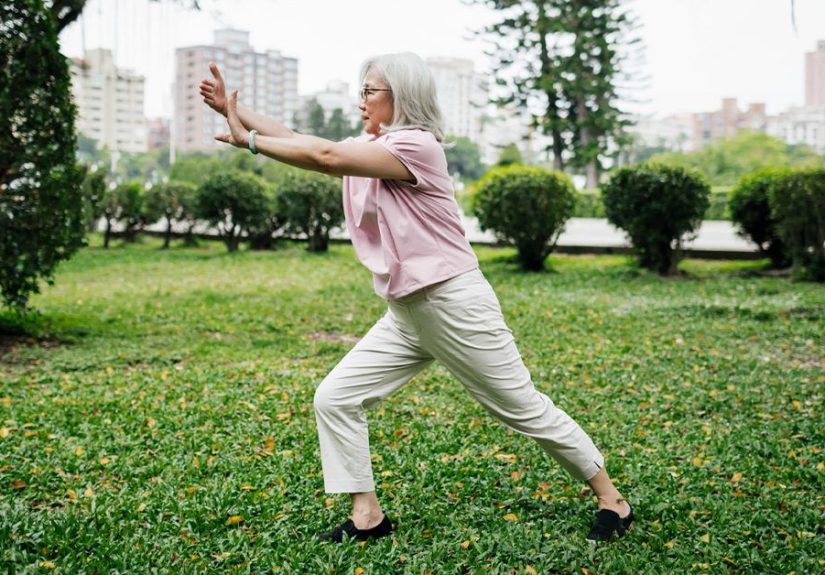
Mind-body movement sounds like something a wellness catalog would sell next to bamboo socks, but these practices can genuinely help. Tai chi in particular has been associated with improved pain, function, balance, and stiffness in people with knee osteoarthritis.
Gentle yoga may also improve flexibility, body awareness, and confidence with movement. The main idea is not becoming a human pretzel. It is retraining the body to move in a calm, controlled way that does not aggravate symptoms.
Choose beginner-friendly classes, avoid forcing deep knee positions, and tell the instructor that your knee has opinions.
10. Acupuncture and massage may help some people
If you are looking for complementary therapies, acupuncture and massage are worth a realistic conversation. Acupuncture may help with short-term pain relief in some people with knee osteoarthritis. Massage has less robust evidence, but some people find it useful for relieving muscle tension around the joint and improving comfort.
These options tend to work best as part of a bigger plan, not as solo superheroes. If acupuncture helps you move more comfortably and stick with exercise, great. If massage reduces guarding in your thigh and calf muscles, also great. Just keep expectations sensible and work with qualified professionals.
11. Eat like someone who wants their joints to stay invited
There is no magical anti-knee-pain menu, but a generally anti-inflammatory eating pattern can support overall joint health. That means emphasizing fruits, vegetables, beans, whole grains, nuts, seeds, olive oil, and fish, while limiting ultra-processed foods that tend to crowd out more nutritious choices.
This kind of eating plan may help with body weight, energy, and inflammation-related conditions, all of which matter when your knees are trying to carry you through life. No single food will fix your joint. Sorry to the internet’s favorite miracle broth.
12. Be cautious with supplements
Supplements are where knee pain advice often goes fully off-road. Some have limited or mixed evidence, and “natural” does not automatically mean safe.
Turmeric or curcumin: Some studies suggest it may help knee osteoarthritis pain and function, but the evidence is still not rock-solid. Formulation, dose, and absorption vary a lot. It may also interact with blood thinners and other medications.
Glucosamine and chondroitin: These have been studied heavily, especially for knee osteoarthritis, but results are inconsistent. Some people swear by them. Research is much less sentimental.
Boswellia, ginger, collagen, and others: Some products show promise in small studies, but the evidence is not strong enough to call them reliable first-line remedies.
If you want to try a supplement, talk with a clinician or pharmacist first, especially if you take prescription medications, have kidney or liver issues, or use blood thinners. Your knee should not improve at the expense of the rest of you.
A simple 7-day natural knee pain reset
If your knee is mildly irritated and you want a realistic starting plan, try this:
- Days 1 to 2: Relative rest, ice if swollen, compression, elevation, short walks around the house, gentle range-of-motion work.
- Days 3 to 4: Add a warm shower before activity if stiff, then 10 to 15 minutes of walking or cycling, plus light strengthening like quad sets and bridges.
- Days 5 to 7: Continue low-impact cardio, add step-ups or mini-squats if tolerated, stretch calves and hamstrings, and evaluate what daily habits trigger the pain.
Throughout the week, aim for pain that stays mild and settles within a day. If symptoms sharply worsen, swell dramatically, or make walking harder rather than easier, stop improvising and get evaluated.
Mistakes that make knee pain worse
- Trying to “push through” sharp pain
- Doing nothing for weeks and losing strength
- Returning to high-impact workouts too fast
- Using heat on a very swollen knee
- Buying six supplements before trying walking and strengthening
- Ignoring hip and glute weakness
- Assuming all knee pain is just aging
Your knee is attached to a whole body and a whole routine. Treating it like an isolated hinge rarely works well.
When natural remedies are not enough
Natural remedies can help a lot, but they are not appropriate for every situation. Get medical care if:
- You cannot bear weight on the knee
- The joint is deformed, locked, or buckling badly
- You have major swelling after an injury
- The knee is red, very warm, or painful with fever
- You have calf pain, numbness, tingling, or bluish discoloration
- You are not improving after several days of home care
- The pain keeps recurring and limits normal life
Sometimes knee pain is a simple overuse flare. Sometimes it is a torn structure, inflammatory arthritis, infection, crystal arthritis, or another condition that needs a proper diagnosis. Heroic guessing is overrated.
What these remedies often feel like in real life
People’s experiences with natural remedies for knee pain are often less dramatic than the internet suggests and more encouraging than they expect. The biggest surprise is usually this: relief tends to come from stacking small helpful habits, not from one magical fix.
Take the classic weekend warrior example. Someone goes a little too hard with yard work, pickleball, or a “friendly” hike that was apparently designed by mountain goats. The knee swells, stairs become rude, and panic-buying begins. In real life, these people often feel better when they stop escalating the situation. A couple of days of relative rest, icing, compression, and gentler activity usually help more than testing the knee every two hours like it is a science fair project. Once swelling settles, adding light exercises often restores confidence faster than continuing to baby the joint.
Then there is the office-worker version of knee pain: not dramatic, just annoyingly persistent. The knee feels stiff after sitting, creaky when standing, and grumbly on stairs. These people often report that heat in the morning, short walks during the day, and a few weeks of strengthening make the joint feel more “trustworthy.” It is rarely an overnight transformation. Instead, they notice that standing up hurts less, walking feels smoother, and they stop thinking about the knee every five minutes. That is a real win.
For people with osteoarthritis, the experience is often emotional as well as physical. Many start out assuming pain means they should move less. Then they learn that smart movement usually helps more than rest alone. At first, exercise can feel counterintuitive. Some worry that every walk is “wearing out” the joint. But once they find the right dosage, many notice the opposite: less stiffness, better mood, easier sleep, and more control over their day. The progress is often subtle at first. One morning the knee bends more easily. A week later, the grocery store trip is less of an ordeal. A month later, they are taking the longer route through the parking lot on purpose.
People who try complementary options like tai chi, massage, or acupuncture often describe a different kind of benefit. Sometimes the pain reduction is modest, but the body feels calmer and less guarded. They move with less fear. Their muscles relax. They stop bracing for every step. That matters, because pain is not just a mechanical problem. It also changes confidence, tension, and movement patterns.
And yes, some people try supplements. Their experiences are mixed. A few feel noticeable improvement with curcumin or glucosamine. Others notice absolutely nothing except that their wallet became mysteriously lighter. That is why it makes sense to judge supplements with healthy skepticism and not let them replace the basics that are more reliably helpful.
The most common positive experience, across the board, is this: when people stop chasing miracle cures and start building a routine, the knee often becomes more manageable. Not perfect. Not twenty years old again. But calmer, stronger, and much less bossy.
Final thoughts
If you are looking for natural remedies for knee pain, the most effective options are usually the least flashy: the right mix of activity, strengthening, heat or ice, supportive habits, and patience. That may not be as exciting as a miracle tea or a glowing gadget with suspiciously confident marketing, but it is far more likely to help.
Start with the basics. Match the remedy to the kind of pain you have. Build strength around the joint. Use complementary therapies as add-ons, not replacements. And if your symptoms look more serious than “annoying but manageable,” get checked out.
Your knees do a lot for you. Returning the favor does not require wizardry. Usually, it just takes consistency, common sense, and slightly fewer reckless stair descents while carrying three bags and a coffee.