
Table of Contents >> Show >> Hide
- SMRs 101: What Makes a “Small Nuclear Reactor” Different?
- So… What Exactly Got Approved?
- Why NuScale’s Safety Case Matters: Passive Safety, Simplified
- SDA vs. Design Certification: The Licensing Alphabet Soup (Made Edible)
- The Big Question: If It’s Approved, Why Don’t We Have One Running Yet?
- Why the 77 MWe Uprate Matters
- What NuScale’s Approval Signals for the U.S. SMR Race
- Where SMRs Fit: A Practical, Not Magical, Role on the Grid
- What Still Has to Happen Before a NuScale Plant Produces Power?
- Conclusion: A Tiny Reactor, a Very Big Signal
- Real-World Experiences: What It Feels Like When a “Tiny Reactor” Goes Big
If you’ve ever looked at a traditional nuclear power plant and thought, “Amazing… but could we maybe do this without building a small city first?”
welcome to the small modular reactor (SMR) era. SMRs are the “meal-prep” version of nuclear: smaller units, standardized designs, and (in theory) more
predictable schedules and costs than the one-off mega-projects that have given the industry so many gray hairs.
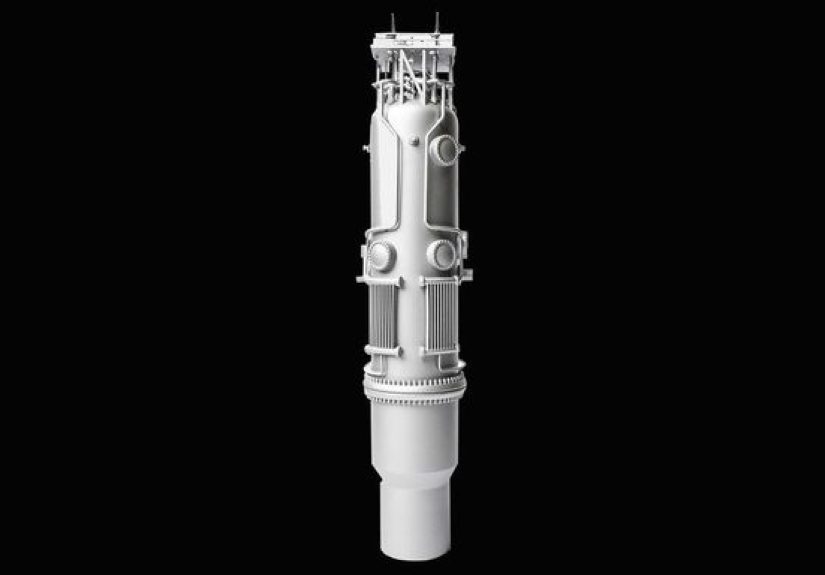
One name keeps popping up whenever SMRs and U.S. licensing get mentioned in the same breath: NuScale. And the headline-worthy moment?
NuScale’s “tiny reactor” concept crossed a major regulatory milestone with the U.S. Nuclear Regulatory Commission (NRC) issuing key safety-related approvals
first for its earlier 50-megawatt-electric design pathway, and more recently for its uprated 77 MWe module in a six-pack plant configuration
known as the US460. In plain English: regulators have spent years checking the math, the physics, the fail-safes, and the paperwork… and said,
“This design is acceptable,” which is the nuclear version of a chef earning a Michelin star.
But what does “safety approval” actually mean here? Is it a green light to break ground tomorrow? And why is everyonefrom utilities to AI data-center
plannerssuddenly eyeing these smaller reactors like they’re the last charging port at an airport?
Let’s unpack what NuScale’s approvals mean, what they don’t mean, and why this could be a turning point for small nuclear reactors in the U.S.
SMRs 101: What Makes a “Small Nuclear Reactor” Different?
“Small modular reactor” is partly about size and partly about strategy.
Traditional reactors are huge, custom-built projects. SMRs aim to use standardized modules that can be manufactured more like industrial products
(with more repetition and fewer bespoke surprises).
Small
NuScale’s module is measured in tens of megawatts of electricity per unit (historically 50 MWe for the certified design, and later an uprated 77 MWe module
reviewed under a Standard Design Approval process). You combine modules to meet the power targetkind of like stacking building blocks, except the blocks
are full of engineering PhDs and very serious valves.
Modular
“Modular” means a plant can be built from multiple reactor modules. The NRC-reviewed US460 configuration describes a plant using six
uprated modules for roughly 462 MWe total output. You can scale up with more modules in some SMR concepts, but the US460 package is
specifically framed around a six-module standard design.
Reactor Type
NuScale’s approach is a light-water reactor designfamiliar territory for U.S. regulators, since the current U.S. fleet is dominated by
light-water technology. Familiarity doesn’t make approval automatic, but it does mean the NRC isn’t evaluating something as alien as, say, a molten-salt
reactor with a side of “we invented new chemistry for fun.”
So… What Exactly Got Approved?
The tricky part is that “approval” can mean different things depending on the regulatory pathway.
For NuScale, there are two big milestones people often blend together in headlines:
-
Design certification (for the earlier NuScale SMR design) the NRC codified the certified design in a final rule, which utilities can reference
when applying for a license to build and operate a plant. -
Standard Design Approval (SDA) (for the uprated US460, 77 MWe/module design) the NRC completed a technical review and issued an SDA,
allowing the design to be referenced in future licensing applications (but it is not itself a design certification).
The most recent headline driver is the May 2025 NRC issuance of a Standard Design Approval for the NuScale US460
standard plant design, paired with the NRC’s final safety evaluation work supporting that decision.
In short: the NRC’s technical review for the uprated 77 MWe module configuration reached the “we’ve finished the serious homework” stage.
Why NuScale’s Safety Case Matters: Passive Safety, Simplified
Nuclear safety is all about what happens when things go wrong: power loss, equipment failures, operator errors, extreme events.
SMR vendors love to talk about “passive safety,” and NuScale is no exception.
The vibe: let physics do the heavy lifting
NuScale’s design emphasizes safety features that rely on natural forceslike convection, gravity, and stored thermal capacityrather than always requiring
powered pumps or rapid human intervention. Think of it as designing a system that “fails safe” more gracefully.
Integral design and below-grade configuration
One of the design themes regulators scrutinize is how the reactor, steam generation, and containment work together as an integrated system, and how the
plant layout can reduce risk. NuScale’s concept places the modules in a large pool of water, below grade, which can provide heat-sinking capability and
physical protection. The point isn’t that it’s invincible; it’s that the design aims to widen the margin between “something broke” and “this became a crisis.”
Smaller core, different risk profile
Smaller reactors can mean less total heat to manage per unit and potentially different accident progression scenarios. That said, “smaller” isn’t a magic
spellengineers still have to prove, system by system, that safety functions are met under the NRC’s requirements.
SDA vs. Design Certification: The Licensing Alphabet Soup (Made Edible)
If you read nuclear licensing news long enough, your brain starts speaking fluent acronym.
Here’s the practical difference that matters to anyone tracking “what happens next.”
Design certification
Design certification is the more heavyweight milestone: the NRC issues a rule that certifies a reactor design.
That certified design can then be referenced in applicationsreducing re-litigation of the same design issues.
NuScale achieved this milestone for its earlier SMR design in a rule that took effect in early 2023.
Standard Design Approval (SDA)
SDA is still a major regulatory achievementit reflects a completed NRC technical review of a standard plant design.
But it’s not identical to certification. Think of SDA as: “This standard design has been thoroughly reviewed and found acceptable,”
which can streamline later licensing steps, even though it isn’t the same legal instrument as a certified design rule.
Why does that nuance matter? Because “approved design” does not automatically equal “shovels in the ground tomorrow.”
A real project still needs a site, an owner/operator, financing, supply chain readiness, trained workforce, and the specific license(s)
to build and operate at that location.
The Big Question: If It’s Approved, Why Don’t We Have One Running Yet?
Because nuclear is a three-legged stool: technology, regulation, and economics.
Even if you nail the first two, the third one can still kick the whole thing over.
Example: the Carbon Free Power Project (CFPP)
NuScale’s early flagship U.S. project effortthe Carbon Free Power Project associated with a consortium of public power utilitieswas ultimately canceled in 2023
after cost increases and participation challenges. That doesn’t undo the engineering progress, but it’s a blunt reminder:
approvals don’t build power plantscustomers and financing do.
SMRs are trying to fix the nuclear “custom megaproject” problem
The promise of SMRs is that standardized modules, repeatable construction, and smaller increments of capacity could improve cost and schedule performance.
But early deployments often carry “first-of-a-kind” costs: new factories, new suppliers, new training pipelines, and learning curves that can be expensive.
And yes, waste is still a thing
SMRs still produce radioactive waste that requires long-term management, and the U.S. still lacks a permanent repository in operation.
Any serious SMR discussion has to include this realitypreferably before someone tries to wave it away with “but it’s smaller!”
Why the 77 MWe Uprate Matters
NuScale pursued the uprated module (often described as moving to 250 MW thermal / 77 MWe) for a reason that’s refreshingly non-mystical:
economics. In power markets, a little more electricity per unit can improve project mathspreading certain fixed costs over more megawatt-hours.
The NRC’s Standard Design Approval for the US460 design is therefore not just a regulatory headline; it’s tied to the idea that a more powerful module could help
SMRs compete in a world where wind, solar, batteries, and gas plants are all fighting for the same grid real estate.
What NuScale’s Approval Signals for the U.S. SMR Race
NuScale isn’t the only company chasing SMRs, but it has repeatedly been a U.S. frontrunner on formal NRC review milestones.
That has ripple effects:
- Utilities get a clearer reference point for what an NRC-reviewed SMR design package can look like.
- Investors get a risk-reduction signal: regulatory uncertainty is a major cost driver for new nuclear.
- Competitors learnbecause every major review produces public breadcrumbs about how NRC staff evaluates modern designs.
At the same time, the approval doesn’t magically erase SMR skeptics’ argumentsespecially around cost, timelines, and long-term waste management.
In fact, the most honest “SMR take” is usually a two-sentence one:
SMRs could be an important firm, low-carbon tool for the grid.
They also have to prove they can be built on time and at a price utilities will actually pay.
Where SMRs Fit: A Practical, Not Magical, Role on the Grid
SMRs are often pitched as a clean-energy Swiss Army knife. The realistic version is still exciting, just less cinematic.
Here are the use cases that keep showing up in serious planning conversations:
1) Replacing retiring coal plants (on familiar sites)
Some coal sites already have transmission, cooling water access, and an energy workforce.
Siting a nuclear project is still hard, but reusing infrastructure can reduce headachesand sometimes community resistance is lower if the town wants to keep
being an “energy town.”
2) Firm power for industrial loads
Certain industries want steady, high-capacity-factor power and/or process heat.
An SMR plant (if the economics work) could provide stable output that complements variable renewables.
3) Data centers and the “always-on” problem
As electricity demand growsespecially from compute-heavy infrastructuresome buyers are exploring nuclear as a long-term hedge against volatility.
Whether SMRs become the go-to option depends on delivery speed and cost, not on vibes.
What Still Has to Happen Before a NuScale Plant Produces Power?
Think of design approval as earning your driver’s license. You’re allowed on the roadbut you still need a car, gas, and somewhere to go.
A real NuScale deployment still needs:
- A committed customer with a firm order and a viable business case.
- A site and local approvalsincluding environmental work and community engagement.
- Licensing for the specific project (construction/operating or combined license pathways, depending on approach).
- Supply chain readiness for nuclear-grade components and quality assurance.
- Construction execution that proves “modular” actually means faster and cheaper, not “new and confusing.”
The good news is that regulatory progress reduces one category of uncertainty. The hard truth is that the remaining categories are the ones that typically
decide whether a project becomes a real plant or a very expensive PowerPoint.
Conclusion: A Tiny Reactor, a Very Big Signal
NuScale’s “tiny reactor” getting major NRC safety-related approvalsculminating in a Standard Design Approval for the uprated US460 designmatters because it
moves SMRs from “interesting concept” toward “licensable product.” It doesn’t guarantee construction, and it doesn’t settle the cost debate.
But it does set a regulatory benchmark and gives the broader SMR industry something concrete to point to when skeptics say,
“Sure, but can you actually get through U.S. safety review?”
The next chapter will be written less by engineers and regulators and more by spreadsheets: power prices, capital costs, construction schedules,
and the willingness of utilities (or big energy buyers) to sign real contracts.
If SMRs can pair this regulatory momentum with credible delivery, they could become a meaningful source of firm, low-carbon power in the U.S. energy mix.
If not, they’ll remain the smartest idea stuck in the world’s longest waiting room.
Real-World Experiences: What It Feels Like When a “Tiny Reactor” Goes Big
“Experience” is a funny word in nuclear, because most of the time it means: rehearsing, simulating, auditing, and re-checking until you’re almost bored enough
to trust it. With SMRs like NuScale’s, a big part of the lived experience isn’t standing next to a shiny new reactor (not yet, anyway)it’s watching the
industry learn how to act like manufacturing, not just construction.
Start with the engineers and licensing teams. For them, the experience of an NRC review is less “Eureka!” and more “Version 2,431 of the same answer,
but now with an additional appendix.” They live in a world where every claim needs a traceable basis, every assumption needs a boundary, and every boundary
needs a justification. When a milestone like a Final Safety Evaluation or Standard Design Approval lands, the mood isn’t confetti; it’s often a quiet,
exhausted relieflike finishing a marathon where the course was made of footnotes.
Then there’s the operator-training mindset. Even before a plant exists, the human side of nuclear starts in simulators and procedures. People who’ve worked
around reactor operations often describe how repetition builds calm: you practice normal evolutions, you drill abnormal ones, and you rehearse the rare events
until “rare” becomes “recognizable.” SMRs add a twist: multi-module operation. Instead of one big unit, you may have several smaller ones, which raises new
questions about staffing, control-room design, and how you manage maintenance without turning the whole plant into a power yo-yo.
Community experience matters, too. In places considering SMRs, you tend to see two emotional tracks at once. Track one is hope: jobs, tax base,
and the pride of being part of “the future of clean energy.” Track two is caution: nuclear safety, emergency planning, waste, and trust in institutions.
The most productive public meetings are rarely the loudestthey’re the ones where people ask plain questions and get plain answers:
What happens if the grid goes down? How is cooling maintained? Who pays if costs rise? Where does the spent fuel go, and for how long?
For utility planners, the experience is a balancing act between reliability dreams and procurement reality. A modern grid is a puzzle: renewables,
storage, demand response, transmission constraints, extreme weather, and policy targets all collide. SMRs are attractive because they offer firm power
without carbon emissions at the point of generation. But planners have learnedsometimes painfullythat “attractive” is not the same as “bankable.”
They want clean baseload, yes. They also want predictable capex, schedule certainty, and contracts that don’t explode when commodity prices sneeze.
Finally, there’s the broader market experience: watching attention swing like a pendulum. When gas prices are low, nuclear looks expensive.
When reliability scares spike, firm power looks priceless. When AI-driven load growth enters forecasts, everyone suddenly remembers that electrons are not
optional. In that swirl, a regulatory milestone like NuScale’s is grounding. It doesn’t solve everything, but it changes the tone of conversations from,
“Is this even real?” to “Okay, what would it take to build oneand would it pencil out?”
In other words, the most important “experience” tied to NuScale’s approvals may be this: the industry is slowly re-learning how to turn nuclear from an
artisanal, one-off mega-project into a repeatable product. If SMRs succeed, it won’t be because they’re tiny and cute. It’ll be because they’re boringin the
best possible way: standardized, well-understood, and deliverable.






 Close
Close