Table of Contents >> Show >> Hide
- What is spastic quadriplegic cerebral palsy?
- Causes and risk factors
- Signs, symptoms, and associated conditions
- Diagnosis and classification
- Treatment and management
- Prognosis, life expectancy, and quality of life
- Supporting the whole family
- Real-world experiences and practical tips with spastic quadriplegic CP
- Conclusion
Hearing the words “spastic quadriplegic cerebral palsy” (often shortened to SQCP) can feel overwhelming.
It’s a long, technical name for a condition that affects a child’s whole body and usually their day-to-day life in a big way.
But behind the medical language are real kids, teens, and adults who love music, memes, pets, and birthday cake just like anyone else they just move, communicate, and participate in the world differently.
In this guide, we’ll walk through what spastic quadriplegic cerebral palsy is, why it happens, what symptoms families might see, and how treatment, therapy, and everyday routines can help.
We’ll also talk about prognosis and quality of life, and then finish with real-world experience-based tips for caregivers and people living with SQCP.
What is spastic quadriplegic cerebral palsy?
Cerebral palsy (CP) is a group of conditions that affect movement and posture caused by damage to the developing brain, usually before birth or shortly after.
It is non-progressive the brain injury itself doesn’t keep getting worse but its effects can change as a child grows.
Spastic cerebral palsy is the most common type of CP. It’s characterized by spasticity, meaning increased muscle tone that makes muscles stiff and movements jerky or tight.
Spastic quadriplegic cerebral palsy is a severe subtype of spastic CP where:
- All four limbs (both arms and both legs) are affected.
- The trunk and face are often affected as well.
- Children usually have very high muscle tone in their limbs but may have a relatively weak or “floppy” neck.
Because so much of the body is involved, many children with spastic quadriplegia cannot walk independently and may also have difficulties with speech, swallowing, vision, hearing, or learning.
They typically need lifelong support, but “lifelong support” is not the same as “no quality of life” far from it.
Causes and risk factors
Spastic quadriplegic CP happens when there is injury or abnormal development in the parts of a baby’s brain that control movement.
This usually occurs before birth, during labor and delivery, or shortly after birth.
Common causes and contributing factors include:
- Lack of oxygen to the baby’s brain (hypoxic-ischemic injury) around the time of birth.
- Bleeding in the brain (intracranial hemorrhage), more common in very premature babies.
- Damage to the brain’s white matter (periventricular leukomalacia), which affects how signals travel.
- Infections during pregnancy, such as certain viral or bacterial infections.
- Stroke in the fetus or newborn.
- Abnormal brain development (malformations present before birth).
- Premature birth and low birth weight, which increase overall CP risk.
In many cases, families never get a single clear “this is exactly why it happened” answer and it’s important to emphasize that cerebral palsy is almost never the parents’ fault.
It’s usually the result of complex medical factors outside anyone’s control.
Signs, symptoms, and associated conditions
Signs of spastic quadriplegic cerebral palsy usually show up in the first year or two of life.
Parents may notice that their baby’s development feels “stuck” or different from what they see in other children.
Motor symptoms
- Very stiff arms and legs that may cross or “scissor” when picked up.
- Trouble holding up the head or rolling over.
- Not sitting, crawling, or standing at typical ages.
- Movements that look jerky, tight, or “clumsy” rather than smooth.
- Contractures (joints that become fixed in a bent or straight position over time).
Whole-body impact
Because spastic quadriplegia affects the trunk and sometimes the muscles that control swallowing and breathing, children may experience:
- Feeding difficulties, choking, or frequent coughing while eating.
- Drooling and trouble managing saliva.
- Recurrent chest infections due to aspiration (food or liquid going “down the wrong pipe”).
Associated conditions
Spastic quadriplegic CP is more likely than milder types to come with other neurological and developmental conditions, such as:
- Epilepsy (seizures)
- Vision or hearing impairments
- Intellectual disability or learning difficulties
- Speech and language delays
- Behavioral or emotional challenges related to frustration, pain, or communication barriers
Not every child has all of these, and intelligence can range from typical to significantly affected.
One of the most important messages for families: limited speech or movement does not always mean a child doesn’t understand what’s going on.
Diagnosis and classification
Doctors usually diagnose cerebral palsy based on a mix of history, physical examination, and sometimes brain imaging (like MRI).
They look for persistent motor problems and abnormal muscle tone that don’t match the child’s age and that aren’t caused by a progressive disease.
Spastic quadriplegia is classified in two main ways:
- Type of movement problem: spastic (stiff muscles).
- Body parts affected: all four limbs, trunk, and often face.
Many clinicians also use the Gross Motor Function Classification System (GMFCS), which ranks mobility from Level I (walks without limitations) to Level V (severe limitations; uses a wheelchair for most mobility).
Children with spastic quadriplegia are often classified at GMFCS Level IV or V.
This classification doesn’t measure a child’s value or potential it simply helps the team plan realistic goals, interventions, and equipment needs.
Treatment and management
There is currently no cure for spastic quadriplegic cerebral palsy.
However, early and ongoing treatment can dramatically improve comfort, function, communication, and independence.
Most children benefit from a team that may include pediatricians, neurologists, rehab doctors, therapists, dietitians, social workers, and educators.
Rehabilitation therapies
Physical therapy (PT) focuses on stretching tight muscles, preventing contractures, improving posture, and maximizing mobility whether that means walking with support, using a walker, or rolling and sitting more comfortably.
Occupational therapy (OT) targets everyday skills like reaching, grasping, dressing, and using adaptive equipment.
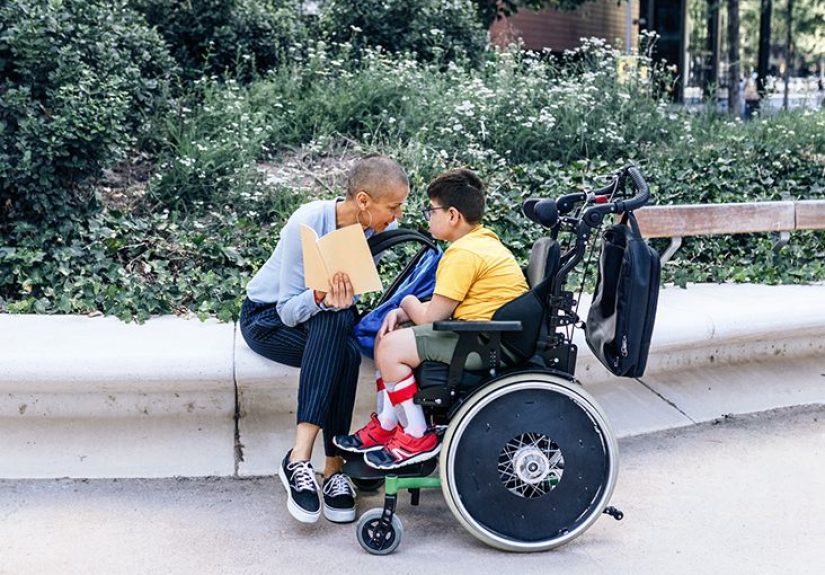
Therapists may recommend special seating systems, supportive strollers, or customized wheelchairs to help kids sit safely and participate in school and family life.
Speech and language therapy can help with speech clarity, swallowing safety, and alternative communication methods (for example, communication boards, tablets, or eye-gaze devices) when speech is limited.
Medications and injections
Several medications can help reduce spasticity or manage related symptoms:
- Oral anti-spasticity medications such as baclofen are used to relax overly tight muscles.
- Botulinum toxin (Botox) injections can be injected into specific muscles to reduce spasticity in targeted areas for a few months at a time.
- Intrathecal baclofen pumps may be considered in severe cases to deliver medication directly to the spinal fluid.
- Anti-seizure medications are used if the child has epilepsy.
Medication choices are highly individualized.
The goal is to lower spasticity enough to improve comfort and function without causing too much drowsiness or weakness.
Orthotics, equipment, and surgery
Orthotics (such as ankle-foot orthoses, or AFOs) and positioning equipment (standers, seating systems) help maintain alignment and prevent deformities.
When contractures or bone changes become severe, orthopedic surgery may be recommended to lengthen tendons, straighten bones, or stabilize hips, knees, or feet.
Some children also undergo selective dorsal rhizotomy (SDR), a procedure that cuts select sensory nerve fibers in the spinal cord to permanently reduce spasticity in the legs.
Most specialists recommend trying less invasive options therapy, bracing, oral medications, and injections before moving to surgery.
Everyday care at home
Daily life with spastic quadriplegic cerebral palsy involves a lot of small, repeated actions that add up over time:
- Regular stretching and positioning routines to prevent pain and stiffness.
- Safe lifting and transfer techniques to protect both the child and caregiver’s back.
- Using adapted utensils, cups, or seating to make mealtimes more successful.
- Experimenting with different communication tools so the child can express preferences, pain, and personality.
None of this is quick or easy, but over months and years, families often become experts at creating routines that fit their child’s strengths and needs.
Prognosis, life expectancy, and quality of life
Because spastic quadriplegia is a severe form of CP, children often have more complex medical needs than those with milder types.
They may have higher risks of respiratory problems, feeding issues, and orthopedic complications.
That said, many people with CP including those with significant motor challenges live well into adulthood.
Studies suggest overall life expectancy for people with cerebral palsy can range broadly, often between the 30s and 70s, depending on mobility, medical complications, and access to care.
With good medical management, nutritional support, and assistive technology, many children with spastic quadriplegia grow into adults who enjoy relationships, hobbies, and meaningful roles in their communities.
Quality of life is influenced by far more than muscle tone.
Respect, inclusion, accessible environments, and supportive family and community attitudes can make an enormous difference.
Supporting the whole family
Spastic quadriplegic cerebral palsy doesn’t just affect one person it reshapes daily life for parents, siblings, and extended family too.
Helpful strategies include:
- Building a care team that includes medical providers, therapists, school staff, and community resources.
- Using school supports such as Individualized Education Programs (IEPs) and 504 plans to secure services and accommodations.
- Planning respite breaks so caregivers can rest and recharge burnout is real.
- Connecting with other families through support groups or online communities, which can offer practical tips and emotional solidarity.
Mental health support for caregivers and siblings is just as valid and important as physical therapy for the child.
Everyone deserves tools to manage stress, grief, and hope.
Real-world experiences and practical tips with spastic quadriplegic CP
Statistics and treatment lists are important, but they don’t fully capture what life with spastic quadriplegic cerebral palsy feels like day to day.
The reality is often a mix of medical appointments, equipment deliveries, tiny victories, and moments of unexpected joy.
Morning routines: slow, steady, and predictable
Many families describe mornings as a carefully choreographed routine.
Getting out of bed might involve a mechanical lift or a specific way of rolling and supporting the child to avoid pain.
Stretching tight muscles, doing a few quick range-of-motion exercises, and making sure splints or braces are in place can set the tone for the rest of the day.
A simple example: a caregiver might start by warming the room, then gently stretching hamstrings and hip muscles before putting on AFOs and transferring the child into a wheelchair.
Breakfast might take longer because of feeding and swallowing challenges, so the family builds in extra time and keeps mornings calm rather than rushed.
Over time, kids learn what to expect, and predictable routines can reduce anxiety for everyone.
Communication: finding the child’s “voice”
One of the biggest turning points many families describe is discovering an effective communication system.
Maybe speech is very limited, but the child can use eye-gaze technology to select words on a screen, or they consistently look toward a picture choice when asked a question.
It can start small: yes/no questions with eye blinks, a few picture cards for “music,” “drink,” and “rest,” or buttons that play recorded messages like “more, please” or “I need a break.”
As the child gets older, communication devices become more sophisticated, allowing them to tell jokes, participate in school discussions, or choose what movie the family watches on Friday night.
School and social life: participation matters
Inclusive schools and communities can make a huge difference.
With the right supports an accessible classroom, an aide to help with transfers or note-taking, communication devices, and adapted activities many students with spastic quadriplegic CP can attend their neighborhood school, make friends, and take part in class projects.
Social life might not look “typical,” but it can be rich:
playing wheelchair soccer with classmates, joining an adaptive music group, sharing memes with friends online, or being the unofficial team statistician for a sports team.
What matters most is that the child is seen as a full member of their peer group, not just a visitor.
Caring for caregivers
Parents and caregivers often juggle work, finances, appointments, and hands-on care.
Lifting, repositioning, and night-time care can be physically exhausting.
It’s common to feel guilty taking time for yourself but regular breaks, sleep, and hobbies of your own aren’t luxuries; they’re survival tools.
Some families rotate responsibilities, use respite care, or lean on extended family and community services.
Others schedule “non-negotiable” downtime maybe one night a week when someone else handles the bedtime routine so the primary caregiver can rest, see friends, or do something that has nothing to do with medical equipment.
Celebrating progress in your own lane
Milestones with spastic quadriplegic CP may look different.
Instead of “first steps at 12 months,” a big celebration might be “sat comfortably in a new wheelchair for three hours without pain,”
“used a communication device to tell a joke,” or “tolerated standing in a stander for the full session.”
When families stop comparing their child to typical growth charts and start tracking progress against their own starting point, they often feel more hopeful.
Progress can be slow and nonlinear, but it’s still progress and every tiny gain in comfort, communication, or independence is worth recognizing.
Looking ahead
As children with spastic quadriplegic cerebral palsy grow into teens and adults, new questions pop up:
How will transitions to adult medical care work? What will independent or supported living look like? How can we plan financially and legally for the future?
There’s no single path that fits every family.
Some adults with SQCP live with parents and receive in-home care; others live in supported apartments or group homes; some attend day programs, work in adapted settings, or volunteer in their communities.
Planning ahead with healthcare providers, social workers, and legal advisors can help create a roadmap that feels realistic and respectful of the person’s preferences and goals.
Above all, spastic quadriplegic cerebral palsy does not erase personality, humor, preferences, or dreams.
With the right support, people with SQCP can lead lives that are deeply meaningful even if they look very different from what their families first imagined.
Conclusion
Spastic quadriplegic cerebral palsy is one of the most complex forms of CP, affecting all four limbs, the trunk, and often speech and swallowing.
It can bring significant medical and practical challenges, but it is not a sentence to a joyless life.
Early diagnosis, rehab therapies, medications, assistive technology, and thoughtful surgeries can all help reduce pain, protect function, and maximize participation.
Just as important are the “soft” pieces: love, patience, humor, inclusive schools, accessible communities, and support for caregivers.
When those are in place, children and adults with spastic quadriplegic cerebral palsy can show the world who they are not just what their muscles can or cannot do.