Table of Contents >> Show >> Hide
- Quick Jump Menu
- What “Stomach Area” Usually Means (Spoiler: Not Just the Stomach)
- Abdominal Maps 101: Quadrants vs. Regions
- Where Is Your Stomach, Exactly?
- Stomach Anatomy: Parts & The Neighbors It Texts at 2 a.m.
- What the Stomach Actually Does (Besides Ruining Your Plans After Street Tacos)
- Layers: The Stomach Wall (and Why It’s Built Like a Tank)
- Pain Map: How Location Can Hint at What’s Going On
- Red Flags: When to Seek Medical Care
- How Doctors “Take Pictures” of the Stomach Area
- Keeping the “Stomach Area” Happier: Practical, Not Preachy
- Real-Life Experiences Related to the Stomach Area (Composite Examples)
- Conclusion
People say “my stomach hurts” when they mean anything from heartburn under the breastbone to a cramp near the belly button. The problem? Your actual stomach is only one organ in a busy neighborhood called the abdomen. This guide maps the “stomach area,” explains the anatomy in plain English, and includes simple, original diagrams you can actually understandno medical degree (or lab coat) required.
Friendly reminder: This article is educational, not personal medical advice. If you’re worried, your best move is still a real clinician with a real stethoscope.
What “Stomach Area” Usually Means (Spoiler: Not Just the Stomach)
In everyday American English, “stomach area” often means the front of your bellyanywhere between your ribs and your hips. Anatomically, that’s the abdomen. Your abdomen contains the stomach, yes, but also the liver, gallbladder, pancreas, intestines, spleen, kidneys, big blood vessels, and more. In other words: if your belly were a group chat, the stomach would be a loud participant but definitely not the only one.
This is why pain “in the stomach area” can come from digestion, muscles, the biliary system, the pancreas, the urinary tract, and sometimes even the chest. The goal is not to self-diagnoseit’s to understand the map so your symptoms make more sense.
Abdominal Maps 101: Quadrants vs. Regions
Clinicians use two common “mapping systems” to describe belly location: four quadrants (fast, simple) and nine regions (more precise). Think of it like giving directions: “near downtown” vs. “two blocks west of the library.”
The 4-Quadrant System (Quick & Practical)
- RUQ (Right Upper Quadrant): liver, gallbladder, part of the intestine
- LUQ (Left Upper Quadrant): stomach, spleen, pancreas (mostly behind), part of the colon
- RLQ (Right Lower Quadrant): appendix area, part of the colon
- LLQ (Left Lower Quadrant): part of the colon
The 9-Region System (More Detailed)
The “nine regions” approach divides the abdomen into a tic-tac-toe grid: top/middle/bottom and right/center/left. The stomach is most associated with the epigastric region (upper middle) and the left hypochondriac region (upper left).
What’s in Each Neighborhood? (Helpful, Not Psychic)
| Area people point to | Medical name | Common organs nearby | Why it matters |
|---|---|---|---|
| Upper middle, under breastbone | Epigastric region | Stomach, duodenum, pancreas (behind) | Heartburn/indigestion often lives here |
| Upper right under ribs | RUQ | Liver, gallbladder | Gallbladder pain classically shows up here |
| Upper left under ribs | LUQ | Stomach, spleen, part of colon | Stomach pain is often left/upper or center/upper |
| Center near belly button | Umbilical region | Small intestine, part of colon | Cramps, viral “stomach bugs,” bowel issues can feel central |
| Lower right | RLQ | Appendix area, bowel | Appendicitis is one reason doctors care about RLQ pain |
Where Is Your Stomach, Exactly?
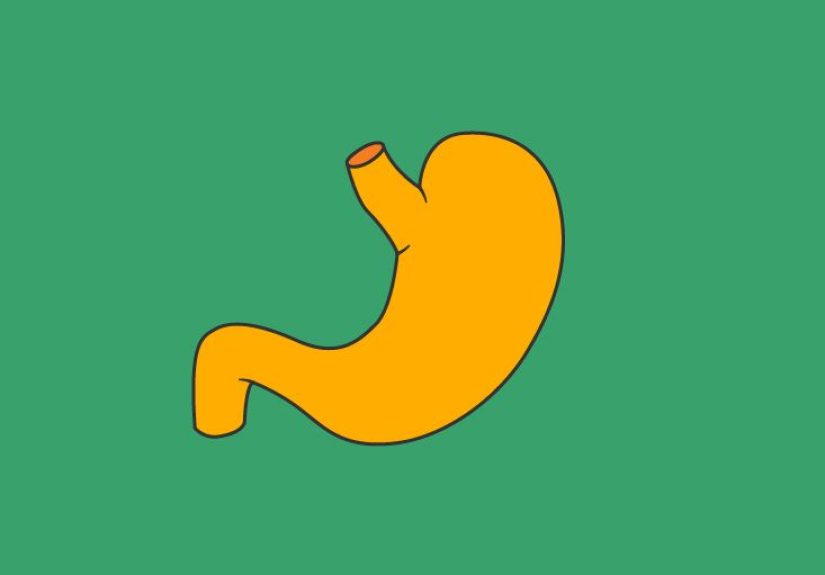
Your stomach is a muscular, J-shaped organ that sits under the diaphragm and usually toward the upper-left side of the abdomen. Many people feel “stomach” symptoms in the upper middle (epigastric) area too, because the stomach spans across that region.
If you place your hand below the center of your ribcage and slide it slightly left, you’re in the right neighborhood. But bodies aren’t identical, and the stomach can shift a bit depending on body position and how full it is.
Stomach Anatomy: Parts & The Neighbors It Texts at 2 a.m.
The stomach connects the esophagus (food tube) to the small intestine (specifically the duodenum). It’s built for storage, mixing, and controlled “release” of food onwardlike a bouncer at a very exclusive club called “Digestion.”
Main Parts of the Stomach
- Cardia: where the esophagus meets the stomach
- Fundus: the rounded upper portion (often contains swallowed air)
- Body: the main “mixing chamber”
- Antrum: lower portion that grinds and mixes more
- Pylorus: the outlet region that leads to the duodenum
Two Important Gatekeepers
- Lower esophageal sphincter (LES): helps keep stomach contents from moving back into the esophagus (hello, heartburn)
- Pyloric sphincter: regulates emptying from stomach into the small intestine
Who Lives Nearby?
Your stomach doesn’t work alone. Nearby structures can share nerves and create “confusing” symptoms:
- Liver: sits upper right and partly overlaps the stomach area
- Pancreas: lies behind the stomach
- Spleen: near the upper-left stomach area
- Colon: wraps around and can contribute to bloating/cramping sensations
- Diaphragm: above the stomach (breathing mechanics matter more than you’d think)
What the Stomach Actually Does (Besides Ruining Your Plans After Street Tacos)
The stomach’s job is not to “finish” digestionit’s to start the heavy lifting and then hand off to the small intestine. Here are the big roles:
1) Mixing & Mechanical Breakdown
The stomach is muscular. It churns and mixes food with digestive juices, turning a meal into a semi-liquid mixture often called chyme. This mixing helps later digestion in the small intestine.
2) Chemical Digestion
Glands in the stomach lining produce acid and enzymes that help break down food. Acid also helps activate certain enzymes and creates an environment that affects microbes.
3) Controlled Emptying
The pyloric region regulates how quickly stomach contents move into the small intestine. This is why some meals “sit heavy,” and why greasy foods can feel like they’ve filed a lease agreement.
4) Signaling: Nerves, Hormones, and the Brain-Gut Connection
The gut is packed with nerves and signaling pathways that affect appetite, fullness, and how “sensitive” your stomach feels. Stress can amplify symptoms, even when nothing is structurally wrongyour nervous system can turn the volume knob up.
Layers: The Stomach Wall (and Why It’s Built Like a Tank)
One reason the stomach is so good at mixing is its specialized wall structure. From inside to outside, think of it like a layered jacket:
- Mucosa: inner lining with glands; forms folds called rugae when empty
- Submucosa: supportive layer with vessels and nerves
- Muscularis externa: muscle layers that churnunique because the stomach has an extra inner layer compared with much of the GI tract
- Serosa: outer covering (part of the peritoneal lining concept)
Those rugae (folds) flatten out as the stomach fillslike sweatpants with a growth mindset.
Bonus Anatomy: The Abdomen Is Lined, Too
Many abdominal organs sit within a thin lining system (often discussed under the “peritoneum” umbrella). Inflammation of these linings can make pain sharper and movement-sensitiveone reason some belly pain feels worse when you cough, laugh, or hit a pothole.
Pain Map: How Location Can Hint at What’s Going On
Location is only one clue, but it’s a useful one. Here’s how clinicians often think about it:
| Where you feel it | How people describe it | Common examples (not a diagnosis) | Practical next step |
|---|---|---|---|
| Upper middle (epigastric) | Burning, gnawing, “indigestion” | Reflux/GERD, gastritis, peptic ulcer, functional dyspepsia | If frequent, persistent, or worsening: talk with a clinician |
| Upper right (RUQ) | Crampy or intense episodes, sometimes after fatty meals | Gallbladder-related pain patterns | Seek care, especially with fever, jaundice, or severe pain |
| Upper left (LUQ) | Pressure, fullness, soreness | Stomach-related issues; sometimes spleen/colon involvement | Watch trends; urgent evaluation if severe or sudden |
| Upper belly radiating to the back | Deep, severe pain with nausea/vomiting | Pancreas-related patterns can present like this | Urgent evaluation is often appropriate |
| Diffuse belly pain + diarrhea/vomiting | Crampy, “stomach bug” vibe | Viral gastroenteritis, food intolerance, IBS flares | Hydration; seek help if severe, bloody, or prolonged |
“My Stomach Hurts”But It Might Not Be the Stomach
A classic plot twist: symptoms can be “referred” or overlap. Heartburn can feel like chest pain; chest problems can sometimes feel like upper abdominal discomfort. That’s why severe symptoms, shortness of breath, or chest pressure deserve urgent attention.
Red Flags: When to Seek Medical Care
Most belly discomfort is not an emergencybut some patterns are worth taking seriously. If any of the following happen, don’t “wait it out to prove you’re tough”:
- Severe belly pain that is sudden, intense, or worsening
- Chest pressure/pain, trouble breathing, sweating, or feeling faint
- Vomiting blood or black, tarry stools
- Persistent vomiting or inability to keep fluids down
- Severe pain after an injury (car accident, fall, sports impact)
- Fever plus significant abdominal tenderness
- Unexplained weight loss with ongoing symptoms
If you’re ever unsure, it’s reasonable to get evaluatedespecially if symptoms are new for you, more intense than usual, or paired with red-flag signs.
How Doctors “Take Pictures” of the Stomach Area
When symptoms are persistent or concerning, clinicians combine your story with an exam and, if needed, tests. Here are common ways they look inside the “stomach area” without turning you into a science fair project:
Physical Exam (Old School, Still Useful)
- Where it hurts (and where it doesn’t)
- Whether movement, coughing, or pressing changes the pain
- Signs of dehydration, fever, or jaundice (yellowing)
Imaging
- Ultrasound: often used for gallbladder/liver and some abdominal evaluations
- CT scan: helpful for broader abdominal causes, depending on scenario
- X-ray: sometimes used for obstruction patterns or other targeted questions
Endoscopy (A Camera Tour)
An upper endoscopy lets clinicians view the esophagus, stomach, and duodenum directly. It can identify inflammation, ulcers, bleeding, and other findings. It also shows normal stomach folds (rugae), which is a surprisingly poetic reminder that your stomach has texture.
Labs & Tracking
Depending on symptoms, clinicians might check bloodwork, stool tests, or recommend tracking triggers. A simple food-and-symptom diary can be helpful when patterns aren’t obvious (and when your stomach seems to be freelancing without a schedule).
Keeping the “Stomach Area” Happier: Practical, Not Preachy
No single tip fixes everything, but many stomach-area complaints respond to a few evidence-aligned habits. Consider these as low-drama experiments:
Eat Slower Than Your Wi-Fi Loads
Swallowing air and rushing meals can worsen bloating, gas, and discomfort. Smaller bites, fewer speed records.
Know Your Triggers (Without Declaring War on Food)
Spicy foods, fatty foods, caffeine, alcohol, and certain acidic items can bother some peopleespecially with reflux or gastritis tendencies. Tracking helps you target your actual triggers, not your entire pantry.
Be Cautious with NSAIDs
Frequent use of certain pain relievers can irritate the stomach lining in some people. If you need them regularly, it’s worth discussing safer strategies with a clinician.
Stress Isn’t “All in Your Head” (But It Can Be in Your Gut)
Stress can increase gut sensitivity and symptoms. Sleep, movement, and basic stress-management aren’t magical, but they’re surprisingly powerful in the long run.
Real-Life Experiences Related to the Stomach Area (Composite Examples)
The stories below are composite examples based on common real-world patterns (not specific individuals). They’re here to make anatomy feel less like a textbook and more like something you can recognize in daily life.
1) The “I Ate Too Fast” Episode
Jordan scarfed down lunch between meetings like the sandwich owed them money. Fifteen minutes later: upper-belly pressure, burping, and that awkward “balloon animal” feeling. The stomach itself wasn’t brokenthis was a greatest-hits combo of swallowed air, fast eating, and a stomach trying to mix food while being repeatedly interrupted by more food. The fix wasn’t dramatic: slower meals, smaller portions, and avoiding carbonated drinks during rushed lunches. Anatomy lesson: the stomach is a mixer and a gatekeeper; it does worse when you treat it like a paper shredder.
2) The “Pain Reliever Plot Twist”
Sam had a sore knee and started taking over-the-counter anti-inflammatory meds daily. Soon came a burning sensation under the breastbone and nagging epigastric pain. Because it felt like “stomach area” pain, Sam blamed spicy food and tried cutting out everything fun. The burning continued. After checking in with a clinician, the conversation turned to stomach lining irritation and ulcer risk factors. The key experience here is not “meds are bad,” but that frequent NSAID use can be relevant when upper abdominal symptoms appear. Anatomy lesson: the stomach lining is tough, but it’s not invincibleespecially when the chemical environment changes.
3) The Great Gas Mystery (Starring the Intestines)
Priya felt bloated “in the stomach” and kept pointing around the belly button and lower abdomen. The sensation was real, but the stomach wasn’t the main actor. Gas is often produced in the intestines as bacteria break down certain carbohydrates, and that pressure can show up anywhere along the abdominal “tube.” Priya noticed it was worse with certain foods and when eating quickly. A food diary helped spot patternsespecially with high-carb, high-fermentation meals. Anatomy lesson: your abdomen is a shared space; the intestines can make the “stomach area” feel uncomfortable even when the stomach itself is behaving.
4) The “Stress Stomach” Week
Alex had a week of deadlines and slept like a phone on 2% battery: barely. Cue nausea, early fullness, and a tight, uneasy feeling in the upper abdomen. Tests didn’t reveal a structural problem. Symptoms improved when sleep normalized and stress dropped. This doesn’t mean the symptoms were imaginarygut nerves and brain-gut signaling can amplify discomfort and change motility. The experience was frustrating (“But it hurts!”) and validating at the same time (“There’s a reason this happens.”). Anatomy lesson: the gut’s nervous system is powerful; feelings and physiology can be friends (even when they’re annoying friends).
5) The “It’s Not My Stomach” Surprise
Taylor felt intense upper abdominal pain after a heavy meal. They assumed it was “bad indigestion.” But the pain peaked in waves and came with nausea. Because the upper abdomen contains more than the stomach, the evaluation looked beyond the stomach: gallbladder and biliary patterns can mimic “stomach area” discomfort, and pancreas-related pain can sometimes radiate to the back. The takeaway isn’t to diagnose yourselfit’s to recognize why clinicians ask about location, timing, and triggers. Anatomy lesson: the stomach shares close quarters with multiple organs, so symptom patterns matter as much as the word “stomach.”
If your own experience feels more intense, more frequent, or simply “off,” that’s a good time to get checkedespecially if any red-flag signs appear. Bodies are consistent enough for patterns to exist, but unique enough that your safest bet is professional evaluation when in doubt.
Conclusion
The “stomach area” is usually the abdomen, and your actual stomach lives mostly in the upper middle and upper-left regions. Understanding the belly mapquadrants, regions, and what organs live nearbyhelps you describe symptoms more clearly and understand why the same sensation can have different causes.
Use location as a clue, not a verdict. If symptoms are severe, persistent, or paired with red flags (vomiting blood, black stools, chest pressure, severe sudden pain), seek medical care. Your stomach can be dramaticbut it’s also worth listening to when it’s waving a legitimate red flag.