Table of Contents >> Show >> Hide
Some airplanes age like milk. The A-10 Warthog has aged like a grumpy mechanic who still outworks everybody on the shift. For years, the A-10 Thunderbolt II has been pronounced finished, outdated, too specialized, too slow, too vulnerable, too loud, too beloved, and probably too ugly to survive modern PowerPoint warfare. And yet the jet keeps finding one more runway, one more mission, one more argument in its favor, and one more reason to refuse retirement.
That is why the phrase “The A-10 Warthog lives to fly again” lands so well. It does not mean the aircraft has magically escaped the hard realities of budget math, air defense threats, and force modernization. It means the Warthog still matters. It still shapes Air Force planning. It still inspires fierce loyalty among pilots, maintainers, and soldiers who care less about slide decks and more about whether help shows up on time. Most of all, it means the A-10 remains the benchmark for close air support, even while the Air Force tries to move on.
So yes, the Warthog is living to fly again. But this is not a fairy tale comeback. It is a very American story about engineering, battlefield usefulness, institutional politics, congressional pushback, and a machine so purpose-built that nobody has quite agreed on how to replace what it does best.
Why the A-10 Warthog Still Refuses to Fade Away
Built for the Dirty Job Nobody Else Wanted
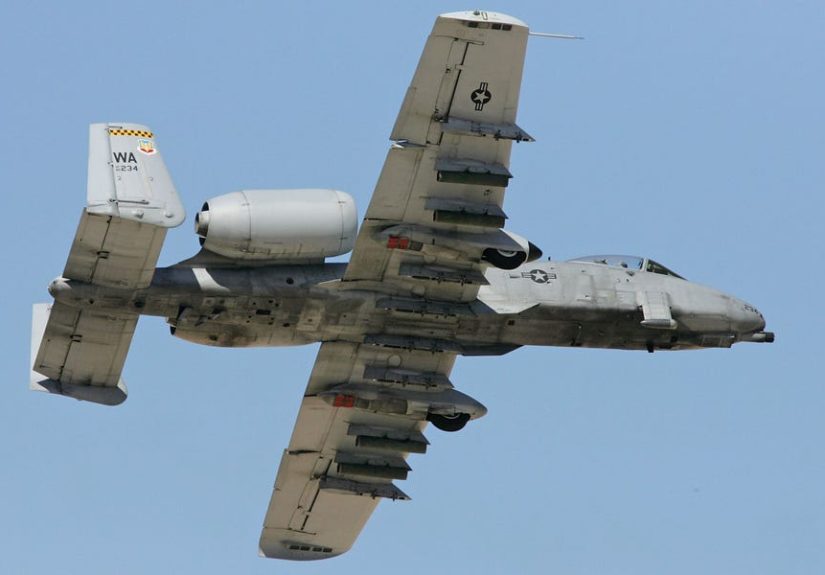
The A-10 was never designed to win a beauty contest. It was designed to do the sort of work that ruins paint, rattles bones, and settles arguments in a hurry. The aircraft was built specifically for close air support of ground forces, with a simple idea at its core: fly low, stay tough, see the fight, and keep helping when conditions are ugly. Its twin-engine layout, long loiter time, wide combat radius, short-field capability, and famously armored cockpit were not style choices. They were survival choices.
That design philosophy is why the jet became legendary. The Warthog can carry a heavy weapons load, including its iconic GAU-8/A 30 mm cannon, while remaining maneuverable at low altitude and relatively slow speed. In an age when many combat aircraft are optimized to do many things well, the A-10 has always been unapologetically specialized. It is a tool made for a job, and it behaves like one. Think less luxury sedan, more industrial power saw with wings.
Why Ground Troops Loved It
Ask why the A-10 earned such devotion and the answer is not complicated. It could get close, stay overhead, and respond fast. RAND research on close air support debates found that the aircraft’s direct-fire cannon, responsiveness, and visible presence created real value in permissive or counterinsurgency-style environments, especially when troops were operating near the enemy. That mattered in Iraq and Afghanistan, where seconds, not theory, often shaped outcomes.
The Warthog also built a psychological reputation that few aircraft can match. To friendly forces, it signaled help. To anyone on the receiving end, it signaled a very bad afternoon. Even its nickname worked in its favor. “Warthog” sounds like an insult until the thing arrives over the ridge and suddenly seems like exactly the animal you wanted on your side.
The A-10’s Long Second Life Was Not an Accident
The A-10C Upgrade Changed the Conversation
One reason the Warthog kept flying long after many expected it to disappear is that the aircraft did not simply sit in a hangar and grow nostalgic. It evolved. The A-10C modernization added digital cockpit displays, improved fire control, helmet cueing, better communications, targeting pods, data links, and compatibility with a broader precision weapons set. In other words, the old bruiser learned some new tricks.
That modernization mattered because it let the aircraft remain relevant in a world where precision, networking, and sensor fusion were becoming table stakes. The upgraded A-10C could still do what made the original airframe famous, but with better awareness, better coordination, and better integration into modern operations. The result was not a stealth aircraft pretending to be a Warthog. It was still a Warthog, just one that had finally joined the digital age without losing its attitude.
New Wings Gave the Jet Literal New Life
The phrase “lives to fly again” is not just poetic. It is mechanical. The Air Force and Boeing pursued a major rewinging effort that replaced aging wing structures and extended service life. Air Force reporting tied the effort to hundreds of millions of dollars in investment, and later program reporting said rewinging completed in 2024 extended the remaining airframes to 10,000 flight hours. That is not a cosmetic refresh. That is the aviation equivalent of replacing your knees and then deciding to run another marathon.
Home-station wing swaps and depot work helped keep the fleet relevant while retirements slowly advanced. For a platform first selected in the 1970s, that kind of structural renewal is a big deal. It is one thing to say a plane is beloved. It is another thing entirely to bolt on the engineering proof that the plane can keep going.
So Why Does the Air Force Still Want to Retire the Warthog?
The Real Argument Is About Future War, Not Past Glory
This is where the A-10 debate gets serious. The case for retiring the Warthog is not that it suddenly became useless. It is that the Air Force believes the kinds of conflicts it must prepare for next look very different from the wars that made the A-10 famous. In a highly contested fight against a peer adversary with advanced air defenses, the Air Force argues it needs a more survivable, more flexible, more multi-role fighter force.
That logic shows up clearly in recent budget documents. In the fiscal 2026 force structure exhibit, the Department of Defense proposed retiring all 162 remaining A-10Cs in that year alone, with estimated operations and maintenance savings of $423 million. The justification said the move would repurpose manpower, enable investment in the future force, and improve lethality against peer adversaries. Translation: the Air Force wants to stop feeding a specialist and start funding a different kind of fight.
Even A-10 Supporters Usually Admit the Problem
Here is the nuance that gets lost in online shouting matches. You can believe the A-10 is superb at close air support and still accept that dense modern air defenses are a nightmare for any aircraft working low and close. RAND’s past analysis found that programmed Air Force forces could cover many missions in permissive environments, while also warning that gaps in responsive CAS, FAC-A, and combat search and rescue support could widen if the A-10 disappeared. That does not make the aircraft a universal answer. It makes it very good at a particular question.
And that is the whole tragedy of the Warthog debate: the jet is being retired not because it failed at its mission, but because the mission itself is being redefined under new strategic assumptions. The A-10 is like a master carpenter in a company that just decided everything will be made of aluminum.
The Warthog’s Strange 2024-2026 Encore
Korea, Guard Units, and the Great Rearrangement
The A-10’s current story is full of transitions. The Air Force announced that Osan Air Base in South Korea, the jet’s final overseas operating location, would begin phasing out its 24 A-10s in January 2025, with withdrawal complete by the end of fiscal 2025. That move effectively ends the aircraft’s permanent overseas basing and marks a major symbolic shift. When the Warthog leaves Korea, it is not just leaving a base. It is leaving an era.
Elsewhere, the map is changing fast. Warfield Air National Guard Base in Maryland was selected to move from an A-10 mission to a cyber wing, and Maryland began divesting aircraft in 2025. Moody Air Force Base in Georgia is slated to trade A-10s for F-35As. Gowen Field in Idaho and the Indiana Air National Guard are lined up for F-16 missions. Selfridge in Michigan is headed toward the F-15EX. Piece by piece, the communities that once revolved around the Warthog are being handed a future that looks faster, stealthier, more networked, and a lot less snout-shaped.
Congress Keeps Hitting the Pause Button
Still, the A-10 refuses to go quietly because Congress keeps intervening. Lawmakers have spent years slowing or reshaping retirement plans, and the fiscal 2026 NDAA continued that pattern. According to summary language and defense reporting, the final measure blocked the Air Force from dropping the A-10 inventory below 103 aircraft, with 93 designated as primary mission aircraft, through the end of fiscal 2026. That does not save the Warthog forever. But it absolutely keeps it alive longer than the Air Force requested.
That matters because it changes the meaning of “retirement.” The Air Force may want to close the book, but Congress keeps dog-earing the page and saying, “Not so fast.” For the A-10, survival has become a political skill as much as an operational one.
The Sunset Signs Are Real, Though
Anyone calling this a full revival should pump the brakes. Recent Air Force reporting shows clear signs of an aircraft in its final chapter. The A-10 developmental test detachment was inactivated in late 2025 as divestment continued. In early 2026, Hill Air Force Base prepared to send off the final A-10 leaving depot maintenance, closing a major chapter in Ogden Air Logistics Complex history. When the last depot bird taxis out and the test enterprise folds its tent, the message is pretty hard to miss.
So yes, the Warthog lives to fly again. But it now lives like a veteran prizefighter in the late rounds: still dangerous, still respected, still capable of landing a clean shot, but also very aware of the clock on the wall.
What the A-10’s Survival Really Means
The Plane Endures Because the Mission Endures
The most important lesson of the A-10 story is not about nostalgia. It is about requirements. Ground troops still need fast, responsive, accurate, persistent air support. They still need aircraft that can communicate clearly, identify threats, remain overhead, and deliver effects without creating a bigger mess. Whether that comes from an A-10, an F-35, a future collaborative combat aircraft, or some mix of systems, the demand does not disappear just because the Warthog eventually does.
In that sense, the A-10 has already won. It defined the standard future systems must meet. Every time someone argues that newer aircraft can replace it, they end up measuring those aircraft against the qualities the A-10 made famous: loiter time, responsiveness, survivability at the tactical edge, pilot confidence, and trust from the people on the ground. That is legacy with teeth.
The Warthog’s Legacy Is Bigger Than Its Airframe
The Warthog also exposed a permanent tension in U.S. defense planning. Wars are fought with the force you have, but budgets are built for the war you fear next. The A-10 excelled in real combat across decades, yet it remains vulnerable in strategic debates because the next conflict may demand something else. That does not erase the aircraft’s value. It simply means usefulness and longevity are not always enough in a Pentagon that is trying to fund tomorrow before tomorrow gets here.
And yet, for all the talk of divestment, the A-10 keeps finding reasons to remain relevant. It has flown in the Middle East even in recent years, including show-of-force missions in Syria and deployment activity in the CENTCOM area of responsibility. It may no longer be the future, but it stubbornly refuses to become just a museum label. That stubbornness is the whole point of the airplane.
Experiences That Explain Why the A-10 Warthog Still Matters
If you want to understand why people still fight over the A-10, skip the jargon for a minute and picture the experience around the aircraft itself. Start on a flight line at dawn. The jet does not look elegant. It looks practical. The engines sit high, the landing gear looks sturdy, and the nose makes it seem like the airplane is already annoyed with you. Yet the maintainers who work around it tend to respect that practicality. The aircraft was built to be serviced in rough conditions, and that design has always been part of the affection. The Warthog does not feel precious. It feels usable.
That impression carries into operations. A-10 culture has always been connected to crews, pilots, and ground units who value reliability over glamour. Home-station wing swaps at Davis-Monthan and long years of depot work at Hill reinforced that image: this was an airplane worth fixing, worth extending, worth dragging forward another few years because people believed the mission still justified the effort. Even its farewell ceremonies have not looked like cold corporate shutdowns. They have felt more like retirement parties for a co-worker everyone trusted during the worst shifts.
Then there is the pilot experience, at least as it is usually described in operational reporting and public accounts. The Warthog’s strength has never been abstraction. It lives in the concrete details of flying lower, seeing more, staying longer, and communicating clearly with forces below. That is one reason the aircraft became so closely associated with close air support credibility. For troops on the ground, “air support” is not a philosophical category. It is the difference between a fast jet streaking through and a platform that remains close enough, long enough, and focused enough to make a messy situation more manageable.
The A-10’s recent use in Syria for show-of-force missions is a reminder that presence can matter almost as much as weapons. Sometimes the point of an aircraft is not to unleash chaos. Sometimes the point is to prevent it, deter it, or signal that someone capable is overhead and paying attention. That role suits the Warthog better than many people realize. It has always been an aircraft with a physical, unmistakable presence. It is hard to ignore, which is occasionally the whole tactical idea.
There is also an emotional experience attached to the aircraft’s final transitions. In Maryland, the first divested A-10 was not just another line item leaving inventory; it was the beginning of a community changing identity. At Osan, the end of A-10 operations marked more than a basing shuffle; it closed the book on the aircraft’s overseas chapter. At Hill, when the depot mission wound down and the “Hawg Out” ceremony marked the end of decades of maintenance work, the moment said something bigger than “program complete.” It said a whole ecosystem of expertise, memory, and daily routine was changing shape.
That is why the A-10 still occupies so much emotional and strategic space. People remember what it did, but they also remember how it felt to rely on it. The airplane earned its mystique through repeated, practical usefulness. It stayed overhead. It looked tough because it was tough. It inspired confidence because it was designed for confidence-building work. Newer aircraft may ultimately replace its functions more efficiently or more survivably, but they will still have to earn what the Warthog earned the old-fashioned way: one mission, one crew, one ground unit at a time.
And that, in the end, is why the A-10 lives to fly again. Not because time stopped. Not because strategy froze. Not because nostalgia won. It lives because when America needed a brutally honest close air support aircraft, the Warthog showed up, kept showing up, and made itself very hard to forget.
Conclusion
The A-10 Warthog is not coming back from the dead because it never fully left. What it is experiencing now is something stranger and more interesting: a prolonged, contested exit in which every attempt to retire it becomes another reminder of why it mattered. The Air Force sees a future built around survivability, multi-role flexibility, and peer-war lethality. Supporters of the Warthog see an aircraft that still represents the gold standard for close air support. Both sides are responding to real problems.
That is why the A-10’s final years have so much energy. The Warthog still flies, still influences force structure, still commands loyalty, and still forces a hard question: what exactly must replace not just its weapons, but its presence, persistence, and trust? Until that answer feels complete, the A-10 Warthog will keep doing what it has done for decadesrumbling back into the argument one more time.