Table of Contents >> Show >> Hide
- Why “parent horror” hits so hard
- The best horror films about parents
- Hereditary (2018)
- The Babadook (2014)
- The Shining (1980)
- Rosemary’s Baby (1968)
- The Omen (1976)
- The Exorcist (1973)
- Insidious (2010)
- Sinister (2012)
- Pet Sematary (1989)
- A Quiet Place (2018)
- The Witch (2015)
- Goodnight Mommy (2014)
- The Stepfather (1987)
- The Brood (1979)
- The Lodge (2019)
- Orphan (2009)
- People Under the Stairs (1991)
- Mother! (2017)
- How to choose your perfect “parent horror” mood
- A simple weekend watch order
- Viewer experiences
- Final thoughts
- SEO Tags
Parenting is supposed to be comforting. Warm hugs. Bedtime stories. Someone who can locate your missing shoe using
nothing but pure love and the supernatural ability to see through laundry piles.
Horror movies, however, looked at that cozy setup and said: “What if the hug lasts one second too long?”
And honestly? Fair question.
The best horror films about parents don’t just use moms and dads as background furniture. They turn parenting into
the main engine of dread: the pressure to protect, the fear of failing, the grief that doesn’t know where to go,
and the unnerving truth that the people who love you most also know exactly how to hurt you… by accident, on a bad
day, or because something ancient and evil picked your family like a raffle winner.
Why “parent horror” hits so hard
A monster in a cave is scary. A monster in your kitchen making a midnight snack in your pajamas is personal.
Parent-centered horror works because home is where we expect safety, rules, and unconditional love.
When those things warpthrough trauma, obsession, religion, isolation, mental illness, or the supernaturalthe
scare factor skyrockets.
Plus, parent horror comes with built-in emotional stakes. You can’t just “move away” from your mom.
(You can try, but she will still text you “???” and somehow that’s a jump scare.)
The best horror films about parents
Below is a curated watchlist of parent-themed horrorfilms where motherhood, fatherhood, caregiving, or family
legacy isn’t a footnote. It’s the nightmare’s beating heart.
Hereditary (2018)
If you want a movie that treats family trauma like a curse with a long memory, this is the big one.
It’s a slow, suffocating descent where grief turns into suspicion, and parenting becomes a high-wire act with no net.
The terror isn’t only what’s “out there,” but what a family inherits, repeats, and can’t escapesometimes without
even knowing the rules of the game they’re playing.
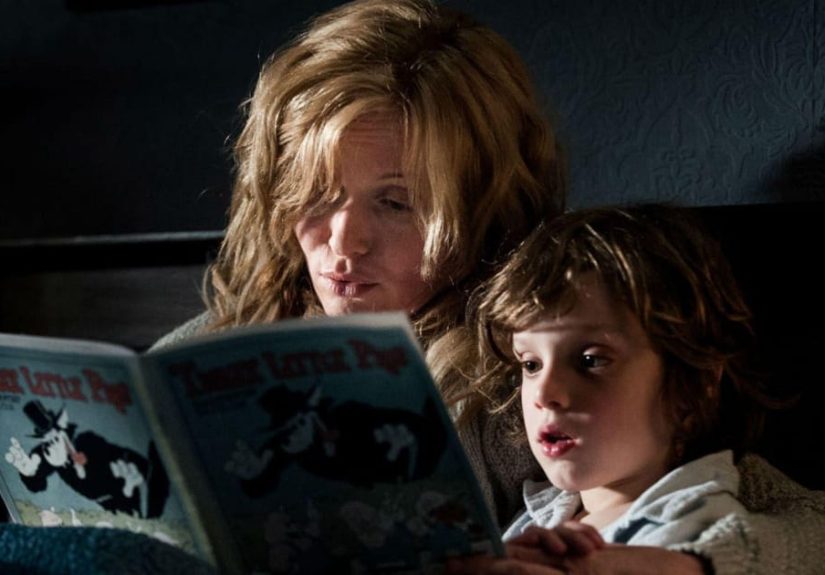
The Babadook (2014)
Widowed motherhood, exhaustion, and a child who’s acting out collide with a storybook monster that feels less like
a random boogeyman and more like an emotion that learned how to open doors. It’s one of the sharpest films about
how grief and resentment can haunt a homeespecially when a parent has no space to be a human being, only a caretaker.
The Shining (1980)
Some horror movies ask, “What if the house is haunted?” This one asks, “What if the dad is haunted… and also
has cabin fever… and also has an axe?” The Overlook Hotel amplifies what’s already broken, and the terror is the way
a family’s protector becomes the threat. It’s a masterclass in parental unravelingequal parts iconic and unsettling.
Rosemary’s Baby (1968)
Pregnancy horror doesn’t get more influential than this. What makes it hit is the isolation: a young woman’s body,
choices, and fears becoming public propertymanaged by neighbors, a husband, and a culture that smiles while it
takes control. It’s less about jump scares and more about the creeping dread of not being believed when it matters most.
The Omen (1976)
Adoption anxiety, faith-based dread, and a child who is… let’s say “complicated.” The fear here isn’t only that the
child might be evil, but that the parent’s love becomes a trap: the deeper the bond, the harder it is to admit
something is wrong. It’s classic “What do you do when your kid is the omen?” horrortimeless and chilling.
The Exorcist (1973)
At its core, this is a mother’s nightmare: your child is suffering, doctors can’t explain it, and every solution
comes with a price you didn’t agree to pay. Beyond the infamous shocks, it’s a brutal story about parental helplessness
that gut-punch feeling when love isn’t enough to fix what’s happening in your own home.
Insidious (2010)
A family fights for a child who slips into a dangerous, dreamlike realmturning bedtime into a war zone.
What makes this one work is how it weaponizes everyday parenting routines: the quiet hallway, the baby monitor vibe,
the “Did you just hear that?” moment that every parent knows. It’s supernatural horror with a very human mission:
get your kid back.
Sinister (2012)
Ambition and fatherhood make a dangerous cocktail here. A dad drags his family into a new home chasing a career-defining
breakthrough, only to discover the house comes with films no one should watchespecially not in the dark, especially not
when your kids are asleep upstairs. It’s a sharp cautionary tale about choices parents make “for the family” that
quietly put the family in harm’s way.
Pet Sematary (1989)
Grief is the monster in this story, and it doesn’t take “no” for an answer. The film stares straight at the most
unbearable parental fearlossand asks what happens when love refuses to accept reality. It’s tragic, eerie,
and emotionally savage in a way that lingers longer than the creepy stuff.
A Quiet Place (2018)
Parenting already requires quiet focus. Now imagine silence is literal survival. This film turns family communication
touch, eye contact, small signalsinto a life-saving language. It’s tense and intimate, and it makes every parental
instinct feel razor-sharp: protect the kids, no matter what, even when the world punishes a single mistake.
The Witch (2015)
Here, parenting happens inside a pressure cooker of isolation, religious fear, and scarcity.
The terror comes from how quickly a family turns on itself when faith becomes paranoia and the “rules” of survival
demand someone be blamed. It’s a bleak, beautifully crafted portrait of a household collapsing under fear and suspicion.
Goodnight Mommy (2014)
Two boys begin to suspect the woman who returned homebandaged after surgeryisn’t their mother.
The film turns the parent-child bond into a puzzle box: identity, trust, and love all become uncertain, and that
uncertainty curdles into something deeply unsettling. It’s tense, intimate, and emotionally icy.
The Stepfather (1987)
Some monsters don’t hide under bedsthey show up with a toolbox, a charming smile, and a strong opinion about how
a “real family” should behave. This is suburban-parent horror at its sharpest: the terror of a caregiver who wants the
role more than the people in it. It’s slick, scary, and disturbingly plausible.
The Brood (1979)
A divorce-and-custody nightmare filtered through body horror and rage.
It’s a film about how unresolved traumaespecially between parentscan spill into a child’s life like poison.
The parenting fear here isn’t only “something bad is coming,” but “what if the damage is already inside the family?”
The Lodge (2019)
A soon-to-be stepmother gets stranded with two kids in a remote winter lodge, and the emotional temperature drops
even faster than the actual one. This is blended-family horror done with maximum tension: grief, resentment,
and mistrust create a situation where love feels like a test no one can pass.
Orphan (2009)
Adoption horror with a wicked sense of escalation. It’s a story about a family wanting to healand discovering that
what they brought into their home is expertly designed to fracture them. The scares work because the threat uses
family dynamics as leverage: doubt the mother, isolate the parents, and turn love into suspicion.
People Under the Stairs (1991)
Here, “bad parents” becomes a full-blown horror ecosystem.
The film blends social commentary with nightmarish caretakers who control a household like a private prison.
It’s weird, darkly funny, and furioushorror where the adults in charge are the true danger.
Mother! (2017)
Not a traditional “family horror,” but it’s steeped in themes of creation, caretaking, and the brutal expectations
placed on a woman who is constantly asked to give more of herself. It’s surreal, intense, and polarizingexactly the kind
of movie you recommend with a warning and a glass of water nearby.
How to choose your perfect “parent horror” mood
If you want supernatural parenting dread
- Hereditary (family legacy as a trap)
- Insidious (parents vs. the other side)
- The Exorcist (a mother’s helplessness made cosmic)
If you want “the adult in charge is the problem”
- The Shining (dad goes full nightmare)
- The Stepfather (domestic menace with manners)
- People Under the Stairs (caretakers from hell)
If you want grief-driven, emotionally sharp horror
- The Babadook (grief that learns your schedule)
- Pet Sematary (love that refuses to let go)
- The Lodge (mourning turned into a blizzard)
A simple weekend watch order
Want a parent-horror marathon that ramps up without destroying your soul by movie #2? Try this:
- A Quiet Place (tense, emotional, crowd-pleasing)
- Insidious (funhouse supernatural)
- The Babadook (psychological and raw)
- Hereditary (finish strong, finish shaken)
Viewer experiences
Horror films about parents land differently depending on where you are in lifeand that’s part of the fun (and the
emotional ambush). If you’re watching as a parent, these movies don’t just scare you; they interrogate you. You’ll find
yourself doing mental math you never asked for: “If a demon showed up at 2 a.m., could I still pack lunches by 7?”
“If the house was haunted, would I have to disclose that on the school emergency contact form?”
The most common experience parents reportespecially with movies like The Babadook,
Pet Sematary, and Hereditaryis that the fear doesn’t come from claws or ghosts.
It comes from recognition. Exhaustion. The feeling of being responsible for someone fragile while you’re also fraying.
That’s why the quiet scenes hit hardest: a parent staring into space at the kitchen table, the long pause before responding
to a child, the look that says “I love you” and “I am not okay” in the same breath.
If you’re watching as someone who grew up with complicated family dynamics, “parent horror” can feel weirdly validating.
There’s a catharsis to seeing a film admit that home isn’t always safe, and authority isn’t always wise. Movies like
The Stepfather and Goodnight Mommy amplify that unease: the dread that the person who should
protect you might be unpredictable, performative, or just plain wrong. These stories can be intense, but they also
make a point: your instincts matter. If something feels off, you’re not “dramatic.” You’re paying attention.
Then there’s the “friend without kids” viewing experiencealso known as the moment you realize babysitting is a horror
genre in disguise. You start a movie thinking you’re here for spooky fun, and suddenly you’re whispering, “Why would you
go into the attic?” while also realizing you don’t even know how to install a car seat. Films like Sinister
and Insidious hit you with a fresh anxiety: children are tiny chaos magnets, and adults are often improvising
with confidence they absolutely do not possess.
And let’s not ignore the group-watch experiencethe one where everyone laughs at the first few ominous signs because it’s
safer than admitting the movie is poking a real nerve. Someone will crack a joke when a parent makes a bad decision,
but then the room goes quiet when the consequences feel too believable. That’s the power of this subgenre: it sneaks past
your defenses. It scares you with monsters, sure, but it also scares you with responsibility, regret, and the fragile hope
that love is enough.
If you want to make these films even richer, try watching with a “parenting lens.” Notice how many plots hinge on:
a parent not being believed, a family lacking support, or a caregiver carrying everything alone. The real villain is often
isolationsupernatural or not. That’s why the best horror films about parents don’t just leave you frightened; they leave
you thinking about what families need to survive: honesty, help, and the ability to say, “I’m not okay,” before the house
starts answering back.
Final thoughts
The best horror films about parents are scary because they’re true in a sideways way. They understand that love can be
fierce, messy, exhausting, and occasionally haunted. They take the most ordinary relationship in the worldparent and child
and ask what happens when fear moves in and refuses to pay rent.
So cue up your favorites, turn on a light if you need to, and remember: if a horror parent says, “Don’t worry,” that’s
basically a siren.
Research sources (US-based) used for synthesis: