Table of Contents >> Show >> Hide
- Electric Semis: From “Someday” to “Schedule It for Tuesday”
- Charging: The Not-So-Secret Boss Battle of Electric Trucking
- Policy and Incentives: Tailwinds, Headwinds, and a Few Surprise Potholes
- Autonomous Big Rigs: The Next Big Step Is Already in Motion
- When Electric Meets Autonomous: Why These Two Trends Will Reinforce Each Other
- What Comes Next: A Practical Forecast (Not a Crystal Ball)
- Conclusion: The Future of Freight Is Arriving in Pieces (and That’s a Good Thing)
- Real-World Experiences: What It Feels Like When the Future Shows Up at Your Dock
For decades, the trucking industry has run on two things: diesel and deadlines. But lately, a third ingredient has
joined the recipeelectricity. And it’s not just showing up as a “concept truck” that lives forever on a stage under
dramatic lighting. Electric semis are hauling real freight for real fleets, in real weather, with real dispatchers
texting “where are you?” like it’s their cardio.
The punchline (and it’s a big one): the electric semi is already hereespecially for regional and
return-to-base routes. And the sequel is forming fast: autonomous Class 8 trucks that can run the
boring highway miles with robot-level patience, while humans handle the complex stuff at the edges.
If that sounds like science fiction, don’t worry. This is truckingno one believes anything until it survives a
pothole, a weigh station, and a driver who calls your new feature “cute” in the most disrespectful way possible.
Let’s talk about what’s real right now, what’s next, and what still needs to be solved before your freight starts
arriving with a software release note.
Electric Semis: From “Someday” to “Schedule It for Tuesday”
The electric semi story used to be simple: big batteries are expensive, charging is complicated, and the payload
penalty is painful. All still trueyet deployments are happening anyway, because certain routes make the math work.
Specifically: predictable miles, consistent loads, known dwell times, and a charging plan that doesn’t involve
“finding a plug and praying.”
What fleets are buying (and why it’s mostly short-haul… for now)
In the U.S., the strongest early fit for battery-electric Class 8 is still regional haulport drayage,
food & beverage loops, retail distribution, and other operations where trucks come home to the same yard like
boomerangs with DOT numbers.
- Freightliner eCascadia is positioned for short-haul and regional work, with published typical ranges
in the ~155–230 mile neighborhood (configuration-dependent) and DC fast charging that can hit 0–80% in about 90 minutes
under the right conditions. - Volvo VNR Electric targets regional operations with an advertised operating range up to ~275 miles
(depending on spec and duty cycle) and common North American CCS charging. - Kenworth’s T680E represents the “OEMs are serious now” phasemore configurations, bigger packs,
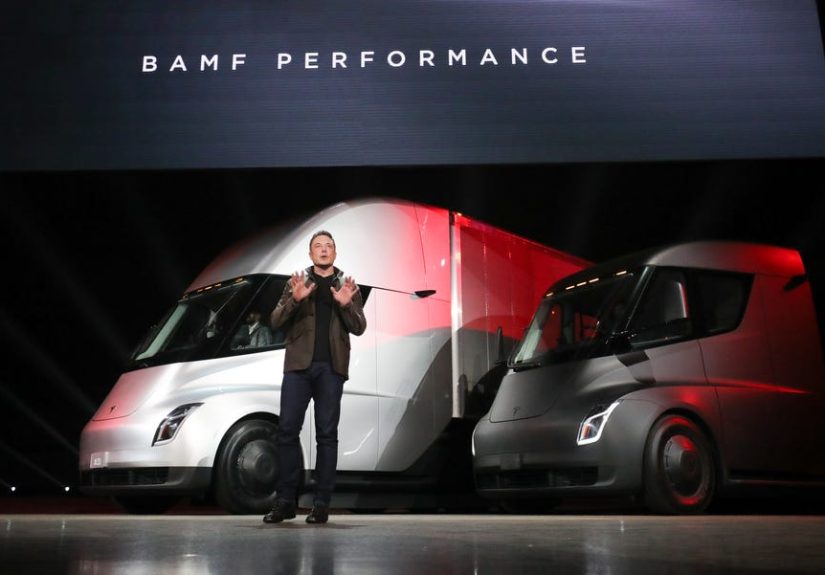
and a clearer playbook for fleets that already know their routes. - Tesla’s Semi is the headline-grabber. Tesla publishes a 500-mile target range and an energy
consumption figure that it claims can be supported by its high-power charging approachyet, like all new trucking
tech, the real-world impact depends on route, speed, payload, weather, and how disciplined the operation is.
A quick reality check: an “electric semi” isn’t one productit’s a category. Different trucks are being optimized for
different missions. Today’s deployments mostly live where routes are repeatable, charging is controllable, and the
truck can be productive without needing a nationwide megawatt charging network on day one.
The economics: not magic, just fewer moving parts
Fleet buyers don’t adopt new technology because it’s cute. They adopt it because the total cost of ownership
starts to look… interesting. Electric drivetrains trade diesel complexity (and lots of maintenance) for electricity,
software, and batteries. On the operations side, many fleets report:
- Lower energy cost per mile (especially when charging off-peak or with negotiated utility rates)
- Lower maintenance (fewer fluids, less brake wear thanks to regenerative braking, fewer wear items)
- Better driver experience (quiet cab, smooth acceleration, less vibration)
Of course, none of this eliminates the big three pain points: upfront cost, charging infrastructure,
and operational change management. Which brings us to the real boss fight.
Charging: The Not-So-Secret Boss Battle of Electric Trucking
If you want to understand why electric semis are spreading route-by-route instead of “everywhere all at once,” look at
charging. The truck isn’t the whole system. The truck plus the charger plus the transformer plus the utility upgrade
plus the site layout plus the software scheduling… that’s the system.
Depot charging vs. corridor charging
Most early fleets start with depot charging: chargers at a terminal where trucks sit for hours anyway.
It’s easier to control costs, minimize downtime, and keep charging aligned with dispatch reality.
Corridor charginghigh-power sites along major highwaysis the next stage, and it’s critical for
broader long-haul adoption. But it’s more complex: land, grid capacity, demand charges, queuing, reliability, and
hardware that has to work for heavy-duty duty cycles.
Megawatt charging is the key unlock (and it’s arriving)
Heavy-duty operations want fast turnaround. That’s why the industry is developing and deploying megawatt-class charging,
which can dramatically cut downtime for trucks with very large battery packs.
One concrete signal: Pilot travel centers (a major U.S. truck stop operator) announced a partnership to build
Tesla Semi charging locations beginning in the first half of 2026 across multiple states, with sites designed for
fleet use and each stall capable of delivering up to roughly 1.2 megawatts. That’s the kind of power level
that starts to make “electric long-haul” feel less like a science project and more like a planning meeting.
Meanwhile, researchers and agencies have been publishing detailed work on medium- and heavy-duty charging infrastructure
needseverything from site attributes and grid impacts to the engineering realities of high-power charging.
The broad theme is consistent: the charging build-out is doable, but it requires coordination, capital, and time.
Policy and Incentives: Tailwinds, Headwinds, and a Few Surprise Potholes
Electric trucking doesn’t happen in a vacuum. Regulation, incentives, and public funding shape what fleets can afford
and what manufacturers prioritize. And lately, the policy landscape has been… let’s call it “dynamic,” because this is
a family website.
California: huge influence, messy execution
California has been a major driver of clean-truck adoption through programs and mandatesespecially because so much freight
flows through its ports and distribution hubs. But the details matter. Reporting in early 2026 highlighted controversy
around the allocation of clean-truck voucher funding and whether the market impact was balanced across manufacturers.
At the same time, California’s fleet-focused rules have faced legal and enforcement complexity. The result: a mix of
delays, revisions, and targeted compliance extensionsespecially where charging or fueling infrastructure isn’t ready on
the ground. In plain English: fleets can’t comply with rules that require equipment they can’t reliably charge.
Federal incentives: the ground shifted
For a while, the federal commercial clean vehicle credit helped soften the purchase-price shock of
heavy-duty EVs. But recent IRS updates indicate that this particular credit is not available for vehicles acquired after Sept. 30, 2025,
with specific rules about what counts as acquisition and placed-in-service timing.
Why does this matter? Because incentives don’t just affect buyersthey affect factory ramp decisions, lease pricing,
and how quickly fleets can justify scaling beyond pilots. When incentives tighten or change, deployments don’t stop,
but they tend to become more selective and ROI-driven.
Autonomous Big Rigs: The Next Big Step Is Already in Motion
If electrification is the powertrain revolution, autonomy is the operations revolution. And unlike robotaxiswhere the
“last 50 feet” is chaostrucking has a sweet spot: long stretches of highway with fewer unpredictable interactions.
The industry’s most common near-term vision is hub-to-hub autonomy: a self-driving Class 8 handles the
middle highway miles between freight hubs, while humans do pickup and delivery in dense urban environments and complex
docks. It’s not “no humans,” it’s “humans where humans add the most value.”
Level 4 autonomy: the goal, the constraint, the strategy
Most serious autonomy programs focus on SAE Level 4 in defined operational design domainsoften specific
states, corridors, weather envelopes, and mapped routes. This is why you keep hearing about the Sun Belt: clear lanes,
consistent highway geometry, and fewer snowstorms trying to audition for a disaster movie.
Aurora: commercial driverless freight is no longer hypothetical
Aurora publicly stated it began regular commercial driverless trucking operations in Texas (notably the
Dallas–Houston corridor). More recently, reporting in February 2026 described Aurora expanding its driverless network,
including longer routes that can exceed what human drivers are allowed to do under hours-of-service limitsbecause
software doesn’t need a sandwich break.
That doesn’t mean “no oversight” or “no constraints.” It means: a system engineered for highway driving, with a
validated safety case, deployed where it performs reliably, and expanded incrementally as confidence grows.
Kodiak: scaling hardware, real operations, and practical routes
Kodiak has been positioning itself around commercial deployments and recently highlighted partnerships aimed at scaling
production-grade autonomy hardware. The point is not just to driveit’s to build an autonomous platform that can be
manufactured, serviced, and supported at fleet scale.
In parallel, heavy-duty OEMs aren’t sitting still. Daimler and its autonomous subsidiary ecosystem have described an
autonomous-ready Freightliner Cascadia approach with redundancy in safety-critical systems like braking
and steeringexactly the kind of design philosophy needed for credible Level 4 trucking.
When Electric Meets Autonomous: Why These Two Trends Will Reinforce Each Other
Here’s where it gets fun: electrification and autonomy aren’t competing futures. They’re complementary. Think about what
each one wants:
- Electric trucking wants predictable routes, planned dwell time, and smooth driving that preserves
efficiency and battery health. - Autonomous trucking wants structured environments, repeatable corridors, and logistics networks that
can standardize operations.
That overlap is huge. A hub-to-hub autonomous lane is naturally “schedule-able,” which makes charging and energy planning
easier. Meanwhile, autonomous driving tends to be smootherless unnecessary acceleration and brakingwhich can improve
energy efficiency and reduce wear. In other words, autonomy can help electric trucks stretch their range, and electric
operations can provide autonomy the operational predictability it craves.
But there’s also a serious engineering challenge here: autonomy needs redundancy, compute, sensors, thermal management,
cybersecurity, and robust maintenance processes. Layering that onto an already expensive EV platform is not cheap. The
likely path is phased adoption: autonomy first on diesel (or hybrid) where it pencils, and electrification where charging
is readyuntil both mature enough to combine at scale.
What Comes Next: A Practical Forecast (Not a Crystal Ball)
If you want a grounded view of the next few years, assume trucking evolves in corridors, not in one giant leap.
Here’s the likely sequence:
1) More electric semis on repeatable regional routes
Expect growth in drayage, regional distribution, and return-to-base operationsespecially where fleets can control
charging and capture operational savings. OEM lineups are broadening, and fleets are getting better at matching duty
cycles to EV capabilities.
2) Megawatt charging moves from pilots to infrastructure
High-power sites will expand along major freight corridors. The key performance metric won’t be peak power on a spec
sheetit’ll be uptime, reliability, queuing management, and the ability to scale without turning truck stops into
parking lots with stress.
3) Autonomous hub-to-hub becomes more common in the Sun Belt
Autonomous Class 8 trucking will spread route-by-route, focusing on corridors with supportive operating conditions.
You’ll see a mix of approaches: some fully driverless in constrained domains, some with safety operators, and plenty
of remote support and operational controls.
4) The long game: autonomy plus electrification for high-utilization lanes
Once charging networks and autonomous platforms mature, the combined value proposition gets compelling: high utilization,
lower energy costs, and consistent operations. The challenge will be building the business model and regulatory framework
that keeps the system safe, insurable, and publicly acceptable.
Conclusion: The Future of Freight Is Arriving in Pieces (and That’s a Good Thing)
Electric semis aren’t waiting for perfectionthey’re already working where the constraints are manageable. Autonomous
big rigs aren’t a distant dreamthey’re being deployed in carefully chosen corridors with real commercial intent.
The most important takeaway is boring (which is why it’s true): the winners will be the fleets and manufacturers that
treat this as a systems problemtruck, charger, grid, routes, software, maintenance, safety, and
operationsrather than a single vehicle purchase.
In trucking, the future doesn’t arrive with fireworks. It arrives with a dispatch schedule, a charging plan, and
someone in operations saying, “Okay… this actually works.”
Real-World Experiences: What It Feels Like When the Future Shows Up at Your Dock
Let’s get out of the boardroom for a minute. Because the most honest way to understand electric semis and autonomous
big rigs is to picture the human momentsthe “oh wow” moments and the “are you kidding me” momentswhen new tech hits
a warehouse yard at 5:12 a.m.
The first thing drivers often mention in an electric semi is the silence. Not “a bit quieter,” but
“did someone turn the world down?” quieter. You hear air lines, tire noise, maybe a pallet jack squeaking in the
distance. The absence of engine roar makes fatigue feel differentless like you’re wrestling a machine and more like
you’re supervising one. Add instant torque and a smooth launch, and many drivers describe the experience as oddly
relaxing for something that can move tens of thousands of pounds.
Then reality taps you on the shoulder: energy is now a scheduling problem. With diesel, you can usually
improvise. With electricity, improvisation is expensive. Dispatch starts to sound like an airline operation:
“You’re on the 10:30 charger slot, stall three. Don’t be late.” Fleets learn quickly that charging isn’t just “plug
in”it’s route planning, dwell time management, and backup options for when a charger is down or the yard is busy.
Drivers also talk about regenerative braking like it’s a superpower. On routes with grades, the truck
can claw back energy on descents, and the feel is differentmore controlled, less brake wear, less drama. That said,
drivers need a little time to “recalibrate their foot,” because regen changes the rhythm of driving. It’s not hard,
it’s just new. Like switching from a flip phone to a smartphone, except the flip phone weighed 80,000 pounds.
For fleet managers, the emotional rollercoaster usually peaks at the charging infrastructure build-out. It’s one thing
to sign a purchase order. It’s another to discover that your site needs utility upgrades, permits, trenching, and a
timeline that moves at the speed of municipal paperwork. When the chargers finally go live, there’s often a brief
honeymoon phasethen the operational fine-tuning starts: demand charges, charging windows, queuing rules, signage, and
the eternal question: “Who parked the yard goat in the EV spot again?”
Now sprinkle in autonomy. The experience of seeing a Class 8 truck handle highway miles with machine precision can be
surreal. People expect it to drive like a nervous teen. Instead, it often drives like the calmest, most rule-following
person you’ve ever met. It signals early. It holds lane position perfectly. It doesn’t get “emotionally involved” when
someone cuts it off. For safety teams, that consistency is the point: reduce the human-error slice of risk in the long,
monotonous segments of freight movement.
Operationally, autonomy introduces a new cast of characters: remote support staff, safety validation teams, and
engineers who care deeply about things like sensor cleaning and redundancy checks. The dock manager may not love the
idea at firstbut they do love reliability. If an autonomous lane runs on time every day, the conversation
shifts from “Is this real?” to “Can we add another lane?” That’s how trucking changes: one reliable lane, one reliable
route, and one less headache at a time.
In the end, the biggest “experience” is psychological. Electric semis make fleets feel like the energy system is now
part of logistics. Autonomous big rigs make fleets feel like software is now part of safety. Both are true. And once a
fleet internalizes those two ideas, the future stops being a headline and starts being a line itemfollowed by a pilot,
followed by a rollout.