Table of Contents >> Show >> Hide
- Who Was Tommy Smothers?
- The Smothers Brothers Comedy Hour: A Variety Show With a Fuse Attached
- Why CBS Clashed With Tommy Smothers
- What “Canceled” Meant in 1969
- Tommy Smothers and the Politics of Being Funny
- The Guests Who Made the Show Feel Dangerous
- Why Tommy Smothers Still Feels Relevant
- The Belated Recognition of a Television Pioneer
- Tommy and Dick: The Brother Act That Made Dissent Charming
- Experiences and Reflections: What Tommy Smothers Teaches Us Now
- Conclusion: Tommy Smothers Was More Than a Funny Man
Before “canceled” became a word tossed around every time someone lost a sponsor, a booking, or three followers after breakfast, Tommy Smothers learned what cancellation really meant. It meant network executives pulling your hit television show off the air. It meant months of censorship battles. It meant being told that jokes about war, power, race, religion, sex education, and political hypocrisy were too dangerous for Sunday-night Americaeven when America was already watching the evening news and seeing far worse.
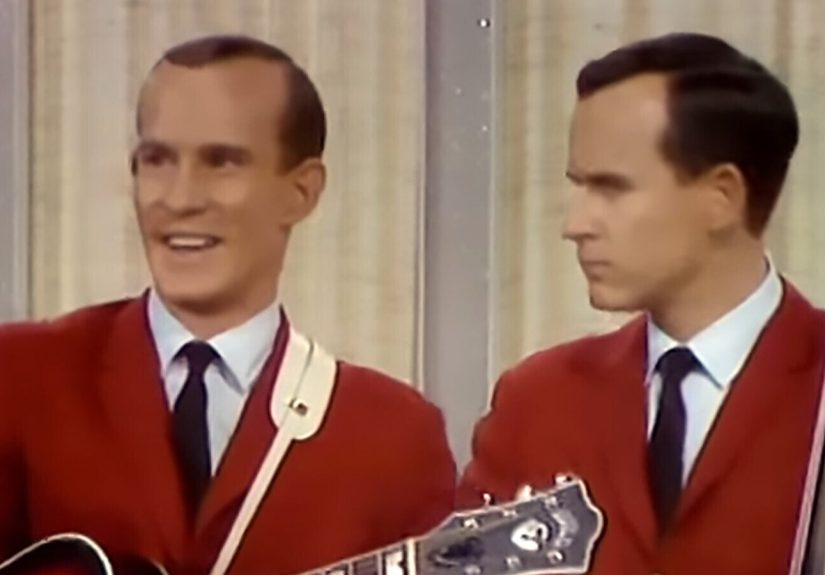
Tommy Smothers, who died on December 26, 2023, at age 86, was best known as one half of the Smothers Brothers, the musical comedy duo he formed with his younger brother, Dick Smothers. They looked harmless: two clean-cut brothers, one with a guitar, one with a bass, singing folk songs and bickering like Thanksgiving dinner had been turned into vaudeville. But beneath the sweet harmonies and sibling squabbles was something sharper. Tommy Smothers understood that comedy could sneak truth into the living room wearing a cardigan.
That is why The Smothers Brothers Comedy Hour, which aired on CBS from 1967 to 1969, still matters. It was not simply a funny variety show. It was a cultural argument with commercial breaks. It brought young audiences, rock music, antiwar sentiment, civil rights awareness, and countercultural wit into prime time. And then CBS canceled it. Not because nobody was watching. People were watching. That was the problem.
Who Was Tommy Smothers?
Thomas Bolyn Smothers III was born on February 2, 1937, in New York City. His early life carried more hardship than his later stage persona suggested. His father, an Army officer, died as a prisoner of war during World War II. Tommy, Dick, and their family eventually settled in California, where music became a serious part of the brothers’ lives.
Tommy and Dick began as folk performers during the late 1950s, a period when coffeehouses, acoustic guitars, and earnest harmonies were multiplying like unpaid parking tickets. But they quickly discovered that audiences laughed as much as they listened. Their act evolved into a brilliant comic imbalance: Dick played the patient straight man while Tommy played the innocent troublemaker, the lovable doofus who somehow kept stepping on society’s pressure points.
The formula worked because Tommy’s “dumb” character was not dumb at all. He was disruptive in the way children are disruptive: by asking simple questions adults would rather avoid. His famous complaint, “Mom always liked you best,” became a signature line, but his real gift was turning sibling rivalry into a delivery system for satire.
The Smothers Brothers Comedy Hour: A Variety Show With a Fuse Attached
When The Smothers Brothers Comedy Hour debuted on CBS in 1967, television variety shows were usually safe places. They had singers, sketches, dancers, guest stars, and jokes that rarely left a bruise. The Smothers Brothers arrived with the familiar shape of a variety show but filled it with unfamiliar electricity.
The guest list alone signaled that something new was happening. The show welcomed artists such as Pete Seeger, Joan Baez, Harry Belafonte, Cass Elliot, George Harrison, The Who, Buffalo Springfield, and other performers connected to youth culture and protest. That mattered because television was still the great American fireplace. If something appeared in prime time, it entered the national living room. The Smothers Brothers invited in musicians and comedians who did not always wipe their feet first.
The writers’ room was just as important. Future stars and major creative figures, including Steve Martin and Rob Reiner, worked in or around the show’s orbit. The humor mixed folk parody, political sketches, absurdity, and commentary. It was not a lecture disguised as comedy; it was comedy that trusted viewers to notice the smoke coming from the national kitchen.
Why CBS Clashed With Tommy Smothers
The conflict between Tommy Smothers and CBS was not one single argument. It was a long, exhausting tug-of-war over what could be said on television during one of the most tense periods in modern American history. The Vietnam War was dividing the country. The civil rights movement had changed public debate. Young people were questioning authority, and older institutions were trying to keep control of the microphone.
CBS censors objected to jokes, songs, sketches, and even phrases that now sound almost adorable in their alleged danger. The network worried about material related to sex education, religion, antiwar politics, and criticism of authority. In one famous example, folk singer Pete Seeger performed “Waist Deep in the Big Muddy,” a song widely understood as a criticism of leaders who keep marching people deeper into disaster. CBS initially refused to air the performance. The brothers pushed back, brought Seeger back, and the song eventually reached viewers.
That episode captures the larger story. Tommy Smothers was not merely trying to “be edgy,” a phrase that often means “please notice my leather jacket.” He was fighting for the idea that television could treat audiences like citizens, not just consumers of detergent commercials. He believed that comedy had a public purpose. It could question war. It could question politicians. It could question network executives, which network executives traditionally enjoy about as much as stepping barefoot on a rake.
What “Canceled” Meant in 1969
In April 1969, CBS canceled The Smothers Brothers Comedy Hour. The official dispute involved whether the brothers had delivered an episode in time for network review. But the deeper cause was obvious to nearly everyone watching the long-running battle: the show had become too politically troublesome for the network. It challenged the Vietnam War, supported civil rights, gave airtime to controversial voices, and refused to stay inside the cheerful little box where prime-time comedy was expected to live.
The cancellation was not a social media storm. It was not a temporary outrage cycle followed by a podcast tour. It was the removal of a successful national platform at a time when there were only three major television networks. Losing a CBS show in 1969 was not like losing one app and opening another. It was like being locked out of the town square while the mayor pretended the gate had always been closed.
The brothers sued CBS for breach of contract. They sought millions and were eventually awarded $775,000. The money mattered, but the symbolic victory mattered more. It confirmed that the network’s handling of the show was not simply business as usual. Tommy and Dick Smothers had been pushed out of a system that could tolerate comedy until comedy started reading the newspaper.
Tommy Smothers and the Politics of Being Funny
Tommy Smothers was often described as the more politically intense brother, and that reputation fits. Dick Smothers provided balance and timing; Tommy supplied the spark that kept finding dry grass. Yet what made Tommy effective was that he rarely sounded like a marble-statue activist. He sounded like your slightly confused cousin who accidentally exposed the flaw in the whole family story.
That style was powerful. Instead of shouting, Tommy played innocence against authority. He could make a censor look ridiculous simply by asking why a harmless phrase was forbidden. He could make war policy seem absurd by placing it next to folk music and sibling banter. He made the powerful explain themselves, and powerful people often prefer not to do that unless there is a podium, a flag, and no follow-up question.
The Smothers Brothers’ comedy also helped widen the path for later political television. Shows like Saturday Night Live, The Daily Show, and countless late-night monologues owe something to the idea that current events belong inside comedy. Tommy Smothers did not invent political humor, of course. Mark Twain would like a word. But he helped prove that political satire could survive on network televisionat least until it made the network too nervous.
The Guests Who Made the Show Feel Dangerous
One reason The Smothers Brothers Comedy Hour felt revolutionary was its connection to music. In the late 1960s, music was not background decoration. It was a political weather report. Folk singers, rock bands, and protest artists were helping young Americans process war, inequality, generational conflict, and the suspicion that grown-ups in suits did not always know what they were doing.
By booking artists associated with the counterculture, the Smothers Brothers turned a variety show into a cultural crossing point. Pete Seeger’s appearance was especially significant because he had been blacklisted during the anti-communist panic of earlier decades. Bringing him back to national television was not just a booking decision. It was a statement about who deserved to be heard.
The Who’s explosive performance, Joan Baez’s moral clarity, Harry Belafonte’s civil rights presence, and other guest appearances helped make the program feel alive in the moment. The show was not asking, “How do we avoid controversy?” It was asking, “What is the country already arguing about, and can we make that argument sing?” That question terrified some executives and thrilled many viewers.
Why Tommy Smothers Still Feels Relevant
Today, the word “canceled” is everywhere. Sometimes it describes real consequences. Sometimes it describes a famous person being mildly criticized while continuing to own several houses. Tommy Smothers’ story helps restore scale to the conversation. He was not merely scolded. He lost a major network show for insisting that comedy could challenge the official story.
His cancellation also reminds us that censorship does not always arrive wearing a villain costume. Sometimes it appears as “standards,” “timing,” “sponsor concerns,” or “we just need the material earlier.” Those reasons can be legitimate in some cases. But they can also become polite wrapping paper around institutional fear. Tommy Smothers understood the difference, and he kept pulling at the ribbon.
That is why his legacy belongs not only to comedy fans but also to anyone who cares about media independence. The question raised by The Smothers Brothers Comedy Hour is still alive: Who gets to decide what the public can hear? In the 1960s, the gatekeepers were broadcast networks and sponsors. Today, the gatekeepers include platforms, algorithms, advertisers, executives, audience mobs, and sometimes the performers themselves. The room has changed, but the argument is still standing by the punch bowl.
The Belated Recognition of a Television Pioneer
In later years, Tommy Smothers received some of the recognition that had been denied during the heat of battle. He was honored by the Television Academy, and the Smothers Brothers were inducted into the Television Academy Hall of Fame in 2010. The delay was almost comically appropriate. Television took decades to say, in effect, “You were right, but please don’t make a sketch about how long this took.”
Tommy also received a special Emmy honor in 2008, decades after the original show was pulled from CBS. The moment felt less like nostalgia and more like an overdue apology from history. By then, political comedy had become an expected part of American entertainment. The once-dangerous idea that comedians might comment on war, presidents, race, media, or hypocrisy had become normal enough to sell advertising packages around it.
That is the strange victory of Tommy Smothers. He lost the show, but the idea survived. In fact, the idea multiplied. Every comedian who uses humor to question authority is walking through a door that Tommy helped kick open, even if he kicked it open while pretending he did not know how doors worked.
Tommy and Dick: The Brother Act That Made Dissent Charming
It is impossible to understand Tommy Smothers without Dick Smothers. Their chemistry was the engine. Dick’s calm, handsome patience made Tommy’s interruptions funnier. Tommy’s mischievous energy made Dick’s exasperation feel earned. Together they turned brotherhood into structure: one pulled the thread, the other tried to keep the sweater from unraveling.
Their act worked because it contained affection. Even when the jokes were pointed, the relationship felt warm. That warmth made the politics more accessible. Viewers who might have resisted a direct sermon could laugh at Tommy’s confusion, then realize the joke had quietly rearranged the furniture in their heads.
The brothers continued performing for decades after the CBS controversy. Their later career included revivals, guest appearances, and live performances, but nothing matched the cultural force of their late-1960s run. That brief period was enough. Some artists build a legacy over hundreds of episodes. Tommy Smothers helped change television in three turbulent seasons.
Experiences and Reflections: What Tommy Smothers Teaches Us Now
Looking back at Tommy Smothers’ cancellation from today’s media landscape feels a little like opening an old toolbox and discovering that the hammer still works. The tools have changedstreaming platforms, social media feeds, viral clips, brand dealsbut the basic problem remains: people in power still get nervous when jokes travel faster than press releases.
One experience many modern viewers share is the feeling of discovering the Smothers Brothers long after their original broadcast and wondering, “This got them fired?” Some of the material seems gentle compared with today’s television. But that reaction misses the point. Comedy is judged by the limits of its own time. A joke that sounds mild now could be explosive when only a few networks controlled the national conversation and when criticizing the Vietnam War in prime time was treated as a threat to public order.
For writers, creators, teachers, and performers, Tommy Smothers offers a practical lesson: tone can be a Trojan horse. He did not always enter the conversation with a raised fist. Sometimes he entered with a guitar, a goofy grin, and a brotherly complaint. That approach allowed difficult ideas to reach people who might have changed the channel if the same message arrived as a lecture. Humor lowers the guard. Then truth walks in carrying a casserole.
There is also a lesson about persistence. Tommy Smothers did not win every battle with CBS. In fact, he lost the biggest visible one: the show was canceled. But cultural influence is not measured only by immediate victory. The brothers’ fight became a reference point in debates about censorship, political comedy, and network power. Their cancellation turned into evidence. Their absence said something. Sometimes being removed from the stage proves exactly why the stage matters.
Another modern experience connected to this topic is the confusion around free speech. People often treat it as a simple slogan, but Tommy’s story shows how complicated it becomes inside institutions. CBS was not the government, yet its control over access to a national audience gave it enormous power. That distinction matters. Free expression is not only a legal issue; it is also a cultural and corporate issue. A society can have constitutional protections and still develop habits that discourage uncomfortable speech.
For anyone creating web content today, Tommy Smothers’ career is a reminder not to confuse safety with value. Safe content may avoid complaints, but it rarely changes minds. That does not mean every article, video, or joke must swing a sword. Nobody needs a political manifesto hidden inside a brownie recipe. But when the topic calls for courage, the creator has to decide whether the goal is to be approved or to be useful.
Tommy Smothers chose usefulness. He used laughter to make room for dissent, and he paid a real price. His career invites us to ask better questions about today’s media culture. Are we protecting audiences, or underestimating them? Are we avoiding harm, or avoiding discomfort? Are we encouraging thoughtful disagreement, or rewarding silence with better scheduling?
The late Tommy Smothers was canceled back when that meant something because the platform he lost was enormous, the stakes were public, and the argument was about war, power, and who had permission to speak. His story endures because it is not merely about one show from the 1960s. It is about the recurring American struggle between comfort and honesty. And if Tommy taught us anything, it is that honesty sometimes works best when it arrives with a banjo, a punchline, and the expression of a man who knows exactly what he is doing while pretending he has no idea.
Conclusion: Tommy Smothers Was More Than a Funny Man
Tommy Smothers was a comedian, musician, television pioneer, free speech advocate, and professional irritant to nervous executives everywhere. His work with Dick Smothers helped transform the television variety show from harmless entertainment into a space where politics, youth culture, protest music, and satire could meet. CBS canceled the show, but it could not cancel the influence.
That is why the phrase “The Late Tommy Smothers Was Canceled Back When That Meant Something” lands with such force. His cancellation was not a branding inconvenience. It was a battle over whether mass media could handle dissent during a national crisis. More than fifty years later, the answer still matters. Tommy Smothers proved that comedy can be gentle without being weak, silly without being empty, and funny enough to make authority sweat through its suit.
Note: This article synthesizes verified public information from reputable U.S. media, entertainment, and institutional sources. Source links are intentionally omitted for clean web publication.