Table of Contents >> Show >> Hide
- Why This Is the Most Overlooked Spot for Fall Bulb Planting
- Why Bulbs Thrive Beneath Deciduous Trees and Shrubs
- The Best Bulbs for This Overlooked Planting Spot
- How to Plant Bulbs Under Trees the Right Way
- Design Ideas for Maximum Spring Color
- Mistakes That Ruin the Effect
- Why This Trick Works So Well in Real Home Landscapes
- Experience-Based Lessons From Gardeners Who Actually Try This
- Final Thoughts
If your spring garden feels a little sleepy until the perennials wake up, the problem may not be your bulb choices. It may be where you’re planting them. Most gardeners automatically think of front beds, neat rows along the foundation, or a few lonely tulips dropped into the lawn like confetti after a parade. Meanwhile, one of the smartest, prettiest, and most underused places in the yard gets ignored every fall: the ground beneath deciduous trees and large shrubs.
Yes, that spot. The one that looks bare in October, mildly awkward in November, and downright uninspiring in winter. In spring, though, it can turn into the garden’s opening act. And unlike some opening acts, it does not need a fog machine or a dramatic backstory.
Planting spring-flowering bulbs under deciduous trees is one of the easiest ways to create maximum spring color with minimal fuss. These bulbs get sunshine while the tree branches are still bare, then finish most of their work before the canopy fills in. Better yet, the shrubs and tree roots around them help make the display look natural rather than overly staged. The result is a landscape that feels layered, thoughtful, and far more exciting than a random clump of tulips standing alone like they missed the group text.
Why This Is the Most Overlooked Spot for Fall Bulb Planting
Under deciduous trees, many gardeners assume the conditions are too shady for bulbs. That sounds logical at first. Trees create shade. Bulbs need sun. Case closed, right? Not quite.
Spring bulbs live on a different schedule than most of the garden. Snowdrops, crocus, scilla, grape hyacinths, early daffodils, and other spring-flowering bulbs emerge when trees are still bare or only just beginning to leaf out. That means they can soak up sunlight in late winter and early spring, bloom beautifully, and begin storing energy for next year before the overhead canopy becomes dense.
In other words, they beat the shade to work.
This planting spot is also overlooked because it tends to be treated as “background space.” Gardeners focus on patio containers, porch beds, mailbox borders, and the front walk, while the open ground beneath a maple, crabapple, redbud, or lilac quietly does nothing for months. But that very emptiness is what makes it useful. It is a blank canvas at exactly the right season.
Why Bulbs Thrive Beneath Deciduous Trees and Shrubs
They get spring sun when they need it most
Spring bulbs rely on cool-season light. Beneath leafless trees, they can receive enough sun to grow, bloom, and recharge. This makes underplanting especially effective with trees that leaf out later in spring or cast light shade early in the season.
The display looks natural, not forced
Bulbs planted in drifts beneath shrubs and small trees often look as if they belong there. That matters. A mass of crocus or daffodils under a flowering crabapple feels effortless in the best way. It softens the landscape, makes the yard look more established, and creates the kind of spring color people assume took far more planning than it actually did.
Fading foliage is easier to hide
Letting bulb foliage yellow naturally is important for next year’s bloom, but nobody has ever said, “Wow, look at those beautifully collapsing daffodil leaves.” Under shrubs, around emerging perennials, or near groundcovers, that fading foliage is much less obvious. The later growth of nearby plants helps disguise the messier stage without cutting the leaves too early.
It extends color into ignored parts of the yard
That patch beneath the tree that usually says “nothing to see here” can suddenly glow in white, blue, yellow, or purple while the rest of the garden is still stretching and asking for coffee. This gives you a fuller landscape in early spring and spreads the color beyond the usual flower beds.
The Best Bulbs for This Overlooked Planting Spot
Not every bulb is equally happy under trees, but many excellent spring-flowering bulbs are perfect for this kind of planting. The best choices are early bloomers, reliable returners, and varieties that can handle light shade once the season progresses.
Top picks for under deciduous trees
- Snowdrops for very early white blooms and woodland charm.
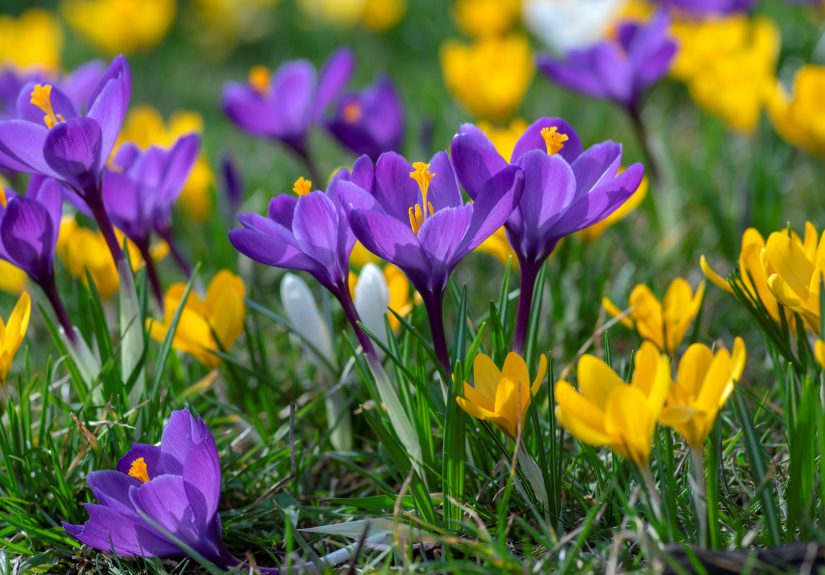
- Crocus for early color in purple, yellow, and white.
- Scilla for sheets of blue that naturalize beautifully.
- Glory-of-the-snow for cheerful starry blooms.
- Grape hyacinths for dense clusters and dependable spread.
- Early daffodils for stronger height, easy naturalizing, and better resistance to deer and rodents than tulips.
- Leucojum and certain alliums for gardeners who want something slightly less predictable.
If you want the biggest return with the least drama, daffodils are the workhorses. They naturalize well in many regions, offer strong spring color, and are less likely to become an all-you-can-eat buffet for local wildlife. Tulips can still be used, but in many home landscapes they are treated more like annuals unless conditions are excellent and critters are unusually polite.
How to Plant Bulbs Under Trees the Right Way
Planting bulbs under deciduous trees is simple, but it works best when you avoid the “stab random holes and hope for greatness” method.
1. Choose the right tree
Select a deciduous tree or shrub, not an evergreen. Evergreens block light year-round, which defeats the whole strategy. Good candidates include crabapple, redbud, serviceberry, dogwood, lilac, and many maples. If the root zone is extremely dense and dry, pick smaller bulbs and focus on the outer edge of the canopy rather than the trunk area.
2. Check drainage first
Bulbs hate soggy soil. If water tends to sit there in winter or spring, improve the soil with compost and choose a better-draining area. Bulbs want moisture while growing, but they do not want to sit in wet soil long enough to regret their life choices.
3. Plant in generous drifts
Skip straight rows. Bulbs almost always look better in loose clusters, broad sweeps, or irregular masses. Toss a handful onto the soil and plant them roughly where they land if you want a more naturalized effect. That informal layout works especially well under trees, where nature already provides the structure.
4. Follow proper depth and spacing
A dependable rule is to plant bulbs about two to three times as deep as the bulb is tall. Large bulbs like daffodils and tulips usually go deeper than small bulbs like crocus or scilla. Space them closely enough for impact but not so tightly that they are fighting for elbow room by year three.
5. Plant with the pointy side up
Bulbs are not impossible to figure out, but they do appreciate being right-side up. The pointed end generally faces upward, while the flatter root plate goes down.
6. Water after planting, then mulch lightly
Watering helps settle the soil and encourages root growth. A light mulch layer can moderate soil temperature and moisture, but do not bury tiny bulbs under a blanket thick enough to qualify as furniture.
Design Ideas for Maximum Spring Color
The beauty of this overlooked spot is not just that bulbs survive there. It is that they can look spectacular there.
Create a bloom sequence
Mix early, mid-, and late-spring bulbs so the area changes over several weeks instead of peaking all at once. Snowdrops can start the show, crocus and scilla can follow, and early to midseason daffodils can carry color deeper into spring.
Use one dominant color family
If you want the space to look polished, stick with a palette. White and blue feels elegant beneath flowering trees. Yellow and cream brighten a shady lawn edge. Purple and magenta create a richer woodland-style look.
Pair bulbs with later-emerging perennials
Hostas, daylilies, catmint, hardy geraniums, hellebores, and ferns can help cover the aging foliage as the season moves on. This is one of the smartest design tricks for keeping a bulb planting attractive after the blooms fade.
Use the canopy edge, not just the trunk zone
The outer ring beneath a tree often has better light and less root competition than the soil right near the trunk. That edge is frequently the sweet spot for planting bulbs in fall for maximum spring color.
Mistakes That Ruin the Effect
Even a brilliant bulb plan can go sideways if a few common mistakes sneak in.
- Planting under evergreens: too much shade, too little payoff.
- Ignoring drainage: wet soil can rot bulbs before spring arrives.
- Using tiny scattered numbers: three crocus do not make a “display”; they make a suggestion.
- Cutting foliage too soon: bulbs need those leaves to store energy for next year.
- Choosing only one bloom time: the show ends fast if everything flowers together.
- Forgetting animal pressure: if deer, squirrels, or voles are regular visitors, lean harder on daffodils, snowdrops, alliums, and other less tempting choices.
Why This Trick Works So Well in Real Home Landscapes
Garden advice is often full of idealized photos that look as if someone gently misted the flowers before sunrise and then paid the sun to shine at a flattering angle. Real yards are messier. They have tree roots, awkward borders, patchy grass, and those “I’ll fix that later” zones that somehow survive several seasons untouched.
That is exactly why this bulb strategy works. It turns a commonly ignored area into a seasonal highlight without requiring a total landscape overhaul. You are not building a formal parterre. You are simply taking advantage of a timing trick nature already offers: spring light before leaf-out.
It also makes the whole yard feel more connected. Instead of all the spring color being trapped in one front bed, it moves beneath trees, skirts shrubs, and pops up where people do not expect it. That surprise is part of the charm. A garden always feels more alive when color appears in layers rather than in one obvious place.
Experience-Based Lessons From Gardeners Who Actually Try This
In real gardens, one of the first things people notice after planting bulbs beneath deciduous trees is how much brighter the entire yard feels in early spring. Areas that looked empty for years suddenly become the place everyone comments on first. A front lawn may still be brownish. The perennial bed may still be half asleep. But under a leafless dogwood or crabapple, little rivers of color show up and make the garden look awake weeks earlier than expected.
Another common experience is surprise at how natural the planting looks. Gardeners often worry that bulbs will seem too formal or too “catalog perfect.” Under trees, that rarely happens. Crocus appear to float through the grass edge. Scilla can create a soft blue haze. Daffodils planted in broad drifts look less like a rigid flower bed and more like the landscape simply decided to become cheerful overnight.
There is also a practical side that people learn quickly. The first year, many gardeners are tempted to plant too sparsely. They tuck in five bulbs here, seven there, and then wonder why the result looks underwhelming. By the second fall, they usually go bigger. Ten becomes twenty. Twenty becomes fifty. This is not garden greed. It is pattern recognition. Bulbs under trees look best when planted generously enough to read as one visual statement instead of several scattered punctuation marks.
Gardeners also learn which bulbs earn permanent status. Tulips may provide a gorgeous first spring, but in many yards they get nibbled, fade out, or return unevenly. Daffodils, grape hyacinths, snowdrops, and small naturalizing bulbs are often the ones people end up trusting most. They are the reliable friends of the spring garden: not always flashy, but almost always there when you need them.
A very real experience is dealing with the post-bloom foliage stage. The flowers are dazzling, then the leaves linger while the gardener debates whether patience is still a virtue. Over time, people figure out that pairing bulbs with hostas, daylilies, ferns, or other later growers solves much of the visual problem. Once those companion plants expand, the yellowing leaves fade into the background instead of becoming the whole story.
Many gardeners also discover that this planting method changes how they see “problem areas.” The space under a tree stops being a bare patch to mulch and forget. It becomes an opportunity. The outer edge of a shrub border becomes a place for spring fragrance. The side yard that nobody noticed in March becomes worth a second walk-through with coffee in hand.
Perhaps the most satisfying experience is the long game. A good under-tree bulb planting often improves over time. Clumps get fuller. Drifts look more settled. The display becomes something the garden is known for. And every fall, planting a few more bulbs there feels less like a chore and more like writing a friendly note to your future self: “Hang in there. Spring is on the schedule.”
Final Thoughts
If you want maximum spring color, do not just ask which bulbs to plant. Ask where they will have the biggest impact. In many home landscapes, the most overlooked spot to plant bulbs in fall is under deciduous trees and large shrubs. It gives spring bulbs the light they need at the right time, creates a more natural display, helps hide fading foliage, and brings color to parts of the yard that otherwise do very little in early spring.
It is simple, smart, and surprisingly transformative. So this fall, before you fill another front border out of habit, look under the trees. Your best spring show may have been waiting there the whole time.