
Table of Contents >> Show >> Hide
- What Are Stainless-Steel Countertops, Really?
- Pros of Stainless-Steel Countertops
- Cons of Stainless-Steel Countertops
- How Much Do Stainless-Steel Countertops Cost?
- Choosing the Right Stainless: Grade, Gauge, and Style
- Maintenance: How to Keep Stainless Steel Looking Great
- Is Stainless Steel Right for Your Kitchen?
- Conclusion: The “Pro Kitchen” Surface With a Real-Life Personality
- Real-World Experiences: What Living With Stainless Steel Is Actually Like (Extra )
- The first week: “Why is everything on my counter… visible?”
- The first month: the patina starts to feel normal (and kind of nice)
- Cooking habits change in small, practical ways
- Noise is realbut it’s manageable
- Entertaining: stainless becomes the ultimate party surface
- The long game: the best owners stop fighting the material
Stainless-steel countertops have a certain “yes, chef” energy. They’re sleek, serious, and they make even a
humble peanut-butter sandwich feel like it should come with a tasting menu. But stainless steel isn’t just for
restaurants and cooking shows where everyone somehow has time to reduce a sauce.
In real homes, stainless-steel countertops can be incredibly practicaldurable, heat-resistant, hygienic, and
unapologetically modern. They can also be… honest. Like, “I see your fingerprints, and I’m going to keep
seeing them” honest. If you’re thinking about going metal, this guide breaks down the pros, the cons, and
the real costsplus what it’s actually like to live with stainless steel day to day.
What Are Stainless-Steel Countertops, Really?
Most residential stainless-steel countertops are made from a sheet of stainless steel (commonly 304-grade in home
kitchens) wrapped over a sturdy substrate such as plywood or MDF. That substrate matters because it helps reduce
flexing and dents and can quiet down some of the “clang!” factor that comes with metal surfaces.
Stainless can be fabricated with a variety of finishes (brushed/satin, matte, or polished), edge profiles, and
details like integrated sinks, backsplashes, drainboards, and seamless corners. In other words: you’re not just
choosing a “material,” you’re choosing a whole countertop system.
Pros of Stainless-Steel Countertops
1) Built for heat, spills, and real cooking
Stainless steel laughs in the face of hot pans. It’s highly heat-resistant, and unlike many stone or solid-surface
materials, it doesn’t need babying when you set down something warm. It also resists water damage and most common
kitchen stains because it’s nonporousliquids don’t soak in the way they can with more absorbent surfaces.
2) Nonporous = more hygienic, less drama
If you’re the kind of person who worries about raw chicken juice making a cameo appearance in your next salad,
stainless is comforting. Its nonporous surface doesn’t harbor residue the same way porous materials can, and it’s
easy to sanitize with routine cleaning. Many homeowners love it for busy households where the kitchen functions as
a snack bar, homework station, and science-lab-adjacent zone.
3) Seamless, integrated sink options
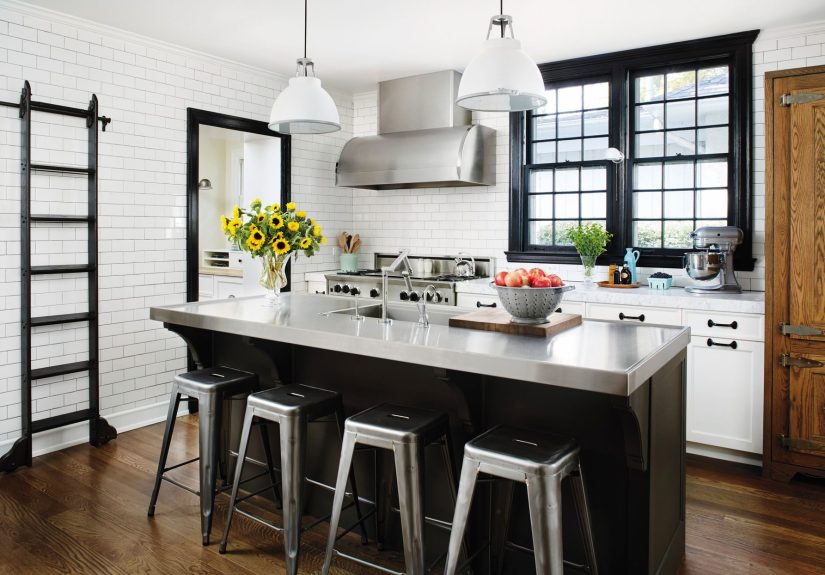
One of stainless steel’s biggest flexes is the ability to fabricate an integrated sink and countertop as one
continuous piece. Fewer seams means fewer crumb traps and fewer places for moisture to lurk. It’s also a
design-forward choice: clean lines, minimal transitions, and a pro-kitchen look that can still feel warm when
paired with wood cabinetry or softer lighting.
4) Tough enough to last decades
In the long run, stainless steel can be a “buy once, cry once” surface. It’s not immune to wear (more on that in a
second), but it’s not prone to cracking like some stone can be. You won’t chip it with a dropped pot the same way
you might with certain brittle materials. Many people view stainless as a long-term investment, especially for
heavy-use kitchens.
5) A finish that can evolve into a forgiving patina
Here’s a weird-but-true stainless-steel benefit: it can look better once it has a little “life” on it. Brushed and
matte finishes tend to develop a soft patina over time, which can make new scratches less obvious because they
blend into a consistent grain. If you’re someone who thinks a kitchen should look used (in a charming way,
not a “please call a hazmat team” way), stainless can be your soulmate.
Cons of Stainless-Steel Countertops
1) Scratches and dents happen (and yes, you’ll notice at first)
Stainless steel is durable, but it’s still metal. It can scratch, and it can dent if something heavy hits it
hardespecially if the steel is thinner. Many homeowners get used to fine scratches as part of the countertop’s
character, but if you want a surface that stays pristine-looking without effort, stainless may feel like a truth
serum you didn’t ask for.
2) Fingerprints and smudges are basically a hobby
Shiny stainless shows fingerprints. Brushed stainless shows less, but it still shows. If you have kids,
pets, or a partner who touches things with hands (so… all households), you’ll be wiping it down more often than a
countertop with a busy pattern.
3) Noise: the “professional kitchen soundtrack” is real
Metal can amplify sound. Set down a pan, clink a spoon, drop an ice cubestainless will let the whole house know
you’re living your best culinary life. Choosing a thicker gauge and a quality substrate helps, but stainless is
rarely the quietest option.
4) It can feel cold or “too industrial” in some designs
Stainless steel reads modern, utilitarian, and commercial. That’s a selling point for some people and a dealbreaker
for others. If your vibe is “cozy cottage,” stainless can still workbut you’ll want to balance it with warm
materials (wood, textured tile, natural fabrics, and lighting that doesn’t feel like an operating room).
5) Usually not a DIY-friendly install
Stainless-steel countertops are typically fabricated to exact dimensions, including cutouts and edge details.
Precision matters. Most projects require professional fabrication and installation, especially if you’re doing an
integrated sink, welded seams, or custom edges. Translation: you’ll likely pay more for labor than you would with
something like butcher block.
How Much Do Stainless-Steel Countertops Cost?
Stainless-steel countertop pricing varies widely because so much depends on customization, gauge (thickness),
finish, edge details, and whether you’re buying prefabricated pieces or commissioning a custom fabrication.
Generally, installed costs commonly land in the $70–$225 per square foot range, with many sources
placing typical midrange projects around the middle of that span.
Typical price ranges you’ll see
- Prefabricated / standard pieces: often around $70–$85 per sq. ft. installed, depending on size and local labor.
- Custom residential fabrication: frequently $140–$215 per sq. ft. installed, especially with specialty edges or sink integration.
- “Real-world” installed ranges: commonly quoted as roughly $75–$150 or $80–$200 per sq. ft. installed for many residential projects (with higher-end work pushing beyond that).
- Total project ballpark: a typical kitchen might land around $2,400–$8,000+ depending on square footage, customization, and region.
Cost breakdown: what you’re paying for
When someone quotes stainless-steel countertop costs, you’re usually seeing a bundle of:
material + fabrication + finishing + delivery + installation. The final price can jump quickly
based on these variables:
1) Gauge (thickness)
Stainless steel thickness is often described in gauges. In plain English: lower gauge = thicker steel = higher cost
and better dent resistance. Many fabricators recommend 14- or 16-gauge for durability in heavy-use
kitchens, while thinner options like 18- or 20-gauge are more budget-friendly but more prone to
showing impacts and “oil canning” (that slightly wavy look under certain lighting).
2) Finish (brushed vs. polished)
A brushed or satin finish is popular for homes because it’s more forgivingfine scratches and
smudges blend into the grain. A polished, mirror-like finish looks dramatic but shows everything,
including the fact that you breathed near it.
3) Edge profile and details
Simple square edges are usually more affordable. Custom edge treatments, thicker-looking built-up fronts, and
specialty corners add labor time (and labor is where a lot of the money goes). Extra features like a rolled edge,
thicker apron, or decorative seams will raise costs.
4) Integrated sink, backsplash, and drainboards
This is where stainless steel shinesand where quotes climb. An integrated sink can be worth it for hygiene and
aesthetics, but it requires more fabrication and welding. Adding a stainless backsplash, side splashes, or a
drainboard detail can also increase total cost.
5) Seams and layout complexity
Large or L-shaped kitchens may require seams. High-quality welding and finishing can make seams nearly invisible,
but it takes skill and time. More corners, more cutouts, and more custom fitting = more cost.
6) Your location and labor rates
Fabrication and installation pricing can vary significantly by region. Urban areas and high-cost markets typically
land on the upper end. Also: removing old countertops, plumbing adjustments, and disposal can add line items you
don’t see in “per square foot” averages.
Choosing the Right Stainless: Grade, Gauge, and Style
304 vs. 316 stainless steel (and why most homes are fine with 304)
In many residential kitchens, 304 stainless steel is the go-to choice because it offers strong
corrosion resistance for everyday cooking environments at a more reasonable price. 316 stainless
has enhanced corrosion resistance (especially around salt and harsh chemicals) and can make sense in coastal
environments or demanding commercial-style usebut it’s typically more expensive. For most households, 304 hits the
sweet spot.
Brushed finishes are your friend
If your goal is a countertop that looks good on a random Tuesdayafter breakfast, before you’ve cleanedchoose a
brushed/satin finish. It’s the “low-drama” option in a material that can otherwise be a little… honest about your
lifestyle.
Consider a “stainless zone” instead of an all-stainless kitchen
Want the pro benefits without committing your entire kitchen to a metal album cover? Many homeowners use stainless
for an island, a baking station, or the area around the range, and pair it with warmer materials elsewhere
(butcher block, quartz, or stone). It’s a practical and design-savvy compromise.
Maintenance: How to Keep Stainless Steel Looking Great
Stainless steel is easy to clean, but it rewards the right technique. The basics are simple:
use mild soap, wipe with a soft cloth, rinse, and dry. Drying matters because it helps prevent
water spots and streaks.
Do: a simple daily routine
- Wipe crumbs and spills with warm water and a drop of dish soap.
- Use a microfiber cloth and wipe with the grain for a cleaner finish.
- Rinse with clean water if you used soap, then dry to prevent streaking.
Don’t: bring out the “strong stuff”
Avoid abrasive pads, steel wool, and harsh chemicals like bleach or chlorine-based cleaners. These can scratch the
surface or damage the protective layer, leading to discoloration or corrosion over time. If you want stainless to
stay stainless, keep the cleaning approach gentle.
What about scratches?
Fine scratches are normal, especially in high-use kitchens. Many people find they blend into the brushed grain as
the surface develops a consistent patina. If a scratch really bothers you, talk to your fabricator about the best
approach for your finishbecause the wrong abrasive “fix” can create a shiny patch that stands out more than the
scratch did.
Is Stainless Steel Right for Your Kitchen?
Stainless-steel countertops tend to make the most sense if you:
- Cook often and want a surface that can take heat and mess without staining.
- Love a modern or industrial look (or want to balance it with warm materials).
- Care about hygiene and prefer nonporous, easy-to-sanitize surfaces.
- Can tolerate (or even enjoy) patinathe idea that the kitchen will look “lived in.”
Stainless may be a tougher fit if you:
- Want a countertop that hides every smudge without effort.
- Have a very quiet, soft-material home aesthetic (unless you plan to balance it carefully).
- Prefer a DIY-friendly countertop project.
- Know dents and scratches will make you sad in a deep, personal way.
Conclusion: The “Pro Kitchen” Surface With a Real-Life Personality
Stainless-steel countertops are durable, hygienic, and heat-resistantbasically the overachiever of the countertop
world. They’re also not shy about showing fingerprints and wear, which is either a dealbreaker or a design feature
depending on your personality.
If you choose the right gauge, a forgiving finish, and a layout that fits your home, stainless can be a
long-lasting, high-functioning surface that ages with character. And if you’re still unsure? Consider using it as
an accentone stainless “work zone” can deliver most of the benefits without turning your whole kitchen into a
restaurant prep station (unless that’s your dream, in which case: live your truth).
Real-World Experiences: What Living With Stainless Steel Is Actually Like (Extra )
People tend to imagine stainless-steel countertops in one of two ways: either (1) a spotless chef’s kitchen where
everything is perfectly organized and nobody owns plastic Tupperware, or (2) a cold, clinical surface that makes
your home feel like a surgical suite. Real life is… deliciously in the middle.
The first week: “Why is everything on my counter… visible?”
The most common early surprise is how quickly stainless reflects daily life. You’ll notice fingerprints from
opening a bag of chips. You’ll see streaks from wiping too fast. If you chose a shinier finish, your counter may
briefly become a mood ring for your cleaning habits. The good news is that the learning curve is short: once you
switch to microfiber and a quick wipe-with-the-grain routine, it gets dramatically easier.
The first month: the patina starts to feel normal (and kind of nice)
Many homeowners report a turning point a few weeks in: the countertop starts to look less “brand new showroom” and
more “working kitchen.” Fine scratches appearespecially near the sink and prep areasbut on brushed finishes they
usually blend into the grain. Instead of chasing perfection, people often settle into a rhythm: keep it clean,
accept that it’s a tool, and enjoy how forgiving it is with spills and heat.
Cooking habits change in small, practical ways
Stainless steel can subtly encourage more confident cooking. People stop panicking about hot pots. They’re more
willing to roll dough, trim meat, or do big messy prep because cleanup is straightforward. That said, most still
use cutting boardsnot because stainless is fragile, but because knives and cutting boards are a relationship worth
protecting (and because slicing directly on metal is not the soothing sound your nervous system needs).
Noise is realbut it’s manageable
The “clang factor” shows up most in kitchens with lots of metal cookware and open floor plans. A thicker gauge, a
solid substrate, and good installation help. Some people also naturally adapt by setting down pans more gently or
using silicone trivets (which also helps prevent the occasional “hot pot ring” momentyes, stainless is
heat-resistant, but your countertop still deserves a little respect).
Entertaining: stainless becomes the ultimate party surface
For gatherings, stainless is almost unfairly convenient. Spills wipe up fast. Ice buckets don’t cause panic. Hot
serving dishes are less stressful. The countertop can become a buffet line without you hovering like a lifeguard.
Guests might even comment on how “professional” it looksbecause stainless has that effect, even if your signature
dish is store-bought guacamole.
The long game: the best owners stop fighting the material
The happiest stainless-steel countertop owners tend to share a mindset: stainless is a work surface, not a
museum display. If you can embrace the evolutionlight scratches, changing sheen, the occasional smudgeit becomes
one of the most practical countertop choices you can make. And if you can’t? That’s not a character flaw. It just
means you might be happier with a surface that hides life better. Stainless doesn’t hide life. Stainless says,
“Congrats on having hands.”







 Close
Close