
Table of Contents >> Show >> Hide
- The Rocket Behind the “Beep-Beep”
- Why an ICBM Became a Satellite Launcher
- How the R-7 Worked (Without Requiring You to Become a Rocket Engineer)
- Launch Night: October 4, 1957
- The Shockwave in the United States
- Legacy: The Rocket Family That Refused to Retire
- Common Myths (and Better Stories)
- Hands-On Experiences: Bring Sputnik’s Rocket to Life
- Conclusion
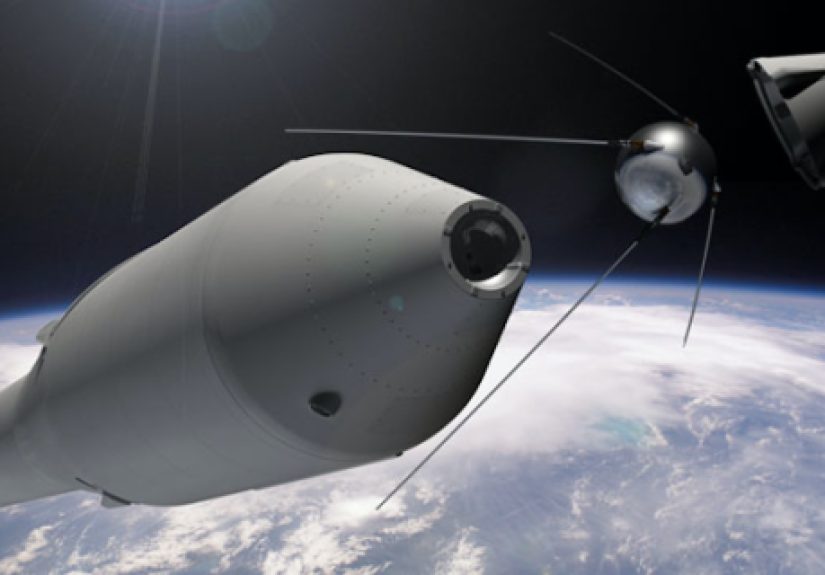
On paper, it was “just” a satellite: a shiny metal sphere with radio transmitters that went beep-beep like an overeager microwave. In reality, Sputnik was a starting pistol. When the Soviet Union put Sputnik 1 into orbit in October 1957, the world didn’t just hear a signalit heard a message: we can throw things into space. And if you can throw things into space, people immediately start wondering what else you can throw. (Humans are consistent like that.)
The star of this story isn’t the beach-ball-sized satellite. It’s the rocket that lofted it: a machine born as a Cold War weapon, repurposed into the launcher that kicked off the Space Race. Meet the R-7 “Semyorka”the rocket family that carried Sputnik into history and then refused to retire for the next several decades.
The Rocket Behind the “Beep-Beep”
Name game: R-7, Semyorka, and Sputnik-PS
The rocket that launched Sputnik wasn’t designed as a “space rocket” the way we picture modern launch vehicles. It began life as the R-7, the world’s first intercontinental ballistic missile (ICBM), built to deliver a nuclear payload across continents. “Semyorka” literally nods to “seven” (as in R-7), and in the West it later received a NATO reporting name. But for Sputnik, the configuration most often referenced is the Sputnik-PS (8K71PS)a variant closely based on the R-7 missile hardware.
If all of this sounds like alphabet soup, that’s because early rocketry was a blend of military programs, engineering bureaus, and secretive naming conventions. The simple takeaway: Sputnik rode a missile-derived launch vehicle that had enough power to reach orbital speedabout 17,500 mphmeaning the satellite could keep falling “around” Earth instead of falling “down.”
Why an ICBM Became a Satellite Launcher
International Geophysical Year lit the fuse
The mid-1950s weren’t just about geopolitics; they were also about science. The International Geophysical Year (IGY) (1957–1958) encouraged global scientific cooperationironically providing perfect timing for two rivals to race each other in public. Both the United States and the Soviet Union talked about launching satellites as part of IGY-era research. But talk is cheap; orbital launches are not.
Soviet planners originally aimed for a more sophisticated scientific satellite, but schedules slipped. So they did something brilliantly pragmatic: they built a simpler satelliteSputnik 1because the main challenge wasn’t fancy instruments. It was proving the rocket could do the job. In other words, the first goal was: get something to orbit, then worry about the deluxe features later.
The strategic subtext nobody could ignore
Sputnik’s public story was scientific progress. Its shadow story was deterrence and capability. A rocket strong enough to launch a satellite also hinted at the ability to launch long-range missiles. That perception mattered enormously in the United States, where Sputnik triggered anxiety about a technology gap, defense vulnerability, and national prestige. The satellite may have been small, but the implications were enormous.
How the R-7 Worked (Without Requiring You to Become a Rocket Engineer)
A rocket built like a bouquet
The R-7’s most recognizable feature is its layout: a central core with four strap-on boosters clustered around it. Instead of a clean “one tube on top of another” look, it resembles a bundled arrangementlike the rocket equivalent of “I brought enough snacks for the whole class.”
This configuration helped generate massive thrust at liftoff. Early heavy payloads (including bulky warhead designs of the era) demanded big lifting power. The Soviets solved it with a design that was powerful, dramatic-looking, and destined to become iconic.
Propellants, engines, and staging
The R-7 used liquid oxygen (LOX) as oxidizer and kerosene as fuelclassic, high-performance propellants that show up again and again in rocket history. LOX/kerosene engines produce strong thrust and reliable performance, but they’re also a logistical headache: LOX is cryogenic, so it must be handled carefully and loaded close to launch time.
During ascent, the strap-on boosters burn and separate, and the central core continues firing. To a non-engineer, staging is simple: when a part is done doing useful work, you drop it to reduce weight. That’s how rockets cheat physics (legally) by shedding mass as they climb.
Early reliability: the quiet villain of every “first”
Early rocket development was a parade of partial successes and dramatic failures. The R-7 went through test flights and setbacks before it became good enough to attempt an orbital launch. This is normal in aerospace, but it’s rarely shown in the highlight reel. When Sputnik finally went up, it wasn’t a casual Saturday projectit was the payoff of repeated testing, iteration, and nerve.
Launch Night: October 4, 1957
From Baikonur (then “Tyuratam”) to orbit
Sputnik 1 launched on October 4, 1957, from what we now know as the Baikonur Cosmodrome (the site was long described in more ambiguous terms in early Western reporting). Once the satellite separated and achieved orbit, its transmitters sent the now-famous radio pulses that could be picked up by listeners around the worldan early example of a global audience for a space event.
A key point: the satellite’s signal wasn’t just a novelty. It was proof. A beeping satellite meant the rocket had achieved the precise combination of speed, altitude, and trajectory needed for orbit. And orbit meant capabilitytechnical, industrial, and organizational.
What Sputnik carriedand what it proved
Sputnik 1 wasn’t loaded with cameras or complex sensors. Its biggest payload was credibility. It demonstrated that the Soviet Union could build a launch vehicle capable of orbital insertion. It also demonstrated that the R-7 platform wasn’t merely theoretical. It worked.
The launch created a new kind of scoreboardone based on milestones like “first satellite,” “first animal,” “first human,” and eventually “first footprints on the Moon.” Those milestones weren’t just science; they were diplomacy, propaganda, and national identity compressed into a countdown.
The Shockwave in the United States
The “Sputnik crisis” was about psychology as much as technology
In the United States, Sputnik triggered fear, awe, and a sudden urgency. Americans worried about defense, education, and whether the country was falling behind in science and engineering. It’s hard to overstate how deeply Sputnik seeped into public consciousness: it wasn’t only a foreign achievement; it felt like a personal wake-up call delivered from orbit.
And it wasn’t just the public. Policymakers understood the symbolic power of space. If the United States wanted to lead in technology, it needed an organized national effortsomething bigger than a scattered collection of programs competing for resources.
Vanguard vs. Explorer: the scramble to answer
The U.S. had satellite plans, but plans are not orbits. One of the most public moments in the early U.S. response was the failure of Vanguard TV-3 in December 1957an event witnessed by media and remembered as a painfully visible stumble. But the story didn’t end there. Within weeks, the U.S. successfully launched Explorer 1, which helped restore momentum and produced valuable scientific findings.
If Sputnik was the shock, the American response was a lesson in resilience: political pressure accelerated funding, reorganized priorities, and pushed the U.S. toward a more unified space strategy.
NASA is bornand Sputnik is in the birth certificate
One of Sputnik’s most lasting impacts was institutional. The United States created a civilian space agencyNASAin 1958, reshaping how the nation coordinated research, development, and exploration. The Space Race quickly became a structured competition with clear goals, large budgets, and intense public attention.
Legacy: The Rocket Family That Refused to Retire
From Sputnik to Gagarin to “still flying”
The R-7 story doesn’t stop with Sputnik. The R-7 design lineage led to launch vehicles that carried major Soviet milestones, including early human spaceflight. Over time, the family evolved into variants that became workhorses of the Sovietand later Russianspace program. In a world where technology becomes obsolete at the speed of a smartphone upgrade, the R-7 family is a rare exception: a foundational architecture that endured through decades of refinement.
That endurance is part of why the “rocket that launched Sputnik” matters beyond its first mission. It wasn’t a one-off stunt. It was the beginning of an ecosystemlaunch vehicles, infrastructure, manufacturing, training, and mission planningthat shaped global spaceflight.
What the Space Race learned from one launch
Sputnik’s rocket taught superpowers (and later, private companies) a few lasting lessons:
- Rockets are systems, not just enginesindustry, testing, launch sites, and people matter as much as hardware.
- “First” is a multipliera single milestone can reshape budgets, education priorities, and national strategy.
- Space is politicaleven when the payload is “just science.”
- Reliability winsthe most celebrated rockets are often the ones that quietly work, again and again.
Common Myths (and Better Stories)
-
Myth: Sputnik was mainly about the satellite.
Better story: Sputnik was about the rocketdemonstrating a launch capability with huge strategic implications. -
Myth: The U.S. had no idea it was coming.
Better story: U.S. leadership understood the possibility, but the public impact was still explosiveSputnik made the abstract feel immediate. -
Myth: The Space Race was purely military.
Better story: It was military, scientific, cultural, and educationalspace became a stage where entire societies competed. -
Myth: Old rockets are irrelevant now.
Better story: The engineering choices of early launcherspropellants, staging, guidancestill echo in modern designs.
Hands-On Experiences: Bring Sputnik’s Rocket to Life
You don’t need a launch pad in Kazakhstan to feel what Sputnik’s rocket meant. You just need a little curiosity, a few smart activities, and permission to be amazed by mid-century engineering that managed to be both clunky and brilliant. Here are experience-based ways to connect with the rocket that started the Space Racewhether you’re a history nerd, a builder, a student, or someone who just likes dramatic machines that go up.
1) Hear the “beep” the way the world did
One of the most surreal parts of Sputnik is how accessible its signal felt. People listened. Amateur radio operators tracked. Newspapers reported on passes. Try recreating that vibe by listening to archived recordings or modern recreations of Sputnik’s radio pulses, then imagine what it would be like to hear that sound in 1957when “space” wasn’t a place we casually sent weather satellites, internet relays, and telescopes. It was a mystery above your head that suddenly had a voice.
2) Visit the hardwareor at least its close relatives
If you ever make it to a major air-and-space museum, spend time with Soviet-era engines, models, and artifacts. Even when you aren’t staring at the exact Sputnik launch vehicle, you’re seeing the same design philosophy: clustered power, practical propellants, and an obsession with making the math behave. Museum labels can be deceptively short, so treat them like trailersthen follow the threads: the engines, the strap-on concept, the launch infrastructure, and the people behind it.
3) Build a model rocket and learn the real lesson: staging is everything
Building a model rocket won’t teach you how to design an ICBM (good!), but it will teach you the core logic of rocketry: mass matters, stability matters, and timing matters. If you want a Sputnik-flavored twist, focus on the idea of “getting something to orbit” by optimizing what you carry. Sputnik 1 succeeded partly because it was simple. Try a “minimal payload challenge” in your model-building mindset: what’s the lightest, cleanest design that still achieves the goal?
4) Run a Cold War headline exercise
Sputnik wasn’t experienced as a technical paperit was experienced as a headline. Grab a few historic front pages or summaries, then write two short “reaction memos” as if you’re advising leaders in 1957: one from a scientific viewpoint (opportunity, discovery, prestige), one from a security viewpoint (capability, deterrence, vulnerability). The point isn’t to be dramatic (though you can be). It’s to feel how one rocket launch forced nations to think differently, fast.
5) Compare the R-7 to today’s launchers (and notice what didn’t change)
Modern rockets look sleeker, but they still wrestle with the same fundamentals: maximizing thrust, managing mass, staging efficiently, and controlling a controlled explosion with absurd precision. The R-7’s bundled booster look may seem old-school, yet clustering engines and modularity are still relevant ideas. When you compare launch vehicles across eras, the most fun discovery is that the “future” still relies on a handful of timeless principlesjust executed with better materials, computers, and manufacturing.
Taken together, these experiences do something important: they turn Sputnik from a trivia fact into a felt reality. The rocket that launched Sputnik wasn’t just a machine that went upit was a machine that changed what people believed was possible, and what they feared was imminent. If you can recreate even a fraction of that emotional whiplashwonder plus worryyou’ll understand why the Space Race didn’t begin with a speech. It began with a rocket, a beep, and a planet looking up.
Conclusion
Sputnik’s story is often told as “a satellite launched and everyone panicked.” But the deeper story is about the rocket: the R-7 Semyorka and its Sputnik-PS variant proved that the Soviet Union could master orbital launchand that one technical achievement could reshape education, policy, institutions, and imagination on both sides of the Cold War.
The rocket that launched Sputnik didn’t just start the Space Race. It started the habit of measuring national ambition in countdowns and milestones. And once the world got a taste of thatonce it heard that beep from orbitthere was no going back to a sky that was merely scenery.





 Close
Close