
Table of Contents >> Show >> Hide
- Why Scandal Movies Hit Different (And Why We Keep Watching Them)
- 10 Underrated Movies About Real-Life Scandals
- Shattered Glass (2003) When Charm Becomes a Cover Story
- The Informant! (2009) Corporate Crime, But Make It Uncomfortably Funny
- Quiz Show (1994) The Original “Reality TV Isn’t Real” Reveal
- Bad Education (2019) Prestige, Property Values, and the Polite Face of Fraud
- Compliance (2012) A Scandal Powered by Obedience
- Big Eyes (2014) Art, Identity Theft, and a Courtroom Paint-Off
- The Insider (1999) When the Story Is True and the Threats Are, Too
- Official Secrets (2019) A Leak, a War, and the Cost of Conscience
- The Report (2019) The Scandal Is the Paper Trail
- Dark Waters (2019) The Corporate Scandal That Got Into the Water
- How to Watch Scandal Movies Without Losing Your Mind
- Conclusion: The Best Scandal Movies Aren’t Just Shocking They’re Useful
- Watching Scandal Movies: The Experience (And Why It Sticks With You)
If you’ve ever fallen down a late-night rabbit hole that starts with “Wait, that actually happened?” and ends with you
texting a friend “I’m furious and I learned something,” you already understand the magic of scandal movies.
They’re not just “based on a true story” they’re cinematic receipts. The best ones don’t merely reenact a headline.
They show the little compromises, ego bruises, legal threats, and quiet moments of denial that let a scandal grow legs
and sprint into history.
The problem is that the most famous scandal films hog the spotlight. You know the usual suspects: the awards darlings,
the cultural touchstones, the ones everyone name-drops to sound tasteful at brunch. Meanwhile, a whole shelf of
sharply written, deeply acted, surprisingly funny (sometimes on purpose!) movies sit there like:
“Hello? I also contain moral dread and excellent performances?”
Below is a curated list of underrated movies about real-life scandals the under-watched, under-discussed, and
occasionally under-appreciated gems that turn corruption, cover-ups, leaks, fraud, and institutional self-protection
into gripping stories. Along the way, we’ll talk about what makes these films hit so hard, what they get right,
and why they deserve a spot on your watchlist.
Why Scandal Movies Hit Different (And Why We Keep Watching Them)
A good scandal movie works like a slow-opening trapdoor. At first, everything seems manageable: a “minor” lie,
a “temporary” shortcut, a “small” ethical compromise. Then the floor drops out, and you realize the story isn’t
about one bad decision it’s about a system that quietly rewards the wrong behavior until the bill comes due.
These films also scratch a very specific itch: they let you watch powerful people get cornered by paperwork,
inconvenient facts, and someone who refuses to “just let it go.” That’s catnip in an era where the real world often
feels like consequences are optional add-ons.
And here’s the fun twist: the best scandal movies aren’t just righteous. They’re messy. The whistleblower isn’t always
a saint. The reporter isn’t always brave. The “good guy” may still benefit from the same machine they’re exposing.
That complexity is exactly what makes these stories feel real and worth revisiting.
10 Underrated Movies About Real-Life Scandals
“Underrated” doesn’t mean “unknown.” It means these movies deserve more conversation than they get because they’re
craft-forward, smart, and disturbingly relevant. Consider this your curated starter pack for scandal cinema.
Shattered Glass (2003) When Charm Becomes a Cover Story
Journalism scandals rarely look dramatic at first. They look like a fun coworker with great anecdotes and a talent
for being exactly what the room wants. Shattered Glass dramatizes the unraveling of Stephen Glass, a young writer
whose too-perfect stories begin to collapse under basic fact-checking. The tension here isn’t car chases it’s phone
calls, missing receipts, and the dawning realization that a lie can be engineered like a stage set.
What makes it underrated is how modern it feels. The film is practically a prequel to the internet-era misinformation
economy: narrative first, verification later, and social pressure doing half the enforcement. It’s also a masterclass
in workplace psychology the way loyalty, reputation, and “but he’s such a nice guy” can keep reality locked outside
the door.
The Informant! (2009) Corporate Crime, But Make It Uncomfortably Funny
Price-fixing conspiracies aren’t glamorous, which is exactly why they thrive. The Informant! takes the mid-1990s
lysine and citric acid antitrust scandal complete with secret meetings, coded talk, and tapes and filters it
through the strange, slippery perspective of Mark Whitacre, a high-level executive turned FBI informant.
The underrated genius here is tone. The movie understands that real scandals often aren’t committed by cartoon villains.
They’re committed by people who consider themselves respectable, who speak in polished phrases while doing ugly things.
The humor isn’t a distraction it’s the knife. You laugh, then you realize the laughter is part of the point:
this is what corruption looks like when it wears a tie and calls itself “strategy.”
Quiz Show (1994) The Original “Reality TV Isn’t Real” Reveal
Before social media “authenticity” became a brand, America had game shows that were supposed to be pure merit:
knowledge wins, ignorance loses, and nobody touches the scale. Then the 1950s quiz show scandals cracked that illusion
wide open. Quiz Show dramatizes the rigging of a hit program and the cultural hunger that made the deception
profitable.
This film is underrated today because the scandal feels quaint until you notice how current its themes are:
audiences craving heroes, executives craving ratings, and producers shaping “truth” into something more marketable.
It’s less about one cheater and more about a society that loves a performance so much it stops asking what’s real.
Bad Education (2019) Prestige, Property Values, and the Polite Face of Fraud
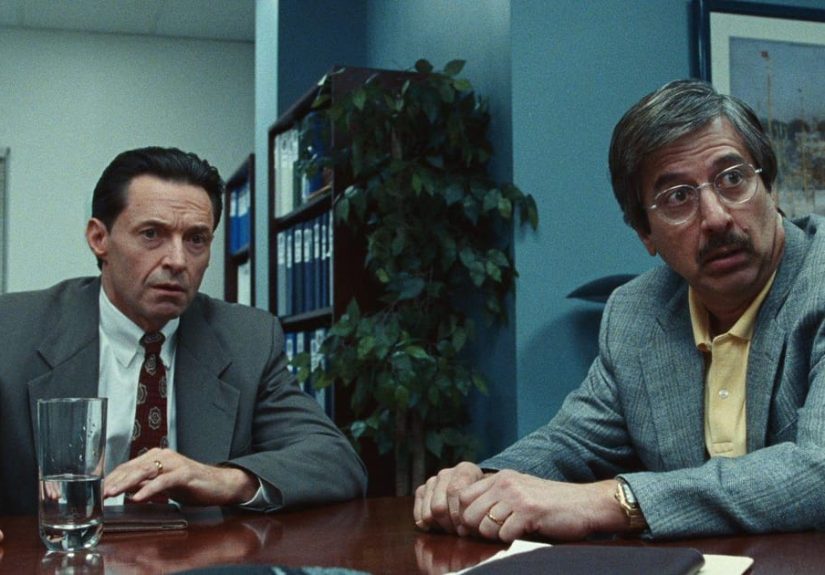
Few scandals are as infuriating as the ones that hide behind community pride. Bad Education tells the story of a
real embezzlement scheme in a wealthy school district, where charisma and “results” help cover the movement of money
into the wrong pockets. It’s a film about theft, yes but it’s also about status, appearances, and how institutions
will sometimes choose reputation management over truth.
What makes it underrated is how sharply it blends satire and dread. You can feel the social math happening in real time:
expose the wrongdoing and risk the district’s image, rankings, and property values or quietly bury it and pretend the
good times are “earned.” The film’s tension lives in that uncomfortable question: how many people benefited, indirectly,
from not looking too closely?
Compliance (2012) A Scandal Powered by Obedience
This is one of the most upsetting films on the list and one of the most important. Compliance is inspired by a
real incident in which a caller impersonating law enforcement persuaded a workplace to detain and abuse an employee,
escalating through “authority” and confusion rather than overt force.
The scandal here isn’t just “a hoax call.” It’s the terrifying ease with which ordinary people can be nudged into
doing the unthinkable when they believe the order is legitimate. The movie is underrated because it’s hard to recommend
casually but it’s also the kind of film that permanently upgrades your skepticism around authority, procedure,
and “we were just following instructions.”
Big Eyes (2014) Art, Identity Theft, and a Courtroom Paint-Off
Not all scandals happen in boardrooms or war rooms. Some happen in living rooms, where one person slowly convinces
another that silence is survival. Big Eyes dramatizes the real story of artist Margaret Keane, whose husband
took credit for her wildly popular paintings and built a brand on her work while she stayed in the shadows.
This movie is underrated because people often file it under “quirky biopic” and move on. But it’s a sharp look at how
control can masquerade as partnership, and how public image can become a trap. The real-life courtroom moment
(yes, the paint-off is rooted in reality) is cathartic in the most specific way: it’s proof that sometimes the truth
isn’t an argument it’s a demonstration.
The Insider (1999) When the Story Is True and the Threats Are, Too
Some scandal movies make you mad at the villains. The Insider also makes you mad at the machinery around them:
the corporate caution, the legal panic, the quiet incentives to soften the truth. The film dramatizes the real
high-stakes clash between a tobacco whistleblower (Jeffrey Wigand) and the institutions that wanted his allegations
contained or delayed.
It’s underrated largely because it’s not flashy. It’s long, procedural, and relentless which is exactly why it works.
It shows how “truth” can be treated like a liability, and how media organizations can face internal pressure that
doesn’t look like censorship… until it does. If you like movies where tension is built from meetings, memos, and moral
backbone, put this near the top of your queue.
Official Secrets (2019) A Leak, a War, and the Cost of Conscience
Political scandals often come wrapped in euphemisms: “intelligence sharing,” “strategic pressure,” “national security.”
Official Secrets is based on the real case of Katharine Gun, a British intelligence employee who leaked a memo
about efforts to influence a UN vote connected to the Iraq War. The story is less about spycraft and more about
moral friction what happens when your job demands silence and your conscience demands noise.
This film is underrated because it’s quiet, grounded, and not interested in turning its protagonist into an action hero.
Instead, it focuses on the human cost: fear, uncertainty, isolation, and the brutal reality that even “doing the right
thing” can still leave you punished.
The Report (2019) The Scandal Is the Paper Trail
Some scandals aren’t exposed by one shocking photo or one dramatic confession. They’re exposed by endurance.
The Report dramatizes the Senate investigation into the CIA’s post-9/11 detention and interrogation program,
following staffers who sifted through a mountain of documentation to produce a report that challenged official
narratives and institutional defensiveness.
The underrated brilliance here is its portrayal of “bureaucratic warfare”: access battles, procedural sabotage,
shifting talking points, and pressure to accept a smaller truth because it’s easier to live with. The film isn’t
asking you to enjoy the scandal. It’s asking you to understand how difficult it is to extract truth from an agency
that believes secrecy is synonymous with safety.
Dark Waters (2019) The Corporate Scandal That Got Into the Water
If you want a scandal movie that feels like a horror film without needing a monster, Dark Waters is your pick.
It dramatizes attorney Rob Bilott’s long fight against chemical pollution tied to PFAS (including PFOA), tracing how a
case can expand from a local problem into a national reckoning about corporate responsibility and regulatory gaps.
This movie is underrated because it’s not a “one and done” victory lap. It emphasizes time: years, decades, and the
grinding patience required to confront a powerful company. It also captures a grim truth about modern scandals:
sometimes the most damaging wrongdoing isn’t loud it’s gradual, normalized, and quietly profitable.
How to Watch Scandal Movies Without Losing Your Mind
A quick public service announcement: don’t binge all of these back-to-back unless you enjoy yelling “HOW IS THIS REAL?”
at your television until your pets start judging you. Scandal movies are most rewarding when you give them room to
breathe because the best ones don’t just provide outrage. They provide insight.
Try watching with a simple lens:
- Where did the incentives go wrong? Follow the money, the prestige, the fear, or the career ladder.
- Who benefited from silence? Sometimes the biggest “villain” is the group decision to look away.
- What was the smallest lie that started it? Many scandals begin as “just this once.”
- What did the movie choose to emphasize? Procedure, psychology, satire, or moral cost each choice changes the story.
You’ll also notice a pattern across the list: scandals don’t survive on secrecy alone. They survive on social comfort.
People don’t want conflict. They don’t want to be the “difficult” person. They don’t want to risk being wrong.
These films are a reminder that the truth often needs someone willing to be unpopular in the short term to be right in
the long term.
Conclusion: The Best Scandal Movies Aren’t Just Shocking They’re Useful
Underrated scandal movies do more than reheat old headlines. At their best, they train your instincts.
They teach you to recognize the language of evasion, the seduction of prestige, the slow creep of “normalizing”
unethical choices, and the way institutions protect themselves even when individuals inside them want change.
If you’re building a watchlist, start with what grabs you most: journalism fraud (Shattered Glass),
corporate manipulation (The Informant!, Dark Waters), reputation-driven embezzlement (Bad Education),
authority abuse (Compliance), art and identity theft (Big Eyes), or the high-stakes politics of leaks and
oversight (Official Secrets, The Report). Each one is a different flavor of “How did we let this happen?”
and each one has something to say about how we keep it from happening again.
Watching Scandal Movies: The Experience (And Why It Sticks With You)
Watching underrated scandal movies is a strangely physical experience. Even when the story is mostly people in offices
making phone calls, you can feel your shoulders tighten as the truth gets boxed in by legal language and polite smiles.
A good scandal film doesn’t just tell you that something unethical happened it makes you feel how easy it is for
“reasonable” people to talk themselves into unreasonable actions.
Many viewers describe a specific emotional arc: curiosity, disbelief, anger, and then a quieter kind of sadness.
Curiosity pulls you in because real life is already wild. Disbelief shows up when the “small” decisions pile into a
mountain. Anger arrives when you see how long wrongdoing can survive on social inertia. And sadness settles in when you
realize that the victims often don’t get cinematic closure they get paperwork, medical bills, lost careers, or a
reputation that never fully repairs.
There’s also a weird, dark humor that bubbles up in a lot of these stories not because the harm is funny, but because
human behavior can be absurd even in serious situations. People say things like “We’re just optimizing,” “This is how it’s
always been,” or “Let’s not make a big deal out of it,” as if the scandal is a spilled coffee instead of a moral spill
that will stain everything. Movies like The Informant! and Bad Education understand that comedy and corruption
can share a room. Sometimes humor is the only way the brain can process how ridiculous the rationalizations are.
Another common experience is the “pattern recognition hangover.” After a few scandal movies, you start noticing repeat
ingredients: a charismatic person who’s trusted too much, an institution that confuses image with integrity, and a chain
of people who each do a tiny part enough that no single person feels fully responsible. That’s the sneaky lesson of
Compliance and The Report: the most frightening scandals aren’t always driven by one mastermind. They can be
driven by compliance, careerism, and the quiet belief that “someone else must have checked this.”
Scandal movies also make for surprisingly good post-watch conversations, especially if you watch with someone who thinks
differently than you. One person may focus on individual responsibility (“How could anyone do that?”) while another focuses
on systems (“Why did the incentives reward this?”). The best films support both readings. Shattered Glass can be viewed
as one liar’s downfall and also as a workplace culture that let storytelling outrun verification. Dark Waters can be
seen as a legal thriller and also as a warning about slow-motion harm that’s hard to photograph and easy to deny.
Finally, there’s the odd motivational effect: these movies can make you braver in small ways. Not in a grand,
whistleblower-with-a-microchip sense but in the everyday sense of asking one more question, double-checking a claim,
and refusing to accept “trust me” as proof. The most underrated gift of scandal cinema is that it makes skepticism feel
like a civic virtue instead of a personality flaw. And honestly? In a world full of spin, that’s a pretty great takeaway
for two hours on the couch.







 Close
Close