
Table of Contents >> Show >> Hide
- Why This Cashew Nut Loaf Works
- Ingredients for Vegetarian and Vegan Cashew Nut Loaf
- How to Make Vegan Cashew Nut Loaf
- Vegetarian Variation
- Flavor Upgrades and Smart Substitutions
- What to Serve With Cashew Nut Loaf
- Storage, Freezing, and Reheating Tips
- Common Mistakes to Avoid
- Why Cashew Nut Loaf Is a Great Plant-Based Main Dish
- Experience Notes: What Making Cashew Nut Loaf Teaches You
- Conclusion
- SEO Tags
A vegetarian and vegan cashew nut loaf is the kind of dish that walks into a holiday dinner wearing a knitted sweater, holding a casserole dish, and somehow becomes the most interesting person at the table. It is savory, golden, sliceable, cozy, and surprisingly satisfying. Best of all, it does not pretend to be meat. It knows exactly what it is: a hearty plant-based main dish made with cashews, vegetables, herbs, grains, and a little kitchen confidence.
If you have ever stared at a vegetarian Thanksgiving table and thought, “So… are mashed potatoes the main course now?” this recipe is your answer. A well-made vegan cashew nut loaf gives you the structure of a classic meatloaf, the richness of toasted nuts, the comfort of stuffing, and the flexibility to serve it with gravy, cranberry sauce, roasted vegetables, salad, or a smug little smile because you remembered to make something everyone can eat.
This recipe is designed for both vegetarians and vegans. The base version is fully vegan, using ground flaxseed as the binder instead of eggs and vegetable broth for moisture. If you are vegetarian but not vegan, you can use an egg or dairy butter if you prefer, but honestly, the vegan version holds together beautifully when the mixture is chopped finely and baked until firm.
Why This Cashew Nut Loaf Works
The magic of a great vegetarian cashew loaf recipe comes down to balance. Cashews bring buttery richness, mushrooms add deep savory flavor, oats and breadcrumbs create structure, lentils or brown rice give body, and herbs make the whole loaf smell like it belongs beside mashed potatoes and gravy. It is not complicated, but it does need the right texture. Too wet, and it becomes a polite spoon casserole. Too dry, and it slices like a brick from a health food store in 1987.
Cashews are especially useful because they have a mellow flavor and creamy texture when processed. Unlike sharper nuts, they do not overpower the dish. Instead, they blend beautifully with garlic, onion, celery, mushrooms, thyme, sage, parsley, and a small touch of soy sauce or tamari. The result is a vegan nut roast that tastes rich without feeling heavy.
Ingredients for Vegetarian and Vegan Cashew Nut Loaf
This recipe makes one standard 9-by-5-inch loaf, enough for 6 to 8 slices depending on how generous you are feeling. Around the holidays, people suddenly develop heroic appetites, so plan accordingly.
For the Loaf
- 1 1/2 cups raw cashews
- 1 tablespoon olive oil, plus more for greasing
- 1 medium yellow onion, finely diced
- 2 celery stalks, finely diced
- 1 medium carrot, grated or finely diced
- 8 ounces mushrooms, finely chopped
- 3 cloves garlic, minced
- 1 tablespoon tomato paste
- 1 tablespoon soy sauce or tamari
- 1 teaspoon dried thyme
- 1 teaspoon dried sage
- 1/2 teaspoon dried rosemary, crushed
- 1/2 teaspoon smoked paprika
- 1/2 teaspoon salt, plus more to taste
- 1/4 teaspoon black pepper
- 1 cup cooked brown rice or cooked green lentils
- 3/4 cup rolled oats
- 1/2 cup whole wheat breadcrumbs or gluten-free breadcrumbs
- 2 tablespoons ground flaxseed mixed with 5 tablespoons warm water
- 1/3 to 1/2 cup vegetable broth, as needed
- 2 tablespoons chopped fresh parsley
Optional Glaze
- 3 tablespoons ketchup or tomato sauce
- 1 tablespoon maple syrup
- 1 teaspoon Dijon mustard
- 1 teaspoon apple cider vinegar
How to Make Vegan Cashew Nut Loaf
Step 1: Toast the Cashews
Preheat the oven to 350°F. Spread the raw cashews on a baking sheet and toast them for 8 to 10 minutes, stirring once, until they smell nutty and look lightly golden. Do not wander too far. Nuts go from “beautifully toasted” to “tiny expensive charcoal” with shocking enthusiasm.
Let the cashews cool for a few minutes, then pulse them in a food processor until they are finely chopped. You want small crumbs with a few slightly larger bits for texture, not cashew butter. If you accidentally make cashew butter, congratulations, you have invented a different lunch.
Step 2: Cook the Vegetables
Heat the olive oil in a large skillet over medium heat. Add the onion, celery, and carrot. Cook for 6 to 8 minutes, stirring often, until the vegetables soften and the onion becomes translucent. Add the chopped mushrooms and cook for another 8 to 10 minutes, until they release their moisture and the pan looks mostly dry.
This step matters because mushrooms carry a lot of water. If you rush them, the loaf may turn soggy in the middle. A good cashew nut loaf should be moist, not mysteriously damp.
Stir in the garlic, tomato paste, soy sauce or tamari, thyme, sage, rosemary, smoked paprika, salt, and pepper. Cook for 1 to 2 minutes, just until everything smells deeply savory. This is the moment when someone in the house will ask, “What are you making?” Try to answer casually, as though you did not just perform plant-based wizardry.
Step 3: Mix the Loaf Base
In a large mixing bowl, combine the chopped cashews, cooked brown rice or lentils, oats, breadcrumbs, flaxseed mixture, parsley, and cooked vegetables. Stir until everything is evenly combined. Add vegetable broth a little at a time, starting with 1/3 cup. The mixture should hold together when pressed but should not be soupy.
For the best texture, mash about one-third of the mixture with a fork or potato masher. This helps bind the loaf while keeping enough visible texture to make each slice interesting. If the mixture feels too crumbly, add another tablespoon or two of broth. If it feels too wet, add more oats or breadcrumbs.
Step 4: Shape and Bake
Line a 9-by-5-inch loaf pan with parchment paper, leaving some overhang so you can lift the loaf out later. Lightly grease the parchment. Press the cashew loaf mixture firmly into the pan, smoothing the top with a spatula.
If using the glaze, whisk together ketchup, maple syrup, Dijon mustard, and apple cider vinegar. Spread it over the top of the loaf. Bake uncovered for 45 to 55 minutes, or until the top is browned, the edges are firm, and the loaf feels set in the center.
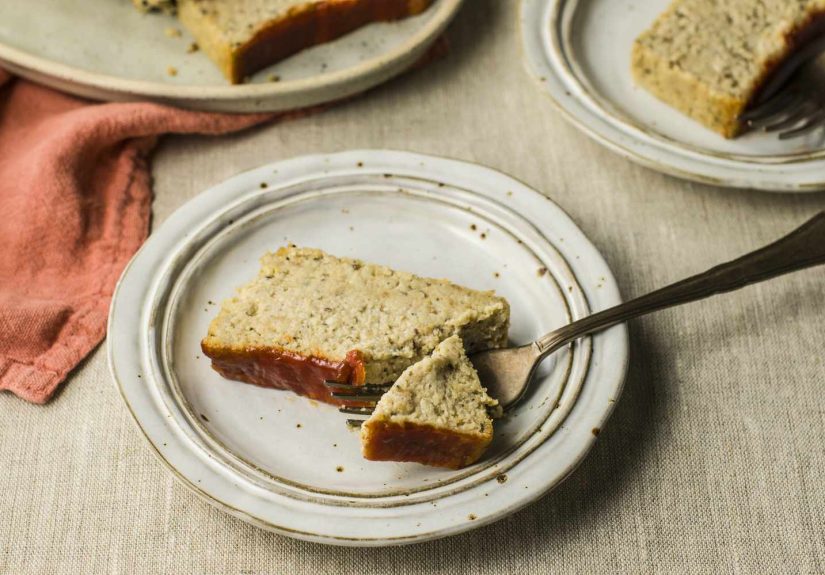
Let the loaf rest for at least 15 minutes before slicing. This is not optional unless you enjoy watching your dinner collapse like a poorly planned group project. Resting allows the oats, flaxseed, and breadcrumbs to finish absorbing moisture so the loaf slices cleanly.
Vegetarian Variation
The vegan version is the most flexible because it works for more guests, but you can easily adapt this recipe for a vegetarian table. Replace the flaxseed mixture with 1 large beaten egg if you prefer a firmer, more traditional loaf. You may also use butter instead of olive oil, or add 1/3 cup shredded cheddar, Parmesan-style cheese, or crumbled feta for extra richness.
That said, cheese is not necessary. The cashews already provide a creamy, satisfying flavor. If you are cooking for both vegans and vegetarians, make the vegan version and serve cheese on the side for anyone who wants to sprinkle it over their slice. This keeps the peace and prevents the classic holiday question: “Wait, is there dairy in this?”
Flavor Upgrades and Smart Substitutions
Make It Gluten-Free
Use certified gluten-free oats and gluten-free breadcrumbs. Tamari is usually a better choice than regular soy sauce for gluten-free cooking, but always check the label. The loaf will still hold together nicely because cashews, flaxseed, oats, and rice all contribute structure.
Make It More Holiday-Style
Add 1/3 cup dried cranberries, 1/4 cup chopped walnuts, and a pinch of nutmeg. This creates a slightly sweet-and-savory vegan nut roast that tastes wonderful with mushroom gravy, cranberry sauce, and roasted Brussels sprouts.
Make It More “Meaty”
For a deeper umami flavor, add 1 teaspoon miso paste, 1 teaspoon vegan Worcestershire sauce, or a tablespoon of finely chopped sun-dried tomatoes. Mushrooms, tomato paste, soy sauce, and toasted nuts already build plenty of savory character, but these extras give the loaf a stronger comfort-food personality.
Make It Higher in Protein
Use cooked lentils instead of brown rice, or use half lentils and half quinoa. You can also add crumbled tempeh, but chop it finely and cook it with the vegetables so it absorbs the seasonings. Plant-based protein works best when it is seasoned early, not tossed in at the end like an afterthought wearing sneakers to a wedding.
What to Serve With Cashew Nut Loaf
This vegetarian and vegan cashew nut loaf recipe pairs beautifully with classic comfort-food sides. Serve it with vegan mushroom gravy, garlic mashed potatoes, roasted carrots, green beans, cranberry sauce, stuffing, or a crisp fall salad. For a weeknight dinner, keep it simple with steamed broccoli and a baked sweet potato.
Leftover slices also make excellent sandwiches. Toast two pieces of bread, spread on vegan mayo or mustard, add lettuce, pickles, cranberry sauce, or caramelized onions, and tuck in a thick slice of cold or reheated nut loaf. It is the kind of lunch that makes sad desk salads question their life choices.
Storage, Freezing, and Reheating Tips
Cool the loaf completely before storing. Wrap slices or the whole loaf tightly and refrigerate for up to 3 to 4 days. For longer storage, freeze individual slices in an airtight container with parchment between them. Reheat refrigerated slices in a 350°F oven for 10 to 15 minutes, or warm them in a skillet until the edges crisp slightly.
If reheating from frozen, thaw overnight in the refrigerator for the best texture. You can microwave slices in a hurry, but the oven or skillet gives a better result. A crisp edge is one of life’s small but important victories.
Common Mistakes to Avoid
Using Whole Cashews Without Chopping
Whole cashews make the loaf difficult to slice. Pulse them until they are finely chopped, but stop before they become paste. A mix of fine and slightly coarse pieces gives the best texture.
Skipping the Vegetable Cook-Down
Raw vegetables release moisture while baking, which can make the loaf soft or crumbly. Cooking the onion, celery, carrot, and mushrooms first improves both flavor and structure.
Not Pressing the Mixture Firmly
Pack the mixture tightly into the loaf pan. Air pockets can cause cracking and uneven slices. Think of it as tucking the loaf into bed: firm, cozy, and ready for a nap in the oven.
Slicing Too Soon
Freshly baked nut loaf needs time to set. Let it rest at least 15 minutes, or longer if you want cleaner slices. Patience is the secret ingredient nobody wants to measure.
Why Cashew Nut Loaf Is a Great Plant-Based Main Dish
A cashew nut loaf is more than a holiday substitute. It is a practical, nourishing recipe that fits many eating styles. It uses familiar pantry ingredients, offers plant-based protein and fiber, and can be adapted for vegan, vegetarian, and gluten-free diets. It is also less processed than many store-bought meat alternatives, which can be helpful if you prefer whole-food meals.
The flavor is also friendly. Some plant-based mains are bold, spicy, or highly seasoned, which is wonderful until you need to feed Aunt Linda, two picky teenagers, a vegan cousin, and someone who “doesn’t trust quinoa.” Cashew nut loaf is approachable. It tastes like herbs, vegetables, toasted nuts, and Sunday dinner. That is a very useful flavor profile.
Experience Notes: What Making Cashew Nut Loaf Teaches You
Making a vegetarian and vegan cashew nut loaf is one of those kitchen experiences that quietly improves your cooking instincts. At first, it may feel unusual if you are used to meat-based loaves. There is no ground beef, no eggs in the vegan version, and no familiar package telling you exactly what will happen. Instead, you learn to judge texture with your hands and eyes. Does the mixture hold together when pressed? Does it look moist but not wet? Does it smell savory enough before it goes into the oven? These little questions turn you into a better cook.
One of the best experiences with this recipe is discovering how important the sauté step is. When onions slowly soften, mushrooms brown, and garlic hits the pan, the flavor changes from “vegetables in a skillet” to “something serious is happening here.” That cooked-down base gives the loaf depth. It also makes the kitchen smell like the kind of place where people are loved, fed, and gently encouraged to take seconds.
Another useful lesson is that plant-based food does not have to be delicate. This loaf can handle big flavors. Add extra black pepper. Add fresh rosemary. Add a spoonful of miso. Add a smoky glaze. Serve it under a ladle of mushroom gravy. The cashews provide a rich foundation, but the recipe welcomes personality. It is forgiving, which is exactly what a home recipe should be.
The first slice is always the suspenseful moment. You lift the knife, hold your breath, and hope it does not crumble into a pile of delicious rubble. If you let the loaf rest properly, the slice should come out firm, tender, and speckled with herbs, grains, vegetables, and golden cashew pieces. That moment feels oddly triumphant. It is not just dinner; it is proof that nuts, oats, vegetables, and flaxseed can organize themselves into something centerpiece-worthy.
This recipe is also a great reminder that vegetarian and vegan cooking often succeeds through layering, not imitation. The goal is not to trick anyone into thinking cashews are turkey. The goal is to create a dish with enough flavor, texture, and comfort that nobody feels like they are missing the main event. When served with mashed potatoes, gravy, roasted vegetables, and cranberry sauce, cashew nut loaf feels complete.
Leftovers may be the best part of the experience. A chilled slice becomes firmer overnight, making it perfect for sandwiches. Warm it in a skillet until the edges brown, then layer it with mustard, lettuce, and pickles. Suddenly yesterday’s holiday centerpiece becomes today’s excellent lunch. That is the kind of kitchen efficiency that deserves applause, or at least another cup of coffee.
Most importantly, this loaf is a conversation starter. People ask what is in it. They ask how it holds together. They ask whether it is really vegan. Then they ask for another slice. That is the quiet power of a good plant-based recipe: it does not lecture, announce, or apologize. It simply shows up tasting wonderful.
Conclusion
This vegetarian and vegan cashew nut loaf recipe is hearty enough for holidays, simple enough for Sunday dinner, and flexible enough for real-life kitchens. Toasted cashews, mushrooms, herbs, oats, lentils or brown rice, and a savory glaze come together in a loaf that slices beautifully and tastes comforting without relying on meat, dairy, or complicated ingredients.
Whether you serve it with vegan gravy at Thanksgiving, pair it with roasted vegetables for Christmas, or turn leftovers into sandwiches the next day, this cashew nut loaf earns its place at the table. It is cozy, flavorful, practical, and just fancy enough to make people think you tried very hard. We will let that be our little secret.







 Close
Close