
Table of Contents >> Show >> Hide
- What Does "Don't Be a Karen" Mean?
- Where Did the Karen Meme Come From?
- Common Examples of Karen Behavior
- 1. Demanding to Speak to the Manager Over a Tiny Issue
- 2. Treating Service Workers Like Personal Servants
- 3. Calling the Police or Authorities Without Real Danger
- 4. Refusing to Follow Rules While Enforcing Them on Others
- 5. Publicly Shaming Workers or Strangers for Attention
- 6. Using “I Pay Your Salary” Energy
- What Karen Behavior Is Not
- Why the Phrase Can Be Controversial
- How to Complain Without Being a Karen
- How to Respond When Someone Says “Don’t Be a Karen”
- Examples of Karen Behavior in Everyday Life
- Why “Don’t Be a Karen” Is Really About Self-Awareness
- Personal Experiences and Real-Life Lessons About Karen Behavior
- Conclusion
Some phrases enter the internet like a quiet houseguest. Others kick the door open, demand to see the manager, leave a one-star review, and somehow become a cultural symbol. “Don’t be a Karen” belongs firmly in the second group.
Today, the phrase is used as a warning against entitled, rude, overly demanding, or socially unaware behaviorespecially in public places like stores, restaurants, airports, parks, offices, and neighborhood Facebook groups where drama goes to wear yoga pants. At its core, “Don’t be a Karen” means: don’t act like your inconvenience gives you permission to mistreat other people.
But the term “Karen” is more complicated than a simple internet joke. It has been used to call out real patterns of entitlement, racism, class privilege, and customer-service abuse. It has also been criticized as sexist, ageist, and unfair to actual people named Karen, many of whom are lovely and probably tired of apologizing for a meme they did not apply for.
So what does “Don’t be a Karen” really mean? What counts as Karen behavior? And how can you stand up for yourself without becoming the person everyone in line quietly hopes will lose Wi-Fi? Let’s unpack it.
What Does "Don’t Be a Karen" Mean?
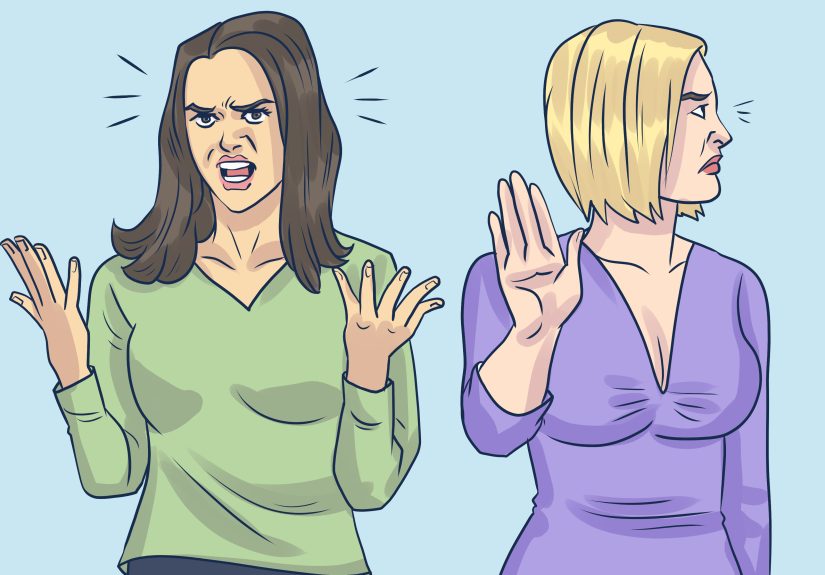
“Don’t be a Karen” is a slang expression that tells someone not to behave in an entitled, aggressive, or unnecessarily confrontational way. It is often used when a person overreacts to a minor problem, treats workers disrespectfully, demands special treatment, polices strangers, or escalates a situation far beyond what it deserves.
In popular culture, a “Karen” is commonly imagined as someone who wants to “speak to the manager,” complains loudly in public, refuses to follow rules that apply to everyone else, or uses authoritysuch as calling the police, reporting someone, or threatening a bad reviewto get their way.
The phrase does not mean that all complaints are wrong. Sometimes the food really is cold. Sometimes the bill really is incorrect. Sometimes the airline really did treat your suitcase like it owed them money. The difference is how a person responds. A reasonable person says, “Excuse me, could you help me fix this?” A Karen-style response sounds more like, “I personally fund this entire grocery chain with my almond milk purchases, and I demand justice.”
Where Did the Karen Meme Come From?
The name “Karen” became internet shorthand over time, especially during the late 2010s and early 2020s. It grew from memes about entitled customers and “speak to the manager” behavior into a wider cultural label for people who use social power irresponsibly.
The term became especially visible in 2020 after several viral videos showed white women calling authorities on Black people for ordinary activities, such as birdwatching, selling water, swimming, barbecuing, or simply existing in public spaces. One of the most widely discussed cases involved a confrontation in New York City’s Central Park, where a woman called police on a Black birdwatcher after he asked her to leash her dog in an area where leashes were required. The incident helped push “Karen” from meme language into mainstream conversations about race, privilege, public behavior, and accountability.
That history matters. The term is not only about being annoying in a checkout line. In its most serious use, “Karen behavior” describes moments when someone weaponizes complaint, authority, race, class, or social status to control others. That is why the phrase can carry a sharper meaning than ordinary rudeness.
Common Examples of Karen Behavior
Karen behavior can show up in many everyday situations. It is usually marked by entitlement, unnecessary escalation, and a belief that other people should bend reality to satisfy one person’s preferences.
1. Demanding to Speak to the Manager Over a Tiny Issue
The classic example is the customer who immediately asks for the manager because a coupon expired three months ago, the coffee has one less ice cube than expected, or the store will not accept a return for shoes that have clearly been worn through two music festivals and a family barbecue.
There is nothing wrong with asking for help. The Karen behavior begins when the request becomes hostile, theatrical, or disrespectful toward employees who did not create the policy and cannot magically rewrite corporate law from behind the register.
2. Treating Service Workers Like Personal Servants
Retail workers, restaurant servers, hotel staff, delivery drivers, and call-center agents often deal with people at their most impatient. Karen behavior appears when someone forgets that workers are human beings, not emotional punching bags with name tags.
Examples include snapping fingers at servers, mocking an employee’s accent, shouting at a cashier, refusing to say “please” or “thank you,” or blaming a front-line worker for a company-wide policy. A person can be upset and still be decent. Revolutionary concept, apparently.
3. Calling the Police or Authorities Without Real Danger
One of the most serious forms of Karen behavior is calling police, security, a homeowners association, or another authority figure on someone who is not doing anything dangerous. This becomes especially harmful when race, age, disability, language, or class bias influences who is seen as “suspicious.”
Examples include calling police because kids are selling lemonade, a neighbor is playing music during reasonable hours, a Black family is using a community pool, or someone is sitting in a public park. When authority is used to intimidate people rather than solve real safety concerns, the behavior stops being merely rude and becomes dangerous.
4. Refusing to Follow Rules While Enforcing Them on Others
A common Karen contradiction is demanding strict rule-following from everyone else while treating personal inconvenience as an exemption certificate. This might look like refusing to leash a dog in a leash-required area, parking in a disabled spot without authorization, cutting in line, or ignoring store policiesthen becoming furious when corrected.
The unspoken attitude is: “Rules are important when they help me and optional when they annoy me.” That attitude is not confidence. It is entitlement wearing sunglasses indoors.
5. Publicly Shaming Workers or Strangers for Attention
Social media has made it easy to turn everyday conflicts into public performances. A Karen-style reaction might include filming an employee without context, posting a stranger’s face online, encouraging followers to attack a small business, or writing an exaggerated review designed to punish rather than inform.
There are legitimate reasons to document mistreatment or unsafe behavior. But using the internet as a revenge cannon over a mild inconvenience can cause real harm. A missing side of ranch does not need a 12-part investigative series.
6. Using “I Pay Your Salary” Energy
Some people believe that spending money gives them authority over everyone nearby. This can sound like, “I’m a paying customer,” “My taxes pay your salary,” or “Do you know who I am?” Usually, the honest answer is noand after that sentence, nobody is eager to find out.
Being a customer gives you the right to receive what you paid for. It does not give you the right to insult people, skip policies, or turn a normal issue into a hostage negotiation.
What Karen Behavior Is Not
Because the phrase is popular, it can be misused. Not every complaint is Karen behavior. Not every assertive woman is a Karen. Not every older person who asks a question is being entitled. And not every person named Karen should have to introduce herself like she is defusing a bomb.
It is not Karen behavior to politely ask for a refund when you were charged twice. It is not Karen behavior to report discrimination, unsafe conditions, harassment, fraud, or serious misconduct. It is not Karen behavior to set boundaries, request accessibility accommodations, or stand up for yourself.
The key difference is whether the response is proportionate, respectful, and based on a real issue. Assertiveness says, “This needs to be fixed.” Entitlement says, “This needs to be fixed because I am more important than everyone else.”
Why the Phrase Can Be Controversial
The term “Karen” is controversial because it sits at the messy intersection of humor, social criticism, gender, race, age, and internet shaming. For some people, calling someone a Karen is a way to name entitlement and bias. For others, it feels like a lazy insult used to silence women who speak up.
Both concerns can be true depending on context. The phrase can be useful when it points to a real behavior pattern: abusing workers, weaponizing authority, or acting with racial entitlement. But it can become unfair when used against any woman who is assertive, frustrated, middle-aged, white, or simply asking a reasonable question.
That is why the best approach is to focus on behavior, not identity. Instead of using “Karen” as a personal attack, it is more accurate to describe the action: “That customer was rude to the cashier,” “That person escalated unnecessarily,” or “That neighbor called security without a real reason.” Behavior can be changed. A meme name cannot.
How to Complain Without Being a Karen
Complaining well is a life skill. Everyone eventually has to challenge a charge, return a broken product, ask for a mistake to be corrected, or deal with customer service. The goal is not to become silent. The goal is to be effective without becoming a cautionary tale.
Stay Calm and Specific
Start with the facts. “I ordered the vegetarian meal, but this has chicken in it” is clear. “This restaurant is a crime scene and I have been personally betrayed by poultry” is less helpful, though admittedly more dramatic.
Assume the First Person You Speak To Is Not the Villain
Most employees did not design the policy, break the website, shrink the airplane seat, or personally sabotage your fries. Treating them with respect often gets better results because people are more willing to help someone who speaks to them like a human being.
Ask, Don’t Threaten
Try: “What options do we have?” or “Is there someone who can help with this?” Avoid starting with threats such as bad reviews, corporate complaints, lawsuits, or “I know the owner.” Unless you actually know the owner, in which case congratulations on having the most annoying superpower.
Know When to Walk Away
Some issues are not worth a full emotional Broadway production. If the problem is minor, temporary, or unfixable, leaving calmly may be the healthiest choice. Protecting your peace is often better than winning a public argument over a $1.50 upgrade.
How to Respond When Someone Says “Don’t Be a Karen”
If someone tells you not to be a Karen, your first instinct may be to become, unfortunately, much more Karen. Pause before reacting. Ask yourself: Am I being reasonable? Am I speaking respectfully? Is this issue serious enough for the level of energy I am giving it?
If the criticism is unfair, you can calmly say, “I’m not trying to be difficult. I’m asking for a reasonable solution.” If the criticism is fair, take the rare and powerful route: own it. “You’re right. I’m frustrated, but I shouldn’t have spoken that way.” That sentence has been known to restore oxygen to entire rooms.
Examples of Karen Behavior in Everyday Life
At a restaurant, Karen behavior might be berating a server because the kitchen is backed up, demanding a free meal after eating almost all of it, or leaving a cruel review naming an employee over a small mistake.
In a store, it might be yelling at a cashier because an item rang up at the posted price instead of the imaginary price your heart selected. It might also be refusing to follow return policies and insisting that “the customer is always right,” a phrase that has done more damage to retail workers than most natural disasters.
In a neighborhood, Karen behavior might include reporting children for playing outside, policing how someone parks when no rule is being broken, or treating public space like a private kingdom with HOA stationery.
Online, it might be mobilizing followers to harass a business, leaving exaggerated reviews, or posting someone’s personal information after a minor disagreement. Digital Karen behavior is especially risky because the internet never forgets, but it does love screenshots.
Why “Don’t Be a Karen” Is Really About Self-Awareness
At its best, “Don’t be a Karen” is not just an insult. It is a reminder to check our entitlement before it starts driving the car. Everyone has moments of frustration. Everyone has been tired, hungry, delayed, overcharged, ignored, or placed on hold long enough to question the meaning of existence.
The test is what happens next. Do we treat people with dignity? Do we ask for help without humiliation? Do we notice when our complaint is actually about control rather than fairness? Do we recognize when our assumptions about someone are shaped by bias?
Self-awareness is the antidote. A person who can pause, breathe, and say, “Maybe I’m escalating this too much” is already moving away from Karen behavior and toward basic public maturity. It may not go viral, but it does make life better for everyone within earshot.
Personal Experiences and Real-Life Lessons About Karen Behavior
Most people have witnessed Karen behavior at least once, even if they did not have a name for it at the time. The scene is usually familiar: a public place, a small inconvenience, an employee trying their best, and one person treating the moment like the Supreme Court has been called into emergency session.
One common experience happens in grocery stores. A customer discovers that a sale ended yesterday and immediately turns the checkout lane into a courtroom. The cashier explains the policy. The customer argues. The line grows. Frozen vegetables begin to thaw. Somewhere, a child learns three new phrases they should not repeat at school. The issue itself is tiny, but the emotional storm becomes enormous.
The lesson from moments like this is simple: frustration is understandable, but public humiliation is not a solution. A calm question often works better than a loud accusation. “Could you check whether this price can still be honored?” is more effective than “This store is scamming me.” One invites help. The other invites everyone nearby to stare at the ceiling and pretend they are invisible.
Another familiar example happens in restaurants. A meal takes too long, or an order comes out wrong. A reasonable customer alerts the server and gives the staff a chance to fix it. A Karen-style customer talks down to the server, demands a manager, and treats a busy kitchen delay like a personal attack. The irony is that kindness usually gets faster cooperation. People are far more motivated to help someone who has not just compared them to a broken vending machine.
There are also neighborhood versions of Karen behavior. Someone sees a stranger walking through the area and immediately assumes they do not belong. Instead of observing calmly or asking a normal question, they call security or police based on suspicion rather than evidence. This is where Karen behavior becomes more than annoying. It can put innocent people in danger, especially people of color who are already more likely to be treated as suspicious in public spaces.
A healthier response begins with humility. Not every unfamiliar person is a threat. Not every difference is a problem to report. Sometimes a person is just delivering food, visiting a friend, birdwatching, jogging, waiting for a ride, or living their life without needing approval from the unofficial mayor of the sidewalk.
Workplaces have their own version too. Karen behavior can appear when someone constantly complains about colleagues, polices harmless behavior, or uses rules selectively to control others. For example, a coworker might ignore deadlines but report someone else for being five minutes late. Or they might frame every disagreement as a crisis requiring management intervention. Over time, this creates a culture of tension where people focus less on doing good work and more on avoiding the office drama tornado.
The personal takeaway is that nobody is immune to Karen moments. Stress can make anyone impatient. Bad service can make anyone irritated. The goal is not perfection. The goal is catching ourselves before irritation turns into entitlement.
A useful question is: “What outcome do I actually want?” If the goal is a corrected bill, ask for that. If the goal is safety, report the real safety concern clearly. If the goal is to feel powerful, punish someone, or win an audience, it may be time to step back. The most mature person in the room is often the one who lowers the temperature instead of raising the volume.
Another helpful habit is to separate inconvenience from injustice. A delayed coffee is an inconvenience. Discrimination is injustice. A sold-out product is an inconvenience. Harassment is injustice. A rude employee may deserve a complaint, but a minor misunderstanding does not need a full public takedown. Knowing the difference keeps our reactions proportional.
In everyday life, the best anti-Karen strategy is basic respect. Say please. Say thank you. Ask questions before making accusations. Follow the same rules you expect others to follow. Give workers a chance to solve problems. Do not call authorities unless there is a real reason. And when you are wrong, apologize quickly. A sincere apology is social magic. It turns “Oh no, I was that person” into “I can do better next time.”
Ultimately, “Don’t be a Karen” is not about mocking a name. It is about choosing dignity over drama. It is about remembering that public life works better when people show patience, fairness, and self-control. In a world already full of delays, policies, tiny frustrations, and suspiciously expensive sandwiches, the least we can do is not become the problem with a haircut.
Conclusion
“Don’t be a Karen” means don’t let entitlement, anger, bias, or inconvenience turn you into someone who mistreats others. The phrase became popular because it captures a recognizable public behavior: the person who escalates minor problems, demands special treatment, polices strangers, or uses authority to intimidate.
Still, the term should be used carefully. It is most useful when it describes harmful behavior, not when it becomes a lazy insult toward women, older people, or anyone who speaks up. There is a big difference between being assertive and being abusive. You can ask for fairness, request a refund, report a real problem, and protect your boundaries without becoming the main character in someone else’s viral video.
The best rule is simple: be firm when needed, kind whenever possible, and self-aware always. In other words, speak upbut don’t make the cashier, the neighbor, the server, or the entire internet wish you had chosen silence and a snack.
Note: This article is an original synthesis based on real public usage of the term, dictionary definitions, cultural reporting, social research, and widely discussed examples of public entitlement and escalation.




 Close
Close