Table of Contents >> Show >> Hide
- Nasal Ranger, explained like you’re busy
- What kind of tool is it (and what it isn’t)?
- How the Nasal Ranger works
- What “dilution-to-threshold (D/T)” actually means
- Where Nasal Rangers are used in the real world
- What a Nasal Ranger can tell you (and what it can’t)
- How to get reliable readings (without turning your nose into chaos)
- How communities and regulators use Nasal Ranger readings
- Nasal Ranger vs. other odor tools
- Who should consider using a Nasal Ranger?
- Quick FAQ
- Experiences From the Field (Real-World Style Scenarios)
- Conclusion
A “Nasal Ranger” sounds like a superhero with an elite sense of smellor the person your dog secretly reports to. In real life, it’s a compact piece of environmental monitoring gear that helps people measure odors in the real world, not just argue about them in neighborhood Facebook groups.
Nasal Ranger, explained like you’re busy
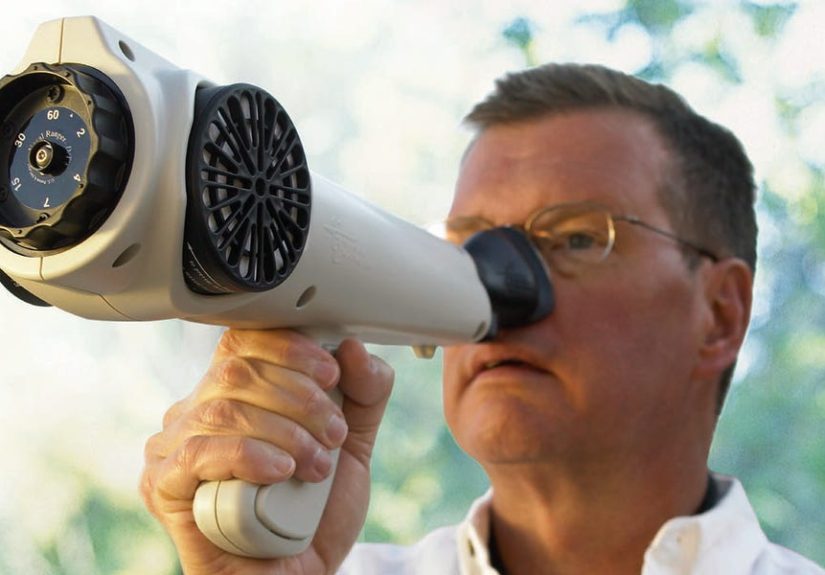
A Nasal Ranger is a portable field olfactometer: a handheld device that lets a trained person quantify how strong an odor is in outdoor (ambient) air using a standardized “dilution-to-threshold” method. In plain English: it helps turn “wow, that stinks” into a number.
What kind of tool is it (and what it isn’t)?
The Nasal Ranger is designed for field olfactometry, meaning odor evaluation performed on-siteat a property line, near a facility, around a neighborhood, or anywhere odor complaints (or process changes) need verification. It’s widely used in environmental work because it’s portable, repeatable, and fast.
It’s not a chemical detector
The Nasal Ranger doesn’t identify specific chemicals the way a lab instrument (like GC/MS) can. It quantifies perceived odor strength at the nose. That matters because odor annoyance is often about perception and exposure patterns, not just a single compound’s concentration.
It’s definitely not a respirator
This one deserves a neon sign: the Nasal Ranger is not personal protective equipment. It’s meant to measure odors, not protect you from hazardous atmospheres. If the air could be unsafe, the right move is proper safety gear and a safety planno exceptions.
How the Nasal Ranger works
The device’s core trick is surprisingly elegant: it mixes odorous ambient air with odor-free filtered air in controlled, known ratios. You sniff the mixture through a mask that seals against your face, reducing “cheating” from outside air.
Two air paths, one sniff
Inside the unit, ambient air can take two routes: (1) through a small opening (an orifice) that lets in unfiltered odor air, and (2) through carbon filter cartridges that remove odor to create “clean” dilution air. The two streams recombine before reaching your nose.
The D/T dial: the numbers that turn opinions into data
The Nasal Ranger uses a dial with alternating positionssome deliver blank (fully filtered air) and others deliver a specific D/T setting. A common standard dial includes D/T steps like 2, 4, 7, 15, 30, and 60, with blank positions between them.
Think of a D/T setting as a recipe: a higher D/T means a higher dilution (more clean air mixed in), so the odor reaching your nose is weaker. If you can still detect an odor even at a high dilution, it’s a strong odor event.
Why flow rate matters (yes, your sniff technique counts)
Sniffing isn’t as consistent as we like to believe. The Nasal Ranger helps by providing feedback so the user inhales within a target flow range (often around 16–20 liters per minute). That flow control improves comparability between users and between sampling sessions.
What “dilution-to-threshold (D/T)” actually means
“Threshold” is the point where an odor is just detectable. The D/T number represents how much odor-free air is needed to dilute odorous air until it’s barely noticeable. One common field definition expresses D/T as: (volume of carbon-filtered air) ÷ (volume of odorous air).
A quick example
Suppose you’re evaluating air at a property line. You start at a higher dilution (more clean air), and you can’t detect the odor. As you reduce dilution, eventually you just detect it. If that happens at D/T 15, you’d record a D/T of 15 for that observation. If detection occurs at D/T 2, the odor is relatively weak (it took very little dilution change to become detectable). If the odor is detectable even at D/T 60, that’s a strong odor condition.
Where Nasal Rangers are used in the real world
Field olfactometers show up anywhere odor complaints collide with permits, operations, or community expectations:
- Wastewater and lift stations: intermittent odor episodes driven by temperature, wind, and process conditions.
- Landfills and transfer stations: odors that vary with cover practices, leachate handling, and daily operations.
- Composting and organics facilities: “good compost” smells different from “something went anaerobic.”
- Livestock and manure management: odor impact surveys around barns, lagoons, and land application.
- Food processing: strong but sometimes short-lived odor events (rendering, frying, roasting, etc.).
- Cannabis cultivation/processing: community odor thresholds and property-line monitoring in some jurisdictions.
- Industrial sites: helping verify whether odor controls are working as intended.
What a Nasal Ranger can tell you (and what it can’t)
What it does well
- Quantifies odor strength quickly in ambient air.
- Supports consistent field documentation when operators follow a standard protocol.
- Helps compare locations and times (e.g., “north fence line at 7 a.m. vs. 2 p.m.”).
- Creates actionable patterns when paired with wind direction, weather notes, and operating logs.
What it does not do
- It doesn’t identify chemicals or apportion sources by itself.
- It doesn’t measure toxicity or determine whether air is “safe.”
- It doesn’t replace lab olfactometry when a permit, lawsuit, or engineering study requires formal lab methods.
- It can’t eliminate human variabilityit can only reduce it with training and good procedure.
How to get reliable readings (without turning your nose into chaos)
A Nasal Ranger is only as good as the person using it. Reliable data usually comes from a mix of training, consistency, and honest documentation.
Best-practice habits that matter
- Use trained assessors: Many programs screen odor sensitivity (often using reference odors) and refresh training regularly.
- Prevent odor fatigue: Strong odors can desensitize you quickly. Breaks, clean air, and rotating assessors help.
- Record context: wind direction/speed, temperature, humidity, and site activity often explain “why now?”
- Repeat measurements: multiple readings over a few minutes are more defensible than a single drive-by sniff.
- Check blanks: blank positions should smell neutral; if not, filters or seals may need attention.
- Maintain the device: clean contact surfaces, ensure a good seal, and replace filters on schedule.
Common mistakes (aka: how to accidentally sabotage your own data)
- Walking while sampling (wind, breathing rate, and positioning change fast).
- Not sealing the mask properly (ambient air sneaks in and dilutes the sample unpredictably).
- Sampling too close to strong sources (you may exceed practical measurement range and overload your nose).
- Failing to note confounders (diesel exhaust nearby, a passing garbage truck, fresh asphaltodor chaos is real).
How communities and regulators use Nasal Ranger readings
In some regulatory and complaint-response programs, odors are evaluated at set locationsoften near property linesusing D/T thresholds and time requirements (for example, needing the odor to persist above a certain D/T for multiple minutes). The goal is to separate “a brief whiff” from “a recurring nuisance.”
For facilities, the value is often operational: measurements can help correlate odor spikes with events like tank cleanouts, biofilter maintenance, aeration changes, deliveries, or weather shifts. Over time, a good dataset can guide targeted fixes rather than expensive guesswork.
Nasal Ranger vs. other odor tools
Nasal Ranger vs. Scentometer-style devices
Older field devices (like classic scentometers) are based on similar dilution ideas, but newer approaches often emphasize improved control of airflow and sampling consistency. The Nasal Ranger’s flow feedback is a key advantage when multiple assessors are involved.
Nasal Ranger vs. lab olfactometry
Lab olfactometry (dynamic olfactometry) typically uses controlled sample bags, calibrated dilution systems, and panels under standardized conditions. It’s more formal and can be more precisegreat for compliance and engineering designwhile the Nasal Ranger shines when you need on-site, real-time odor quantification.
Nasal Ranger vs. “electronic noses” and sensors
Sensors can continuously monitor patterns, but odor annoyance is still deeply tied to human perception. Many odor programs pair sensor data (trend + timing) with field olfactometry (human confirmation + strength). Think of sensors as the security camera and the Nasal Ranger as the eyewitnessboth useful, neither perfect.
Who should consider using a Nasal Ranger?
- Facility operators who need to verify odor controls and document improvements.
- Municipal inspectors responding to odor complaints with a consistent method.
- Consultants conducting odor surveys, impact assessments, and mitigation verification.
- Community monitoring groups working with agencies on structured, evidence-based reporting (when properly trained).
Quick FAQ
Does a higher D/T number mean the odor is stronger?
Typically, yesif the odor is detectable even when heavily diluted (higher D/T), it’s considered stronger in the field olfactometry sense.
Can anyone use it?
Technically yes, but meaningful results usually require training, sensitivity screening, and a protocol. Without that, data can become “numbers with confidence” rather than confident numbers.
Is it useful for one-time odor complaints?
It can be, but it works best as part of a repeatable approach: multiple readings, multiple days, consistent locations, and notes on weather and activity.
Experiences From the Field (Real-World Style Scenarios)
The best way to understand the Nasal Ranger is to see how it behaves in situations where odors behave like toddlers: unpredictable, loud, and weirdly proud of themselves. The experiences below are composite scenarios drawn from common odor-monitoring contextsmeant to illustrate what teams typically run into and how the tool fits into decision-making.
1) The “It’s Fine Until the Wind Turns” day
A city inspector gets a complaint: “It smells like rotten eggs near the park.” The facility nearby insists nothing changed. On arrival, the inspector takes readings upwind and downwind. Upwind is neutral. Downwind shows detectability at a higher D/T. The big “aha” isn’t just the numberit’s the pattern. The wind direction lines up perfectly with where complaints originate. The Nasal Ranger doesn’t solve the mystery alone, but it helps confirm that odor impact is directional and timing-related, which pushes the next step: checking operations and controls during that wind window.
2) The landfill that swears it’s the compost next door
Two neighboring sites both claim innocence. A consultant sets multiple sampling points around the shared boundary and logs D/T readings along with odor descriptors (sweet, sulfur, ammonia, “wet cardboard,” etc.). Over multiple visits, the numbers spike most consistently near one corner during active unloading hours. That doesn’t automatically prove fault, but it creates a data trail strong enough to justify targeted corrective actionslike adjusting cover timing, improving negative pressure zones, or changing handling practices. The “win” is that arguments shift from “not us” to “what can we change?”
3) The cannabis facility learns that “indoor” isn’t an invisibility cloak
A grow operation invests in filtration and expects silence (and by silence, they mean “no one smells anything”). Complaints still happen. Field checks show the odor is sometimes detectable at higher D/T at the property line, but only at specific times. The culprit ends up being mundane: door openings during trimming shifts, loading-bay traffic, and occasional maintenance bypasses. Once the operator ties readings to events, fixes become practicalairlock discipline, schedule changes, and maintenance protocolsrather than “buy a bigger filter and hope.”
4) The “odor fatigue is real” moment
A new assessor is excited, takes repeated readings back-to-back, and starts reporting lower values over time. Another assessor arrives later and reports higher values at the same location. That’s not necessarily dishonesty; it’s biology. Nose adaptation happens. Teams learn to rotate assessors, schedule breaks, and avoid pre-exposure to strong odors. This is where the Nasal Ranger’s structure helps: it doesn’t remove fatigue, but it makes it easier to notice when results drift and to correct the process before the data becomes misleading.
5) The “numbers help the budget meeting” story
A facility manager needs funding for odor mitigation, but “trust me, it smells bad” rarely unlocks capital. After several weeks of structured monitoringsame points, consistent timing, clear logsthe manager can show: (a) where the worst impacts occur, (b) under what conditions, and (c) how changes (like a repaired seal or process tweak) reduce observed odor strength. Suddenly the conversation becomes measurable: “This upgrade correlates with fewer high D/T episodes downwind.” Even people who never leave the conference room understand trend lines and documented outcomes.
Across these scenarios, the Nasal Ranger’s value is consistent: it’s a practical bridge between human perception and decision-making. It turns odor from a vague complaint into something you can track, compare, and improvewithout pretending that odors are simple or that human noses are robots.
Conclusion
The Nasal Ranger is essentially a standardized sniffing toola field olfactometer that blends ambient air with odor-free air in known ratios so trained users can quantify odor strength as dilution-to-threshold (D/T). Used correctly, it supports odor complaint investigations, operational troubleshooting, and documentation of improvements. Used casually, it becomes an expensive way to confirm what your face already told you. The magic is not the gadgetit’s the protocol, training, and consistency behind it.